

How to Recognize Insurance Adjuster Tactics After a Duluth Car Accident
The adjuster investigates the claim, but they work for the insurance company or are hired by it. Their estimate is not the final word. In Georgia, fault matters: under the 50% bar rule, an injured person generally cannot recover damages if they are 50% or more responsible for the crash. Insurers may use this rule to argue you share more blame than the facts support.
You also have deadlines. Georgia generally gives injured people two years to file a personal injury lawsuit under O.C.G.A. Section 9-3-33. That time can pass quickly while medical bills and repair costs pile up. Whether your case involves a driver who breached a duty of care, meaning the responsibility to act reasonably and avoid harming others, or a dangerous-property claim involving premises liability, early evidence matters. To see how industry standards operate, the National Association of Insurance Commissioners explains basic regulatory oversight.
We are Slam Dunk Attorney, a Duluth, Georgia personal injury firm focused on clear answers and strong preparation. We’ve seen how insurance adjuster tactics can pressure injured people to settle before they know what their claim is truly worth. Gaining insight into the claim handling process helps you stay ahead. You can learn how does the first-party insurance claim process work and follow simple steps to master the insurance claim process from day one.
Proudly Serving Duluth and All of Georgia Contact us to start your recovery! Explore Our Practice Areas

Navigating Claims After an Auto Accident in Duluth
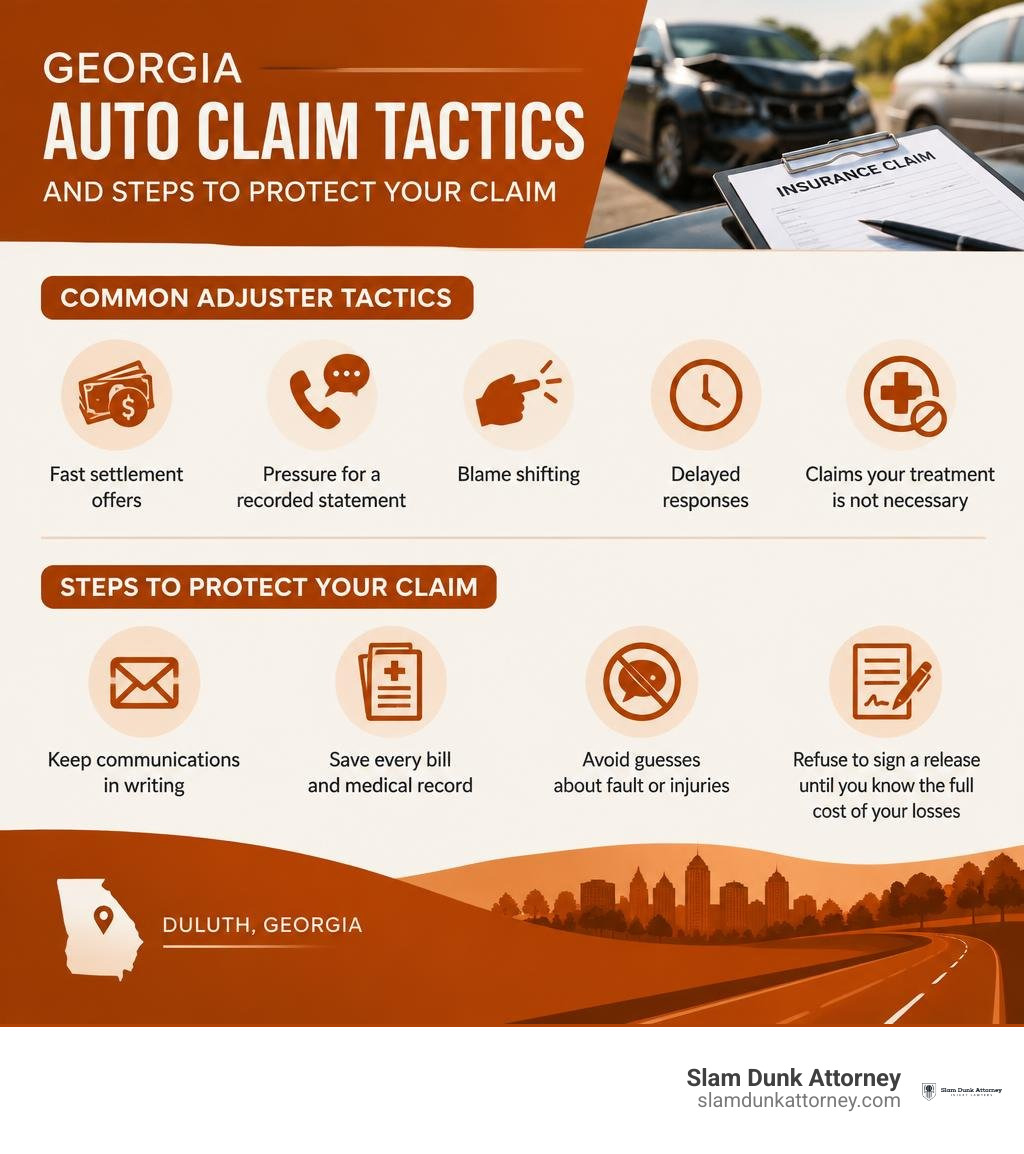
When you file an auto accident claim in Duluth, Georgia, it can feel like the adjuster is there to be your teammate. They might ask friendly questions about your family or your vehicle damage. In reality, insurance companies are businesses with strict profit motives. Their main goal is cost containment, which means paying out as little as possible on every claim.
Every driver on Georgia roads owes others a duty of care, which is the legal responsibility to act reasonably to avoid causing harm. When someone fails in that duty on Peachtree Industrial Boulevard or Satellite Boulevard, their insurer must answer for the damage. But the adjuster assigned to your case is trained to devalue claims and protect company funds. Understanding how adjusters work helps you stay protected from the start.
6 Common Auto Insurance Adjuster Tactics Used to Devalue Georgia Claims
Adjusters often rely on an industry playbook sometimes called the “3 Ds”: Delay, Deny, and Defend. They evaluate claim severity using computer software like Xactimate or Colossus, which often underestimates true repair costs and medical expenses in local Georgia markets.
|
|
|||||||||||||||||||||||||||||||||||||||||||||||||||||||||||||||||||||||||||||||||||||||||||||||||||
| Adjuster Type | Who Employs Them? | Who Do They Work For? | Primary Goal | ||||||||||||||||||||||||||||||||||||||||||||||||||||||||||||||||||||||||||||||||||||||||||||||||
|---|---|---|---|---|---|---|---|---|---|---|---|---|---|---|---|---|---|---|---|---|---|---|---|---|---|---|---|---|---|---|---|---|---|---|---|---|---|---|---|---|---|---|---|---|---|---|---|---|---|---|---|---|---|---|---|---|---|---|---|---|---|---|---|---|---|---|---|---|---|---|---|---|---|---|---|---|---|---|---|---|---|---|---|---|---|---|---|---|---|---|---|---|---|---|---|---|---|---|---|
| Staff Adjuster | Insurance company | The insurance company | Settle claims quickly within internal cost caps | ||||||||||||||||||||||||||||||||||||||||||||||||||||||||||||||||||||||||||||||||||||||||||||||||
| Independent Adjuster | Third-party adjusting firm | The insurer that hired them | Manage claim overflow while serving carrier guidelines | ||||||||||||||||||||||||||||||||||||||||||||||||||||||||||||||||||||||||||||||||||||||||||||||||
| Public Adjuster | Policyholder (Hired by you) | You (The policyholder) | Maximize your payout for covered property losses | ||||||||||||||||||||||||||||||||||||||||||||||||||||||||||||||||||||||||||||||||||||||||||||||||
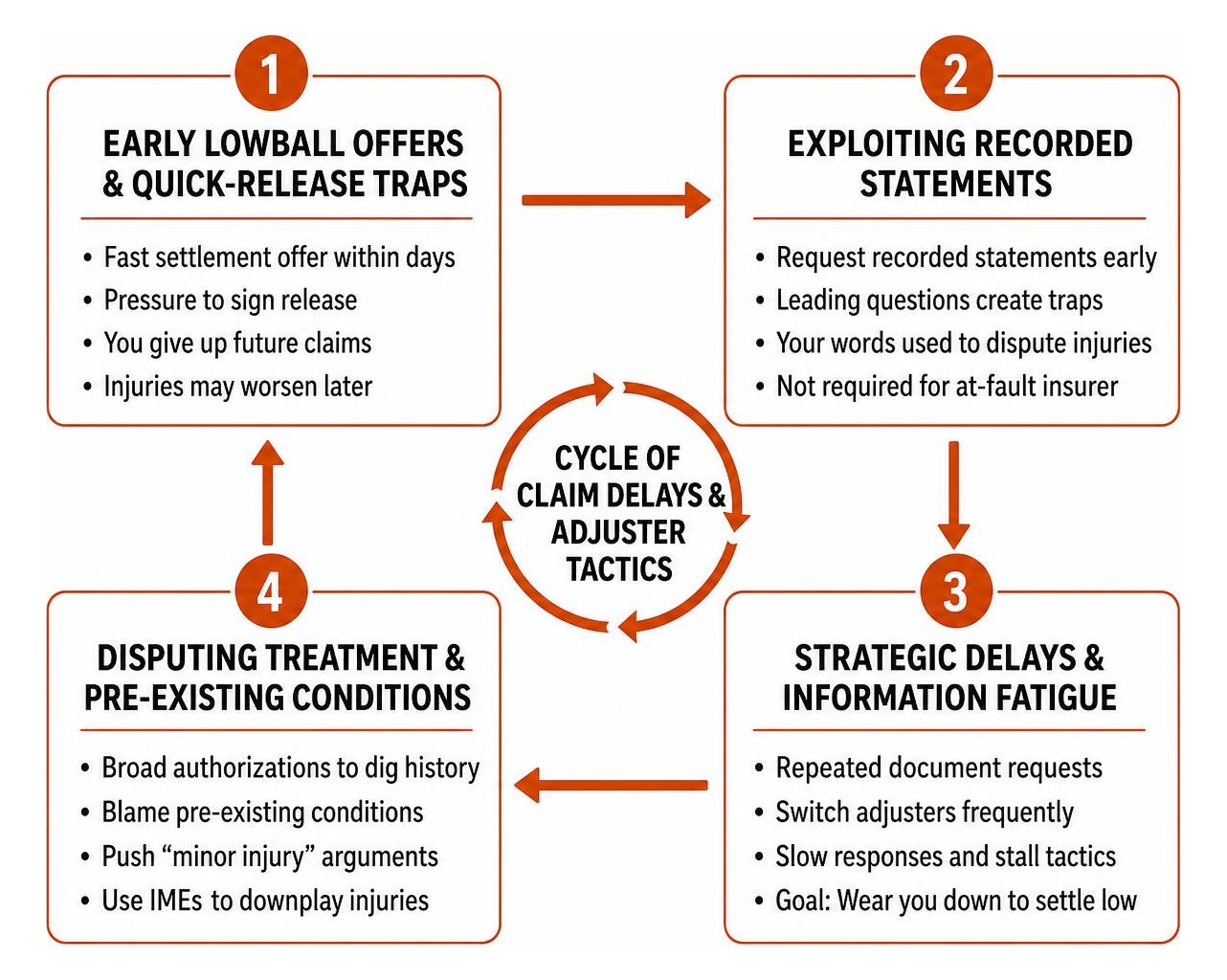
Here are the six most common ways adjusters try to reduce what they owe you.
Click to contact our personal injury lawyers today
1. Early Lowball Settlement Offers and Quick-Release Traps
One of the most common moves is the fast settlement offer. Within a few days of a wreck, the adjuster might offer a quick check for a few thousand dollars. They know you are facing financial pressure from missed work and car repairs.
Complete a Free Case Evaluation form now
2. Exploiting Recorded Statements: How Insurance Adjuster Tactics Twist Your Words
Adjusters often call soon after a collision asking for a recorded statement. They may tell you it is just a routine step to move your claim forward.
3. Strategic Claim Delays and Manufactured “Information Fatigue”
When adjusters cannot deny a claim right away, they may try to stall. This involves administrative delays, such as repeatedly asking for documents you already sent or switching your assigned adjuster three times in two months.
4. Disputing Medical Treatment and Weaponizing Pre-Existing Conditions
Adjusters frequently send broad medical authorization forms. They ask you to sign so they can “verify your bills.” However, these forms often allow them to dig into your entire medical history.
5. Shifting Blame Under Georgia’s 50% Bar Rule: Unfair Insurance Adjuster Tactics
Georgia follows a modified comparative negligence system under O.C.G.A. § 51-12-33. Under this 50% bar rule, you cannot recover any money if you are found to be 50% or more at fault for an accident. If you are 20% at fault, your total payout is reduced by 20%.
6. Misrepresenting Policy Limits and Coverage Ambiguities
Insurance policies are full of complex language. Adjusters sometimes take advantage of this by claiming certain losses are excluded under policy clauses or by misrepresenting coverage limits.
How to Protect Your Claim and Counter Insurer Bad-Faith in Gwinnett County
To protect your rights and fight back against bad-faith tactics, you need strong evidence. Save every medical bill, take photos of vehicle damage and injuries, keep a daily pain journal, and request independent repair estimates from trusted local shops.

Georgia sets a strict 2-year statute of limitations for personal injury lawsuits under O.C.G.A. § 9-3-33. If an insurance company stalls past this deadline, you lose your right to take them to court. When an insurer refuses to pay a valid claim without a reasonable ground, Georgia’s statutory bad-faith law under O.C.G.A. § 33-4-6 allows policyholders to pursue additional penalties and attorney fees.
The information provided on this blog is for general informational purposes only and is not intended to be, nor should it be construed as, legal advice. Every personal injury case is unique, and the laws and circumstances that apply can vary based on the specific facts of your situation. Reading this content does not create an attorney-client relationship. To receive legal advice specific to your case, you should consult directly with a qualified personal injury attorney licensed to practice in the state of Georgia.
Call or text 404-951-3513 or complete a Free Case Evaluation form