
Truck Accidents | Duluth, Georgia
Steps to File a Truck Accident Claim in Georgia
Truck accident cases involve more parties, more paperwork and tighter timelines than most crashes. Here is a plain-language guide to the steps, from the scene to the settlement table, and how our team can help you through each one.
By Peter F. Jaraysi · Published October 19, 2026
Filing a truck accident claim in Georgia involves reporting the accident, gathering evidence, notifying insurance, and either settling or pursuing a lawsuit—a process that typically takes 3–12 months if settled quickly, or 1–3 years if litigation is necessary.
What Is a Truck Accident Claim and Who Should File One
A truck accident claim is a formal demand for compensation from the at-fault driver’s insurance company or, if settlement fails, a lawsuit against the driver, the trucking company, or both. Anyone injured or whose property was damaged in a truck accident caused by another party’s negligence can file a claim.
Truck accident claims cover medical bills, lost wages, vehicle repair or replacement, pain and suffering, and in severe cases, permanent disability or death. In Suwanee and metro Atlanta, truck accidents often involve commercial carriers with experienced insurance adjusters and legal teams. Many people find it helpful to have a lawyer explain the claims process and review each settlement offer with them.
If you've been injured in a truck accident in Suwanee or anywhere in Georgia, you don't have to handle the claim process alone—call us or request a free consultation today. Talk it through with our team — the first consultation is free, confidential, and carries no obligation.

Immediate Steps to Take at the Scene of a Truck Accident
Your actions in the first moments after a truck accident can make or break your claim.
Call 911 first. Report the accident and request police and medical response. A police report creates an official record of what happened and is critical evidence in your claim.
Move to safety if possible. If your vehicle is in traffic and it’s safe to exit, move to the shoulder or sidewalk. Stay in your vehicle if exiting would put you in danger.
Do not admit fault. Never say “I’m sorry,” “It was my fault,” or apologize for the accident. These statements can be used against you later. Stick to facts: “A truck hit my car” is fine; “I didn’t see the truck coming” is not.
Exchange information with the truck driver. Get the driver’s name, phone number, address, insurance company name, policy number, and the trucking company’s name. Write down the truck’s license plate, company markings, and any visible damage.
Get witness contact details. If anyone saw the accident, ask for their name and phone number. Witnesses are invaluable if the case goes to trial.
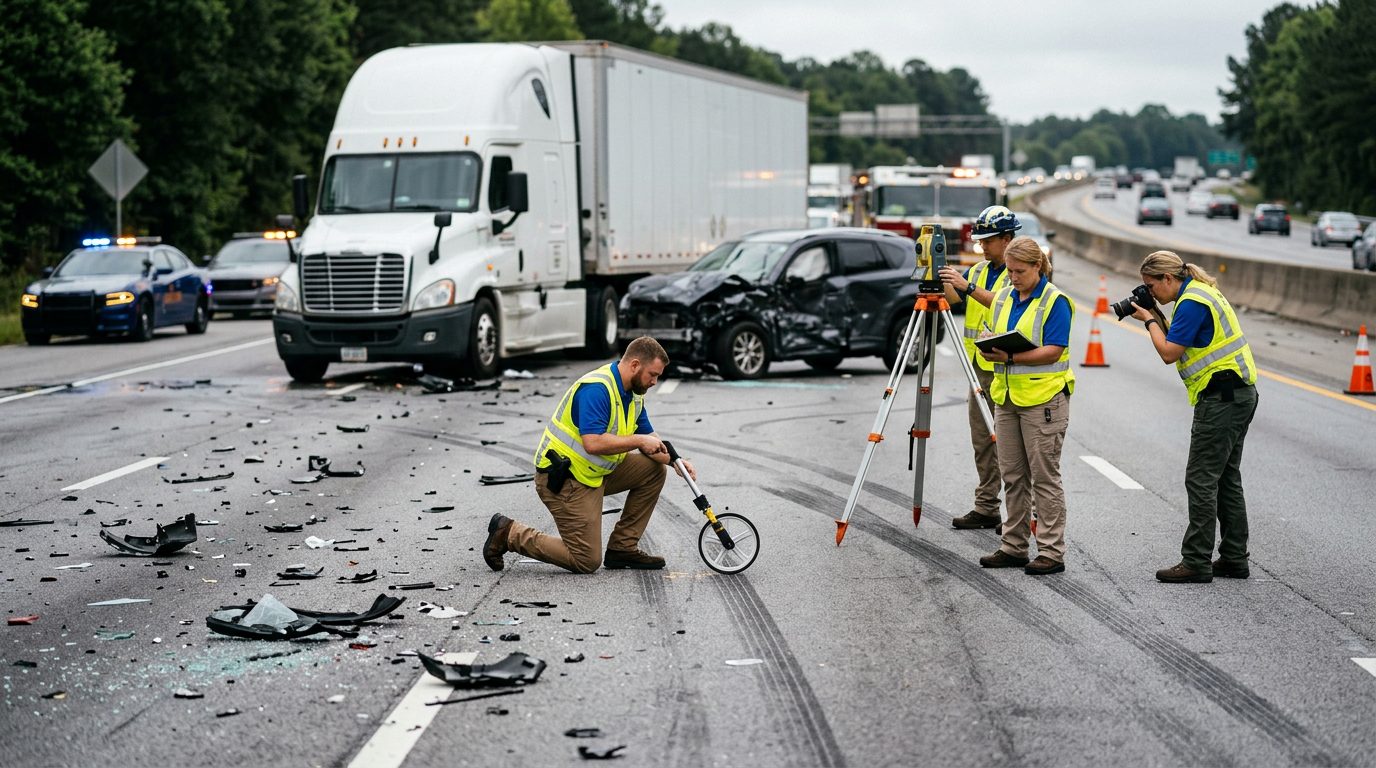
Take photos and video. Document vehicle damage from multiple angles, road conditions, traffic signs, weather, the truck’s license plate and company markings, and the overall accident scene. Photos are evidence and help your lawyer prove liability.
Request the police report number. Before leaving, ask the officer for the report number. You’ll need it to obtain the full report later.
Seek Medical Attention—Even if You Feel Fine
Go to an emergency room or urgent care immediately after the accident, or see your doctor within 24 hours. Many truck accident injuries—whiplash, internal bleeding, concussion, spinal cord damage—don’t show symptoms for hours or days.
Medical records create a documented link between the accident and your injuries. This is essential for your claim. Insurance companies and juries rely on medical evidence to believe your injuries are real and caused by the accident.
Keep all medical bills, test results, prescriptions, and provider notes. These are proof of your damages. Follow your doctor’s treatment plan; gaps in care or missed appointments can be used against your claim.
Step 1: Gather and Preserve Evidence
Evidence is the foundation of your claim.
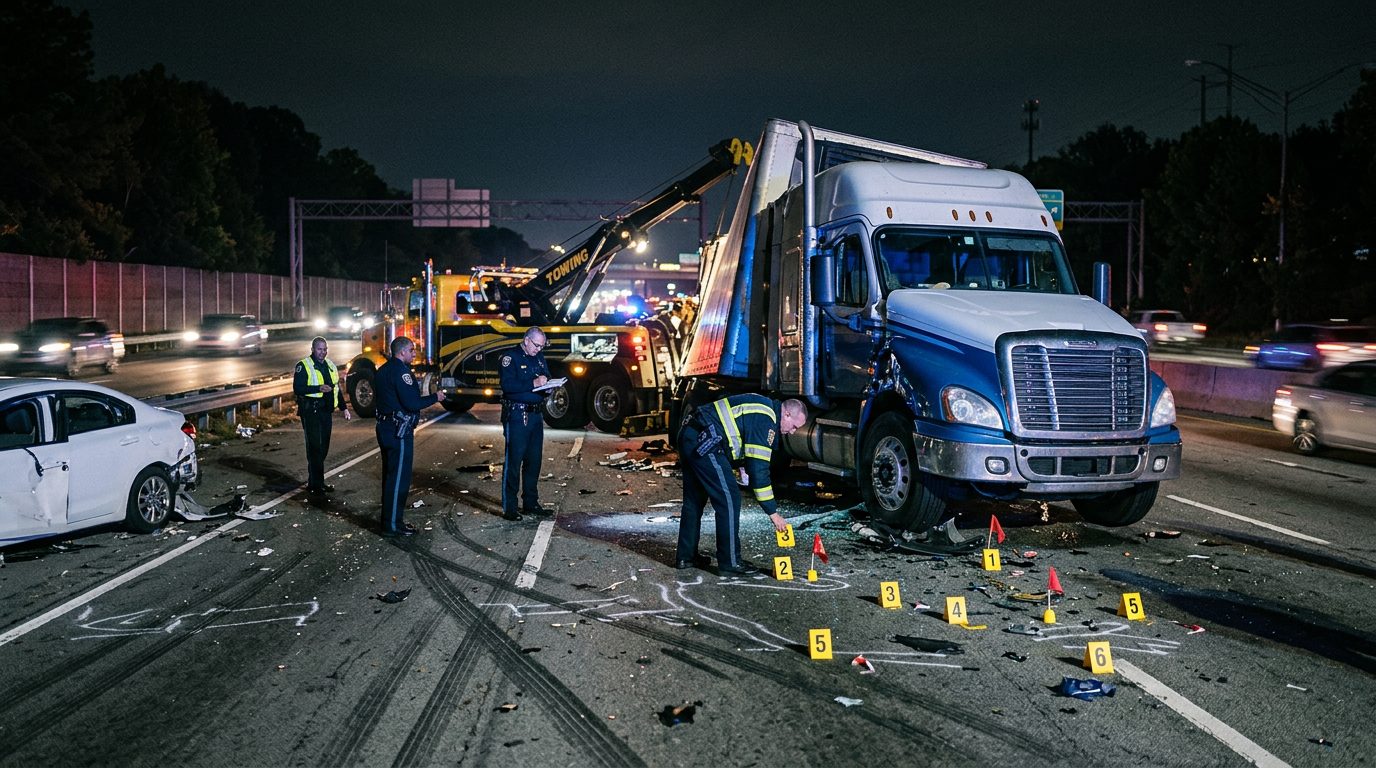
- Obtain the police report once it’s available (usually within 5–10 business days). The report includes the officer’s findings, witness statements, and sometimes a determination of fault.
- Preserve your vehicle. Do not repair or discard it until the insurance company inspects it. The vehicle’s condition is evidence of impact and injury.
- Collect medical records and bills from all providers who treated you.
- Save receipts for out-of-pocket expenses: medications, travel to appointments, lost wages, childcare while recovering.
- Document visible injuries with photos if possible (bruises, scars, swelling).
- Keep a journal of your pain, physical limitations, and how the injury affects your daily life, work, and relationships.
- Request truck maintenance records and driver logs if possible. Your lawyer can obtain these through discovery (the legal process of gathering evidence before trial).
Step 2: Notify the Insurance Company
Report the accident to your own insurance company within the timeframe required by your policy—usually 24–72 hours. Provide factual information only; do not speculate or accept blame.
Do not sign any settlement offer or medical authorization without reviewing it with a lawyer. Do not give a recorded statement to the other driver’s insurance company without legal advice; insurers use recorded statements to lock you into a story and find contradictions later.
Keep copies of all correspondence with insurers. This creates a record if disputes arise.
Step 3: Understand Your Insurance Coverage
Liability coverage pays for damage you cause to others—not your own injuries.
Collision coverage pays for your vehicle damage regardless of who was at fault.
Uninsured or underinsured motorist coverage protects you if the truck driver lacks sufficient insurance. Under Georgia law, insurers must offer uninsured and underinsured motorist coverage, but the policyholder may reject it in writing. If the truck driver is uninsured or underinsured, your coverage may cover your damages.
Medical payments coverage covers your medical bills up to a limit, regardless of fault.
Review your policy to understand what’s available to you.
Not sure what your next step is?
Talk it through with our team — the first consultation is free, confidential, and carries no obligation.
Step 4: File Your Claim or Demand
Your lawyer sends a demand letter to the at-fault driver’s insurance company. The letter includes evidence of liability (police report, photos, witness statements), proof of your injuries (medical records), and a calculation of your damages (medical bills, lost wages, pain and suffering).
The insurance company has 30–60 days to respond with a settlement offer, a denial, or a request for more information. If the offer is fair and covers your damages, you may accept and settle. If not, your lawyer advises whether to negotiate further or file a lawsuit.
How Long Does a Truck Accident Lawsuit Take?
Settlement negotiations typically take 3–12 months. Many truck accident claims settle without filing a lawsuit.
If litigation is necessary, the process takes 1–3 years from filing to trial, depending on the court’s docket and case complexity. Your lawyer manages all deadlines and procedural requirements so you don’t miss critical dates.
Georgia law requires you to file a lawsuit within two years from the date of injury. Do not wait. Evidence can disappear, witnesses move away, and memories fade.
Step 5: Negotiate or Litigate
If the insurance company makes a reasonable offer, you can accept and close the claim.
If both sides are far apart, your lawyer may suggest mediation—a neutral third party helps you and the insurance company reach agreement before trial.
If no settlement is reached, your lawyer files a lawsuit. The case then proceeds through discovery (both sides exchange evidence), depositions (witnesses and parties answer questions under oath), and finally trial if needed.
Your lawyer handles all communication and negotiation. You are not required to speak directly with the insurance company or appear in court until trial, if it occurs.
What Not to Say When Filing a Truck Accident Claim
Do not admit fault. “I’m sorry” or “It was my fault” can be used against you in court.
Do not exaggerate your injuries or claim damages you did not incur. Insurers investigate; dishonesty destroys your credibility.
Do not post about the accident on social media. Insurers and opposing counsel monitor social accounts. A photo of you smiling at a friend’s birthday party weeks after the accident can be used to argue your injuries aren’t serious.
Do not discuss the accident with the other driver’s insurance company without your lawyer present. They are trained to get you to say something that weakens your claim.
Do not sign documents or accept settlement offers without legal review. Once you sign, you cannot undo it.
Do not delay seeking medical care or miss appointments. It signals to insurers that your injuries aren’t serious.
What Slam Dunk Attorney Handles for You
We handle the entire claim process so you can focus on recovery.
- Investigation: We gather police reports, medical records, witness statements, and evidence of the truck driver’s negligence.
- Insurance communication: We negotiate with the insurance company on your behalf.
- Claim filing: We prepare and file your claim with all required documentation.
- Valuation: We calculate fair compensation based on your medical expenses, lost wages, and pain and suffering.
- Litigation: If settlement fails, we file a lawsuit and represent you through trial.
Our firm offers a free, confidential first consultation with no obligation to continue. You may still be responsible for court costs and case expenses.
If you've been injured in a truck accident in Suwanee or anywhere in Georgia, you don't have to handle the claim process alone—call us or request a free consultation today. Talk it through with our team — the first consultation is free, confidential, and carries no obligation.
Why You Need a Truck Accident Lawyer
Truck accidents involve commercial carriers with experienced insurance adjusters and legal teams. You need equal representation.
Insurance companies often undervalue claims to protect their profits. A lawyer can review your losses and work to pursue fair compensation, though no particular result can be predicted.
Federal and state regulations govern commercial trucks.
Deadlines and procedural rules are strict. Missing one can cost you your case. A lawyer manages all dates and filings.
A lawyer handles all communication, paperwork, and negotiation, freeing you to heal and return to normal life.
Can I Recover if I Was Partially at Fault?
Yes. Georgia follows modified comparative fault: you can recover even if you were partially responsible, but your award is reduced by your percentage of fault. However, if you are 50 percent or more at fault, you recover nothing (O.C.G.A. § 51-12-33; Quynn v. Hulsey, 310 Ga. 473 (2020)). This is why evidence and a strong lawyer matter—to minimize your percentage of fault and maximize your recovery.
Frequently Asked Questions
Q: Do I have to go to court?
A: No. Most truck accident claims settle without trial. Your lawyer will advise you on whether litigation is necessary.
Q: How much does it cost to hire a lawyer?
A: Start with a free, confidential initial consultation; there is no obligation to continue. You may still be responsible for court costs and case expenses.
Q: What if the truck driver was uninsured?
A: Your uninsured motorist coverage (if you have it) may cover your damages. We will pursue all available sources of recovery.
Do not wait; evidence can disappear and memories fade.
Q: What damages can I recover?
A: Medical bills, lost wages, vehicle repair, pain and suffering, and in cases of severe injury or death, additional damages. Your lawyer will calculate what you are entitled to.
Q: What if the insurance company denies my claim?
A: A lawyer can challenge wrongful denials and file a lawsuit if necessary. Do not accept a denial without legal review.
Dealing with Insurance Companies After a Truck Accident
Insurance adjusters are trained to minimize payouts. They may pressure you to settle quickly or accept a low offer. Do not accept the first offer without consulting a lawyer.
Insurers may request a recorded statement. You can decline or ask that your lawyer be present.
They may deny your claim based on technicalities. A lawyer can challenge wrongful denials.
Having a lawyer signals that you are serious and willing to litigate. Having a lawyer can help you understand and respond to settlement offers.
Get Your Free Consultation Today
If you were injured in a truck accident in Suwanee or anywhere in Georgia, you do not have to navigate the claim process alone. Slam Dunk Attorney is ready to review your case, answer your questions, and explain your options—at no cost.
Request a free consultation or call us today. We handle truck accident claims across metro Atlanta and Georgia and understand local courts, insurance practices, and what it takes to win fair compensation for our clients.
How Our Team Supports You Through a Truck Accident Claim
Plain-language guidance
We explain each step of the claim in everyday terms, so you always know what is happening and why.
Evidence gathering
Our team works to identify and request the records that matter in a commercial truck case, such as trip logs, maintenance files and driver qualification documents.
Communication with insurers
We handle calls and letters from insurance adjusters so you can focus on your recovery.
Focused on your side
Our practice concentrates on representing people injured in car, truck and motorcycle accidents, along with the other matters we handle across metro Atlanta and Georgia.
Important: Be Careful With Early Statements
Trucking companies and their insurers often contact injured people quickly. Before you give a recorded statement or sign any release, talk with a lawyer about what you are being asked to agree to.
The Basic Steps of a Truck Accident Claim
1. Get medical care and document the scene
Your health comes first. Seek medical attention, keep every record of treatment, and, if you can, take photos of vehicles, the roadway and any visible injuries.
2. Preserve the evidence
Commercial trucks generate large amounts of data, including electronic logs, dispatch messages and inspection reports. Records like these can change or be discarded, so they should be requested promptly.
3. Talk with a lawyer
A free, confidential consultation lets you explain what happened and ask questions. There is no obligation to continue after the first meeting.
4. Investigate, demand and negotiate
Your lawyer reviews the evidence, identifies the parties involved, and presents a demand to the insurers. Many truck accident claims are resolved through negotiation rather than trial.