
Duluth, Georgia | Slip and Fall Injury Claims
Hurt in a Slip and Fall? Talk With a Duluth Injury Lawyer
By Peter F.
A slip and fall injury can turn an ordinary errand into weeks of pain, bills, and missed work. If you were hurt in a fall on someone else’s property in Duluth or elsewhere in Georgia, you may be asking whether you have a claim. A slip and fall claim asks whether the property owner failed to keep the property reasonably safe and whether that failure caused your injury. For most injuries to the person, Georgia gives two years to file (O.C.G.A. § 9-3-33; Kenneth B. Cameron v. Jmp Pizza, Inc (2026)).
This page explains how these claims work, what evidence matters most, and what the free first consultation involves.
What a Slip and Fall Claim Is and Who It Is For
A slip and fall claim is a premises liability claim for an injury caused by a dangerous condition on another person’s property. The claim focuses on the property, not on a fault you should have avoided.
Common settings include:
- Grocery and retail stores
- Restaurants and bars
- Apartment complexes
- Parking lots and sidewalks
- Office buildings
Typical causes include wet or unmarked floors, spills, uneven flooring, torn carpet, broken stairs, loose handrails, poor lighting, and ice or debris on walkways. Georgia’s Department of Public Health publishes state injury data on falls, including traumatic brain injuries from falls.
This page is for injured visitors, customers, tenants, and guests. It is also for family members helping someone who was hurt. A fall on property you did not own or control can still support a claim, depending on the facts.
If your fall in a store, parking lot, or apartment complex left you hurt and unsure whether you have a claim, our team invites you to call for a free case review. Talk it through with our team — the first consultation is free, confidential, and carries no obligation.

What a Slip and Fall Claim Can Cover
A slip and fall claim can seek compensation for the losses your injury caused. That includes more than the fall itself.
- Medical care and bills. Under O.C.G.A. § 51-12-1.1, medical expenses are limited to the reasonable value of medically necessary care, and the jury decides that amount.
- Necessary expenses. Under O.C.G.A. § 51-12-7, necessary expenses from an injury are a legitimate part of the damages estimate.
- General damages. These include pain and suffering. Under O.C.G.A. § 51-12-2, the law presumes they flow from a wrongful act, so they need no proof of a dollar amount.
- Special damages. These are actual costs, such as bills and lost wages. They must be proved.
Common injuries include fractures, head and brain injuries, back and neck injuries, soft tissue injuries, and injuries that need surgery. Some symptoms appear days or weeks after a fall, so an early medical check matters.
No amount can be predicted from a description alone. The value of any claim depends on the facts.
What Georgia Law Requires You to Show
To recover, you generally need to show that the owner failed to use ordinary care, that the owner knew or should have known of the hazard, and that the hazard caused your injury.
- Duty. O.C.G.A. § 51-3-1 makes an owner or occupier liable when a failure to use ordinary care in keeping the premises safe injures someone invited there for a lawful purpose.
- Causation. The hazard must be what caused the fall and the injuries.
- Comparative fault. Under O.C.G.A. § 51-12-33, a judge reduces damages in proportion to your share of fault. If you are 50 percent or more responsible, you cannot recover damages.
- Deadline. Under O.C.G.A. § 9-3-33, actions for injuries to the person must be brought within two years after the right of action accrues, except for actions for injuries to the person involving loss of consortium, which must be brought within four years after the right of action accrues. Other deadlines can apply depending on the facts.
Georgia’s slip and fall guidance from the Department of Administrative Services names housekeeping, removing obstructions, addressing spills, and keeping walkways safe as key prevention steps.
Evidence to Protect After a Fall
The evidence that matters most is often what you gather in the first days after a fall. Conditions get mopped, repaired, or removed, and video can be overwritten.
Georgia’s highest court has held that the duty to preserve evidence starts when litigation is reasonably foreseeable to the party controlling the evidence, not only when a lawsuit is pending. See Phillips v. Harmon.
Practical steps include:
- Report the fall to the owner or manager, ask for an incident report, and keep a copy.
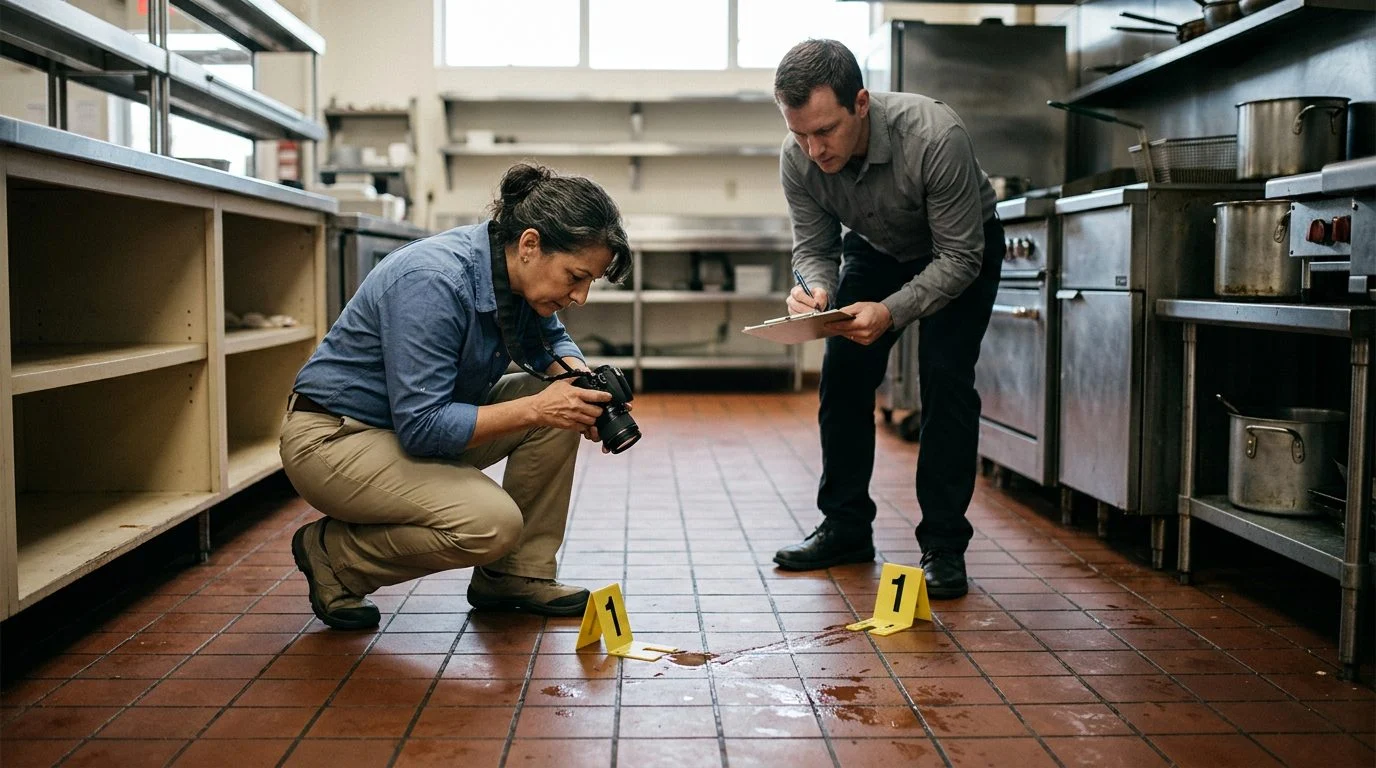
- Photograph the hazard, the area around it, the lighting, and your footwear, and note the date and time.
- Collect names and contact details of witnesses, and write down what each person saw.
- Keep every medical record, bill, prescription receipt, and note about missed work.
- Keep the clothing and shoes you wore, and limit social media posts about the fall.
How Our Process Works, Step by Step
A slip and fall claim usually moves from a first consultation to a case review, an investigation, negotiation, and, if needed, a lawsuit.
- Free first consultation. The first consultation is confidential and carries no obligation to continue. It can be by phone or in person at our Duluth office.
- Case review. We go over the fall, the property, your injuries, and the evidence you have.
- Investigation. This can include incident reports, video, maintenance and inspection records, and witness statements.
- Medical and damages review. We review treatment records and documented losses.
- Negotiation. We negotiate with the property owner’s insurer. If a fair resolution is not reached, a lawsuit may be filed in court.
- Resolution or trial. You stay informed at each stage.
Simple claims can take months. Claims involving serious injuries or litigation often take longer. Timing depends on the facts.
Why Work With Slam Dunk Attorney in Duluth
Slam Dunk Attorney is a personal injury firm based in Duluth, Georgia. Peter F. Jaraysi is the responsible lawyer for this page. Our lawyers include Peter F. Jaraysi and Brian D. Wright, and our team includes assistants and office staff.
We represent people hurt in falls, car and truck crashes, motorcycle accidents, dog bites, nursing home abuse, and wrongful death. Clients come from across metro Atlanta and Georgia, including Lawrenceville, Johns Creek, Alpharetta, Marietta, Norcross, Kennesaw, Dunwoody, and Gwinnett County.
Our team aims to explain each step in plain language and answer your questions directly. If your injury involves a different situation, such as negligent security or catastrophic injuries, our team can talk through that with you too.
Not sure what your next step is?
Talk it through with our team — the first consultation is free, confidential, and carries no obligation.
Common Questions About Slip and Fall Claims in Georgia
Do I need to prove the owner was careless?
You generally need to show the owner knew or should have known about the hazard and failed to use ordinary care. The facts decide how this plays out.
What if I was partly at fault for my fall?
Georgia reduces your damages by your share of fault. If you are 50 percent or more responsible for the injury or damages claimed, you cannot recover damages (O.C.G.A. § 51-12-33(g)).
How long do I have to file?
For most injuries to the person, Georgia gives two years from when the right of action accrues. Other deadlines can apply, so talk through your timing early.
Do I have to pay for the first consultation?
No. The first consultation is free, confidential, and carries no obligation to continue.
What if I did not report the fall right away?
Medical care and documentation still matter. Get treatment as soon as you can, and talk through your specific facts with our team.
Will my case go to trial?
Some claims resolve before trial, and others do not. Every case depends on its facts, and no outcome can be predicted.

Talk With Us About Your Fall
If you fell in a store, parking lot, or apartment complex and are still treating injuries, you may be wondering whether you have a claim. Our team can review your fall with you at no cost. Request a free consultation or call our Duluth office for a free case review. The first consultation is confidential and carries no obligation to continue.
How Our Firm Approaches Your Slip and Fall Claim
A Conversation First
We listen to how the fall happened, where it happened, and how it has affected your health and daily life.
Clear Next Steps
We explain what information matters, what records to gather, and what the process may look like, so you can make decisions with a clear picture.
Lawyers Who Keep You Informed
Peter F. Wright, and our team work to keep you updated in plain language as your case moves forward.
Fees Explained Up Front
Many injury cases are handled with no fees unless there is a recovery. Case costs and expenses may still be your responsibility, and we will explain how both work before you decide.
Protect Your Health and Your Evidence
Get medical attention for your injuries even if they seem minor at first. If you can, photograph the spot where you fell, note any warning signs or missing signage, and keep the names and contact details of anyone who saw what happened.
Common Slip and Fall Situations We Discuss
Grocery and Retail Stores
Wet floors, spilled products, and uneven flooring in shops, markets, and shopping centers.
Restaurants and Apartments
Icy walkways, broken stairs, and poorly maintained handrails at commercial and residential properties.
Parking Lots and Entrances
Potholes, cracked pavement, and unmarked hazards in lots and near building entrances.
Vacation and Short-Term Rentals
Dangerous stairs, decks, or bathrooms in rental properties where the owner or manager may have known about the problem.