
Premises Liability | Duluth, Georgia
Hurt in a Parking Lot? Talk With a Duluth Injury Firm About Your Options
Slip and fall injuries in store, shopping center and apartment parking lots can be serious. Our team focuses on helping people across metro Atlanta and Georgia understand what happened and what steps to take next.
By Peter F. Jaraysi · Published October 27, 2026
A parking lot slip and fall happens when someone loses their footing on a hazard in a lot, such as ice, a pothole or a spill. If you were hurt this way, you may have a claim, and the facts of your fall will shape what comes next.
This guide explains how these cases work in Georgia, what to do right after a fall, and how our team handles a claim from the first call onward. Slam Dunk Attorney is based in Duluth, Georgia, and represents injured people in Atlanta and across Georgia.
What a Parking Lot Slip and Fall Is and Who It Covers
A parking lot slip and fall is a fall caused by a hazard on the lot’s surface or in its path. Two terms come up often:
- Slip and fall: You lose your footing on a slick surface, such as wet pavement or ice.
- Trip and fall: Your foot catches on something uneven, like a broken curb, a raised seam or a parking block.
Both are premises liability claims. Premises liability is the area of law that asks who must keep property safe for the people on it. These falls happen at stores, malls, restaurants, medical offices, apartment complexes and event venues.
Georgia law focuses on visitors the owner invited. Under O.C.G.A. § 51-3-1, an owner or occupier who invites people onto its property for a lawful purpose must use ordinary care to keep the property and its approaches safe.
If you're caring for someone hurt in a lot they never expected to cross, our team can talk through the facts with you in a free, confidential consultation. Talk it through with our team — the first consultation is free, confidential, and carries no obligation.

Common Parking Lot Hazards Behind These Falls
Most parking lot falls come from a hazard the property should have found and fixed. Common hazards include:
- Ice, standing water or wet pavement after rain or snow, especially where drainage is poor.
- Potholes, cracked asphalt, raised seams and broken curbs or wheel stops.
- Oil, fuel or other spills left on the surface.
- Faded or missing striping, unmarked height changes and missing warning signs.
- Debris, loose cart corrals and dim or broken lights that hide hazards at night.
The question is usually what the owner knew, or should have discovered with reasonable care. A hazard that lasted a long time, or that staff reported before your fall, can matter a great deal.
Georgia’s Department of Administrative Services guidance on slip-and-fall prevention lists housekeeping, removing obstructions, addressing spills and keeping walkways safe. You can read the Georgia DOAS slip-and-fall guide for those prevention practices.
How Georgia Premises Liability Applies to Parking Lots
The duty comes from O.C.G.A. § 51-3-1, which makes an owner liable when its failure to use ordinary care causes an injury.
Several details shape a parking lot claim:
- Control of the lot. A landlord, property manager or maintenance contractor may share responsibility, depending on who controlled the lot and its repairs.
- Your awareness. If you could clearly see the hazard, the insurer may argue you should have avoided it. This argument can change the analysis, so the details matter.
- Violent conduct by others. If an assault or other wrongful act by another person caused the injury, Georgia’s negligent security rules apply. Those rules are set out in O.C.G.A. § 51-3-51 and have their own proof requirements.
How Comparative Fault Works in Georgia
Georgia reduces your damages by your share of fault, and it bars recovery if you are 50 percent or more responsible. Under O.C.G.A. § 51-12-33, a plaintiff who is 50 percent or more responsible for the injury or damages claimed is not entitled to receive any damages.
Here is a simple example. Suppose a jury finds you 30 percent at fault and the property 70 percent at fault. Under O.C.G.A. § 51-12-33, if the plaintiff is to some degree responsible for the injury or damages claimed, the judge shall reduce the amount of damages otherwise awarded to the plaintiff in proportion to his or her percentage of fault. If you were 50 percent or more at fault, the statute would bar recovery (O.C.G.A. § 51-12-33; Quynn v. Hulsey (2020)).
Insurers often argue that the injured person was distracted, wore unsafe footwear or ignored a visible hazard. Those arguments are about percentages, not an all-or-nothing answer. Partial responsibility does not automatically end a claim. The statute also lets fault be assessed against a nonparty, such as a contractor, if the plaintiff settled with that nonparty or if a defending party gives notice not later than 120 days prior to the date of trial that the nonparty was wholly or partially at fault.
What to Do Right After a Parking Lot Fall
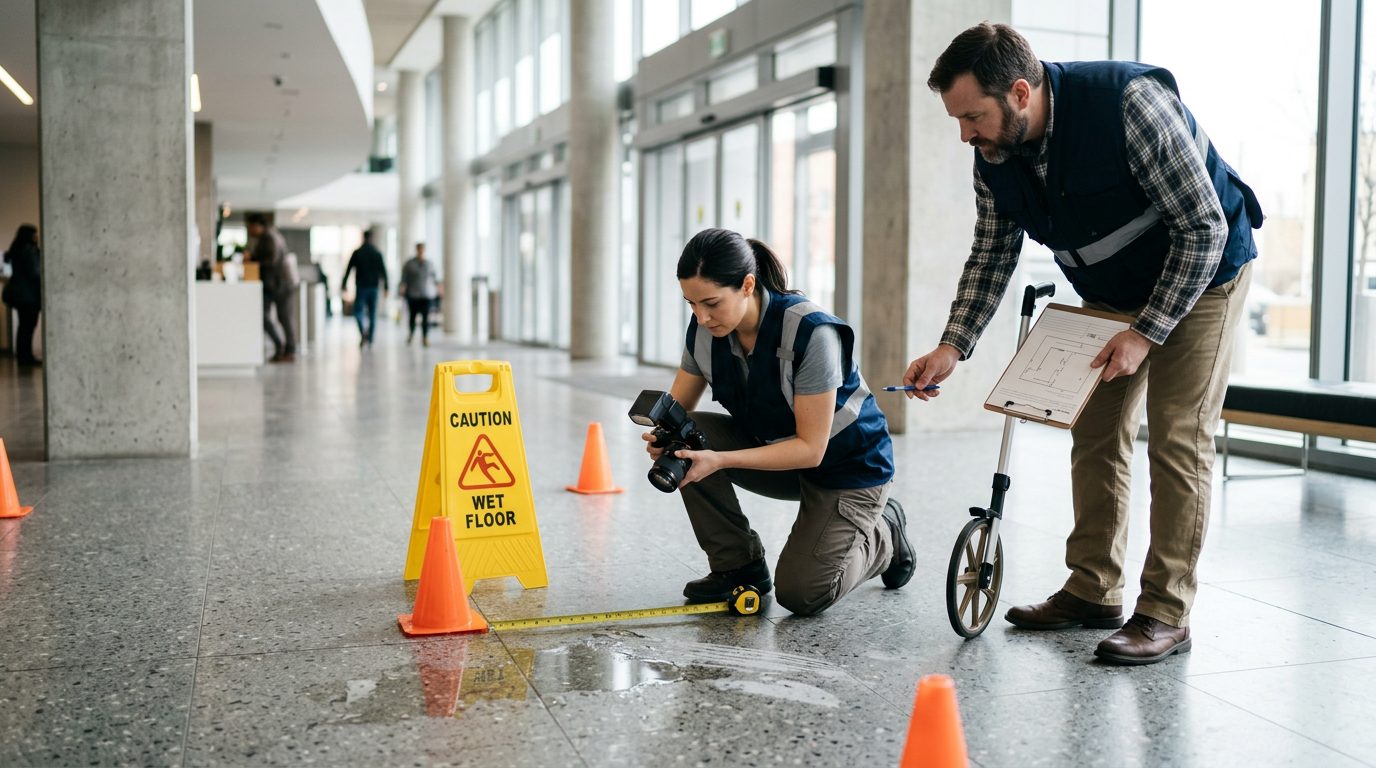
Get medical care, report the fall and document the scene before anything is cleaned or repaired. These steps protect your health and your evidence.
- See a medical provider promptly, even if the injury seems minor. Keep every visit, test result and bill.
- Report the fall to store or property staff. Ask for an incident report and keep a copy.
- Photograph the spot from several angles, along with the hazard, the lighting, your footwear and your clothing. Note the weather.
- Collect witness names and phone numbers. Ask whether security video exists and ask staff to keep it.
- Be careful with the insurer. Share facts, not guesses about fault. Avoid recorded statements and signing papers until you have spoken with a lawyer.
Georgia’s general deadline for personal injury lawsuits is two years. O.C.G.A. § 9-3-33 says actions for injuries to the person must be brought within two years after the right of action accrues, except for actions for injuries to the person involving loss of consortium, which shall be brought within four years after the right of action accrues. Waiting also makes evidence harder to preserve.
How a Parking Lot Claim Moves Forward With Our Firm
Our process starts with a free, confidential initial consultation, which carries no obligation to continue. Here is what usually follows, though the timing depends on the facts of each case.
- Consultation. We review the date, location, hazard, injuries and any reports or photos you have.
- Evidence preservation. We may send letters asking the property to keep video, maintenance logs and incident reports.
- Documentation. We gather medical records, bills, and proof of lost work and daily limits caused by the injury.
- Negotiation. We discuss the claim with the insurer, based on the documented facts and the defenses raised.
- Lawsuit, if needed. If a fair resolution is not reached, we explain the option of filing suit before any decision is made.
Please understand the cost picture. Even though the first consultation is free, the client may still be responsible for court costs and case expenses if the case proceeds. Our lawyers will explain these before any decision.
Not sure what your next step is?
Talk it through with our team — the first consultation is free, confidential, and carries no obligation.
Why Slam Dunk Attorney Handles These Claims
Slam Dunk Attorney is a personal injury firm based in Duluth, Georgia. It serves clients across Atlanta and Georgia, including Lawrenceville, Johns Creek, Alpharetta, Marietta, Norcross, Kennesaw and Dunwoody.
- Lawyers. Peter F. Jaraysi and Brian D. Wright are lawyers at the firm. Our team includes support staff who help clients gather records and keep track of important dates.
- Related matters. The firm handles premises liability, slip and fall, negligent security, catastrophic injuries and wrongful death. A fall that leads to serious injury can be reviewed alongside related claims.
- Clear next steps. Each case starts with the same free, confidential consultation, so you can learn your options before making any decision.
Parking Lot Slip and Fall Questions Answered
Most questions focus on fault, injuries, reporting and deadlines. Here are short answers.
What is a slip, trip and fall?
A slip is losing your footing on a slick surface. A trip is catching your foot on an uneven surface or object. Both can lead to a premises liability claim.
Can I still have a claim if I was partly at fault?
Yes, possibly. Georgia reduces damages by your percentage of fault and bars recovery at 50 percent or more (O.C.G.A. § 51-12-33; Quynn v. Hulsey (2020)).
What injuries are common in parking lot falls?
Falls can cause injuries that look minor at first, including broken bones and head or back injuries. Severe injuries may need a broader review, and our firm also handles catastrophic injuries claims.
Do I need a lawyer to report the fall?
Reporting the fall to the property is your step to take. A lawyer can help you handle the insurer and protect your rights.
How long do I have to file?
Georgia law generally gives two years to bring a personal injury action (O.C.G.A. § 9-3-33; Kenneth B. Cameron v. Jmp Pizza, Inc (2026)). Talk with a lawyer soon, because evidence can disappear quickly.
If you’re caring for someone who was hurt in a lot they never planned to cross, you don’t have to sort out the next steps alone. Reach out to Slam Dunk Attorney in Duluth to discuss the facts in a free, confidential consultation, with no obligation to continue. Contact us here.
Responsible lawyer: Peter F. Jaraysi, Slam Dunk Attorney, Duluth, Georgia. Contact the firm through the contact page linked above.
Don't Wait to Get Checked
Some injuries, including back, neck and head injuries, may not show symptoms until hours or days after a fall. Get medical care promptly, even if you feel you can walk it off, and keep your shoes, clothing and any photos of the spot where you fell.
After a Parking Lot Fall, Consider These Steps
Get Medical Care
Visit a doctor or urgent care right away. A medical record links your injuries to the fall and documents your condition from the start.
Document the Scene
If you can, take photos of the surface, lighting, debris, puddles, potholes or missing signs. Note the time, weather and where you fell.
Identify Witnesses
Write down names and phone numbers of anyone who saw the fall or helped you. Their accounts can matter later.
Keep Your Records
Save receipts, medical bills, work notes and any messages with the property owner or manager. Keep a simple log of how your injuries affect daily life.
Why Talk With Slam Dunk Attorney
Free First Consultation
Your initial consultation is free, confidential and comes with no obligation to continue.
Plain-Language Guidance
We explain premises liability claims in clear terms so you can make informed decisions about your case.
Based in Duluth, Georgia
We represent people injured across metro Atlanta and throughout Georgia, including Lawrenceville, Johns Creek, Alpharetta, Marietta, Norcross, Kennesaw and Dunwoody.
Compassionate Support
A fall can affect your health, work and family. We listen first and focus on what you need.