
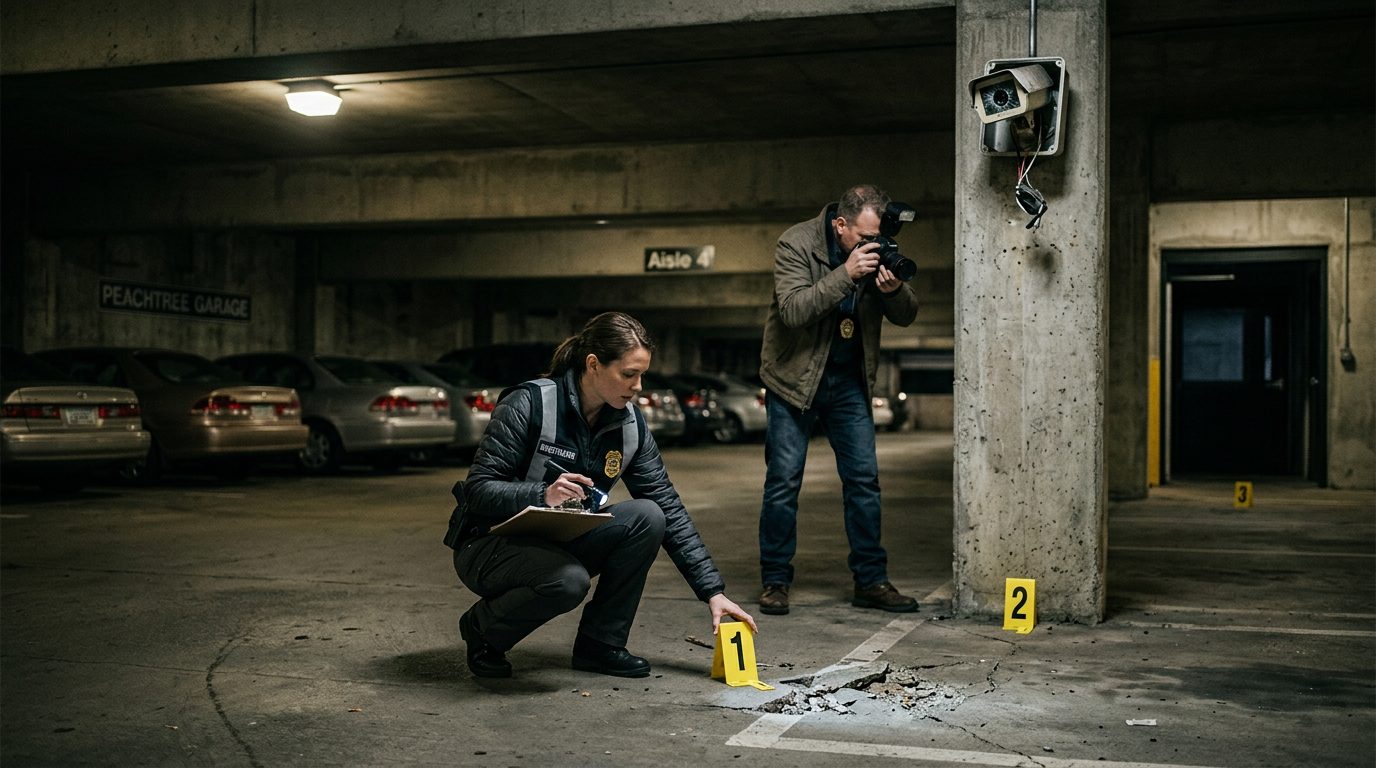
Premises Liability | Duluth, Georgia
Premises Liability vs. General Liability in Georgia: What the Difference Means for You
One is a legal claim for injuries caused by an unsafe property. The other is a type of business insurance. Here is how the two terms differ and why the distinction can matter. Our team at Slam Dunk Attorney is based in Duluth, Georgia, and we offer a free first consultation that is confidential and comes with no obligation to continue.
By Peter F. Jaraysi · Published October 14, 2026
Premises Liability vs General Liability: The Short Answer
Premises liability is a legal claim. General liability is an insurance coverage. The two phrases often appear together, but they describe different things. Premises liability refers to a negligence claim for injuries caused by an unsafe condition on property. General liability refers to a type of business insurance that may respond to certain third-party claims, such as bodily injury or property damage. Whether either one applies depends on the facts and, for insurance, on the policy wording.
Many people run into the term premises liability vs general liability after a fall at a store, an apartment building, or another property. They may be reading an insurance letter or a form they did not expect. This page explains the difference in plain terms.
For a broader overview, see our guide to premises liability in Georgia.
If you are sorting out a fall on someone else's property, we can talk through your situation in a free, confidential consultation with no obligation to continue. Talk it through with our team — the first consultation is free, confidential, and carries no obligation.
What Premises Liability Means in an Injury Claim
Premises liability is a negligence claim about injuries caused by the condition of a property or by a failure to keep it reasonably safe. The claim asks whether the person responsible for the property acted with reasonable care toward people who were on it.
In Georgia, the starting point is O.C.G.A. § 51-3-1, and how it applies depends on the facts of each case, with exceptions possible. That law says an owner or occupier who invites people onto land for a lawful purpose may be liable for injuries caused by a failure to use ordinary care to keep the premises and approaches safe. Whether a duty or breach exists depends on the facts of each case, and exceptions may apply.
A visitor’s status can also matter. Georgia law treats invitees, licensees, and trespassers differently. For example, O.C.G.A. § 51-3-2 generally limits an owner’s liability to a licensee to willful or wanton injury, though exceptions may apply depending on the facts of your case. Your status on the property depends on the facts.
Questions that may come up include who controlled the property, whether the condition was known or should have been known, and why the person was there. These are factors that depend on the facts. Conditions like wet floors, broken stairs, or poor lighting are possible hazards that may be relevant. They do not create liability on their own.
What General Liability Means in Insurance
General liability is an insurance category. It describes coverage a business may carry to pay certain claims made by outside people.
One common business policy is the commercial general liability (CGL) policy. A CGL policy may respond to third-party bodily injury and property damage claims. Its coverage depends on its limits, exclusions, and definitions. No coverage should be assumed without reading the policy.
Insurance categories are not always grouped the same way. Agents, carriers, and policy forms may label coverage differently. That is one reason the phrase “three types of liability insurance” can mean different things in different documents. Check the policy itself rather than relying on a label.
The declarations page lists key details such as the named insured, policy period, and limits. The definitions and exclusions sections explain what the policy covers. These parts decide what applies, and they depend on each policy’s wording.
The key distinction is this. A policy category is a type of insurance. A legal claim is a demand based on a legal duty. The two work together, but they are not the same thing.
How a Premises Injury Claim Can Relate to a General Liability Policy
Here is where the premises liability vs general liability question gets practical. A premises injury claim is made against the owner or occupier of the property. That claim may be presented to the business’s insurer. A general liability policy may be one of the policies involved, depending on the policy terms and the facts.
Other policies may also be involved, depending on who owned, operated, or controlled the property. A policy that applies to one business may not apply to another. The insurer’s coverage decisions depend on the policy language and the facts of the incident.
Hiring a lawyer does not change what a policy covers. This page does not describe how insurers behave or how they will respond to any claim. Those questions depend on the facts and the policy.
If you are unsure which policies may apply to your situation, consult a lawyer about your own case. A lawyer can review the actual documents with you.
Types of Premises Liability Claims
Common premises claims include slip and fall incidents, unsafe property conditions, and negligent security. Each one is a possible claim type. Whether any of them applies depends on the facts.
A slip and fall is an incident. Premises liability is the legal framework that may apply to that incident. The same fall can raise different questions depending on the property, the visitor’s status, and what was known about the hazard.
Negligent security is a specific area of Georgia law. Georgia defines it as a claim for bodily injury or wrongful death that arises from a failure to keep premises safe from the wrongful conduct of third persons, as described in O.C.G.A. § 51-3-50, and how it applies depends on the facts of each case. The statute sets out elements a plaintiff must prove. These include whether the harm was reasonably foreseeable. Whether those elements are met depends on the facts.
For readers dealing with a lodging incident, our page on hotel premises liability covers that setting in more detail.
Types of General Liability Claims
General liability claims generally involve third-party bodily injury or property damage, as described in the policy. The exact scope depends on the policy wording.
A business owner’s policy may describe covered operations differently from one business to the next. That is why general liability is broader than a single property condition. It may cover a range of business activities, not only one hazard.
Premises and operations liability is a term used in insurance guides. It describes coverage tied to a business’s premises and its day-to-day operations. Coverage under this concept depends on the policy.
Review the declarations page and the policy definitions with a licensed insurance agent or a lawyer. Do this before assuming any coverage applies to your situation.
Not sure what your next step is?
Talk it through with our team — the first consultation is free, confidential, and carries no obligation.
Are Premises Liability Cases Hard to Win?
The answer depends on the facts, the available evidence, and the law that applies to the case. No outcome is assured, and this page does not predict how any case will turn out.
A premises claim generally involves several elements. These include a duty, a breach of that duty, causation, and damages. Each element depends on the facts. Exceptions may apply, and the analysis is specific to each case.
Georgia’s comparative fault rule may also affect a claim, depending on the facts of each case, and exceptions may apply (O.C.G.A. § 51-12-33; Quynn v. Hulsey, 310 Ga. 473 (2020)). Please consult a lawyer about your own situation. Under O.C.G.A. § 51-12-33, damages may be reduced in proportion to the injured person’s percentage of fault, and how this applies depends on the facts of your case, with exceptions possible. The statute also says a plaintiff who is 50 percent or more responsible is not entitled to receive damages. How this applies depends on the facts, and exceptions may apply.
A related rule appears in O.C.G.A. § 51-11-7, and how it applies depends on the facts of your case. It addresses whether a plaintiff could have avoided the harm with ordinary care. Whether it applies depends on the facts.
Because these rules depend on the facts, consult a lawyer about your own situation.
Talk Through Your Situation with Slam Dunk Attorney
We know you may be researching this while dealing with a difficult situation. You might be looking into a fall that happened to a family member on someone else’s property. You might also be reading an insurance letter that raised questions you did not expect. Either way, you do not have to sort it out alone.
If you are weighing premises liability vs general liability for your situation, we can talk it through. Slam Dunk Attorney offers a free first consultation that is confidential and comes with no obligation to continue. You can reach out through our contact page to start that conversation.
Whether a claim exists depends on the facts of your case. No outcome is assured, and whether a claim exists depends on the facts of your case.
Attorney advertising. This page is general information, not legal advice, and it does not create an attorney-client relationship. The responsible lawyer is Peter F. Jaraysi of Slam Dunk Attorney in Duluth, Georgia. Contact information is available on our contact page.
Two Terms, Two Different Meanings
Premises liability is a legal claim
It is a negligence claim that may arise when a person is hurt because of an unsafe condition on property, such as a hazard the owner or occupier knew about or should have discovered and addressed.
General liability is an insurance coverage
It is a type of business insurance that may respond to certain third-party claims for bodily injury or property damage, subject to the terms, exclusions and limits of the specific policy.
Coverage depends on the policy
Whether a general liability policy applies to a particular incident depends on the policy language and the facts. Policies differ, so the written terms matter.
The two can overlap
A premises liability claim may involve a property owner's insurance, but the claim and the coverage are separate questions that are evaluated on their own facts.
Important: Do Not Assume Coverage
Whether a claim exists, which party may be responsible, and whether any insurance applies all depend on the facts of your situation and the terms of any policy involved. Exceptions may apply, and general statements about the law are not a substitute for advice about your own case.
Questions Readers Often Ask
Can I bring a premises liability claim against a property owner?
Whether a claim is possible depends on who owned or controlled the property, what condition caused the injury, and what the facts show. Consulting a lawyer about your own situation is the best way to understand your options.
Does a business's general liability policy always pay?
No policy pays every claim. Coverage can depend on the policy's terms, exclusions, limits and how the incident is described. Questions about a specific policy depend on its written language.
Can both concepts apply to the same incident?
They can, because a premises claim may be made against a party whose business carries liability insurance. Whether that happens depends on the facts and the policy in each case.
What should I do with these questions?
Bring your questions to a lawyer. Our team can review the basic facts of your situation during a free first consultation, which is confidential and comes with no obligation to continue.