
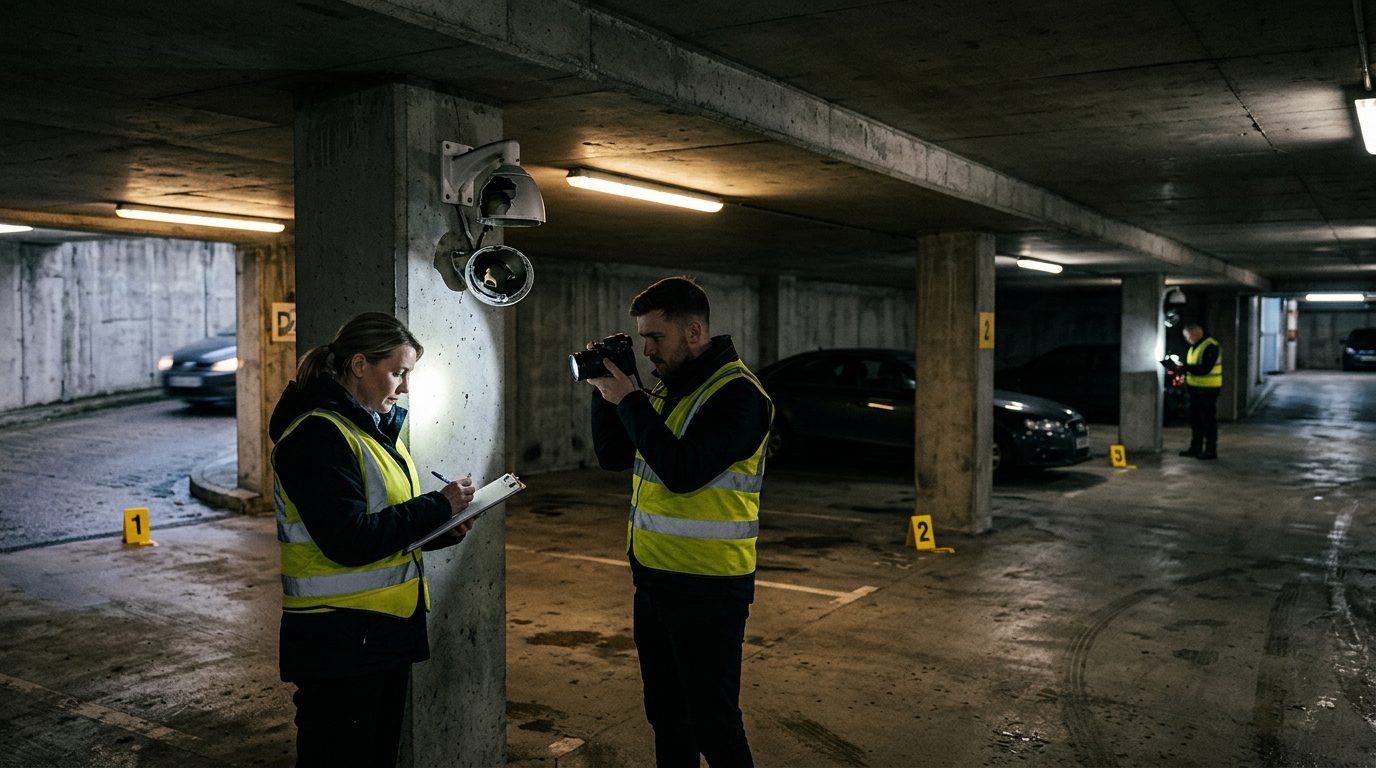
Premises Liability
What Property Owners Need to Know About Liability Insurance Coverage
Understanding what premises liability policies cover—and what they don't—can help you protect yourself if someone is injured on your property.
By Peter F. Jaraysi · Published September 20, 2026
Premises Liability Insurance Coverage: What Property Owners Need to Know
Premises liability insurance covers bodily injury and medical expenses when someone is injured on a property owner’s premises, along with legal defense costs and liability judgments—but it deliberately excludes intentional acts, contractual liability, employees, and certain high-risk situations. Understanding what your policy actually pays for—and what it doesn’t—is essential whether you own a business, rent a commercial space, or are injured on someone else’s property.
This guide walks you through premises liability insurance coverage in Georgia, what’s typically excluded, and what happens when coverage falls short.
If you've been injured on someone else's property in Georgia or you're a property owner navigating a coverage dispute, our team helps people understand their rights when insurance alone doesn't cover the full picture. Talk it through with our team — the first consultation is free, confidential, and carries no obligation.
What Premises Liability Insurance Covers
Premises liability insurance provides protection when someone suffers an injury on the insured property due to the property owner’s negligence or failure to maintain safe conditions.
Core coverage includes bodily injury and medical expenses. If a visitor slips on a wet floor, trips over a loose step, or is bitten by a dog on your property, the policy covers their medical bills, hospital care, and related treatment costs. The insurer also pays legal defense costs if the injured party sues, and it covers any liability judgment or settlement the court awards.
Slip and fall injuries are a primary focus of premises liability policies. These claims represent a significant portion of premises liability claims nationwide. Coverage applies to injuries from wet floors, debris, poor lighting, uneven surfaces, and other fall hazards on the property.
Dog bite liability is typically included as standard coverage or as a separate endorsement. If someone is bitten by a dog on your property, the policy usually covers their medical expenses and any judgment against you—though some insurers limit coverage or require a separate rider (an addition to the policy).
Negligent security claims may be covered, depending on the policy. If someone is injured due to inadequate security measures—such as a mugging in a poorly lit parking lot or an assault in an unsecured building—some policies cover the resulting liability. However, this coverage varies significantly and is often limited or excluded; you’ll need to review your specific policy language.
Legal defense costs are paid separately from the coverage limit. This means the insurer pays your attorney’s fees and court costs in addition to any settlement or judgment, which is a critical distinction when evaluating your actual protection.
Property damage caused by the insured to a third party’s belongings is covered. If you accidentally damage a visitor’s phone, purse, or vehicle on your property, premises liability insurance may cover the cost of repair or replacement.
Typical coverage limits range from $300,000 to $1 million per occurrence for residential properties, and $1 million to $2 million or more for commercial properties. These limits represent the maximum the insurer will pay for a single incident.
Common Exclusions and Gaps in Premises Liability Policies
Premises liability insurance has significant gaps that property owners and injured parties need to understand.
Intentional acts and criminal conduct by the property owner are never covered. If you deliberately injure someone or commit a crime on your property, your insurance will not pay. Similarly, assault or battery committed by you or your employees is excluded.
Contractual liability is excluded. If you signed a contract agreeing to hold another party harmless (meaning you agreed to take responsibility for their injuries), premises liability insurance won’t cover that obligation. This is why businesses often purchase additional contractual liability coverage.
Employees and workers’ compensation claims are excluded. Injuries to your employees are covered under workers’ compensation insurance, not premises liability. This is a critical distinction—if an employee is injured on your property, their claim goes through workers’ comp, not your general liability policy.
Certain high-risk activities and attractions are excluded. If you operate a swimming pool, trampoline, or other inherently dangerous activity on your property, standard premises liability may exclude or severely limit coverage for injuries related to that activity.
Damage to the insured’s own property is not covered. If you damage your own building, equipment, or inventory, premises liability insurance doesn’t pay. Property insurance covers your own property.
Pollution and environmental liability are excluded. If someone is injured due to chemical exposure, mold, or environmental hazards on your property, standard premises liability won’t cover it.
These exclusions create real gaps. A property owner may believe they’re fully protected, only to discover that a specific injury claim falls outside their policy. Injured parties may find that the property owner’s insurance denies their claim based on an exclusion, leaving them to pursue other legal remedies.
Policy Limits: Understanding Your Coverage Amount
Premises liability policies have two types of limits that work together.
Per-occurrence limits cap the maximum paid for a single incident. If your policy has a $1 million per-occurrence limit and someone suffers a catastrophic injury costing $1.5 million in damages, the insurer pays $1 million, and you’re responsible for the remaining $500,000.
Aggregate limits cap the total paid across all claims during the policy period (usually one year). If your policy has a $2 million aggregate limit and you’ve already paid out $1.5 million on one claim, only $500,000 remains available for any future claims that year.
These limits directly affect what an injured party can recover. A person injured on your property can’t recover more than your policy limits from the insurer. If their actual damages exceed your limits, they may pursue you personally for the difference.
Commercial properties typically carry higher limits than residential properties. A retail store or office building might carry $1 million to $5 million in coverage, while a homeowner’s policy might include $100,000 to $300,000 in premises liability coverage. This reflects the higher volume of visitors and greater exposure to injury claims.
Umbrella or excess liability policies provide additional coverage layers. Many commercial property owners purchase umbrella policies that sit above their standard premises liability coverage, providing an extra $1 million to $10 million in protection. This is common for properties with significant visitor traffic or higher injury risk.
When Premises Liability Insurance May Not Be Enough
Serious injuries often exceed policy limits, leaving both property owners and injured parties facing significant gaps.
Catastrophic injuries—spinal cord damage, traumatic brain injury, or permanent disability—can result in damages far exceeding standard policy limits. Medical care, ongoing rehabilitation, lost wages, and pain and suffering can easily reach $2 million, $5 million, or more. A $1 million policy limit leaves a substantial shortfall.
Coverage disputes arise when insurers deny or reduce claims based on policy exclusions. An insurer might argue that an injury falls under an excluded activity, that the property owner’s negligence was intentional rather than accidental, or that the claim doesn’t meet the policy’s definition of a covered loss. When this happens, an injured party may need to challenge the insurer’s decision or pursue the property owner directly.
Negligent maintenance and willful neglect by the property owner may exceed what insurance covers. Georgia law imposes a duty of care on property owners to maintain their premises in a reasonably safe condition. If a property owner knowingly ignores a dangerous condition—such as a broken railing that’s been reported multiple times or a flooded stairwell left unrepaired for weeks—a court may find willful neglect. Some policies exclude or limit coverage for willful acts.
Multiple liable parties complicate coverage coordination. If an injury involves the property owner, a contractor, a security company, and a tenant, each may carry their own insurance. Determining who pays what requires careful analysis of each policy and each party’s degree of fault.
When property owner insurance won’t pay or limits are too low, an injured party may pursue the property owner directly. This means suing for damages beyond what insurance covers, recovering from the property owner’s personal assets, or negotiating a settlement that accounts for the insurance gap.
Georgia Requirements and Standards for Property Owners
Georgia does not mandate premises liability insurance by state law, but that doesn’t mean property owners have no obligations.
Lenders, landlords, and commercial leases often require premises liability insurance as a condition of the loan or lease. A bank may require a business owner to carry $1 million in coverage before approving a commercial mortgage. A property manager may require tenants to carry liability insurance. These contractual requirements are common even though state law doesn’t impose them.
Georgia law imposes a duty of care on property owners to maintain their premises in a reasonably safe condition and to warn visitors of known dangers. This duty exists regardless of whether the property owner carries insurance. If a property owner fails in this duty and someone is injured, they can be held liable even if their insurance denies the claim or limits are insufficient.
Georgia courts view premises liability claims through the lens of reasonableness. Did the property owner know or should they have known about the dangerous condition? Did they take reasonable steps to fix it or warn visitors? These are the questions courts ask when evaluating liability.
It’s critical to understand that insurance limits do not cap a property owner’s legal liability. A property owner with a $500,000 policy limit who is found liable for $2 million in damages is personally responsible for the $1.5 million shortfall. Insurance limits only cap what the insurer will pay, not what the property owner owes.
Not sure what your next step is?
Talk it through with our team — the first consultation is free, confidential, and carries no obligation.
What to Do If You’re Injured on Someone Else’s Property
If you’re injured on another person’s property, understanding insurance coverage and your rights is essential.
Gather information about the property owner’s insurance as soon as possible. Ask the property owner or manager for their insurance company name, policy number, and coverage limits. Document the scene with photos, collect witness contact information, and report the incident in writing to the property owner.
Understand your rights when coverage is disputed or insufficient. If the insurer denies your claim or offers a settlement far below your actual damages, you have options. You can challenge the insurer’s decision, file a complaint with the Georgia Department of Public Health, or pursue a claim directly against the property owner.
Seek legal guidance if the property owner’s insurance won’t pay or limits are too low. When insurance alone won’t cover your medical bills, lost wages, and other damages, an attorney can help you understand whether you can pursue the property owner directly, negotiate with the insurer, or pursue other liable parties.
An attorney can help navigate coverage disputes and pursue additional recovery. If the insurer is wrongfully denying your claim, an attorney can challenge that decision. If the property owner is underinsured, an attorney can help you pursue a claim for the full extent of your damages, including recovery from the property owner’s personal assets if necessary.
FAQ
Does premises liability insurance cover dog bites in Georgia?
Dog bite liability is typically included in premises liability policies as standard coverage or as a separate endorsement, though coverage limits and exclusions vary by insurer and policy terms.
What is not covered by premises liability insurance?
Premises liability insurance excludes intentional acts by the property owner, contractual liability, employees (covered under workers’ comp), assault or battery by employees, pollution, and damage to the insured’s own property.
What happens if an injury on a property exceeds the insurance policy limit?
If damages exceed the policy limit, the property owner is personally responsible for the difference; the injured party may pursue the property owner directly for recovery beyond what insurance covers.
Does Georgia require property owners to carry premises liability insurance?
Georgia does not mandate premises liability insurance by state law, but lenders, landlords, and commercial leases often require it as a condition of financing or occupancy.
Can I recover damages if the property owner’s insurance denies my claim?
Yes; if the insurer wrongfully denies your claim, you can challenge the denial or pursue the property owner directly for damages, regardless of the insurance outcome.
What is the difference between per-occurrence and aggregate limits?
Per-occurrence limits cap the maximum paid for a single incident; aggregate limits cap the total paid across all claims during the policy period.
If you’ve been injured on someone else’s property in Georgia or you’re trying to understand why a property owner’s insurance won’t cover your damages, our team regularly helps people navigate these situations. Reach out for a free case review to discuss your specific circumstances—many people in your situation contact us to understand their options when insurance alone doesn’t provide the protection they need.
What Premises Liability Insurance Typically Covers
Slip and Fall Injuries
Coverage usually applies when someone is injured due to unsafe conditions on your property—like wet floors, broken stairs, or poor lighting—provided you were negligent in maintaining the premises.
Dog Bite Liability
Dog bite liability is typically included in premises liability policies as standard coverage or as a separate endorsement, though coverage limits and exclusions vary by insurer and policy terms.
Negligent Security Claims
Some policies extend to injuries resulting from inadequate security measures, such as insufficient lighting in parking areas or lack of security personnel where reasonably expected.
Medical Expenses and Legal Defense
Coverage generally includes the injured person's medical bills, lost wages, and your legal defense costs if a claim is filed against you.
Common Coverage Gaps
Premises liability insurance excludes intentional acts, injuries to people living on the property, and certain high-risk activities. Your policy may also have exclusions for specific hazards or business operations. Review your policy carefully with your insurer to understand what is and isn't covered in your situation.
When Coverage Disputes Arise
Coverage Denials
Insurers sometimes deny claims based on policy exclusions or arguments that the property owner was not negligent. Understanding your rights is critical.
Policy Interpretation
Insurance language can be complex. Disputes often center on whether a specific injury or incident falls within the policy's scope of coverage.
Underinsurance
If the injured person's damages exceed your policy limits, you may face personal liability. Knowing your coverage limits helps you plan accordingly.
If Someone Is Injured on Your Property
If you're facing a premises liability claim or your insurer has denied coverage, don't navigate it alone. The sooner you understand your obligations and options, the better you can protect yourself.
Questions About Your Coverage or a Premises Liability Claim?
Related practice areas
- Pedestrian Hit by Car Atlanta | Legal Rights & Compensation