
Negligent Security | Georgia
Property Owners Have a Duty to Protect You from Crime
If inadequate security at an apartment, business, or other property led to your injury, the owner may be liable. Slam Dunk Attorney represents victims across metro Atlanta and Georgia.
By Peter F. Jaraysi · Published September 28, 2026
What Is Security Negligence at Residential Properties in Georgia?
Residential security negligence occurs when a property owner or manager fails to provide reasonable security measures, and that failure allows foreseeable harm to reach a resident or visitor. Under Georgia law, property owners have a legal duty to exercise reasonable care in maintaining their premises and protecting people on the property from harm they could have foreseen and prevented. When a property owner breaches that duty—by ignoring broken locks, failing to repair security systems, or neglecting to respond to known threats—and someone is injured as a result, the owner may be held liable.
This principle applies to apartments, rental homes, condos, townhomes, and other residential complexes. It covers both active failures (a security system that stops working) and passive ones (no locks, no lighting, or no access controls in the first place). Understanding what residential security negligence means can help you determine whether the property where you were injured may bear responsibility for what happened.
Not sure what your next step is?
Talk it through with our team — the first consultation is free, confidential, and carries no obligation.
What Duties Do Residential Property Owners Have Under Georgia Law?
Georgia law imposes on property owners a duty to exercise reasonable care in maintaining safe premises and protecting residents from foreseeable harm. This is not an absolute duty to prevent all crime—it is a duty to be reasonable given the circumstances and the neighborhood.
Specifically, property owners and managers must:
- Provide adequate locks and access controls appropriate to the property type and neighborhood risk level.
- Maintain working lighting in parking areas, hallways, entryways, and other common spaces where residents and visitors spend time.
- Respond to known security threats or prior criminal activity by taking steps to prevent similar incidents.
- Keep security systems and equipment in working order, including gates, intercoms, cameras, and alarm systems.
- Screen and supervise security personnel if the property employs guards or monitors.
- Address resident complaints about security concerns in a timely manner.
These duties are not one-size-fits-all. A property owner in a high-crime area may have a stronger duty to invest in enhanced security than an owner in a low-crime neighborhood. Courts consider what is “reasonable” based on the property’s location, size, prior incidents, and industry standards for similar properties.
Common Examples of Residential Security Negligence
In the negligent security cases our attorneys handle, we often see patterns of preventable failures. These include:
- Broken or missing locks on entry doors, windows, or gates that should control access to the building or units.
- Inadequate or non-functional lighting in parking lots, stairwells, hallways, and entryways where crimes commonly occur.
- Failure to repair or replace broken security gates, intercoms, or card-access systems that would otherwise restrict entry to authorized residents.
- No security cameras or monitoring in areas where prior crimes have taken place.
- Ignoring resident complaints about security concerns before an incident occurs.
- Lack of security personnel or regular patrols in complexes with a history of criminal activity.
- Failure to restrict key or access card distribution to only authorized residents and staff.
- Negligent hiring or inadequate supervision of security staff, allowing unqualified or dangerous individuals to guard the property.
Any of these failures can create an opportunity for a criminal to enter the property, target a resident, and cause harm that reasonable security measures might have prevented.
What Injuries or Incidents May Involve Residential Security Negligence?
Residential security negligence claims arise from a wide range of criminal acts and injuries:
- Assault or battery by an intruder who gained access due to broken locks or missing security features.
- Robbery or theft enabled by poor lighting, lack of surveillance, or unsecured common areas.
- Sexual assault or harassment by someone who should have been prevented from entering the building.
- Injury from a known or repeat offender the property owner failed to address after prior incidents.
- Harm to children or vulnerable residents due to unsecured common areas or negligent supervision.
- Wrongful death resulting from a crime that reasonable security measures might have prevented.
The key is that the injury must have resulted from a foreseeable risk—one the property owner knew or should have known about—and that reasonable security could have reduced or prevented it.
How Is Negligence Proven in a Residential Security Case?
To establish that a property owner is liable for security negligence, four elements must be proven:
- The owner owed a duty of reasonable care to the resident or visitor who was harmed.
- The owner breached that duty by failing to provide adequate security measures.
- The breach caused the harm that occurred (the injury would not have happened but for the security failure).
- The resident or visitor suffered actual injury or loss (physical injury, emotional distress, medical bills, lost wages, or other damages).
Georgia courts also examine whether the harm was foreseeable. This is where prior crimes and the property’s history become critical. If a residential complex has experienced break-ins, assaults, or robberies, the owner is on notice that security is inadequate. Failure to improve security after a known incident strengthens a negligence claim significantly. Even if no crime has occurred at that specific property, a complex in a high-crime area may be expected to maintain enhanced security measures.
Evidence in these cases may include:
- Prior police reports of crimes on the property.
- Written complaints from residents about security concerns.
- Security audits or inspections showing deficiencies.
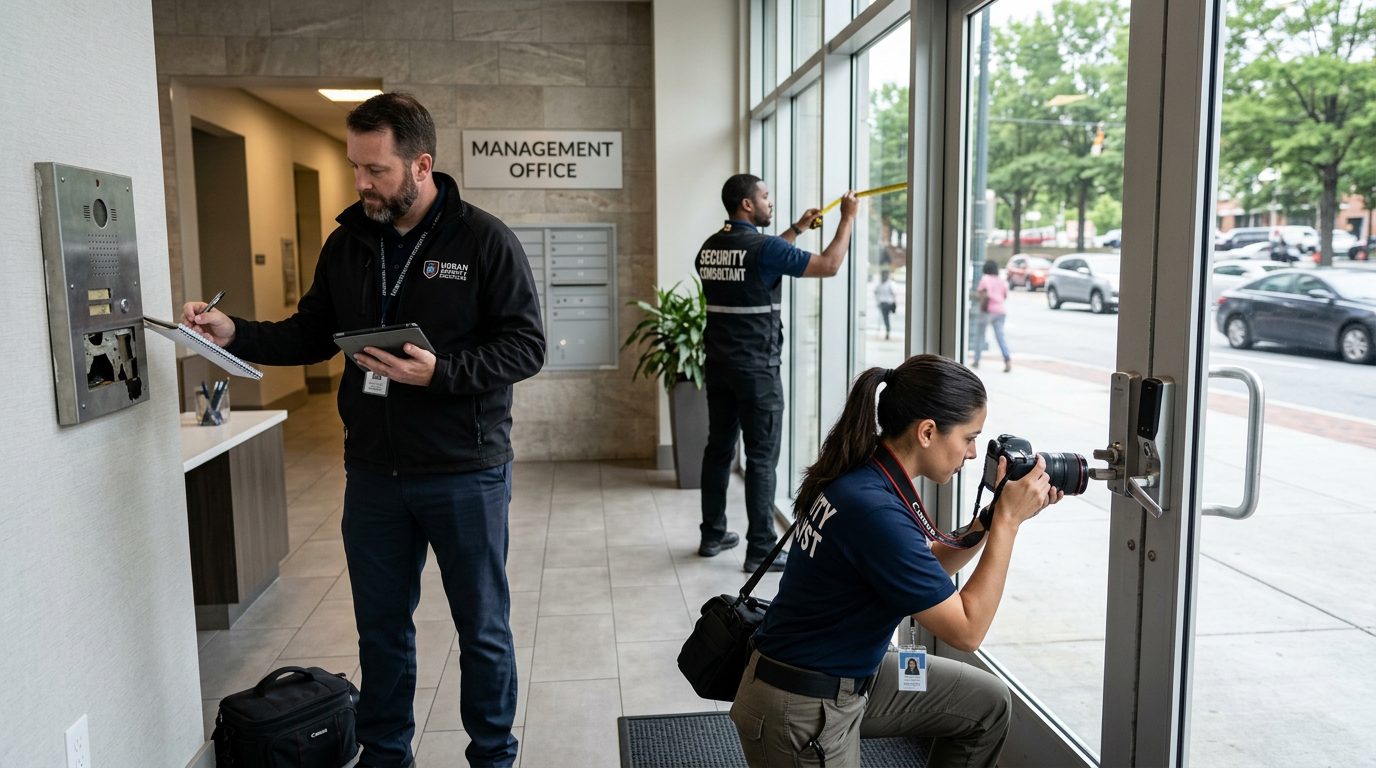
- Photos or documentation of broken locks, non-functional lighting, or failed systems.
- Witness statements from other residents or visitors.
- Industry standards for security in similar properties and neighborhoods.
Foreseeability: Why Prior Crimes Matter
Foreseeability is the linchpin of residential security negligence law in Georgia. Property owners have a heightened duty to provide adequate security if prior crimes have occurred on the property. A break-in, assault, or robbery signals to the owner that the current security is insufficient.
When a property owner receives notice of a security problem—through a resident’s complaint, a police report, or a prior incident—and fails to respond, they are essentially admitting that they knew the risk existed. Courts view this as a strong indicator of negligence. The owner had the opportunity to prevent harm and chose not to act.
Even in the absence of a prior crime at that exact location, a property in a demonstrably high-crime area may require more robust security than one in a safer neighborhood. The question is always: what would a reasonable property owner do in this location, given what is known about crime in the area?
Not sure what your next step is?
Talk it through with our team — the first consultation is free, confidential, and carries no obligation.
Defenses Property Owners May Raise
Property owners and their insurers often assert defenses to avoid liability, even when negligence is apparent. Common defenses include:
- Lack of foreseeability: claiming the harm was not predictable given the property’s location and history.
- Compliance with code or standards: arguing that the security measures met local building codes or industry standards.
- Third-party criminal act: asserting that because a criminal—not the property owner—committed the act, the owner bears no responsibility.
- Resident or visitor negligence: claiming the injured person contributed to their own harm.
- Lack of notice: claiming the owner was unaware of prior security problems.
These defenses do not eliminate liability if negligence is proven. They are commonly asserted, but they often fail when evidence shows the owner knew or should have known of the risk and failed to act reasonably.
What Should You Do If You’ve Been Injured Due to Security Negligence?
If you’ve been harmed at a residential property due to inadequate security, taking the right steps immediately can preserve your claim and protect your rights:
- Seek medical attention and document all injuries with photographs, medical records, and bills.
- Report the incident to the property manager or owner in writing, and keep a copy for your records.
- Gather evidence: photograph broken locks, non-functional lighting, or security system failures; collect witness statements; obtain copies of any prior police reports of crimes on the property.
- Keep records of any complaints you or other residents made about security before the incident.
- Do not sign any settlement, release, or waiver without legal advice.
- Consult with an attorney who handles negligent security claims in Georgia as soon as possible.
Time is important. Evidence can disappear, witnesses’ memories fade, and there are legal deadlines for filing claims.
Time Limits for Filing a Claim in Georgia
Georgia law imposes a statute of limitations that restricts the time you have to file a negligent security claim. The deadline depends on the type of claim and when the injury occurred. Waiting too long can result in losing your right to pursue compensation entirely, even if you have a strong case.
Acting promptly and seeking legal guidance early is essential. An attorney can advise you on the specific deadline that applies to your situation and ensure your claim is filed within the required timeframe.
Frequently Asked Questions
Can a property owner be liable for a crime committed by a third party?
Yes. Even though the criminal committed the act, the property owner can be held liable if they failed to provide reasonable security that might have prevented the crime or the criminal’s access to the property.
What counts as “reasonable” security for an apartment complex?
Reasonableness depends on the property’s location, size, prior incidents, and industry standards. A complex in a high-crime area with a history of break-ins may need more robust security than one in a safer neighborhood.
How do I prove that the property owner knew about a security problem?
Evidence includes prior police reports of crimes on the property, written complaints from residents, security audits, and testimony from other residents or staff members who reported concerns to management.
What if the property owner says they met the building code?
Meeting the building code is not a complete defense. Courts ask whether the owner’s security measures were reasonable given the specific property’s circumstances and history, not just whether they complied with minimum legal requirements.
How long do I have to file a claim?
Georgia’s statute of limitations varies depending on the type of claim. It is critical to consult with an attorney promptly to determine your deadline and preserve your rights.
If you’ve been hurt in an assault, robbery, or other crime at an apartment or residential complex where security was inadequate or missing, reach out to discuss what may have happened and whether the property owner bears responsibility. People in your situation contact us regularly to explore their options and understand their rights.
Know Your Rights
Property owners are not automatically liable for crimes committed by third parties. However, Georgia law recognizes that owners can be held responsible if they failed to provide reasonable security measures that might have prevented the crime or the criminal's access to the property.
When Can a Property Owner Be Held Liable?
Inadequate Locks or Access Controls
Broken locks, missing security doors, or unrestricted entry points that allowed an intruder to access common areas or your unit.
Lack of Lighting or Surveillance
Poorly lit parking lots, stairwells, or walkways, or the absence of security cameras in areas where crimes commonly occur.
No Security Personnel
Properties in high-crime areas that failed to employ security guards or monitor the premises, particularly after prior incidents.
Failure to Warn or Respond
The property owner knew of prior crimes or dangerous conditions but did not warn residents or take steps to improve security.
Why Choose Slam Dunk Attorney
Focused on Your Case
We focus exclusively on personal injury claims, including negligent security cases across Georgia. We understand the law and your rights.
We Listen and Advocate
We treat you with respect and empathy. Your injury matters, and we work to hold property owners accountable for their negligence.
Clear Fee Structure
We work on a contingency basis: no fees unless there is a recovery. You may still owe certain case costs. We explain everything upfront.
Serving Metro Atlanta and Georgia
Based in Duluth, Georgia, we represent clients throughout the Atlanta area and across the state in negligent security and premises liability claims.
Common Questions About Negligent Security Claims
What counts as 'reasonable' security?
Reasonableness depends on the property type, location, prior crime history, and industry standards. An apartment complex in a high-crime area may need more robust security than a suburban office building. We evaluate your specific situation.
Do I need to prove the owner knew a crime would happen?
No. You must show the owner knew (or should have known) of prior similar crimes or dangerous conditions, and that better security could have prevented your injury.
What if I was partially at fault?
Georgia law allows recovery even if you are partially responsible, as long as you are less than 50% at fault, with your damages reduced by your share of fault. We investigate all facts to build the strongest claim.
How long do I have to file a claim?
Time limits apply to negligent security claims. Contact us right away so we can review your case and protect your rights.
You Don't Have to Face This Alone
Related practice areas
- Nursing Home Abuse Damages in Georgia: What You May Recover