
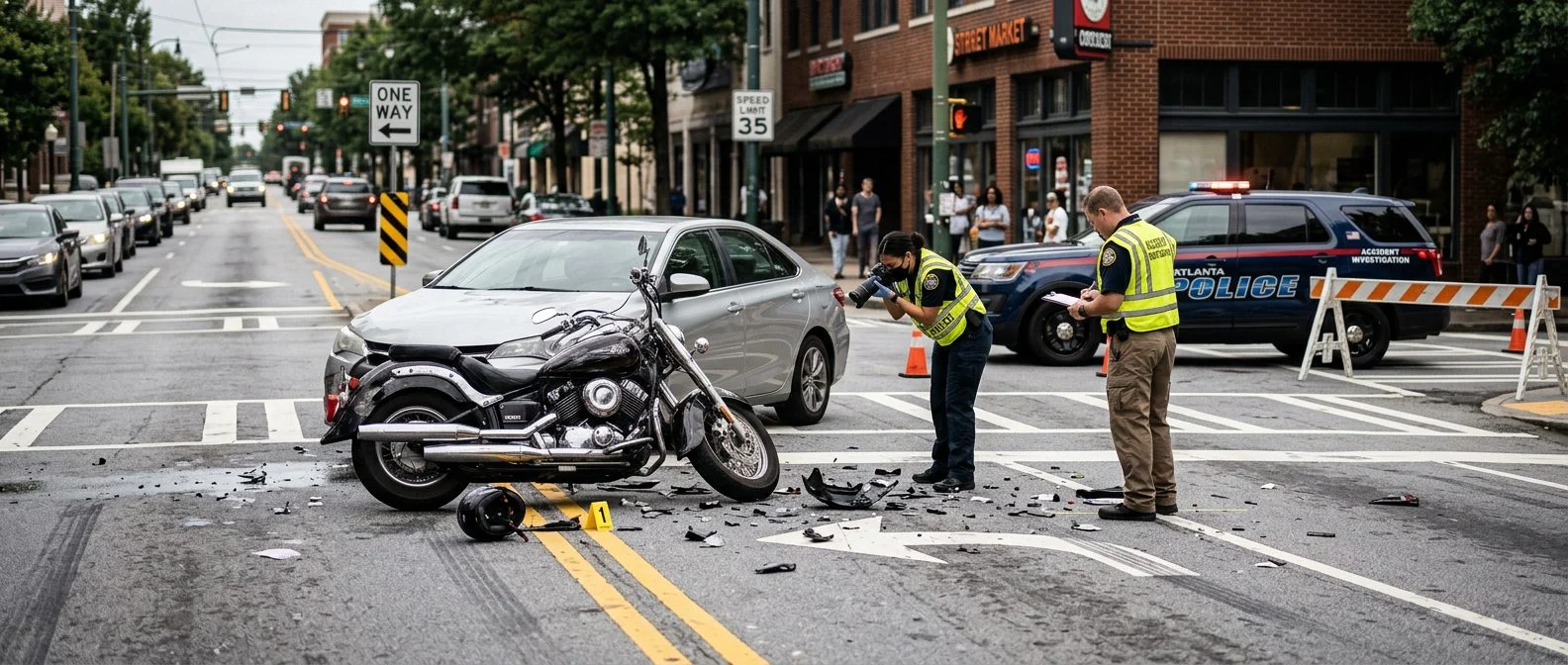
Motorcycle Accidents & Road Hazards
When a Bad Road Causes a Motorcycle Crash
Potholes, debris, and poor maintenance can injure riders. We help injured motorcyclists in Georgia understand their options.
By Peter F. Jaraysi · Published September 25, 2026
Road Hazards & Motorcycle Accidents: Georgia Liability Claims
When a pothole, debris field, oil slick, or other road defect causes a motorcycle to crash, someone may be responsible for the rider’s injuries. Road hazards create liability in Georgia when a property owner, municipality, contractor, or business failed to maintain a safe surface—and a rider’s smaller tire contact patch and lighter weight make motorcycles far more vulnerable than cars to conditions that might barely affect four-wheeled traffic.
This guide explains how road hazards cause motorcycle accidents, who may be liable under Georgia law, what evidence matters, and what steps to take after a crash.
If a road condition caused or contributed to your motorcycle crash, you may have a claim against the municipality, a property owner, or a contractor—and understanding your options starts with talking through what happened. Talk it through with our team — the first consultation is free, confidential, and carries no obligation.
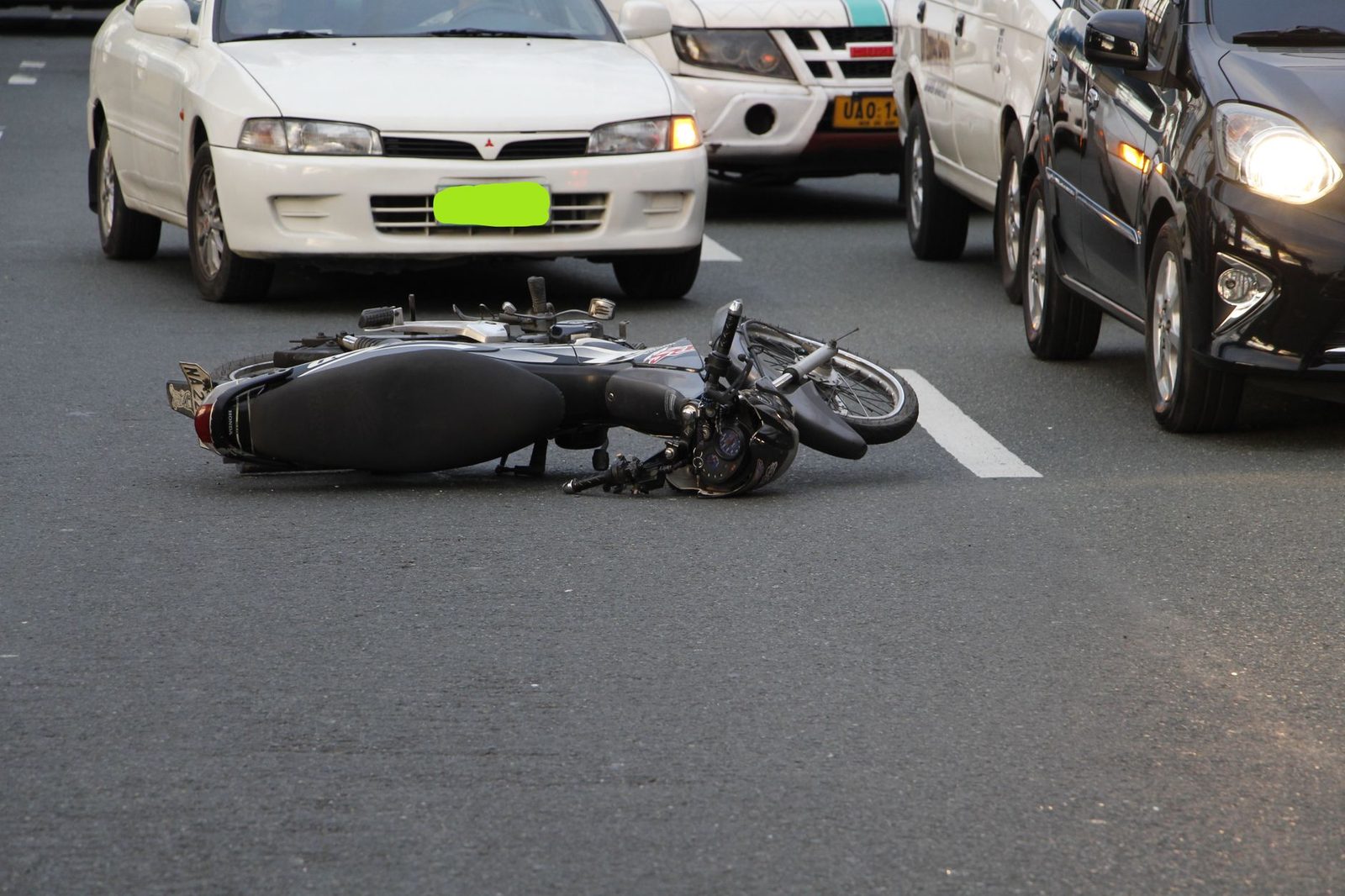
How Road Hazards Cause Motorcycle Accidents
Motorcycles are far more vulnerable to road hazards than cars because they have a smaller tire contact patch, less weight, and far less stability on compromised surfaces. A pothole that a sedan might roll over can throw a motorcycle rider into a loss of traction or control. Loose gravel, standing water, or an oil slick that a car navigates safely can cause a rider’s wheels to slip, slide, or lock up—often with no safe way to recover.
Common road hazards that cause motorcycle crashes include:
- Potholes and pavement failures – Broken asphalt, sunken sections, and crumbling edges
- Debris – Metal shards, glass, wood, rocks, or other objects scattered across the road
- Loose gravel or sand – Especially on shoulders, at intersections, or near construction zones
- Standing water and hydroplaning conditions – Pooled water that reduces tire grip
- Oil or chemical spills – Slippery surfaces left by vehicles or industrial operations
- Missing or damaged manhole covers – Holes or uneven metal grates that catch tires
- Railroad crossings in poor condition – Uneven, slick, or broken surfaces at grade crossings
Unlike a car driver who can often brake or swerve around these hazards, a motorcycle rider has limited ability to maneuver safely on a degraded surface. The rider’s weight, lean angle, and tire grip are all at the edge of physics—and a road defect can push that balance past the breaking point in an instant.
Who Can Be Liable for Road Hazards
Multiple parties may bear responsibility for a road hazard motorcycle accident in Georgia.
Municipalities and government entities have a duty to keep public roads in reasonably safe condition. Cities, counties, and the Georgia Department of Transportation (GDOT) are expected to repair potholes, clear debris, and maintain pavement. However, claims against government entities are subject to strict procedural requirements and notice deadlines that differ sharply from claims against private parties.
Property owners adjoining a roadway are liable if their property created or contributed to a hazard—for example, if a business’s poor drainage caused water to pool on an adjacent road, or if a property owner failed to prevent gravel or debris from spilling onto a public street.
Contractors hired to repair or maintain roads may be liable if their work created a hazard or if they failed to complete work safely. This includes contractors who left debris, failed to post warnings, or created uneven surfaces during repairs.
Private businesses whose operations created a road hazard—such as a fuel or chemical spill, or a delivery vehicle that dropped cargo—may also be responsible.
Georgia’s Legal Standard for Road Hazard Liability
Georgia applies a negligence framework to road hazard claims. A defendant is liable if:
- They owed a duty to maintain the road or prevent the hazard.
- They breached that duty by failing to repair, inspect, or warn of the condition.
- The breach caused injury to the rider.
- The rider suffered damages (medical bills, lost wages, pain and suffering).
The duty to maintain is clear for municipalities: they must keep public roads reasonably safe. For private property owners, the duty exists if the hazard poses a foreseeable risk to riders—meaning the owner knew or should have known the condition was dangerous.
Notice is often critical. Georgia law typically requires that the defendant knew or should have known of the hazard. Evidence of prior complaints, repeated damage, visible deterioration, or a pattern of accidents at the same location can establish notice. Public records requests can reveal maintenance logs, complaint histories, and inspection reports.
Georgia is a comparative negligence state. If a rider is found partially at fault—for example, because they were speeding, not paying attention, or rode recklessly despite a visible hazard—recovery may be reduced proportionally. If you are found 50% or more at fault, you cannot recover under Georgia law.
Evidence That Matters in Road Hazard Claims
Strong evidence is essential in road hazard claims. Here’s what matters:
Photographs and video taken soon after the accident are invaluable. Document the hazard itself (size, depth, visibility), surrounding road conditions, lighting, weather, and any warning signs (or lack thereof). Photos from multiple angles and distances help establish how obvious or hidden the hazard was.
Accident scene documentation includes the police report, witness statements, and your own account of what happened. The police report is especially important because it creates an official record of the road condition.
Road maintenance records obtained through public records requests can show whether the municipality or owner knew of the hazard, how long it existed, prior complaints, or deferred maintenance. These records are powerful evidence of notice.
Expert inspection by an accident reconstructionist or civil engineer can assess whether the road condition was unreasonably dangerous and whether it caused the loss of control. Experts can also testify about how motorcycles differ from cars in their vulnerability to road defects.
Medical records documenting your injuries link them directly to the accident and the road hazard. Comprehensive medical documentation strengthens your claim.
Prior incidents at the same location—other accidents, complaints, or damage reports—show that the hazard was foreseeable and that the defendant should have acted.
Challenges in Road Hazard Motorcycle Claims
Road hazard claims face several common defenses.
Defendants may argue assumption of risk—that riders assume the risk of road conditions. Georgia courts reject blanket assumptions of risk, but they do consider whether the hazard was obvious or avoidable. A rider who spots a pothole and swerves into it anyway may face a harder case than one who encountered an unexpected or hidden hazard.
Comparative fault is a real risk. If you were speeding, distracted, or rode recklessly, the defendant will argue you share responsibility. Georgia courts will weigh your actions against the road condition.
Government immunity limits claims against municipalities. Georgia law allows claims against government entities, but they must meet strict procedural and substantive requirements, including notice to the municipality within a specific timeframe. Missing a deadline can bar your claim entirely.
Defendants may dispute causation, arguing that your own actions—braking, swerving, or loss of control—caused the crash, not the road condition itself. This is where expert accident reconstruction becomes critical.
Finally, if the hazard was newly created or hidden, liability may be harder to establish because the defendant may not have had notice.
Not sure what your next step is?
Talk it through with our team — the first consultation is free, confidential, and carries no obligation.
Steps to Take After a Road Hazard Motorcycle Accident
Immediately after a road hazard motorcycle accident, take these steps:
-
Seek medical attention. Prioritize your health and get a full medical evaluation, even if injuries seem minor. Some injuries appear hours or days later.
-
Document the scene. Take photos and video of the road hazard, surrounding area, lighting, weather, and your motorcycle’s damage. Do this before the road is repaired or cleaned up.
-
Report to police. File an accident report and ask the officer to document the road condition in the report.
-
Gather witness information. Collect names and contact details from anyone who saw the accident or the hazard.
-
Preserve evidence. Do not allow the road to be repaired or cleaned up before it can be inspected. Notify the relevant municipality or property owner in writing that you are preserving your claim.
-
Keep records. Save all medical bills, repair estimates, photos, correspondence, and the police report.
Why Road Hazard Claims Are Complex
Road hazard motorcycle accident claims in Georgia are complex for several reasons.
Multiple defendants may be involved. You may pursue claims against the municipality, a contractor, a property owner, or a combination. Determining who is responsible requires careful investigation.
Procedural requirements for government entities differ from those for private parties. Claims against municipalities have strict notice and filing deadlines. Missing a deadline can bar your claim entirely.
Causation and fault require careful proof. You must show that the road hazard—not your own actions—caused the accident. This often requires expert analysis.
Insurance coverage varies. Your own motorcycle insurance, the municipality’s liability policy, a contractor’s coverage, and a property owner’s policy may all be involved. Determining which policies apply affects how the claim is pursued.
Statute of limitations sets time limits for filing suit. Georgia law gives you a limited window to file; missing it bars your claim.
Frequently Asked Questions
What counts as a road hazard in a motorcycle accident claim?
Any condition that creates an unreasonable risk to riders—potholes, debris, loose gravel, oil slicks, uneven pavement, missing manhole covers, or poor drainage—can be a road hazard if the defendant knew or should have known of it.
Can I sue a city or county for a pothole that caused my motorcycle accident?
Yes, but claims against municipalities are subject to strict notice requirements and procedural deadlines under Georgia law. You must notify the municipality within a specific timeframe and meet other requirements; an attorney can help ensure you comply.
How do I prove a road hazard caused my motorcycle crash?
Photographs, the police report, witness statements, medical records, and expert accident reconstruction all help establish that the road condition caused your loss of control.
What is the statute of limitations for a road hazard motorcycle accident in Georgia?
Georgia law sets time limits for filing suit; the deadline depends on whether you’re suing a government entity or a private party. Missing the deadline bars your claim, so prompt action is critical.
Is comparative negligence a defense in road hazard claims?
Yes. If you were partially at fault—for example, speeding or riding recklessly—your recovery may be reduced proportionally. If you’re found 50% or more at fault, you cannot recover under Georgia law.
If a road condition caused or contributed to your motorcycle crash, you may have a claim against a municipality, property owner, or contractor—and the evidence, deadlines, and legal requirements are strict. Riders in your situation reach out regularly to understand their options and what happens next. Contact us for a free case review to discuss what happened and whether you may have a claim.
Common Road Hazards in Motorcycle Accidents
Potholes & Pavement Damage
Uneven or broken asphalt can destabilize a motorcycle. If a city or county knew or should have known of the hazard, liability may apply.
Debris & Loose Material
Gravel, oil, sand, or fallen objects create dangerous riding conditions. Property owners and road maintenance agencies have a duty to clear or warn of these risks.
Poor Drainage & Standing Water
Pooled water can hide hazards and reduce traction. Inadequate drainage maintenance may establish liability.
Missing or Damaged Infrastructure
Uncovered manhole covers, broken guardrails, or absent signage increase accident risk and may indicate negligence.
Government Immunity Applies—But Exceptions Exist
Cities and counties in Georgia have limited immunity from lawsuits. However, the law recognizes exceptions when a government entity fails to maintain roads or property in a reasonably safe condition, or fails to warn of known hazards. Understanding which exception may apply to your accident requires careful review of the facts and the applicable law.
How We Help After a Road-Hazard Motorcycle Accident
Investigate the Scene
We gather photos, maintenance records, prior complaints, and weather data to document the hazard and establish notice.
Navigate Immunity Rules
We analyze whether an exception to government immunity applies and identify all potentially liable parties—government agencies, contractors, or property owners.
Build Your Claim
We work to establish that the defendant knew or should have known of the hazard, failed to repair or warn, and that failure caused your injuries.
Preserve Evidence Early
Road conditions change and records disappear. Acting promptly helps ensure evidence is preserved and deadlines are met.
Questions About Road-Hazard Motorcycle Claims
What counts as a road hazard?
Any condition that creates an unreasonable risk to riders—potholes, debris, loose gravel, oil slicks, uneven pavement, missing manhole covers, or poor drainage—can be a road hazard if the defendant knew or should have known of it.
Can I sue a city or county for a pothole?
Possibly. Georgia law limits government liability, but exceptions apply when a government entity fails to maintain roads in a reasonably safe condition or fails to warn of known hazards. The specific facts of your accident matter.
What if a private property owner's road caused the crash?
Private property owners have a duty to maintain their roads and property in a reasonably safe condition and to warn of known hazards. Liability may be clearer than with government entities, though the facts must support it.
How do I prove the road hazard caused my accident?
We examine accident scene evidence, your injuries, witness statements, and expert analysis to show the hazard was a substantial factor in the crash and your resulting harm.
About Fees
We handle road-hazard motorcycle accident claims on a contingency basis: no fees unless there is a recovery. You may still be responsible for case costs and expenses, which will be discussed with you upfront.