
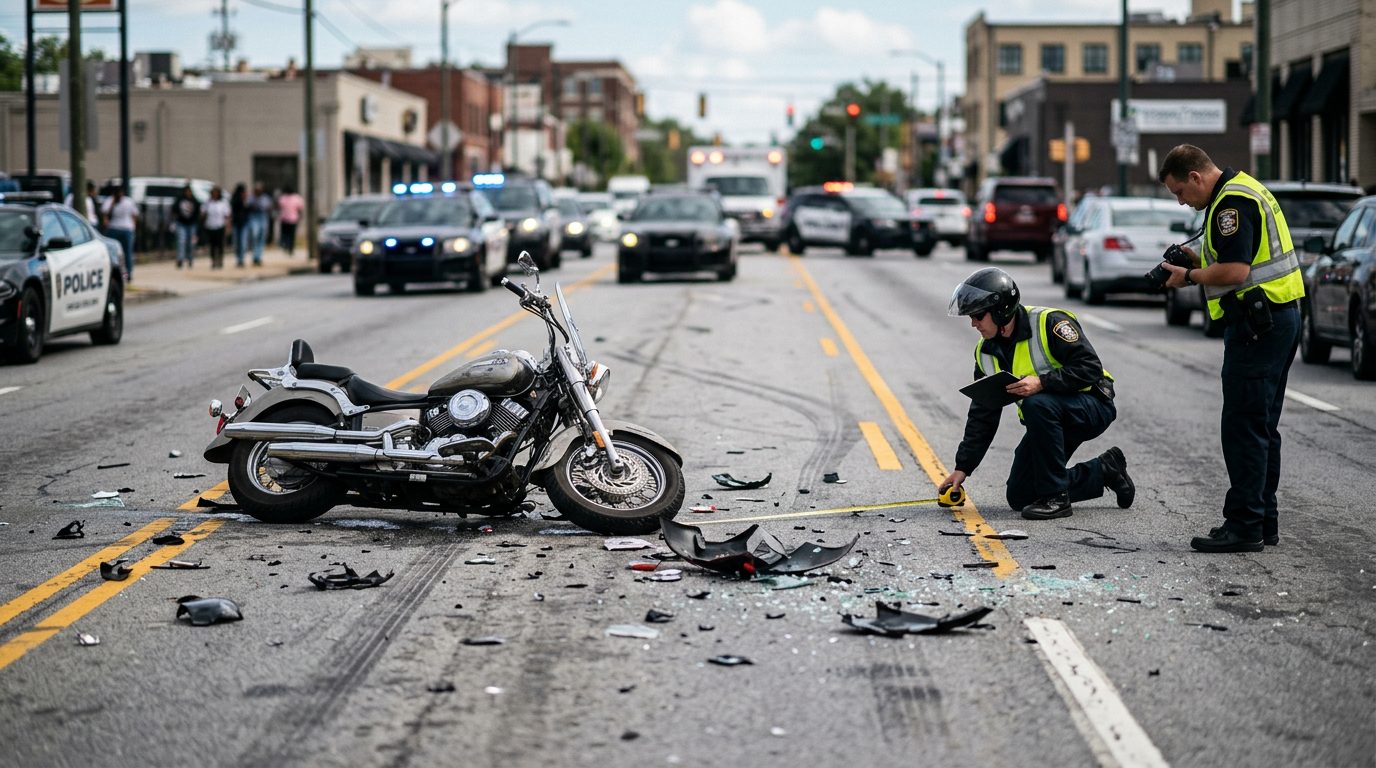
Motorcycle Accident Guide
Protect Your Assets After a Motorcycle Accident in Georgia
You've been hurt. Now protect what matters. Learn what steps to take and how to hold the at-fault party accountable.
By Peter F. Jaraysi · Published September 30, 2026
How to Protect Your Assets After a Motorcycle Accident in Georgia
Your actions in the hours and days after a motorcycle accident directly determine whether you recover fair compensation for your injuries, lost income, and medical costs. Protecting your assets after a motorcycle accident means safeguarding your claim value, your legal rights, and your financial stability during recovery—and it starts immediately.
If you're navigating medical bills, insurance calls, and uncertainty about what comes next after a motorcycle crash, you're not alone—and talking through your situation with someone who handles these cases regularly can clarify your options. Talk it through with our team — the first consultation is free, confidential, and carries no obligation.

Why Asset Protection Matters After a Motorcycle Accident
Motorcycle accidents often result in serious injuries and significant medical expenses. Unlike minor fender-benders, motorcycle collisions frequently cause broken bones, head trauma, spinal injuries, and long-term disabilities. Your immediate choices—what you say, what you document, and how you respond to insurance companies—directly affect your ability to recover damages.
Georgia law gives you specific windows and requirements to act. Missing deadlines or making common mistakes can cost you thousands of dollars. Asset protection isn’t about hiding money; it’s about preserving evidence, maintaining your legal position, and ensuring you receive full compensation for your losses.
Ensure Your Safety and Get Medical Attention Immediately
Move to safety if possible; if you cannot move, stay still and wait for emergency responders. Call 911 even if your injuries seem minor—many motorcycle accident injuries appear hours or days later, and some are life-threatening despite initial appearances.
Get a full medical evaluation at an emergency room or urgent care facility. Document the date, time, facility name, and provider names. Medical records create the legal foundation of your claim by establishing that the accident caused your injuries. Without this documentation, insurance companies will argue your injuries existed before the crash.
Follow all medical advice and attend every follow-up appointment. Gaps in treatment are weaponized by insurance adjusters to argue that your injuries weren’t serious. Consistent medical documentation directly strengthens your claim value.
Call the Police and File an Official Accident Report
Contact law enforcement at the scene or as soon as safely possible. A police report creates an official record of the accident, injuries, and circumstances. Georgia law requires reporting accidents involving injury or significant property damage.
Obtain the report number and the officer’s name and badge number. Request a copy of the full accident report; this document is critical for your insurance claim and any legal action. The police report often includes witness statements, traffic violations, and the officer’s assessment of fault—all of which support your case.
Gather and Preserve Evidence at the Scene
Take photos and video of the accident scene, vehicle damage, road conditions, traffic signals, and weather. Photograph your injuries if visible; document them again over the following days as they evolve. Visual evidence is powerful and difficult for insurance companies to dispute.
Collect names, phone numbers, and addresses from all witnesses. Get the other driver’s name, phone number, address, driver’s license number, vehicle make, model, year, license plate, and insurance information. Note the exact location, date, and time of the accident.
Preserve physical evidence: keep damaged clothing, your helmet, and motorcycle parts. Do not repair or discard them. Insurance companies and attorneys need to inspect these items to understand the force of impact and the severity of the accident.
What Not to Do After a Motorcycle Accident
Do not admit fault or apologize at the scene, even if you think you were partially responsible. Georgia follows comparative fault rules, meaning fault can be shared. Admitting fault at the scene strengthens the other driver’s case against you.
Do not sign anything except for police and emergency responders. Do not post about the accident on social media; insurance companies and opposing counsel monitor these posts. A single photo or comment can be used to minimize your claim.
Do not give a recorded statement to the other driver’s insurance company without legal guidance. Insurance adjusters are trained to ask leading questions designed to reduce payouts. Do not accept a quick settlement offer before you understand the full extent of your injuries. Do not delay reporting the accident to your own insurance company.
Not sure what your next step is?
Talk it through with our team — the first consultation is free, confidential, and carries no obligation.
What Not to Tell Your Insurance Company
Stick to facts: date, time, location, vehicles involved, and what happened—nothing more. Do not speculate about fault or liability. Do not minimize your injuries or say you feel fine if you do not.
Do not agree to a recorded statement without understanding your rights. Do not discuss settlement value or accept an initial offer without consulting an attorney. Insurance adjusters are trained to reduce payouts; your words can be used to limit your claim. Keep your statements brief and factual.
Notify Your Insurance Company Promptly
Report the accident to your own insurance company as soon as possible, typically within 24–48 hours. Provide basic facts: date, time, location, and parties involved. Keep records of all communications: dates, times, names of representatives, and what was discussed.
Your insurance policy may require prompt notice; failure to report can jeopardize coverage and your ability to recover. Cooperate with your insurer’s investigation while protecting your legal rights.
Keep Detailed Records of All Accident-Related Expenses and Recovery
Document all medical treatment: dates, providers, diagnoses, treatments, and costs. Save receipts for medications, medical equipment, and therapy. Track lost wages by obtaining written statements from your employer showing dates missed and income lost.
Record transportation costs to medical appointments. Keep a journal of your pain, limitations, and how the injury affects your daily life. These records form the basis of your damages claim and demonstrate the accident’s financial impact. Insurance companies cannot dispute what you document.
Protect Your Legal Rights and Understand Georgia’s Statute of Limitations
Georgia law gives you two years from the date of the accident to file a personal injury lawsuit. This deadline applies to motorcycle accidents; missing it bars you from recovery entirely. This is not a guideline—it is a hard legal deadline.
Do not assume your insurance claim will resolve everything; some claims require legal action. Early consultation with an attorney preserves your options and protects your timeline. Insurance companies know these deadlines; they may delay settlement discussions to pressure you into accepting less than you deserve.
Under Georgia’s statute of limitations, you have a limited window to act. Acting early protects your rights and strengthens your negotiating position.
How Physical Therapy and Ongoing Treatment Protect Your Claim
Consistent medical treatment demonstrates the seriousness of your injuries. Physical therapy records show your recovery progress and any lasting limitations. Gaps in treatment can be interpreted as evidence that injuries were not severe—even if the gaps occurred because you couldn’t afford treatment or had to work.
Follow your doctor’s recommendations, even if recovery is slow or uncomfortable. Medical documentation of treatment directly supports the value of your claim. Insurance adjusters review treatment records to determine settlement amounts; consistent care signals a legitimate, serious injury.
If you're navigating medical bills, insurance calls, and uncertainty about what comes next after a motorcycle crash, you're not alone—and talking through your situation with someone who handles these cases regularly can clarify your options. Talk it through with our team — the first consultation is free, confidential, and carries no obligation.
Know What You May Be Entitled To Recover
You may recover medical expenses (past, current, and reasonably anticipated future treatment), lost wages (income you lost due to the accident and recovery), pain and suffering (compensation for physical pain and emotional distress), and property damage (repair or replacement of your motorcycle).
If the accident causes lasting effects, you may recover compensation for permanent disability or disfigurement. In wrongful death cases, Georgia law allows recovery by a spouse, children, and parents. Understanding your full entitlement prevents you from accepting an inadequate settlement.
When to Seek Legal Guidance
Serious injuries, significant medical bills, or lost income warrant early legal consultation. If the other driver was uninsured or underinsured, you need to understand your options. If liability is disputed or unclear, an attorney can investigate and protect your rights.
Insurance companies often undervalue claims. An attorney can ensure fair compensation and handle negotiations on your behalf. Georgia law allows you to recover attorney fees in certain cases, so legal representation may not cost you out of pocket.
Frequently Asked Questions
What should I do immediately after a motorcycle accident?
Call 911, move to safety if possible, get medical evaluation, call the police, gather evidence and witness information, and notify your insurance company within 24–48 hours.
How long do I have to file a motorcycle accident claim in Georgia?
You have two years from the date of the accident to file a personal injury lawsuit under Georgia law; missing this deadline bars you from recovery.
Can I recover damages if I was partially at fault?
Yes, Georgia’s comparative fault rule allows recovery even if you were partially responsible, though your recovery is reduced by your percentage of fault.
What if the other driver was uninsured?
If you carry uninsured motorist (UM) coverage, it can help cover your losses; an attorney can review your policy and explain your options.
Does physical therapy increase my settlement?
Consistent physical therapy demonstrates the seriousness of your injuries and supports higher claim value; gaps in treatment can reduce settlement offers.
What should I avoid posting on social media after an accident?
Avoid posting anything about the accident, your injuries, or your recovery; insurance companies monitor social media and use posts to minimize claims.
If you’re navigating medical bills, insurance calls, and uncertainty about what comes next after a motorcycle crash, you’re managing a stressful situation you didn’t choose. Many people in your position reach out to discuss their options and understand what their case may be worth. Contact Slam Dunk Attorney for a free case review—we serve motorcycle accident victims across metro Atlanta and Georgia, and we’re here to help clarify your next steps.
Act Within Georgia's Filing Window
Under Georgia law, you have two years from the date of your motorcycle accident to file a personal injury claim. Waiting too long can cost you your right to recover. The sooner you take action, the sooner evidence can be preserved and your case can move forward.
What to Do Right After Your Accident
Prioritize Safety & Medical Care
Call 911 immediately. Move to a safe location if you can do so without further injury. Get a medical evaluation—even injuries that seem minor can worsen. A medical record created at the scene or shortly after strengthens your claim.
Document the Scene
Gather the other driver's name, phone number, address, insurance information, and vehicle details. Get contact information from any witnesses. Take photos of vehicle damage, road conditions, traffic signals, and your injuries if safe to do so.
Report & Preserve Evidence
Call the police and request a report. Notify your insurance company within 24–48 hours. Keep all medical records, repair estimates, receipts, and communications. Do not post about the accident on social media.
Consult an Attorney Early
Contact us before giving a recorded statement to the other driver's insurer. An early conversation protects your rights and helps ensure nothing you say is used against you later.
Why You Need Legal Representation
Protect Your Rights
Insurance companies work to minimize payouts. We stand between you and pressure tactics, ensuring your claim is handled fairly.
Handle the Paperwork
Accident claims involve complex documentation, deadlines, and legal requirements. We manage it all so you can focus on recovery.
Identify All Damages
We help you understand what you may recover: medical bills, lost wages, pain and suffering, property damage, and more.
Transparent Communication
We explain your options in plain language and keep you informed every step of the way.
Common Questions About Motorcycle Accident Claims
What if I was partially at fault?
Georgia follows a comparative negligence rule. You may still recover damages even if you share some responsibility—though your recovery may be reduced by your percentage of fault.
What damages can I recover?
You may be entitled to compensation for medical expenses, rehabilitation, lost income, property damage, pain and suffering, and other losses caused by the accident.
How much will this cost me?
We work on a contingency basis: no fees unless there is a recovery. You may still owe certain case costs; we'll discuss all fees and expenses upfront.
How long does a claim take?
Every case is different. Some settle quickly; others require negotiation or litigation. We'll give you a realistic timeline based on your specific situation.