
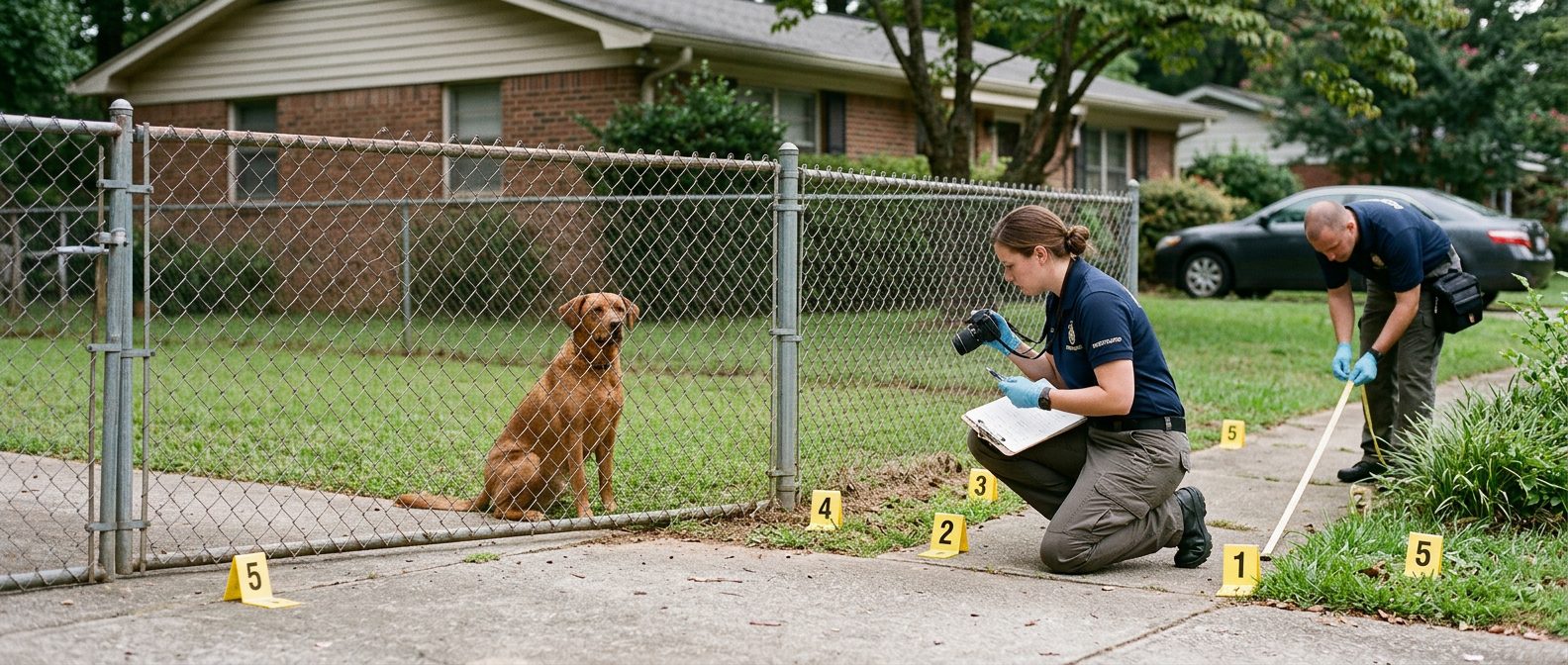
Dog Bites | Duluth, Georgia
Was It a Minor Dog Bite? Here's What to Know About Reporting It
Even a small bite can lead to infection, scarring, or hidden injuries. Learn how reporting works in Georgia, and talk with our team about your next steps.
By Peter F. Jaraysi · Published October 29, 2026
Short Answer: Must a Minor Dog Bite Be Reported in Georgia?
Do I have to report a minor dog bite? In most cases, yes. Questions about how a bite is reported in your county can be directed to local animal control or health department offices.
Reporting exists mainly because of rabies. A bite lets officials find the animal, check its vaccination history, and watch it for signs of illness. A small puncture can still become infected, so a report and medical care often go hand in hand.
Each county runs its own process. Cobb County’s animal services nuisance animals page explains how to report an animal bite. DeKalb County publishes its own animal rules too, so details can differ from one county to the next.
If you’re unsure, start with two steps. Report the bite to local animal control or the county health department, and get medical care. You don’t need every detail to begin. Share the basics and let officials guide the rest.
If a dog bite has you unsure about reporting, a claim, or your child's care, our team is glad to talk it through with you. Talk it through with our team — the first consultation is free, confidential, and carries no obligation.
Who Receives a Dog Bite Report in Georgia?
Bite reports usually go to county animal control or the county health department. Sometimes the doctor or hospital that treats the wound makes the report.
DeKalb County’s animal ordinances and public safety page describes county rules for dangerous or vicious animals. Local rules shape what happens next.
A report usually includes the date and place of the bite. It also includes how to reach the injured person, who owns the dog, and the dog’s vaccination status if known. Officials also want to know where the animal is now.
Worried about a relative or neighbor? If the dog belongs to a family member, friend, or neighbor, the report still goes through the same channels. Many parents ask this when a child is bitten. A report is about tracking the animal and protecting public health.
A report doesn’t automatically mean the dog is taken away. It also doesn’t mean anyone is charged with a crime. What happens next depends on county rules and the dog’s history. For dog complaints beyond a bite, the Georgia Department of Agriculture’s animal complaints page explains where to send them.
The 10-Day Observation Period Explained
This window gives officials time to see whether the dog develops signs of illness.
Keep the dog confined during the window. Follow any written instructions from animal control or the health department. Don’t let the animal roam while officials are watching it.
Don’t assume a small bite skips this step. Ask the county how it handles your bite. Officials can tell you what applies to your situation.
Reporting Is Not the Same as Making an Injury Claim
A bite report tells officials about the animal and the bite. An injury claim is a separate legal process for recovering compensation for medical bills, pain, and other losses.
Georgia sets a deadline for most injury claims. Under O.C.G.A. § 9-3-33, actions for injuries to the person must generally be brought within two years after the right of action accrues, except for actions for injuries to the person involving loss of consortium, which must be brought within four years after the right of action accrues.
Georgia also looks at the owner’s responsibility. Under O.C.G.A. § 51-2-7, a person who owns or keeps a vicious or dangerous animal may be liable if careless management or letting the animal go at liberty causes injury to someone who did not provoke it.
Fault can change the outcome. Under O.C.G.A. § 51-12-33, damages are reduced by the injured person’s share of fault. A plaintiff who is 50 percent or more responsible is not entitled to any damages.
Frequently Asked Questions
Does a dog bite report mean I have a legal claim?
Not by itself. A report notifies officials, while a claim is a separate legal process.
Is there a deadline to file a dog bite claim in Georgia?
Most injury claims must be brought within two years after the right of action accrues, under O.C.G.A. § 9-3-33.
Is the dog owner always liable?
Liability under O.C.G.A. § 51-2-7 depends on facts like careless management and whether the injured person provoked the bite.
Steps to Take After a Minor Dog Bite
After any dog bite, get medical care first. A small puncture or scratch can still become infected, and rabies concerns are time-sensitive. Ask your doctor whether the wound needs follow-up.
Take photos of the wound when it happens and again as it heals. Include the dog and the location in at least one photo.
Get the owner’s name, contact details, and any vaccination information. Write down the names and phone numbers of anyone who saw the bite.
Keep medical records, bills, and copies of any animal control or health department reports. Write a short timeline while the details are fresh. Include the time, the place, what the dog did, and who responded.
How Other States Handle Dog Bite Reporting
This page covers Georgia only. Each state sets its own reporting and observation rules. Ohio, Florida, New York, and Texas each handle bites differently.
If your bite happened outside Georgia, check that state’s rules before you act on anything here. The guidance on this page is about Georgia law and Georgia county practice.
Even inside Georgia, county practice varies. Cobb and DeKalb publish different procedures. A bite in Gwinnett County may follow different local steps than one in Cobb County.
Not sure what your next step is?
Talk it through with our team — the first consultation is free, confidential, and carries no obligation.
Talk With Our Team About Your Dog Bite
If you’re not sure whether a bite needs a report, a claim, or both, you don’t have to sort it out alone. Maybe your child was bitten. Maybe a neighbor’s dog keeps getting loose. A quarantine, a report, and worry about your own losses can all arrive at once.
Our team can talk through your bite, the reporting questions, and the injury side of the situation. Reach out through our contact page. The first consultation is free, confidential, and comes with no obligation to continue.
Disclaimer: This page is general information, not legal advice. The responsible lawyer is Peter F. Jaraysi of Slam Dunk Attorney in Duluth, Georgia. Contact the firm at slamdunkattorney.com/contact-us.
Why Small Bites Still Deserve Attention
Medical care comes first
Puncture wounds and animal bites can become infected quickly. A medical evaluation creates an early record of your injuries.
Records matter
Photos, medical notes, and the bite report can help document what happened if questions come up later.
Reporting protects the community
Reports help local officials track dogs involved in bites and respond to potential public safety risks.
Questions are welcome
Our team can explain how a report and a potential injury claim differ and what information may be useful to gather.
Important: A Report Is Not the Same as a Claim
Filing a bite report notifies officials about an incident. Seek medical care for any bite, even a minor one, and keep your records.
Steps to Take After a Dog Bite
1. Get medical attention
Have the wound checked, even if it seems small. Ask about signs of infection and follow the care plan you are given.
2. Report the bite
Contact local animal control or the appropriate county office to report the bite and the dog's details.
3. Document everything
Take photos of your injuries, save medical bills and visit notes, and write down what happened while the details are fresh.
4. Talk with our team
Our firm offers a free first consultation that is confidential and comes with no obligation to continue. Call to discuss your situation.