
Premises Liability · Duluth, Georgia
Injured at an Apartment Complex? Learn How Injury Lawsuits Work in Georgia
Slip and falls, broken stairs, poor lighting and criminal attacks on residential property can cause serious harm. Slam Dunk Attorney explains the basics in plain language and is ready to review your situation.
By Peter F. Jaraysi · Published November 3, 2026
Can you sue an apartment complex after an injury?
Yes, you may be able to sue an apartment complex if an injury on its property traces back to unsafe conditions or a failure to use reasonable care. The owner, the management company, or another party that controlled the area may be responsible. Whether a claim works turns on how the injury happened, not just on the fact that it happened at an apartment.
Many people asking this question are still recovering. Others are worried about a parent, a roommate, or a child who was hurt in a hallway, parking lot, stairwell, or pool. Feeling unsure about what comes next is normal. You don’t have to decide anything today.
So, what can you sue an apartment complex for? The answer usually comes down to the facts. Did the people in charge of the property take reasonable care to keep it safe? And did that failure cause the harm? This guide covers the parties involved, the proof, and the deadlines that matter in Georgia. For the broader picture of serious injury claims, see our catastrophic injuries guide.
If an injury at an apartment complex has left you or someone you love with hard questions, you don't have to sort out who is responsible alone. Our team can review your facts in a free, confidential first consultation. Talk it through with our team — the first consultation is free, confidential, and carries no obligation.
Who can be named in a claim against an apartment complex?
The right defendants depend on who controlled the area where the injury happened. The property owner or landlord entity is usually the starting point, because it holds title to the property. Ownership alone doesn’t end the analysis, though.
A management company often runs daily operations. It may handle repair requests, tenant notices, and maintenance schedules. A security company hired to patrol or control gates can also be involved if it took on that job. Repair, landscaping, or pool contractors may matter if their work created a hazard or failed to fix one.
Identifying these parties early matters for two reasons. Each one may carry its own insurance, and each may have different responsibilities. That rule applies even if a party was never named in the lawsuit. Looking at every party with a role gives a fuller picture.
What you have to prove: how negligence works in Georgia
Generally, you must show that the complex failed to use ordinary care and that this failure caused your injury. Georgia’s premises duty statute sets that standard for people invited onto property for a lawful purpose. The owner must keep the premises and approaches safe for them.
Ordinary care means the care that ordinarily prudent people use in similar circumstances. The Georgia negligence definition describes the absence of that care as ordinary negligence. Courts ask what a reasonable property manager would have done in the same situation.
Knowledge is often the central question. Did the complex know about the hazard, or would a reasonable inspection have found it? Prior complaints, repair requests, and incident reports can help answer that question.
Georgia also looks at the injured person’s own share of fault. Under the apportionment statute, damages are reduced by the injured person’s percentage of fault (O.C.G.A. § 51-12-33; Quynn v. Hulsey (2020)). A person who is 50 percent or more responsible for the injury recovers nothing. How hard a case is to prove depends on the evidence available. That is one reason an early, free case review can help.
Slip and fall and unsafe conditions in common areas
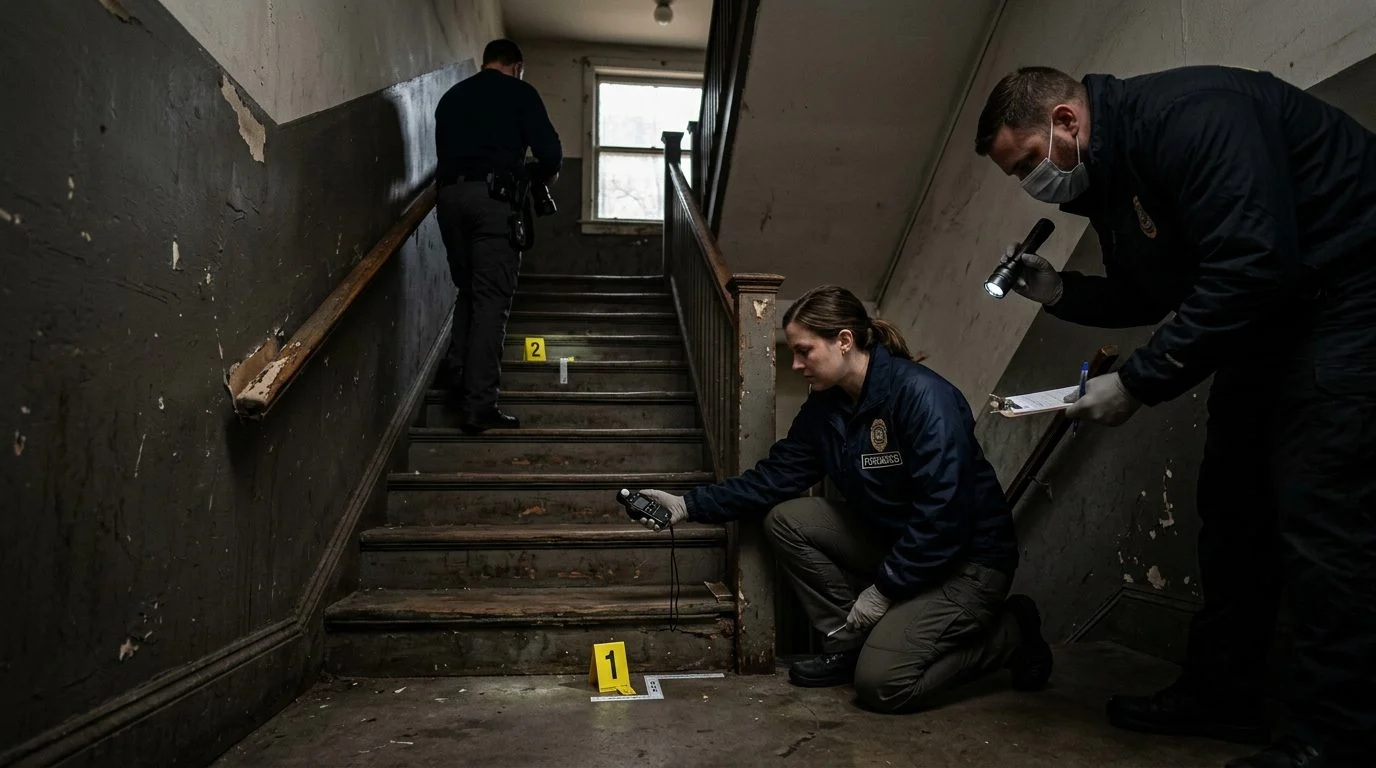
A slip and fall in a common area can support a claim when the complex knew, or should have known, about the hazard and did not fix it or warn people. Many people asking what can you sue an apartment complex for are thinking about a fall on a stair, a walkway, or a parking lot.
Common hazards include wet or icy walkways, broken or missing stair treads, poor lighting in parking lots and stairwells, uneven pavers, and debris left in hallways. Standing water on pool decks belongs on this list too.
Timing matters. A hazard that a routine inspection would have revealed is treated differently from one that appeared with no reasonable chance to fix. A spill that sat for days raises different questions than one cleaned up minutes after the fall. The ordinary care standard guides that analysis.
Evidence helps a great deal. Take photos soon after the fall, and include the spot where you fell. Maintenance logs, work orders, and weather records for that day can matter. Write down the names of anyone who saw the fall. Keep the shoes and clothing you wore, since they can be part of the proof.
Negligent security and assaults on apartment property
Negligent security is a claim that the complex failed to take reasonable steps against crimes it should have expected. Under Georgia’s negligent security statute, an owner or occupier can be liable only if the injured person proves several specific things.
One key element is foreseeability, meaning whether the crime was reasonably predictable. The owner may have had a particularized warning of imminent wrongful conduct. Or the owner reasonably should have known a third person was likely to act that way. Prior similar incidents on the property can matter. So can similar incidents on adjoining property or within 500 yards, if the owner had actual knowledge of them.
The injured person must also show a specific, known physical condition created a much greater risk than the general risk nearby. Examples include a broken gate lock or a dark garage. The owner must have failed to use ordinary care to fix it. That failure must be a proximate cause (the direct legal link) of the injury.
If a security company took on a duty to keep part of the property safe, its liability is limited to the same standards that apply to owners. The attacker’s conduct is central, but it isn’t the only conduct examined.
Dog bites and animal attacks at the complex
A dog bite on apartment property can lead to a claim against the person who owns or keeps the dog. Georgia’s animal liability statute says an owner or keeper may be liable when careless management or letting the animal roam causes injury to someone who did not provoke it.
Proof can be simpler in one situation. If a city, county, or consolidated government leash ordinance required the dog to be on a leash, and it wasn’t, that alone can be enough to show a dangerous propensity.
The complex may become part of the picture too. It might have owned or kept the animal. It might have known a particular dog was dangerous and done nothing. Repeated written complaints about a dog can matter. So can unleashed pets in areas where the complex’s own rules required leashes.
The injured person’s conduct matters as well. A bite that followed the person’s own provoking act is handled differently.
Not sure what your next step is?
Talk it through with our team — the first consultation is free, confidential, and carries no obligation.
Defective conditions, balconies, pools, and repair duties
A defective balcony, railing, gate, or elevator can support a claim when the landlord failed to repair a known problem. Georgia’s landlord repair statute says the landlord shall keep the premises in repair. It also treats any lease for a dwelling as including a promise that the premises is fit for human habitation.
Georgia’s landlord tort statute adds a limit. A landlord that has fully given up possession is generally not responsible to outsiders for damages caused by the tenant’s negligence. That same statute keeps the landlord responsible for defective construction and for failing to keep the premises in repair.
This is where the split between a tenant’s own unit and shared areas matters. Stairwells, pool decks, and elevators often stay under the complex’s control. A unit’s condition can involve both the landlord and the tenant, depending on who had possession and who made changes.
Keep every repair request you sent. That includes texts, emails, and portal messages to management. Those records often show what the complex knew and when it knew it. Note the date you first noticed the defect, too.
Serious injuries, wrongful death, and what damages can include
Serious injuries can lead to claims for medical costs and for long-term effects on work and daily life. A traumatic brain injury can range from mild to catastrophic. It can cause coma, death, and substantial medical needs. Paralysis is a loss of muscle function and can result from catastrophic injuries such as spinal cord injuries.
General damages are those the law presumes to flow from a wrongful act, and they can be recovered without proof of an exact amount. Special damages actually flow from the act and must be proved, as described in Georgia’s damages statute. Medical bills and lost pay are examples that need records.
When a death follows an apartment injury, Georgia’s wrongful death statute lets the family pursue a claim. If no one else is entitled to bring the action, the administrator or executor may bring it for the next of kin. Funeral and medical expenses from the injury and death can be recovered.
No dollar amount can be given here. The value of any claim turns on the injury, the proof, and the particular facts.
Deadlines and what to gather before you talk to a lawyer
Georgia’s general deadline for injury suits is two years. Under the personal injury limitations statute, actions for injuries to the person must be brought within two years after the right of action accrues. Loss of consortium claims have a four-year period under the same statute. Other claim types can follow different timing, so the time to act matters.
Gather these items while they are fresh:
- Photos of the hazard and your injuries, taken as soon as you safely can.
- Incident reports, police reports, or complex incident forms.
- Names and phone numbers of witnesses.
- Medical records, bills, and visit notes.
- Your lease or rental agreement.
- Written complaints, repair requests, and any replies from management.
Write a simple timeline. Record what happened, when, and who was there. Log each medical visit and symptom. Memory fades, and notes help.
These steps preserve the facts. They don’t require any decision yet.

Talk with our team about what happened to you or your loved one
An apartment injury can support a claim in some situations, and a short conversation can show whether yours may. Our team is glad to listen to the facts.
Can you sue an apartment complex for a slip and fall?
Yes, a fall can support a claim when the complex knew or should have known of the hazard and did not fix it or warn people.
Can you sue an apartment complex for negligent security?
Possibly. The claim turns on whether the attack was reasonably foreseeable and whether the complex failed to use ordinary care.
How long do you have to sue an apartment complex in Georgia?
For most personal injury claims, Georgia’s limit is two years from when the right of action accrues.
What if I was partly at fault?
Georgia reduces damages by your share of fault, and a person 50 percent or more responsible recovers nothing (O.C.G.A. § 51-12-33; Quynn v. Hulsey (2020)).
If you were hurt at an apartment, or someone you love was, you don’t have to work out who is responsible on your own. Contact Slam Dunk Attorney to schedule a free, confidential first consultation, with no obligation to continue, at our contact page.
This page offers general information, not legal advice about your situation. Responsible lawyer: Peter F. Jaraysi, Slam Dunk Attorney, Duluth, Georgia. Contact: our contact page. Attorney advertising.
Situations We Often Review at Apartment Complexes
Negligent Security
Assaults and other crimes on apartment property can raise questions about whether the owner or manager used ordinary care to protect residents and guests.
Unsafe Common Areas
Broken stairs, uneven walkways, icy paths, damaged railings and poor lighting can create hazards that need prompt repair or a clear warning.
Known or Ignored Hazards
Repeated complaints, maintenance requests or prior incidents can help show what the complex knew about a problem and how it responded.
Injuries to Residents and Guests
Tenants, family members, visitors and delivery drivers may all be hurt on apartment property, and each situation has its own facts.
Protect Your Claim From the Start
Report the injury to management in writing, photograph the hazard and the area around it, keep every medical record and bill, and write down the names of any witnesses. Do not give recorded statements to the property's insurer before talking with a lawyer.
How Our Team Can Help
Listen First
We start by hearing what happened, when it happened and how it has affected your health, work and family.
Review the Facts
We look at the incident reports, maintenance history, photographs and medical records to understand how the injury occurred.
Explain Your Options
We explain the possible paths forward in plain language so you can decide what makes sense for you, with no pressure.
Keep You Informed
Our team keeps you updated on the status of your matter and answers the questions that come up along the way.