

Duluth, Georgia | Personal Injury and Nursing Home Cases
Not Sure Whether You Need a Personal Injury or Elder Abuse Lawyer?
Families across metro Atlanta often start with the same question. Here is how the two kinds of cases differ, and how our team can help you sort out where your situation fits.
By Peter F. Jaraysi · Published November 9, 2026
If someone you love was hurt in a care facility, or you were hurt in a crash, you may be asking whether a personal injury lawyer or an elder abuse lawyer fits your case. That’s a fair question, and the answer is clearer than it first looks. A general personal injury practice usually centers on one event, such as a crash or a fall. Nursing home litigation usually centers on a care setting, duties that continue over time, and a resident who depended on others for safety.
This page explains those differences in plain language. It also shows where the two overlap and what to gather before you talk with anyone. Every case is different, so treat this as a starting point.
How does a general personal injury firm handling car, truck, and rideshare cases compare with a firm that focuses specifically on elder abuse and nursing home litigation?
A general personal injury case usually centers on a single event, while a nursing home case usually centers on a care setting. Both are personal injury matters under Georgia law. Both ask who was at fault and what harm followed. The difference is the shape of the case, not which lawyer is better.
A general claim often starts with a timeline of one day. A nursing home claim often starts with months of records, from admission through the last visit. Which fit is right depends on who was hurt, where it happened, and how. A crash on a metro Atlanta road and a fall in a memory care unit raise different questions, even when both cause injuries.
For broader context on serious harm, read our guide on catastrophic injuries in Georgia.
If you're caring for a parent or relative after a fall, a sudden decline, or a crash, you don't have to sort out the options alone. Our team offers a free, confidential first consultation with no obligation to continue. Talk it through with our team — the first consultation is free, confidential, and carries no obligation.
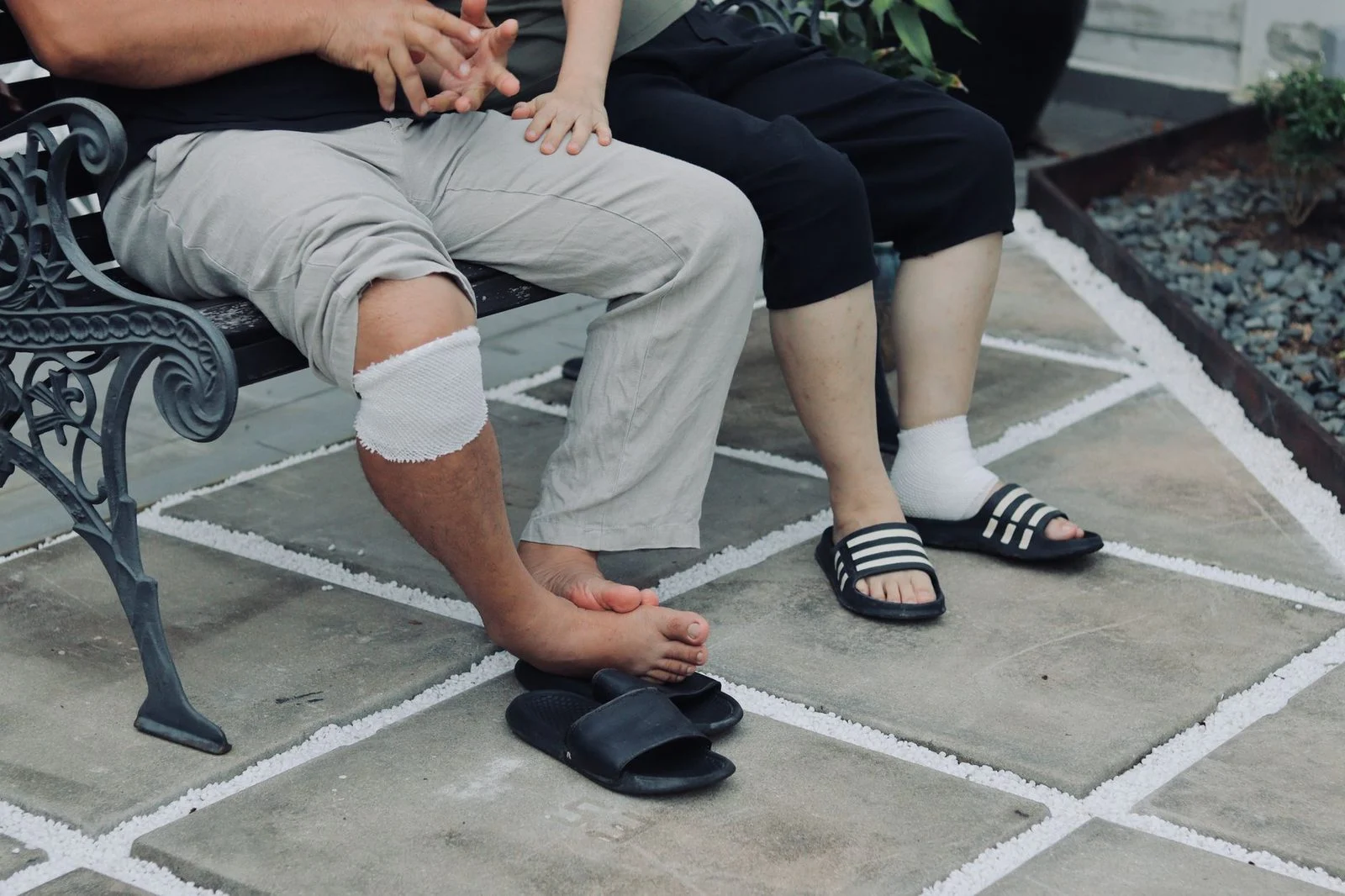
What does a general personal injury case usually involve?
A general personal injury case usually involves a specific event, a driver or company that may be responsible, and an insurance policy that may pay the claim. Car, truck, motorcycle, and pedestrian claims often follow that pattern.
Proof usually comes from the scene and the early record. That includes the police report, photos, witness names, medical records, and bills. Truck claims can also involve company records about the driver and the vehicle.
Rideshare cases can involve more than one insurance policy. Georgia law lets insurers exclude coverage under a driver’s personal policy while the driver is logged in to a transportation network company’s app (O.C.G.A. § 33-1-24). Whether the app was on at the time is a key fact to review with a lawyer.
Premises and slip-and-fall claims follow a similar logic. Under Georgia law, an owner or occupier who invites people onto land must use ordinary care to keep the premises and approaches safe (§ 51-3-1). Key questions often include what the owner knew about a hazard and how long it was there.
What does a nursing home abuse or neglect case usually involve?
A nursing home abuse or neglect case usually involves a resident harmed while in a facility’s care, plus records showing whether that care met the required standard. Georgia law says each resident must receive care that is adequate and appropriate, given with reasonable care and skill (§ 31-8-108).
Signs can be easy to miss. They include unexplained bruises or cuts, falls, bedsores, weight loss, dehydration, medication errors, or a resident who seems withdrawn or afraid. A family member often notices a change before anyone reports one.
These claims often depend on care records, staffing levels, facility policies, and whether staff followed the resident’s care plan. A resident may also see a clear explanation of diagnosis and treatment, and copies of their records. O.C.G.A. § 31-8-108 reads: “Each resident shall have access to all information in the medical records of the resident and shall be permitted to inspect and receive a copy of such records unless medically contraindicated.”
A nursing home claim may involve more than one responsible party. Examples include the facility operator, a management company, or a staffing company. Under Georgia law, damages assigned to each liable person are that person’s own liability, not joint liability (§ 51-12-33). Georgia’s highest court has also said an employer must use ordinary care not to hire or retain an employee it knew or should have known posed a risk of harm to others (Munroe v. Universal Health Services).
Where do the two kinds of cases overlap?
The two kinds of cases overlap when a resident suffers a catastrophic injury or dies. In those situations, injury principles and wrongful death rules can both apply. The type of harm, not only the setting, shapes how the case is built.
A resident can suffer a catastrophic injury from a fall, a fire, or neglect. MedlinePlus describes paralysis as a loss of muscle function that can result from a spinal cord injury or a broken neck. The Brain Trauma Foundation states that traumatic brain injuries can range from mild to catastrophic. That range is one reason early medical records matter.
When a resident dies, the claim may be a wrongful death claim. Under Georgia law, a surviving spouse, or children if there is no surviving spouse, may recover the full value of the decedent’s life, as shown by the evidence (§ 51-4-2). When death results from a crime or other negligence, the personal representative may also recover funeral, medical, and other necessary expenses (§ 51-4-5).
Who can bring a claim and how soon must it be filed?
The injured person may bring a personal injury claim. Certain family members or an estate representative may bring a wrongful death claim under Georgia law.
Georgia’s general rule is two years for actions for injuries to the person after the right of action accrues (§ 9-3-33). The same statute sets four years for actions involving loss of consortium. Some people get extra time. Georgia law gives a person who was legally incompetent because of intellectual disability or mental illness when a claim arose the same time after the disability is removed as others get (§ 9-3-90).
The two-year rule covers injuries to the person. How it applies to a particular wrongful death claim depends on the facts, so note the dates early. Any person harmed because a long-term care facility violated or failed to provide a right granted under Georgia’s residents’ rights article may sue the facility for damages and other relief the court considers proper (§ 31-8-126).
Deadlines keep running whether or not a family feels ready to act. Write down the date of the injury, the discharge, and each report or call that followed.
What should a family gather before talking with a lawyer?
Gather medical records, discharge papers, the care plan, and a written timeline before your first conversation with a lawyer. Keep the originals and make copies for your own file.
For a nursing home matter, useful items include:
- Discharge papers and medication lists
- The care plan, if you have a copy
- Photos of injuries or the room
- Dates of incidents and names of staff involved
- Written notes from family visits
The request must include a HIPAA authorization and a signed written authorization (§ 31-33-2). If the patient has died, the request may come from an executor, administrator, or temporary administrator for the decedent’s estate if such person has been appointed. If none is appointed, the surviving spouse, a surviving child, or a parent may ask.
For crash cases, keep the police report number, photos, insurance information, and medical bills. Avoid posting details about the injury or the claim on social media. Anything posted may be seen by the other side.
Not sure what your next step is?
Talk it through with our team — the first consultation is free, confidential, and carries no obligation.
How does Slam Dunk Attorney handle these kinds of cases?
Slam Dunk Attorney is based in Duluth, Georgia. It represents people in car, truck, motorcycle, pedestrian, dog bite, premises liability, slip and fall, negligent security, rideshare, short-term rental, nursing home abuse, wrongful death, and catastrophic injury matters across metro Atlanta and Georgia.
Peter F. Jaraysi is the responsible lawyer for this page. Brian D. Wright is also one of the firm’s lawyers. Our lawyers are supported by assistants and office staff. We serve clients in Lawrenceville, Johns Creek, Alpharetta, Marietta, Norcross, Kennesaw, and Dunwoody, as well as across Georgia.
Common questions
Is a personal injury lawyer the same as an elder abuse lawyer?
Both work in Georgia personal injury law. A nursing home case usually centers on a care setting and a resident’s rights.
How long do I have to file a nursing home lawsuit in Georgia?
Georgia’s general rule for injury claims is two years under § 9-3-33. Write down the date of the injury now, since timing is a key fact to track.
Can a family get a nursing home resident’s records?
Yes, if the request meets Georgia’s rules.
Next step: talk with our team about your situation
If you’re reading this for a parent after a fall, a sudden decline, or a crash that changed your family’s routine, you may still be sorting out what happened. You don’t have to decide anything yet. Our first consultation is free, confidential, and carries no obligation to continue. You can reach out through our contact page to talk about your situation.
Attorney advertising. Peter F. Jaraysi is the responsible lawyer for this page. Slam Dunk Attorney, Duluth, Georgia. Contact through slamdunkattorney.com/contact-us.
What to expect when you reach out
Free first consultation
Your first consultation is free, confidential, and comes with no obligation to continue.
Plain-language answers
We explain the options in terms you can understand, without legal jargon or pressure.
Support for families
Our team works with injured people and the loved ones who are helping them through a difficult time.
Serving metro Atlanta and Georgia
We represent clients in Duluth, Lawrenceville, Alpharetta, Marietta, Dunwoody and communities across Georgia.
Preserve what you can now
Medical records, photos, incident reports and the names of witnesses can be hard to gather later. Keep copies of everything, and write down what you remember while it is still fresh.
Cases we handle
Personal injury claims
Car, truck, motorcycle and pedestrian accidents, rideshare crashes with Uber or Lyft, dog bites, and injuries caused by unsafe property or short-term rentals.
Nursing home and elder abuse cases
When an older loved one is harmed in a care setting through neglect, abuse or unsafe conditions, we review what happened and what options may be available.
Catastrophic injuries and wrongful death
Spinal cord injuries, paralysis, traumatic brain injuries, amputations, severe burns, and losses that leave families searching for answers.
Slip and fall and negligent security
Injuries on someone else's property, including falls and assaults that may have been prevented with reasonable security.