
Rideshare Accidents | Duluth, Georgia
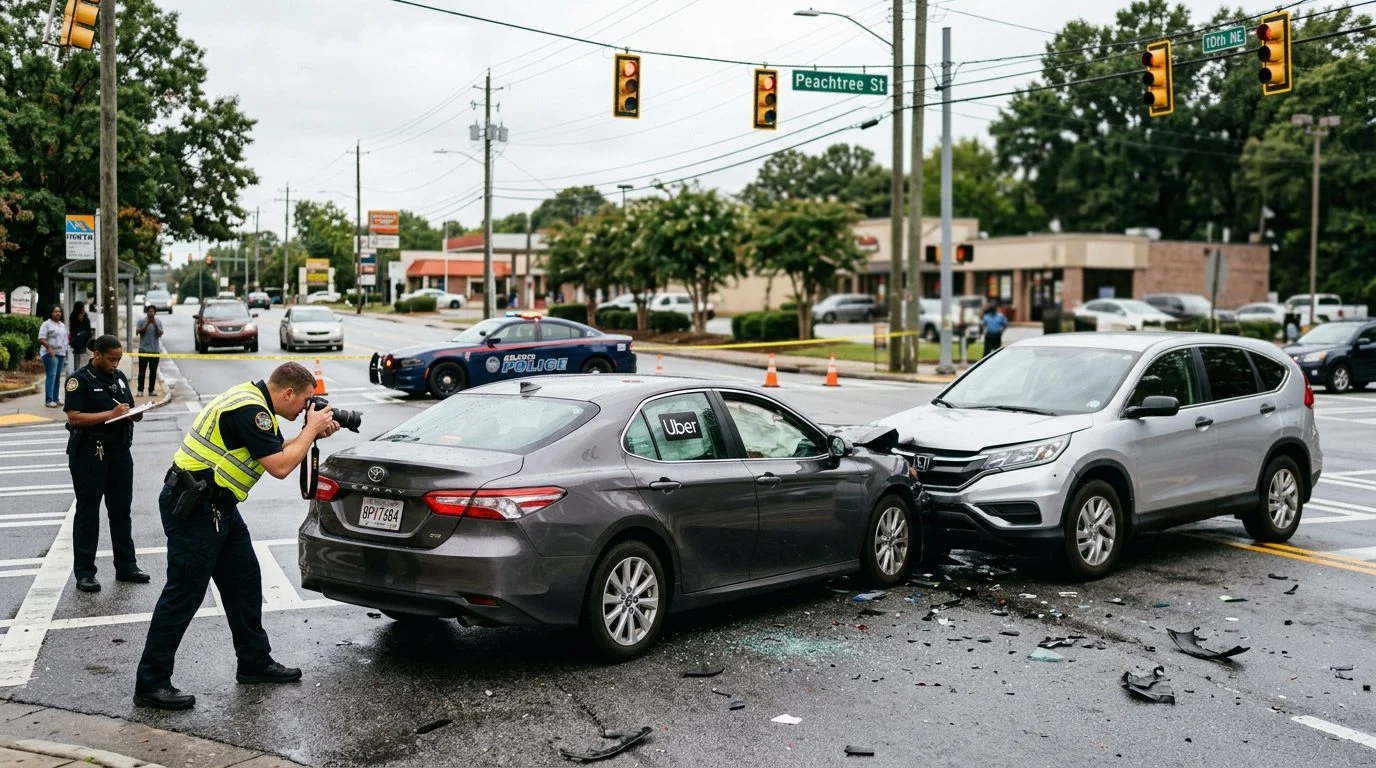
Hurt in an Uber or Lyft Crash? Know Who May Be Involved
Rideshare collisions can involve more parties and more insurance questions than a typical crash. Here is how these cases differ and what to think about early.
By Peter F. Jaraysi · Published November 16, 2026
If you were hurt in a crash with an Uber or Lyft vehicle, you may be sorting out insurance while you recover. Many people in that spot are also helping a family member who cannot handle the calls and paperwork.
Rideshare vs car accident claims in Georgia differ in one main way. A rideshare claim can involve the driver’s app status at impact, the company’s coverage, and more than one at-fault party. A standard car claim usually involves one driver and that driver’s own policy. The sections below explain each difference in plain terms.
Why Rideshare and Standard Car Claims Get Compared After a Crash
Most people never plan for a crash, and few expect to compare rideshare claims with ordinary car claims. The comparison usually starts when someone learns the other driver was working through an app, or when the injured person was a passenger.
At its core, a rideshare crash raises the same questions as any car crash. Who caused it? What injuries resulted? Which insurance pays? The rideshare piece adds parties and insurance layers that a typical wreck often lacks.
The people involved can include the driver, passengers, the other motorist, pedestrians, and sometimes the company behind the app. Each one may face different insurance questions.
This page explains how Georgia law handles those questions. Every claim turns on its own facts, so the focus here is the process, not what any particular case may be worth.
If you were hurt in an Uber or Lyft crash, our team can talk through the facts of your situation and whether you may have a claim. Talk it through with our team — the first consultation is free, confidential, and carries no obligation.
How do rideshare crash claims involving Uber or Lyft drivers differ from standard car accident claims in Georgia?
In a standard car claim, the main questions are who was at fault and which auto policy pays. In a rideshare claim, the driver’s app status at the moment of impact can also decide which insurance may respond, and the platform may become part of the claim.
If the driver was off the app, the case looks more like an ordinary car claim, with the driver’s own policy at the center. If the driver was logged on, waiting for a request, or carrying a passenger, the company’s coverage may come into play. Georgia law sets insurance rules for transportation network companies, the legal term for ride-hailing services like Uber and Lyft. Under O.C.G.A. § 33-1-24, insurers may exclude some coverage under a personal policy while a driver is logged on or providing services.
Your role in the crash also shapes the claim. A passenger, the other motorist, a pedestrian, and a cyclist each raise different questions about which policy responds and who may be responsible. The basic steps still apply: a police report, prompt medical care, and notice to every insurer involved. The difference is that a rideshare claim often means more insurers and more claim numbers to track.
How does an app’s status at the moment of a crash change the insurance picture?
The driver’s app status at impact is often the first fact that decides which coverage may apply. Under O.C.G.A. § 33-1-24, “transportation network company services” includes the period of time a driver is logged on to the transportation network company’s digital network and available to accept a ride request until the driver is logged off, except for the time period described in subparagraph (B) of the statute, and also includes the period of time a driver accepts a ride request on the transportation network company’s digital network until the driver completes the transaction or the ride is complete, whichever is later.
Under O.C.G.A. § 33-1-24, insurers that write motor vehicle policies in Georgia may exclude coverage under the owner’s personal policy for a loss that happens during that use. The same statute also lets a personal insurer offer a policy or endorsement that covers this use, with or without a separate charge. So the exact policy wording matters.
The company’s coverage follows its own rules. Under the statute, coverage under the company’s policy does not wait for a personal insurer to deny the claim first. When the company provides primary coverage, its insurer takes on the costs of defense and indemnification.
Insurers sometimes disagree about which policy applies, and that disagreement can slow a claim. Write down the time of the crash, what the app showed, and any screenshots you have, as soon as you can. Those notes help pin down the app status at impact.
How does Georgia’s comparative negligence rule apply when a rideshare driver shares fault?
Georgia reduces an injured person’s damages by their share of fault, and bars recovery entirely at 50 percent or more. Under the state’s apportionment statute, the trier of fact, usually a jury, divides fault among everyone who contributed to the injury.
The process works in steps. First, the fact-finder decides the injured person’s percentage of fault, and the judge reduces the award to match. Then the remaining award is divided among the liable parties by each one’s fault. Those shares are not joint liability, and they are not subject to contribution. Each liable party owes its own share.
The 50 percent line matters. The statute says a plaintiff who is 50 percent or more responsible for the injury or damages is not entitled to receive any damages (O.C.G.A. § 51-12-33; Quynn v. Hulsey (2020)). That makes the percentage question high stakes.
In a rideshare crash, the driver, the other motorist, and sometimes an employer or vehicle owner may each receive a share of fault. Percentages come from the facts and evidence in each crash, so they are hard to predict from a general page.
When can more than one party be responsible in a rideshare crash?
More than one party can be responsible in a rideshare crash. Those parties may include the rideshare driver, the other driver, a vehicle owner, and in some cases an employer or the rideshare company.
The company’s position has limits. Under O.C.G.A. § 40-1-201, a ride share network service is not liable for a driver’s operation of a personal car under any theory, including vicarious liability. That protection has conditions. The service must not have its own negligence or criminal misconduct, it must follow the part’s requirements, and it must run a criminal or private background check on each driver at least once every two years.
Whether those conditions are met can be a fact question, so the platform’s role varies from case to case.
A business can also answer for a worker’s conduct. Under O.C.G.A. § 51-2-2, a person is liable for torts committed by a servant in the prosecution and within the scope of his business. In Quynn v. Hulsey, the Supreme Court of Georgia explained that claims for negligent hiring, training, supervision, and retention are based on the alleged negligent acts of the employer. As Quynn v. Hulsey describes, these claims rest on the employer’s own alleged negligent acts.
Whether a driver is an employee, a contractor, or something in between can be a disputed question. Road conditions, construction zones, or a defective vehicle part may also matter in some crashes.
What evidence tends to matter in an Uber or Lyft crash claim?
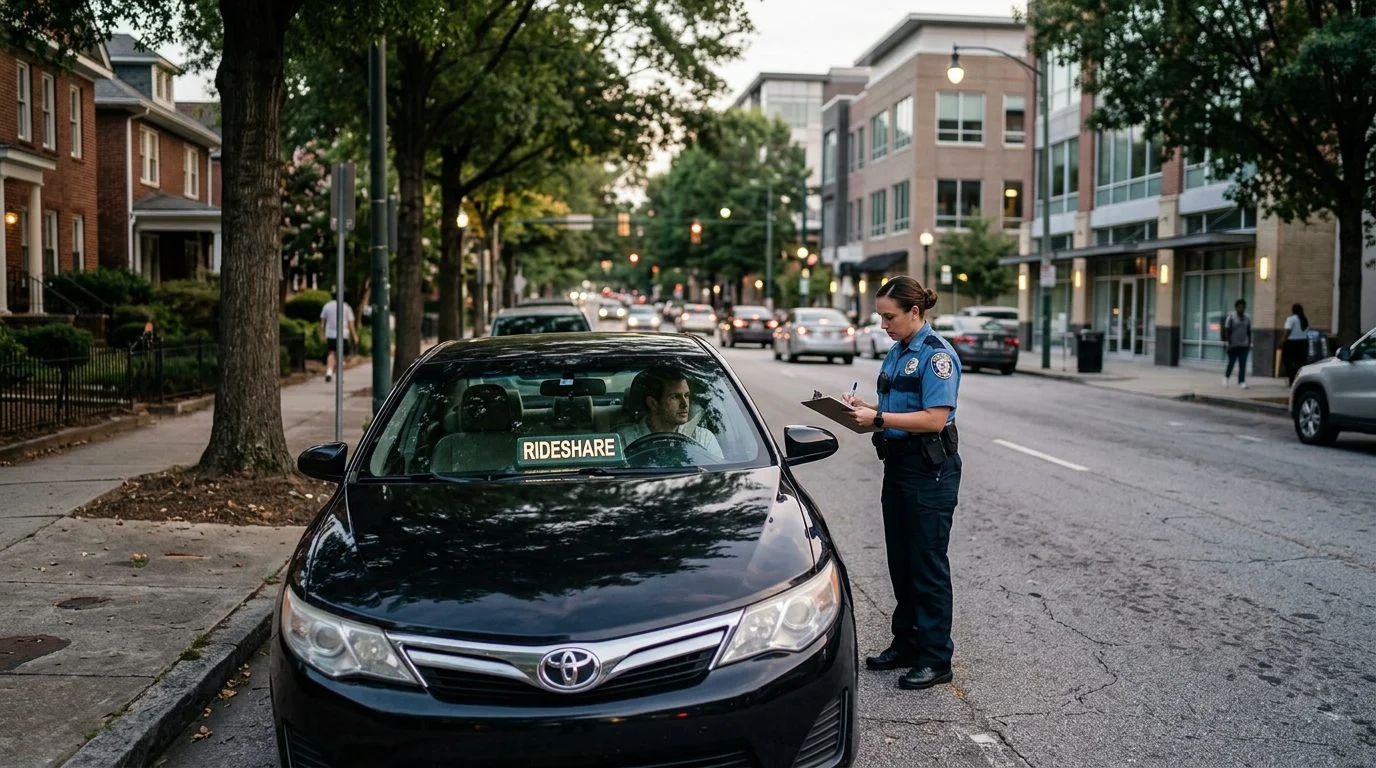
The most useful evidence usually includes the police report, photos of the scene, witness contacts, medical records, and trip details from the app. Georgia also requires rideshare drivers to carry digital identification on a phone, and that record can help show what happened.
Under O.C.G.A. § 40-1-193, each ride share driver must keep digital identification on a smartphone while active on the network. That record includes the driver’s name and photo, the vehicle’s make, model, and plate, and insurance certificates. If an officer reasonably suspects improper operation, the driver must, upon request, provide the officer with access to that information and the electronic trip record.
Gather these items early:
- The police report, plus the officer’s name and report number
- Photos of vehicle positions, damage, license plates, and road conditions
- Names and contact details for witnesses
- Medical records and a dated timeline of treatment, since records tie injuries to the crash
- Dashcam footage, phone records, and app trip details from the minutes before impact
- Pay stubs, receipts, and bills, organized by date
Keep these items together in one folder, paper or digital. Organized records are easier to explain later.
Not sure what your next step is?
Talk it through with our team — the first consultation is free, confidential, and carries no obligation.
How long do you have to file a claim after a Georgia rideshare or car crash?
For most injury claims in Georgia, the general deadline is two years. Under O.C.G.A. § 9-3-33, actions for injuries to the person must generally be brought within two years after the right of action accrues, but actions for injuries to the person involving loss of consortium must be brought within four years after the right of action accrues.
The same statute sets a four-year period for loss of consortium claims, which cover a spouse’s loss.
Claims involving government vehicles can carry shorter, separate notice rules. Under O.C.G.A. § 50-21-26, written notice of a tort claim against the State must generally be given within 12 months of when the loss was discovered or should have been discovered. Under O.C.G.A. § 36-33-5, a claim against a city or other municipal corporation must be presented in writing to its governing authority within six months of the event.
A crash involving a city vehicle can therefore carry a six-month deadline to present the claim, much shorter than two years, though the statute of limitations is suspended while the demand for payment is pending before such authorities without action on their part. Waiting also makes it harder to gather records and witness recollections.
What changes when the injuries are serious or catastrophic?
Serious injuries such as spinal cord injury, traumatic brain injury, amputation, and severe burns usually bring longer medical care, more detailed records, and more planning for the future. The full picture of a serious injury often takes time to form.
Paralysis, a loss of muscle function, can result from a spinal cord injury or a broken neck, according to MedlinePlus. Recovery and care needs can be hard to judge early on.
If the injured person has Medicare, the order of payment matters. CMS states that when an individual is entitled to Medicare and was in an accident or other situation where no-fault or liability insurance is involved, that insurance pays primary for accident or other situation related health care services claimed or released. It also notes that Medicare may make a conditional payment that must be repaid from a settlement, judgment, or other payment, and that federal law takes precedence over state law and private contracts.
When a crash is fatal, Georgia law sets out who may bring the claim. Under O.C.G.A. § 51-4-2, a surviving spouse may recover the full value of the decedent’s life, as shown by the evidence. If there is no surviving spouse, a child or children may bring the claim. The surviving spouse receives no less than one-third of that recovery. Our team handles catastrophic injury and wrongful death matters across Georgia.
Talk With Our Team About Your Rideshare Crash
If you were hurt in an Uber or Lyft crash, or you are helping someone who was, you do not have to work through insurance and deadlines alone.
Can I sue Uber or Lyft directly?
Georgia’s statute generally protects a rideshare company from liability for a driver’s operation of a personal car, if its conditions are met. Whether the company can be part of your claim turns on those conditions and the facts.
Is the rideshare company’s insurance always involved?
Not always. Georgia’s rules for these companies focus on whether the driver was logged on or providing services at the time of the crash.
How long do I have to file?
For most personal injury claims, Georgia generally allows two years. Claims against government vehicles can have much shorter notice deadlines.
If you are weighing what happened to you or someone you love, reach out to our team to talk through the facts of your crash. You can request a free case review through our contact page. Our first consultation is free, confidential, and comes with no obligation to continue.
This page gives general information, not legal advice. Peter F. Jaraysi is the responsible lawyer for this page. Slam Dunk Attorney is based in Duluth, Georgia, and its contact information is on the contact page linked above.
What We Look at in a Rideshare Crash
Driver app status
Whether the driver's app was off, waiting for a ride, or en route to a passenger is one of the first facts we look at.
Everyone involved
Passengers, the rideshare driver, other drivers, and pedestrians may each have a different role in the crash.
Insurance coverage
Rideshare vehicles can carry several layers of coverage, and we review which ones may apply to your situation.
Scene and vehicle evidence
Photos, dash-cam footage, app records, and trip details can disappear quickly, so we help preserve them.
Before You Speak With an Insurer
Insurance companies may contact you soon after a rideshare crash. Keep your trip receipts, screenshots of the app, and medical records, and consider speaking with a lawyer before giving a recorded statement.
Rideshare Crashes We Handle
Uber and Lyft Passengers
Injuries sustained while riding in an Uber or Lyft, whether the crash involved the rideshare driver or another vehicle.
Other Drivers and Pedestrians
Crashes caused by a rideshare driver that injure people in other vehicles or on foot.
Motorcyclists and Cyclists
Collisions with rideshare vehicles that leave riders with serious injuries.
Catastrophic Injuries
Spinal cord injuries, traumatic brain injuries, and other life-changing harm that require long-term care planning.