
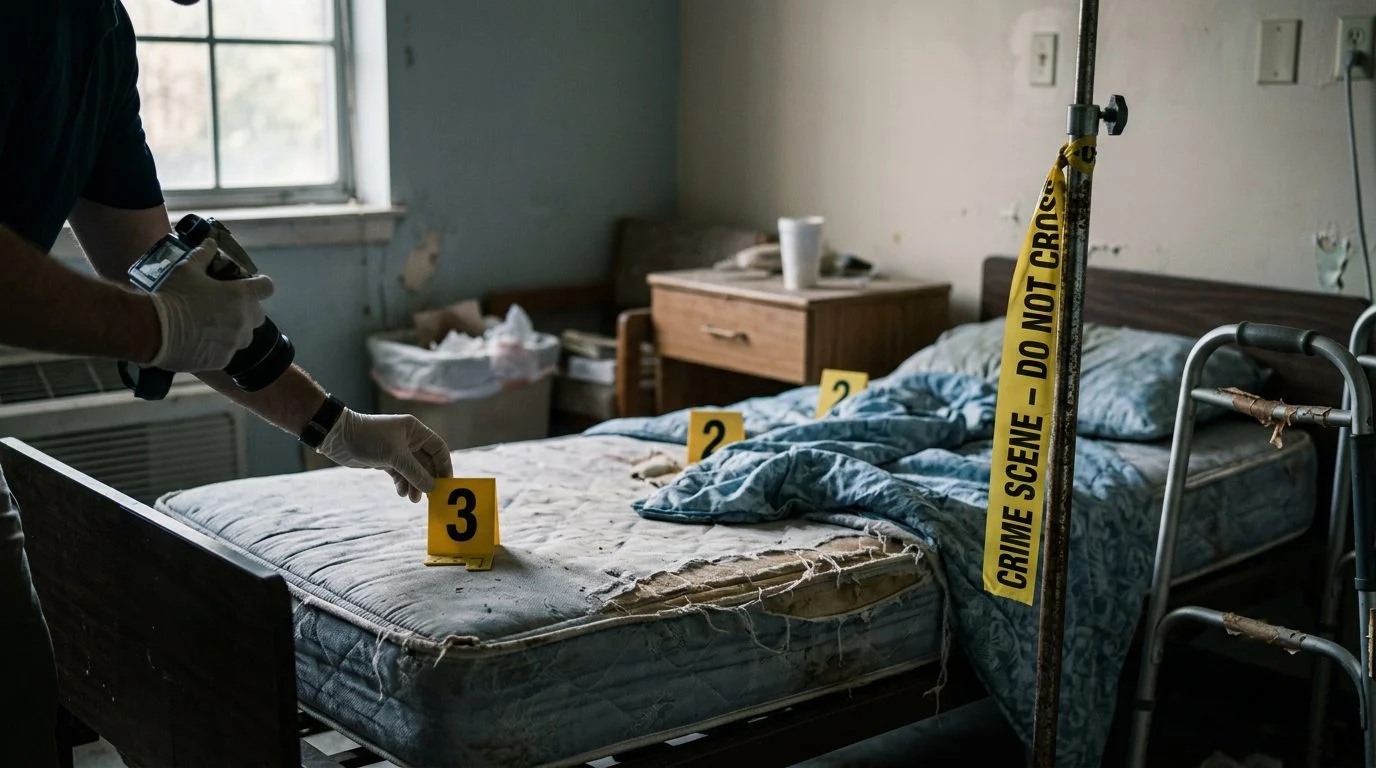
Nursing Home Abuse | Duluth, Georgia
Nursing Home Records Request After a Serious Injury in Georgia
When a loved one is hurt in a nursing home, the medical and facility records often hold the answers. Our team at Slam Dunk Attorney can help you understand what to request and how to ask for it.
By Peter F. Jaraysi · Published November 2, 2026
If your loved one was seriously hurt in a Georgia nursing home, the best first step is a written records request. Ask for the hospital file, the facility’s resident chart, incident reports, and staffing papers, then keep a dated copy of every request. Georgia law gives a resident or guardian the right to inspect and copy medical records, unless that is medically contraindicated.
This guide covers the records families most often need, what each one shows, and how to ask for it. Use it as a starting point, since every facility keeps its files a little differently.
Why Records Matter Early After a Serious Nursing Home Injury
Start gathering records while your relative is still recovering. The paper trail is spread across several places.
A serious injury leaves records at the hospital, at the nursing home, and with the staff who cared for your relative. Notes get updated, shifts get reorganized, and older papers become harder to find over time.
Make every request in writing. A written request gives you a dated record of what you asked for and when. It also helps if a response is late or incomplete.
Georgia’s resident rights law says each resident can inspect and get a copy of the resident’s records, unless that is medically contraindicated (O.C.G.A. § 31-8-108). If your relative has a guardian, the guardian should make the request.
If your parent was hurt in a Georgia nursing home and you're now holding a stack of hospital and facility papers, our team can talk through them with you. Talk it through with our team — the first consultation is free, confidential, and carries no obligation.
Hospital and Treating Provider Records
Hospital records show how serious the injury was and how doctors treated it. Ask for these items:
- Emergency department notes
- Admission and discharge summaries
- Imaging reports and images, such as X-ray, CT, and MRI
- Lab results
- Surgical and procedure notes
- Rehabilitation and follow-up records
Serious injuries can change daily life. A broken neck or spinal cord injury can cause paralysis, which is a loss of muscle function. Traumatic brain injuries can range from mild to catastrophic, according to the Brain Trauma Foundation. Researchers also study how recovery unfolds after spinal cord injury, as in this spinal cord injury recovery study.
The first hospital notes often record how your relative described the injury and who was in the room. Ask for the full emergency record, not only the discharge papers.
Keep the itemized bills, too. Under Georgia law, if the plaintiff has public or private health insurance, evidence of medical costs must include both the amounts charged and the amounts actually necessary to satisfy those charges under the insurance contract, whether or not insurance was used (O.C.G.A. § 51-12-1.1).
The Facility’s Resident Chart: Care Plans, Nursing Notes, and Medication Records
The resident chart shows what the facility planned to do and what staff actually recorded.
The care plan sets out the agreed steps for fall prevention, mobility, wound care, and supervision. It is the baseline for comparing expected care with actual care.
Nursing and aide notes record changes in condition, when staff were alerted, and what they did in response.
Medication administration records (MARs) show what medication was given, when, and by whom. Treatment records show dressing changes, therapy, and other care.
Comparing the care plan with the daily notes can show whether planned care was carried out. Georgia law requires that each resident receive care, treatment, and services that are adequate and appropriate, provided with reasonable care and skill. It also says a significant change in a resident’s health should be reported to the people the resident chooses within a reasonable time (O.C.G.A. § 31-8-108).
Many families ask only for a summary sheet. A summary can’t show the timing of each change. Ask for the daily notes, every version of the care plan, and the MAR for the dates in question.
Incident Reports and Internal Investigation Documents
An incident report is the facility’s written account of an event, such as a fall, an injury, or a suspected case of abuse or neglect.
Staff usually write these reports soon after the event. The report reflects what staff wrote down and when, so compare it with the medical records and the nursing notes.
Ask for the follow-up documents too. These can include witness statements, internal reviews of what caused the event, and corrective actions the facility took afterward. Name each item in your request, since a request for the chart alone may not include them.
Georgia law gives a person who was harmed by a facility’s failure to provide a resident right the ability to seek damages (O.C.G.A. § 31-8-126). Whether a particular event involves a violation depends on the facts.
Assessments, Staffing, and Facility Compliance Records
Assessments and staffing records show what the facility knew about the resident’s risks and who was on duty.
Ask for the admission assessment and the periodic assessments. Common types include fall risk, skin and pressure injury, cognitive status, and mobility. A pressure injury is a wound caused by sustained pressure on the skin, often called a bedsore. Compare these assessments with the care plan to see whether care changed when a new risk appeared.
Ask for staffing schedules and assignment sheets for the dates and shifts in question. These show who was assigned to the resident’s area during the time of the injury.
State regulators can also act against a facility. If a violation occurs, the state orders the facility to correct it. For violations repeated under the same license within 12 months, the state may also assess a civil penalty, only after notice and hearing, not to exceed $75 per violation for each day the violation continues, with a maximum of $2,500 per violation (O.C.G.A. § 31-8-126). Inspection and survey reports can add context. A survey is a snapshot from one inspection, not a full account of one resident’s care.
Admission Agreements, Policies, and Communication Logs
The admission agreement is the contract the family signed. Its terms can affect how a claim is handled.
Read the agreement closely and look for an arbitration clause. An arbitration clause sends disputes to a private decision-maker instead of a courtroom. Save every page you signed.
Ask for the facility’s written policies on falls, supervision, restraint use, and reporting. Comparing those policies with what happened can show gaps between what should have happened and what did.
Gather your own communication records too. These include emails, portal messages, texts, visitor notes, and phone logs. Write down what staff told you, with the date and time, as soon as you can. Memory fades, and written notes hold up better.
Not sure what your next step is?
Talk it through with our team — the first consultation is free, confidential, and carries no obligation.
How to Make the Request and Keep Your Copies
Send each records request in writing and keep a dated copy of everything you send. Address requests to the facility’s administrator or records custodian, and to the hospital’s medical records department.
Include these details in every request:
- The resident’s full name and date of birth
- The dates of the resident’s stay
- The specific records, by type and date range, such as “daily nursing notes, March 1 to March 14”
- A request for copies and an itemized list of what was sent
- Your name, your relationship to the resident, and proof of authority, such as guardianship papers
- The date and your signature
Keep all records in one place. Note what is missing, and follow up in writing when a response is late or incomplete.
Time limits matter too. Under Georgia law, a medical malpractice action generally must be brought within two years after the injury or death. In no event may it be brought more than five years after the negligent act (O.C.G.A. § 9-3-71). For background on how these claims work, see this medical malpractice overview.

Talk With Our Team About Your Resident’s Records and Options
Holding a stack of hospital and facility papers can be overwhelming. Our team can talk through what you have and what it shows.
Can a family member get a nursing home resident’s records in Georgia?
A resident or guardian has the right to inspect and receive copies of medical records, unless it is medically contraindicated. The resident is entitled to obtain from the resident’s physician or the physician attached to the facility a complete and current explanation of the diagnosis, treatment, and prognosis, in language the resident can understand.
Can a Georgia nursing home charge for copies?
Yes. The facility may charge a reasonable fee for copies, but the fee cannot exceed actual cost.
Is there a deadline for filing a nursing home injury claim?
Under O.C.G.A. § 9-3-71, an action for medical malpractice must generally be brought within two years after the date on which an injury or death arising from a negligent or wrongful act or omission occurred, and in no event more than five years after the date of that negligent or wrongful act or omission.
If your mother or father was hurt in a Georgia nursing home, you don’t have to sort through those papers alone. Our team offers a free, confidential first consultation, with no obligation to continue. Reach out through our contact page to talk about your next steps. We cannot predict how any individual matter will turn out.
Responsible lawyer: Peter F. Jaraysi, Slam Dunk Attorney, Duluth, Georgia. This page is general information and is not legal advice for any specific situation.
How Our Firm Can Help Your Family
Organized Records Requests
We help families identify the records that matter, including medical charts, care plans, incident reports and medication logs.
Attention to Nursing Home Abuse
Our firm handles nursing home abuse and neglect matters across Georgia and works to protect residents who cannot always speak for themselves.
Support During a Hard Time
A serious injury affects the whole family. We explain each step in plain language so you can make informed decisions at your own pace.
Lawyers and Staff You Can Reach
Our lawyers, including Peter F. Jaraysi, and our support staff keep you informed about the status of your records and your case.
Keep a Record of Your Own Requests
Write down the date, the person you spoke with and what you asked for each time you contact a facility. Keep copies of every letter, email and form you send or receive.
Steps to Take After a Serious Injury
Get Medical Care First
Your loved one's health comes first. Ask the treating providers for a clear explanation of the diagnosis, treatment and expected course of recovery.
Make a Written Request
Send a dated, written request to the facility and ask for the complete resident file. Keep a copy of the request for your own records.
Ask About Incident Reports
If a fall, medication error, infection or other incident occurred, ask specifically for any incident reports and related notes.
Talk With a Lawyer Early
Our team can review what you have received, explain what may be missing and discuss your options in a free, confidential first consultation with no obligation to continue.