
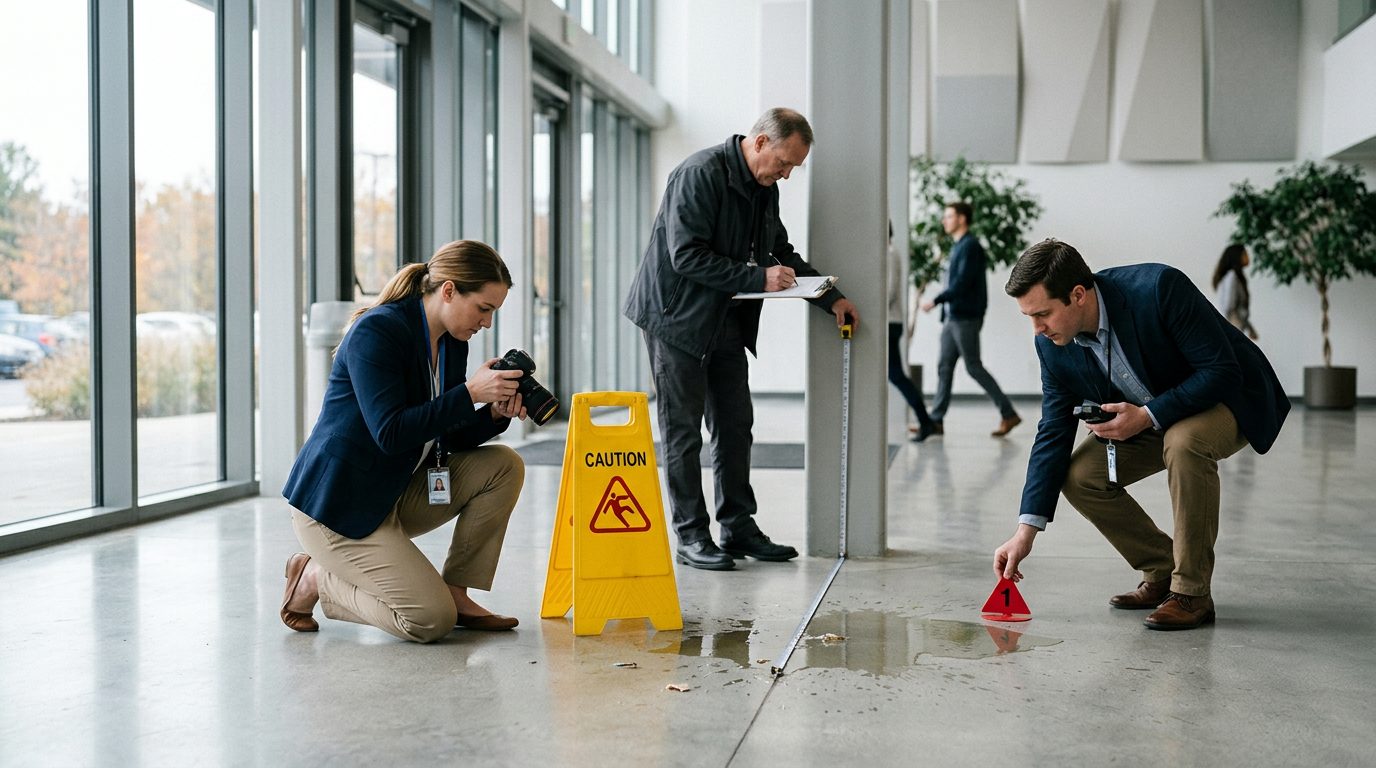
Slip and Fall Claims
How to Prove a Slip and Fall Claim in Georgia
Understanding the evidence and legal standards you'll need to recover compensation for your injury.
By Peter F. Jaraysi · Published September 27, 2026
How to Prove a Slip and Fall Claim in Georgia: The Evidence and Legal Standards You Need
To prove a slip and fall claim in Georgia, you must show that the property owner owed you a duty of care, breached it by failing to maintain safe conditions or warn of hazards, that breach caused your fall, and you suffered real damages—all by a standard called “preponderance of the evidence,” which means more likely than not. Understanding what proof means in the legal sense and what evidence matters most will help you build a stronger case from the start.
If you've slipped and fallen on someone else's property and aren't sure whether you have a claim, people in your situation reach out to us regularly—let's talk about what happened and what comes next. Talk it through with our team — the first consultation is free, confidential, and carries no obligation.

What It Means to “Prove” a Slip and Fall Claim in Georgia
In a Georgia civil case, the burden of proof is preponderance of the evidence—meaning more likely than not, or greater than 50% certainty. This is different from criminal cases, which require proof “beyond a reasonable doubt,” a much higher bar. In your slip and fall claim, you don’t need absolute certainty. You need to show that it’s more probable than not that the property owner’s negligence caused your injury.
This lower standard matters because it shapes what evidence you’ll need to gather. You’re not building a case for criminal conviction; you’re building one that shows a reasonable person would agree the property owner failed in their duty to keep you safe. Understanding this framework helps you focus on the right evidence and avoid chasing proof that won’t move the needle in court.
The Four Legal Elements You Must Establish
Every slip and fall claim in Georgia rests on four legal elements. You must prove all four to have a viable case.
Element 1: Duty of Care
The property owner or manager owed you a legal duty to maintain reasonably safe conditions or to warn you of known hazards. Georgia law recognizes this duty for visitors to commercial and residential properties. If you were lawfully on the property—as a customer, guest, or invited visitor—the owner owed you this duty. You don’t need to prove the owner promised safety; the law imposes this duty automatically.
Element 2: Breach of Duty
The owner breached that duty by failing to maintain safe conditions or by failing to warn you of a hazard they knew about. A breach might be a wet floor left unattended, a broken step, poor lighting, ice on a walkway, or a missing handrail. It could also be the owner’s failure to inspect the property regularly or to fix a known problem.
Element 3: Causation
The breach directly caused your slip and fall. You must show a clear link between the hazardous condition and your injury. For example, if you slipped on a wet floor that the owner knew about but didn’t clean or mark, causation is straightforward. If the owner argues you tripped over your own shoelace, causation becomes disputed.
Element 4: Damages
You suffered actual, measurable harm—medical bills, lost wages, pain and suffering, or ongoing medical care. You can’t recover for a slip and fall if you didn’t suffer injury or loss. Damages are what make your case worth pursuing.
Proving the Property Owner Knew or Should Have Known About the Hazard
One of the hardest elements to prove is that the owner knew—or reasonably should have known—about the dangerous condition. Georgia courts recognize two types of knowledge: actual and constructive.
Actual Knowledge
Actual knowledge means the owner was directly aware of the hazard. Evidence includes:
– A witness who saw the owner or manager observing the hazard before your fall
– Maintenance staff reports documenting the condition
– Prior complaints from other customers or visitors about the same problem
– Security camera footage showing the owner or staff aware of the hazard
Constructive Knowledge
Constructive knowledge means the condition existed long enough that a reasonable owner should have discovered it during routine inspection or maintenance. Georgia courts ask: Would a property owner acting reasonably have found this hazard if they inspected the property as they should?
Evidence of constructive knowledge includes: – Maintenance and cleaning schedules showing inspections should have occurred – The length of time the hazard existed (a wet floor for hours, a broken step for weeks) – The obviousness of the condition to anyone walking through – Prior similar incidents at the same location
For example, if a grocery store’s floor was wet for two hours before your fall and the store’s policy requires floor checks every 30 minutes, a court might find constructive knowledge even if no manager directly saw the water.
Essential Evidence to Gather at the Scene
The moments after your fall are critical. If you’re able, gather evidence immediately. If you’re injured, ask a friend or family member to help.
Photographs and Video
Take clear photos and video of:
– The exact spot where you fell
– The hazard itself (wet floor, broken step, debris, ice)
– The surrounding area and layout
– Any warning signs (or the absence of them)
– The condition of the floor, walkway, or surface
Photograph from multiple angles and distances. Close-ups show detail; wider shots show context.
Lighting Conditions
Poor lighting can contribute to a fall. Document:
– Whether the area was well-lit or dim
– The time of day
– Whether lights were working or burned out
– Take photos showing the lighting as you experienced it
Weather and Environmental Conditions
If weather played a role (rain, ice, snow), document it:
– Take photos of wet surfaces, ice, or snow
– Note the weather on the date and time of your fall
– You can later cross-reference official weather records for that date and location
The Condition of the Surface
Describe and photograph:
– Whether the floor was slippery, uneven, or damaged
– The material (tile, concrete, carpet, wood)
– Any debris, spills, or obstacles
– Worn areas or trip hazards
Medical Records and Documentation of Your Injuries
Medical records are among the strongest evidence in a slip and fall claim because they establish causation—they prove the fall caused your injuries—and they document the extent of your damages.
Seek Immediate Medical Evaluation
Go to an emergency room, urgent care, or your doctor as soon as possible after the fall. Medical records created at the time of injury carry more weight than records created weeks later. Early treatment also establishes a clear timeline linking the fall to your injuries.
Treatment Records and Diagnosis
Your medical records should include:
– Initial examination and diagnosis
– Imaging (X-rays, MRI, CT scans) showing injury
– Treatment plans and recommendations
– Medications prescribed
– Follow-up visits and ongoing care
Ongoing Medical Care and Rehabilitation
If your injuries require continuing treatment—physical therapy, specialist visits, surgery—keep detailed records of:
– All appointments and treatments
– Progress notes from your healthcare providers
– Any complications or setbacks
– How your injuries affect your daily life and work
Lost Wages and Medical Expenses
Document:
– Time missed from work and lost income
– Medical bills and receipts
– Insurance statements showing what you paid out of pocket
– Travel costs for medical appointments
Not sure what your next step is?
Talk it through with our team — the first consultation is free, confidential, and carries no obligation.
Witness Statements and Testimony
An independent witness who saw your fall or the hazardous condition strengthens your claim significantly. Witness testimony provides corroboration—proof that someone other than you observed what happened.
Identifying Witnesses
At the scene, ask anyone nearby:
– “Did you see me fall?”
– “Did you see the wet floor / broken step / hazard?”
– Get their name, phone number, and email address
– Ask where they were standing and what they saw
Collecting Written Statements
Ask witnesses to write down what they saw while details are fresh. A simple statement—”I saw water on the floor near the produce section at 2 p.m. on [date]. The customer slipped in that water”—is valuable evidence.
Witness Credibility
In court, a witness’s credibility matters. A witness who was present, had a clear view, and has no bias toward either side carries more weight. A witness who works for the property owner may be viewed with some skepticism, but their testimony still counts.
Your Own Documentation and Timeline
Your own written account, created soon after the fall, is important evidence.
Write It Down While It’s Fresh
Within a day or two, write:
– The date, time, and exact location of the fall
– What you were doing when you fell
– What caused the fall (the hazard you encountered)
– Your immediate physical symptoms and pain level
– What you did after the fall (sought medical care, reported it to management)
– Names of anyone who witnessed it
Keep a Recovery Journal
As you heal, document:
– Your pain levels and limitations day to day
– Medical appointments and treatments
– How the injury affects your work, hobbies, and daily life
– Any complications or setbacks
– Your emotional state (frustration, anxiety, depression from the injury)
A recovery journal provides evidence of your ongoing damages and helps you recall details if your case goes to trial months or years later.
Property Records and Maintenance History
Property owners and businesses keep records about maintenance, cleaning, inspections, and incident reports. These records are powerful evidence of whether they knew or should have known about the hazard.
Maintenance and Cleaning Schedules
Request:
– Daily, weekly, or monthly cleaning logs
– Floor inspection records
– Maintenance schedules for the area where you fell
– Records showing when the hazard should have been discovered
Incident Reports
If you reported your fall to the property owner or manager, they likely filed an incident report. Request a copy. This document is often admissible as evidence and shows the owner acknowledged the incident.
Prior Complaints
If other people have complained about the same hazard—a slippery floor, a broken step, poor lighting—those complaints are evidence the owner knew or should have known. Request:
– Complaint logs or records
– Email complaints from other customers or visitors
– Social media posts or online reviews mentioning the hazard
Safety Inspection Records
Businesses often conduct safety inspections. Request records showing:
– When inspections were performed
– What was inspected
– Whether the hazard was noted
– What corrective actions were taken
How to Request These Records
Early in your claim, your attorney can send a formal request (called a discovery request) asking the property owner to produce these records. If the owner refuses or claims they don’t exist, that refusal itself can be evidence of negligence or a cover-up.
Expert Evidence in Slip and Fall Cases
In straightforward cases, expert testimony may not be necessary. But in complex cases, experts strengthen your proof of breach and causation.
Safety Experts
A safety expert can evaluate:
– Whether the property owner’s maintenance practices met industry standards
– What a reasonable property owner should have done to prevent the hazard
– Whether warning signs were adequate
– The foreseeability of the hazard
Medical Experts
Your treating physician’s records establish your injuries, but in serious cases, a medical expert (orthopedic surgeon, neurologist, physiatrist) can testify about:
– The extent and permanence of your injuries
– Whether the fall caused your injuries (causation)
– Your long-term prognosis and ongoing medical needs
– Future medical costs
Accident Reconstruction Specialists
In complex falls—for example, if the property owner claims you were careless or that the hazard was “open and obvious”—an accident reconstruction specialist can analyze:
– How the fall occurred
– The biomechanics of your fall
– Whether a reasonable person would have noticed and avoided the hazard
– Environmental factors (lighting, surface conditions) that contributed
Comparative Negligence: Georgia’s Impact on Your Proof
Georgia follows comparative negligence rules. This means if you’re found partially at fault for your own slip and fall, your recovery is reduced by your percentage of fault—but you can still recover if you’re less than 50% responsible.
Why Property Owners Raise This Defense
A property owner will likely argue you were careless. Common arguments include:
– “You weren’t paying attention to where you were walking.”
– “You were wearing inappropriate footwear.”
– “The hazard was obvious, and you should have avoided it.”
– “You were rushing or distracted.”
Evidence That Counters Negligence Claims
To counter these arguments, gather evidence showing:
– The hazard was not obvious (poor lighting, the spill was fresh, the broken step was in shadow)
– You were acting reasonably (walking at a normal pace, watching where you were going)
– The hazard was unavoidable (it suddenly appeared, or you had no time to react)
– Other people in similar circumstances would have fallen too
For example, if multiple other customers had slipped in the same spot, that evidence shows the hazard was not obvious and that a reasonable person would have fallen.
If you've slipped and fallen on someone else's property and aren't sure whether you have a claim, people in your situation reach out to us regularly—let's talk about what happened and what comes next. Talk it through with our team — the first consultation is free, confidential, and carries no obligation.
Common Challenges to Proving Slip and Fall Claims
Property owners and their insurers will challenge your claim. Understanding common defenses helps you gather evidence to counter them.
“We Had No Knowledge of the Hazard”
The owner claims they didn’t know about the wet floor, broken step, or other hazard. Counter with:
– Maintenance records showing they should have inspected the area
– Prior complaints about the same problem
– How long the hazard existed (suggesting they should have found it)
– Witness testimony that the hazard was obvious
“The Hazard Was Open and Obvious”
The owner argues you should have seen and avoided the hazard. Counter with:
– Photographs showing poor lighting or visibility
– Witness testimony that the hazard was not obvious
– Evidence the hazard appeared suddenly (a fresh spill)
– Expert testimony about visibility and foreseeability
“Your Fall Wasn’t Caused by Our Hazard”
The owner claims something else caused your fall—your own carelessness, your footwear, a medical condition. Counter with:
– Medical records showing you were healthy before the fall
– Witness testimony about how you fell
– Photographs of the exact hazard
– Expert testimony about causation
“You Were Partially at Fault”
The owner argues you were careless. Counter with evidence you were acting reasonably and the hazard was unavoidable.
Gaps in Evidence
If you didn’t photograph the scene or gather witness information immediately, gaps emerge. The owner will argue the hazard didn’t exist or wasn’t as dangerous as you claim. This is why early documentation is critical.
Why Professional Help Matters in Building Your Case
Proving a slip and fall claim requires knowledge of Georgia premises liability law, skill in gathering and preserving evidence, and experience navigating property owner and insurance company defenses. An attorney helps by:
Identifying and Preserving Critical Evidence
An attorney knows what evidence matters and acts quickly to preserve it. Photographs fade, witnesses move away, and property owners destroy records. Early legal action prevents evidence loss.
Understanding Georgia Law
Premises liability law is complex. An attorney knows the four elements, the burden of proof, comparative negligence rules, and how Georgia courts interpret “constructive knowledge” and “open and obvious” defenses. This knowledge shapes your evidence-gathering strategy.
Handling Property Owner and Insurance Defenses
Insurance adjusters and property owner attorneys use standard defenses. An experienced attorney anticipates these arguments and gathers evidence to counter them before they’re raised.
Ensuring Evidence Is Admissible
Not all evidence is admissible in court. An attorney ensures your evidence is collected, preserved, and presented in a way that satisfies Georgia rules of evidence and procedure.
Negotiating or Litigating Your Claim
An attorney negotiates with the insurance company or represents you in court. Most slip and fall claims settle before trial, but your attorney’s readiness to litigate strengthens your negotiating position.
For more information about premises liability claims in Georgia, visit our slip and fall guide. If you’ve been injured in a slip and fall and want to discuss your case, we’re here to help.

FAQ
What is the burden of proof in a Georgia slip and fall case?
The burden is preponderance of the evidence—meaning more likely than not, or greater than 50% certainty. This is lower than the criminal standard of “beyond a reasonable doubt.”
How do I prove a property owner knew about a hazardous condition?
You can prove actual knowledge (they directly saw it) or constructive knowledge (the condition existed long enough that a reasonable owner should have discovered it during routine inspection). Maintenance records, prior complaints, and the length of time the hazard existed are key evidence.
What evidence do I need to win a slip and fall claim in Georgia?
You need photographs of the hazard, medical records linking the fall to your injuries, witness statements, your own written account, and evidence the property owner knew or should have known about the danger.
Can I recover damages if I was partially at fault for my slip and fall?
Yes. Georgia’s comparative negligence rule allows you to recover if you’re less than 50% at fault. Your recovery is reduced by your percentage of fault.
How long do I have to file a slip and fall claim in Georgia?
Georgia’s statute of limitations for personal injury claims is two years from the date of injury. You must file within this time or lose your right to sue.
Do I need a witness to prove my slip and fall claim?
No, but a witness strengthens your claim significantly. If no witness saw your fall, medical records, photographs, and maintenance records can still prove your case.
What should I photograph after a slip and fall?
Photograph the exact spot where you fell, the hazard (wet floor, broken step, debris), the surrounding area, lighting conditions, and any warning signs (or lack thereof). Take photos from multiple angles.
How important are medical records in a slip and fall case?
Medical records are critical. They establish causation—proving the fall caused your injuries—and document your damages. Seek medical care immediately after your fall.
If you’ve slipped and fallen on someone else’s property in the Atlanta area or elsewhere in Georgia and you’re unsure whether you have a claim, reach out. People in your situation contact us regularly to discuss what happened and explore their options.
The Key Elements You Must Prove
The Property Owner Knew (or Should Have Known)
You must show the owner had actual knowledge of the hazard, or that a reasonable inspection would have uncovered it. This includes conditions that existed long enough that the owner should have discovered them.
The Condition Was Unreasonably Dangerous
The hazard must pose a real risk of harm. A wet floor in a grocery store or a broken step on a rental property can qualify, but minor imperfections that are obvious may not.
The Owner Failed to Warn or Fix It
The property owner did not take reasonable steps to repair the hazard, block it off, or warn visitors about it in time to prevent your injury.
You Were Injured Because of the Condition
Your fall and resulting injuries were directly caused by the hazard. Medical records and documentation of how the fall happened are critical evidence.
Evidence That Strengthens Your Claim
Photographs and Video
Images of the hazard, the scene, and your injuries taken as soon as possible after the fall are powerful proof of conditions at the time of your accident.
Witness Statements
People who saw the hazard or your fall can testify to what they observed. Written statements or contact information from witnesses should be gathered immediately.
Medical Records
Emergency room reports, doctor's notes, imaging studies, and treatment records establish the nature and severity of your injuries and link them to the fall.
Maintenance and Inspection Records
Property maintenance logs, cleaning schedules, and safety inspection reports can show whether the owner knew or should have known about the hazard.
Timeline Documentation
Records showing how long the hazard existed—such as incident reports, prior complaints, or service records—help prove the owner had time to discover and fix it.
Security or Surveillance Footage
Video recordings of the fall or the hazardous condition provide objective evidence of what happened and the state of the property.
Act Quickly to Preserve Evidence
The longer you wait, the harder it becomes to gather photographs, locate witnesses, or obtain maintenance records. Property owners may clean up or repair hazards, and memories fade. Report your fall to the property owner or manager in writing as soon as you can, and document everything about the incident.
Common Slip and Fall Scenarios in Georgia
Retail Stores and Restaurants
Spilled liquids, debris on floors, or wet surfaces from cleaning are common hazards. Stores have a duty to inspect regularly and clean up or warn customers promptly.
Rental Properties and Apartments
Broken stairs, cracked walkways, poor lighting, or icy conditions on common areas can make a landlord liable if they failed to maintain the property safely.
Parking Lots and Sidewalks
Potholes, uneven pavement, debris, snow and ice, or inadequate lighting create hazards. Property owners must maintain these areas or warn visitors of dangers.
Workplace Premises
Employers and property owners must keep work areas safe. Cluttered floors, spilled materials, worn carpeting, or poor maintenance can lead to liability.
Why You Need Legal Guidance
Georgia Law Is Specific
Slip and fall claims in Georgia require proof of the owner's knowledge or negligence. The rules differ from other states, and mistakes in how you frame your case can cost you.
Insurance Companies Push Back
Property owners and their insurers will challenge your claim and argue you were careless. You need someone who understands how to counter those defenses with solid evidence.
Evidence Matters Most
Knowing which evidence to gather, how to preserve it, and how to present it effectively can make the difference between a successful claim and one that fails.
Settlement Negotiations
An attorney can evaluate what your claim is worth, handle discussions with the insurance company, and protect your rights throughout the process.
Ready to Discuss Your Slip and Fall?
Related practice areas
- Slip and Fall Accident Lawyer in Georgia | Slam Dunk Attorney
- Slip & Fall Stairs/Escalators Georgia | Premises Liability