
Short-Term Rental Injuries | Kennesaw, Georgia
Hurt at a Short-Term Rental in Kennesaw? Here Is What to Do Next
Airbnb, VRBO and other vacation rental injuries can leave you facing medical bills, lost time and unanswered questions. Our Duluth-based firm represents people injured in Kennesaw and across metro Atlanta and Georgia.
By Peter F. Jaraysi · Published October 26, 2026
If you were hurt at a short-term rental in Kennesaw, your first priorities are medical care and a record of what happened. This guide covers common causes, who may be responsible, and steps that help protect a claim.
Slam Dunk Attorney is based in Duluth, Georgia. The firm represents people injured in short-term rentals across metro Atlanta and Georgia, including Kennesaw and Cobb County.
Hurt at a Kennesaw Rental? Start With Safety and Records
Get medical care first, then protect the evidence that shows how the injury happened. Rentals are unfamiliar places. You may not know where the loose stair is, how the hot tub works, or whether the gate code changed last week.
Some injuries are easy to overlook at the scene, including head injuries. Tell every doctor that the injury happened at a rental, what you fell on or hit, and when it happened. A clear history helps your medical record match what actually happened. The Georgia Department of Public Health presents Georgia statistics on fall-related injuries, including traumatic brain injuries.
Once you are safe, start writing things down. Keep copies of your booking, your messages with the host, and any emails from the platform. These records often disappear or get harder to find as time passes, so save them early.
If you were hurt at a Kennesaw rental and are weighing your next step, our team can review what happened with you in a free case review. Talk it through with our team — the first consultation is free, confidential, and carries no obligation.

Common Ways Guests Are Hurt at Short-Term Rentals
Most rental injuries come from a condition the host or manager should have found and fixed. Others involve an animal or another person on the property. Common examples include:
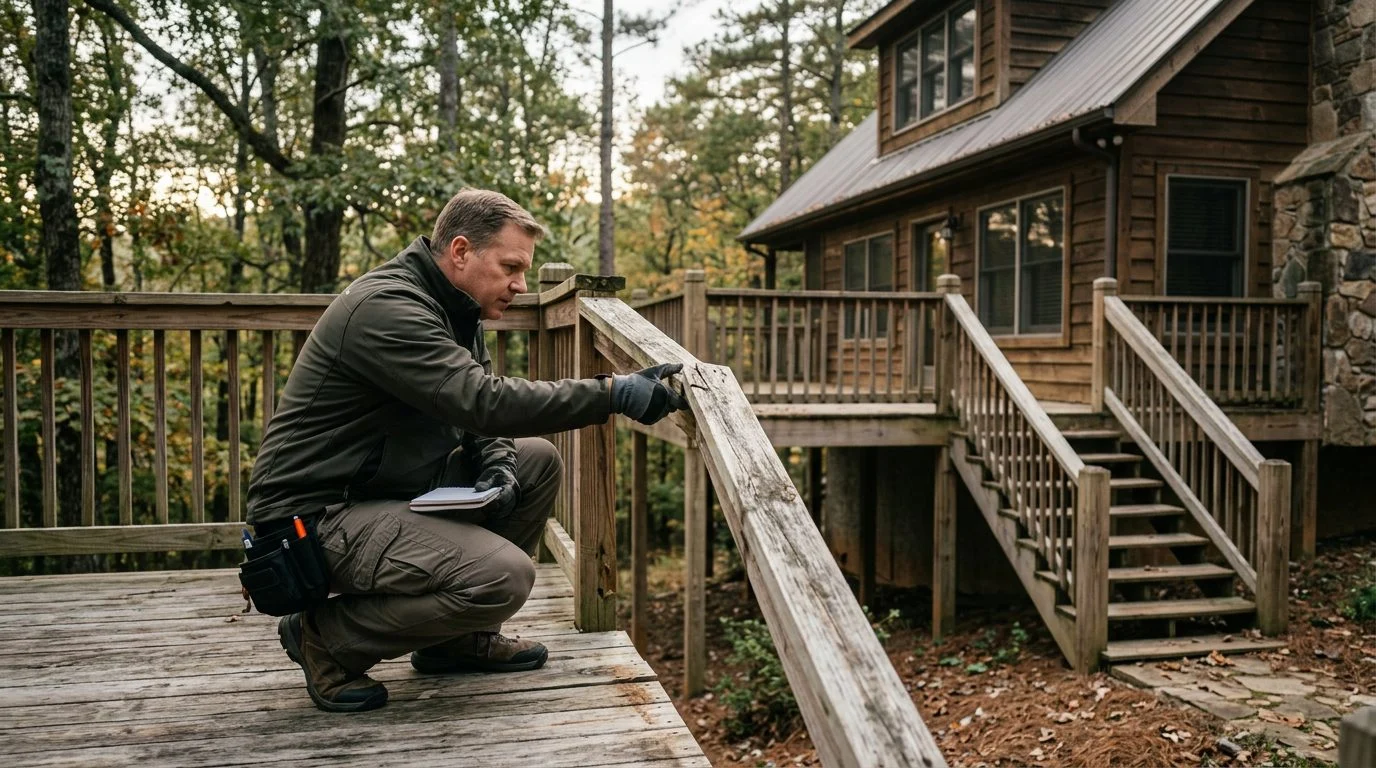
- Stairs, railings, decks, and balconies. Loose rails, missing guards, and poor lighting can cause serious falls.
- Pools, hot tubs, and docks. Missing barriers, slick surfaces, and no warning signs can contribute to falls or drownings.
- Furniture and fixtures. An unsecured TV mount, a wobbly shelf, or a broken chair can fall on a guest.
- Dog bites. Under O.C.G.A. § 51-2-7, an owner or keeper of a vicious or dangerous animal who, by careless management or by allowing the animal to go at liberty, causes injury to a person who did not provoke the injury may be liable. Showing that a city, county, or consolidated government leash ordinance required the dog to be at heel or on a leash and the dog was not at heel or on a leash at the time is sufficient to prove vicious propensity.
- Negligent security. Broken locks, unreliable gate codes, or dark walkways can matter after an assault or break-in. Under O.C.G.A. § 51-3-51, an injured invitee must prove several things. The wrongful conduct must have been reasonably foreseeable, for example because of prior similar incidents the owner actually knew about on the property or within 500 yards. The attacker must have exploited a specific physical condition the owner knew about that made the risk substantially greater than in the surrounding area. The owner must have failed to use ordinary care to fix that condition, and that failure must have caused the injury.
State risk guidance on slip-and-fall prevention lists keeping walkways clear, removing obstructions, and addressing spills. Those are the same conditions that often matter in a claim. Each category falls under premises liability or dog bite rules, and the specific facts of the property determine which applies.
Who May Be Responsible for a Rental Injury
The responsible party is usually whoever controlled the unsafe condition. That can be the owner, a property manager, or a host who handled maintenance and safety. Under O.C.G.A. § 51-3-1, an owner or occupier who invites people onto the property must use ordinary care to keep the premises and approaches safe.
Georgia treats landlords differently. Under O.C.G.A. § 44-7-14, a landlord who has fully parted with possession and the right of possession is not responsible to third persons for damages resulting from the negligence or illegal use of the premises by the tenant. The landlord stays responsible for defective construction and for failing to keep the premises in repair. Whether that rule fits a short-term rental turns on who held possession and who handled repairs.
Georgia also reduces damages by the injured person’s share of fault. Under O.C.G.A. § 51-12-33, a person who is 50 percent or more responsible for the injury cannot receive damages. When more than one person is liable, damages are divided by each person’s percentage of fault, not shared jointly. Being partly at fault does not automatically end a claim.
More than one insurance policy may be involved, including a host’s liability coverage. The Insurance Information Institute explains that homeowners and renters policies may or may not cover rental activity, and that regular hosting can need separate business coverage. An insurance claim and a lawsuit are different steps.
How Local Rental Rules in Cobb County and Metro Atlanta Can Affect a Claim
Every short-term rental incident is different, and the specific facts of each case shape how it is evaluated. Cobb County and the City of Atlanta have both changed their short-term rental rules in recent years. Some enforcement has been paused and revisited.
Records about a rental’s registration or permit status may become part of the investigation. Save the listing as it looked when you booked, including any permit or registration number it displayed. Those details show what the host presented to guests at the time.
Each case turns on its own facts. The core question remains whether the owner used ordinary care to keep the premises safe from wrongful conduct by a third person. For a negligent security claim, Georgia law says owners are not required to use extraordinary care against third-party wrongful conduct. Under O.C.G.A. § 51-3-55, the fact-finder considers the security measures in place at the time of injury, the need for additional or other security measures, whether those measures were practical, whether they would have prevented the injury, the respective responsibilities of owners or occupiers and government with respect to law enforcement and public safety, and any other relevant circumstances.
Steps That Help Protect a Claim After a Rental Injury
Photos, booking records, written notes, and medical records are the steps that matter most. Start them as soon as you can.
- Photograph the scene. Capture the exact spot, the broken or unsafe item, the lighting, and any warning signs or their absence. Keep the original files, since their timestamps help show when the photos were taken.
- Save every booking record. Keep your confirmation, the listing description, house rules, and every message with the host or manager. Screenshots help, but keep the original messages too.
- Write it down. Record the date, time, who was present, and what you were told while the details are fresh.
- Keep your medical trail. Save every record, bill, and receipt. Follow your doctor’s treatment plan, because missed appointments can make it harder to show how the injury affected you.
- Be careful with insurers. Ask what you are agreeing to before you give a recorded statement or sign a release.
Some details are easy to miss. A guest hurt by a loose railing may not think to save the photos of it, or the host’s text saying it would be fixed next week. Those messages can show what the host knew and when.

Time Limits and Your Next Step in Kennesaw
Georgia generally allows two years from the date of injury to file a personal injury lawsuit. Under O.C.G.A. § 9-3-33, actions for injuries to the person must be brought within two years after the right of action accrues, except for actions for injuries to the person involving loss of consortium, which must be brought within four years after the right of action accrues. Wrongful death claims follow their own timing rules, so families should ask about deadlines early.
Acting early keeps more options open and helps preserve evidence while it is still fresh. Slam Dunk Attorney represents people injured in short-term rentals across metro Atlanta and Georgia, including Kennesaw.
How long do I have to sue after an Airbnb injury in Georgia?
Georgia generally allows two years from the date of injury for a personal injury lawsuit, under O.C.G.A. § 9-3-33. Wrongful death claims have their own timing rules.
Who can be responsible for a VRBO injury?
The owner, a property manager, or a host who controlled the unsafe condition may be responsible. Who held possession and who handled repairs matters.
Can I still recover if I was partly at fault?
Yes, if you are less than 50 percent responsible, your damages are reduced by your share of fault under O.C.G.A. § 51-12-33. At 50 percent or more, Georgia law bars recovery.
Does a host’s homeowners insurance cover a guest injury?
Not always. The Insurance Information Institute explains that coverage for rental activity varies by policy.
If you were hurt at a Kennesaw rental and are deciding what to do next, a free, confidential initial consultation with no obligation to continue is available through our contact page.
Disclaimer: Peter F. Jaraysi is the responsible lawyer for this page. Slam Dunk Attorney, based in Duluth, Georgia, can be reached through its contact page. This page is general information, not legal advice, and it does not promise any particular result.
How Our Firm Can Help
Confidential Listening
Tell us what happened in your own words. Our team will listen carefully and explain the options that may apply to your situation.
Organized Records
We help gather rental listings, booking confirmations, messages with hosts, photos and medical records so your facts are clear from the start.
Attention to Liability
Injuries at rental properties can involve owners, property managers and hosts. We look closely at who controlled the property and what was done, or not done, to keep guests safe.
Focus on Recovery
Our lawyers work to take the paperwork and phone calls off your plate so you can concentrate on getting better.
Important: Protect Your Health and Your Claim
Get medical attention right away, even if your injuries seem minor, and follow your doctor's advice. Avoid posting about the incident or your injuries on social media, and do not give recorded statements to insurance adjusters before speaking with a lawyer.
Steps to Take After a Short-Term Rental Injury
1. Seek Medical Care
Your health comes first. Visit a doctor or urgent care, describe every symptom, and keep copies of all records and bills.
2. Document the Scene
Photograph the unsafe condition, your injuries and the property as soon as you safely can. Save the listing, house rules and any messages with the host or platform.
3. Report the Incident
Notify the host, property manager or platform in writing, and keep a copy of what you sent. Ask for any incident report in writing.
4. Talk With Our Firm
Our team can review what happened, explain your options under Georgia law and help you decide on next steps at no cost to start.