

Premises Liability | Gwinnett County, Georgia
Hurt on Someone Else's Property? Talk With Slam Dunk Attorney
Slam Dunk Attorney is based in Duluth, Georgia. Our team helps people injured in slip and falls and other unsafe-property incidents in Gwinnett County and across metro Atlanta.
By Peter F. Jaraysi · Published October 22, 2026
A premises liability lawyer in Gwinnett County helps people hurt by unsafe conditions on property that someone else owns or controls. Under Georgia law, in a negligent security claim, an owner or occupier must use ordinary care to keep persons on or around any premises safe from wrongful conduct by a third person, but is not required to exercise extraordinary care or to assume the responsibilities of government for law enforcement and public safety. When that duty is broken and someone gets hurt, the injured person may have a claim. This guide explains the rule in plain terms, the proof that tends to matter, how fault is divided, and why the two-year deadline matters. Our firm is based in Duluth, Georgia, and serves metro Atlanta and throughout Georgia.
What Premises Liability Means in Georgia
Premises liability is the area of law about injuries caused by unsafe conditions on property. The owner or occupier may be responsible for those injuries. The main rule appears in O.C.G.A. § 51-3-1. It says an owner or occupier who invites or leads others onto its land for a lawful purpose is liable for injuries caused by failing to use ordinary care to keep the premises safe.
The key idea is invitation. Shoppers, diners, guests, and visitors who come onto property by invitation are the people this rule protects. Lawyers often call them invitees. The duty owed to a visitor is different from the duty owed to someone who entered without permission.
In Gwinnett County, these claims often start in ordinary places. A wet grocery aisle in Lawrenceville, a loose stair at a Norcross apartment, or a cracked walkway outside an office can raise the same question. Did the owner keep the space reasonably safe?
If a fall or assault on someone else's property left you or a loved one hurt, you may have a claim, and our team can talk it through with you. Talk it through with our team — the first consultation is free, confidential, and carries no obligation.

Actual Versus Constructive Knowledge
Whether the owner knew, or should have known, about a hazard is often the central question.
These ideas matter because owners don’t cause every hazard. A spill made by the store’s own employee is the simplest case. The staff created it, so the store had knowledge. A spill a customer left a few minutes earlier is harder. The question becomes whether anyone had a fair chance to find and fix it.
That is why timing matters. Investigators look at how long the hazard was present and whether the floor or walkway was checked. Maintenance logs and cleaning schedules can show what the owner actually did. Weather adds another layer, since a storm may create a hazard the owner had little chance to see before someone was hurt.
Proving Negligence in a Premises Claim
In plain words, the injured person must show the owner had a duty to keep the space safe and failed to do so. That failure must have caused the injury, and the injury must have led to real losses.
Some evidence carries more weight than others. Photos and video of the hazard, taken as soon as possible, show exactly what was there. Notes about lighting, footwear, and weather help explain how the fall happened. The incident report and the names of people who saw the event matter too.
Timing is a real concern. Security video is often recorded over on a set schedule, so a request for footage should go out early. Ask the owner to keep incident reports, inspection logs, and cleaning records. Medical records tie the injuries to the event and show what treatment was needed.
Common Examples of Premises Liability Cases
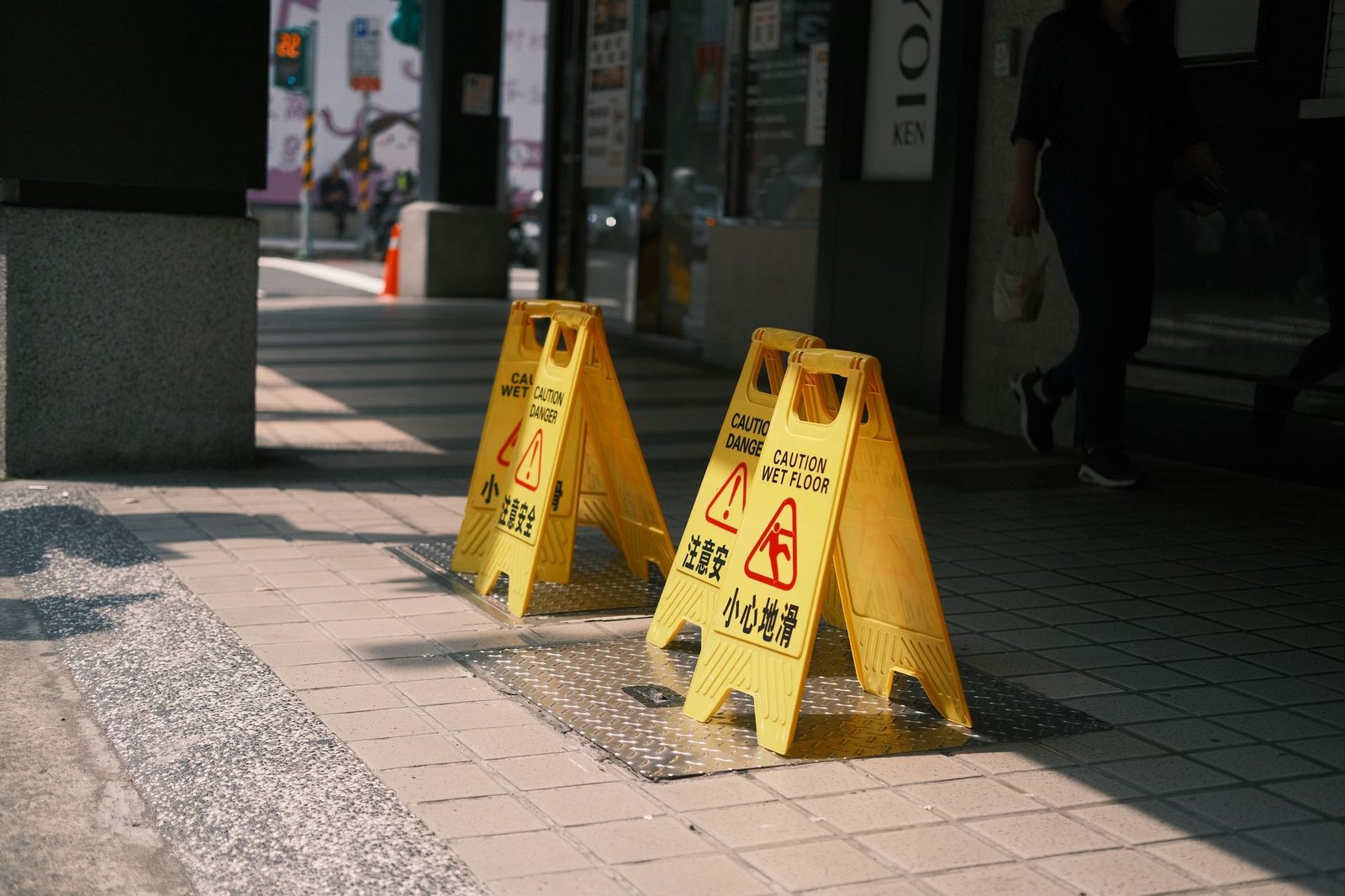
Slip and fall cases are the most common type. They include wet floors, spilled liquids, and unmarked wet areas in stores and restaurants (Cameron v. JMP Pizza). Trip and fall claims involve torn carpet, broken pavement, or uneven parking lot surfaces.
Falls on stairs, missing handrails, and collapsed balconies at apartments and homes raise the same duty questions. So do injuries from falling merchandise, unsafe displays, or poor lighting.
Negligent security is a separate kind of case. It involves an assault or violent crime on the property. That can involve a particular warning or prior similar incidents on the property, or within 500 yards of it, that the owner knew about. The claim also requires proof that the owner failed to exercise ordinary care to remedy or mitigate a specific, known physical condition that created the risk. Under O.C.G.A. § 51-3-55, owners are not required to use extraordinary care or take on the duties of law enforcement.
Short-term rentals such as Airbnb and VRBO properties raise questions about who controlled the property and who knew about the hazard. Landlord rules can matter too. Under O.C.G.A. § 44-7-14, a landlord that has fully parted with possession and the right of possession is not responsible to third persons for damages resulting from the negligence or illegal use of the premises by the tenant. The landlord remains responsible for defective construction and for failing to keep the premises in repair.
How Georgia Splits Fault and Why It Matters
Georgia uses comparative fault, which means fault can be shared. Under O.C.G.A. § 51-12-33, the judge reduces the damages in proportion to the injured person’s own share of fault. The same statute says a plaintiff who is 50 percent or more responsible for the injury recovers no damages.
Fault can be split among several parties. The judge or jury considers the fault of everyone who contributed to the injury, even people not named in the lawsuit, if the plaintiff settled with them or a defending party gave notice not later than 120 days prior to the date of trial that they were wholly or partially at fault. Each person found liable pays only its own share. That liability is not joint, so one defendant does not pay another’s share under this statute.
Insurers and property owners often raise defenses. They may argue the injured person was not an invitee, already knew about the hazard, was distracted, or wore the wrong shoes. They may also argue a danger was obvious. Those arguments are judged on the specific facts, and good records help answer them.
The Two-Year Deadline and Why Early Steps Matter
Georgia generally gives two years to sue for injuries to the person. Under O.C.G.A. § 9-3-33, those actions must be brought within two years after the right of action accrues. Claims for loss of consortium have four years under the same statute.
Timing matters because evidence fades. Video gets recorded over, hazards get repaired, memories blur, and witnesses move away. Waiting can make proof harder long before the deadline arrives.
Practical first steps are simple. Get medical care for your injuries, and keep records of treatment, bills, and missed work. Photograph the scene and the hazard if you can do so safely. Ask for the incident report and keep copies of everything. Be careful about giving a recorded statement to the owner’s insurer. Speaking with a lawyer before that call can help protect your position.
Not sure what your next step is?
Talk it through with our team — the first consultation is free, confidential, and carries no obligation.
What Damages a Premises Claim May Include
Georgia separates general damages from special damages. General damages are presumed to flow from a wrongful act and can be recovered without proof of an amount. Special damages actually flow from the act and must be proved, as explained in O.C.G.A. § 51-12-2.
Special damages are those which actually flow from a tortious act and must be proved in order to be recovered, as explained in O.C.G.A. § 51-12-2. Under O.C.G.A. § 51-12-1.1, they are limited to the reasonable value of medically necessary care, treatment, or services, as the trier of fact decides. Keep bills, emergency care records, surgery and rehabilitation notes, and prescription receipts. Lost wages and reduced ability to work are also part of many claims.
Georgia law also covers families after a death. Under O.C.G.A. § 51-4-5, when death results from a crime or from criminal or other negligence, the personal representative may recover funeral, medical, and other necessary expenses. Where no one else may bring the action, the administrator or executor may sue for the next of kin.
No amount or outcome can be predicted in advance. Each claim depends on the evidence, the injuries, and the rules that apply.
How the Firm Approaches Premises Liability Cases
Our firm is based in Duluth, Georgia, and serves people across metro Atlanta and throughout Georgia. That includes Gwinnett County communities such as Lawrenceville and Norcross.
Peter F. Jaraysi is the responsible lawyer for this page. Brian D. Wright is also one of our lawyers. Our team works on each matter together, and our support staff, including assistants and office staff, helps with scheduling and paperwork.
When you contact us, we review the incident, your injuries, and the questions on your mind. You can ask which rules may apply to your situation before you decide on any next step.
Talk With Our Team About Your Gwinnett County Injury
If you were hurt in a fall or assault on property in Gwinnett County, you may be wondering whether the owner could be responsible. These quick answers cover common questions.
Is there a deadline for a premises claim in Georgia?
Georgia generally gives two years for injuries to the person. The clock is set by statute, so timing matters early.
What is the 50 percent rule?
A person who is 50 percent or more responsible for the injury recovers no damages under O.C.G.A. § 51-12-33. A smaller share reduces the award in proportion.
Must a property owner protect visitors from crime?
Owners must use ordinary care, but they are not required to use extraordinary care or take on law enforcement duties. Negligent security claims also have specific proof requirements.
Can a family sue after a fatal fall on someone else’s property?
Georgia law lets certain representatives pursue damages for the next of kin. The details depend on the facts of the case.
If a fall or assault on someone else’s property has left you or a loved one hurt, you may have a claim, and our team is ready to listen. Contact us for a free, confidential first consultation with no obligation to continue. The responsible lawyer for this page is Peter F. Jaraysi. You can reach our office through our contact page.
What to Expect When You Reach Out
Call for a Free Case Review
Tell us what happened and we will listen to your account of the incident.
Confidential Conversation
Your first consultation is free and confidential.
No Obligation to Continue
You decide whether to move forward. There is no obligation to continue after the first consultation.
Support Along the Way
Our team, including our lawyers and support staff, keeps you informed and answers your questions in plain language.
Protect Your Record After an Injury
Photos of the hazard, the names of any witnesses, and a copy of any incident report can be valuable later. Get medical care promptly and keep every bill and record.
Unsafe Conditions We Review
Wet, Icy or Uneven Surfaces
Slippery floors, broken walkways, potholes in parking lots and loose flooring can cause serious falls.
Poor Lighting and Stairways
Dim areas, missing handrails and broken steps often lead to trips, falls and fractures.
Inadequate Security
Some assaults happen on property where the risk of crime was known or should have been addressed. These cases are reviewed as negligent security matters.
Unsafe Rental Properties
Short-term and vacation rentals, including Airbnb and VRBO stays, can have hazards such as broken railings, pools without barriers and faulty wiring.