
Slip and Fall | Georgia
Is It Worth Suing for a Slip and Fall? What Georgia Residents Need to Know
Understanding your rights, the facts that matter, and when a claim makes sense.
By Peter F. Jaraysi · Published October 01, 2026
Is It Worth Suing for a Slip and Fall? A Georgia Premises Liability Guide
Whether a slip and fall claim is worth pursuing depends on three things: whether the property owner was negligent, how serious your injuries are, and whether you can prove liability. Not every fall on someone else’s property creates a legal claim, but many do—and understanding the factors that determine value helps you decide whether to move forward.
If you've slipped and fallen on someone else's property in Georgia and are now managing injuries, you may have a claim—and people in your situation reach out regularly to understand their options. Talk it through with our team — the first consultation is free, confidential, and carries no obligation.

What makes a slip and fall claim worth pursuing
A slip and fall claim has value when the property owner breached a duty of care and that breach caused your injury. Georgia premises liability law holds owners responsible for maintaining safe conditions and warning visitors of known hazards. The owner must have either actual notice (knew about the hazard) or constructive notice (should have known through reasonable inspection). If you can prove the owner failed in that duty and you were injured as a result, you may have a recoverable claim.
The “worth” of your claim is measured by the damages you can recover: medical bills, lost wages, pain and suffering, and costs of ongoing or future care. A claim with minor injuries and low medical costs may not justify the time and effort, even if liability is clear. Conversely, a claim with significant injuries, substantial medical expenses, and strong proof of negligence can be well worth pursuing.
Understanding negligence in slip and fall cases
Georgia premises liability law requires property owners to maintain safe conditions and warn visitors of known hazards. The owner must have either actual notice (they knew about the hazard) or constructive notice (they should have known through reasonable inspection). If the hazard was temporary and the owner had no reasonable time to discover and fix it, liability may not apply.
Your status as a visitor also matters. Invitees—customers, guests invited for business purposes—receive the highest duty of care from the property owner. Licensees, such as social guests, receive less protection. An owner’s duty to inspect and maintain is stronger for invitees than for licensees, which affects how strong your claim is.
How hard is it to win a slip and fall lawsuit?
Winning requires proving three things: the owner knew or should have known about the hazard, the owner failed to fix it or warn you, and the hazard directly caused your fall and injury. This is harder than it sounds. Insurance companies will argue the hazard was obvious, temporary, or that you were careless. They may claim you didn’t pay attention or that your injuries were pre-existing.
Georgia’s comparative negligence rule works in your favor here. You can recover damages even if you were partly at fault for the slip and fall, as long as you were less than 50% responsible for the accident; if you are 50% or more at fault, you recover nothing. So even if the insurance company argues you were partly careless, you may still have a claim—though your recovery would be reduced by your percentage of fault.
What damages can you recover in a slip and fall claim?
Recoverable damages include medical expenses (emergency care, surgery, physical therapy, ongoing treatment, and future medical needs), lost wages (income lost while recovering and unable to work), and pain and suffering (compensation for physical pain, emotional distress, and reduced quality of life). If the fall caused permanent injury or disability, damages may reflect long-term impact on your health and earning capacity.
The total value of your claim depends on injury severity, the quality of medical evidence supporting your injuries, and how clearly you can prove the owner’s negligence. A claim with clear liability, documented medical treatment, and significant injuries will be worth more than one with weak proof of negligence and minor injuries.
Slip and fall claims in common areas: apartments, businesses, and public spaces
Apartment complex common areas—hallways, stairs, parking lots, lobbies—are frequent sources of slip and fall claims because owners have a duty to maintain them safely. Businesses open to the public have a heightened duty to inspect regularly and address hazards promptly. Slip and fall in a private home is harder to pursue because social guests receive less legal protection than business invitees.
The location and type of property affect both liability and the strength of your claim. A slip on a wet floor in a grocery store, where the owner should have been inspecting regularly, is typically stronger than a slip on ice in a private driveway during winter.
Not sure what your next step is?
Talk it through with our team — the first consultation is free, confidential, and carries no obligation.
Common defenses insurance companies raise
Insurance companies defending slip and fall claims often argue the hazard was “open and obvious” and you should have seen it. They may claim you were careless or not paying attention. They’ll argue the hazard was temporary and the owner had no time to address it. They may say you were partly at fault for the fall, or that your injuries were pre-existing or unrelated to the fall.
Understanding these defenses helps you evaluate whether your claim can withstand challenge. If the hazard truly was obvious—a bright yellow wet-floor sign, for example—your claim is weaker. If you have no medical evidence linking your injuries to the fall, liability becomes harder to prove.
When a slip and fall claim may not be worth pursuing
If your injuries are minor and medical costs are low, the claim value may not justify the time and effort. If you cannot prove the owner knew or should have known about the hazard, liability is weak. If you were significantly at fault for the fall, Georgia’s comparative negligence rule may reduce or eliminate recovery. If the property owner has no insurance and no assets, collecting a settlement becomes difficult even if you win.
Evaluating your slip and fall situation: next steps
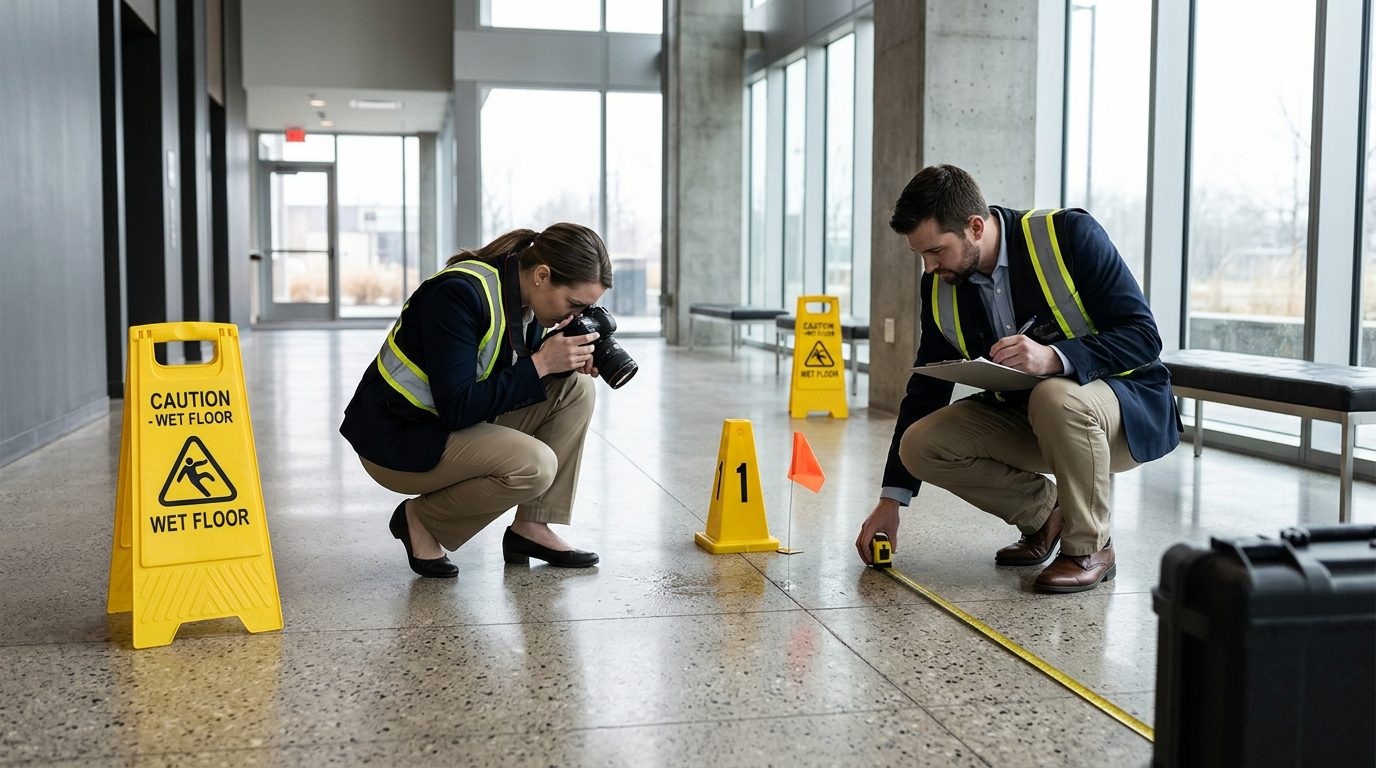
Start by documenting the scene with photos of the hazard, the surrounding area, and any visible injuries. Write down the names and contact information of any witnesses. Seek medical attention and keep all medical records and bills—they’re essential evidence. Report the incident to the property owner or manager and request a written incident report.
Gather evidence of the hazard: maintenance records, prior complaints, or similar incidents at the same location. If other people have fallen in the same spot, that strengthens your claim significantly. The more evidence you have that the owner knew or should have known about the danger, the stronger your case.

FAQ
Can I sue for a slip and fall if I was partly at fault?
What is the deadline to file a slip and fall lawsuit in Georgia?
Georgia’s statute of limitations for personal injury claims, including slip and fall, is typically two years from the date of injury. Waiting too long can bar your claim entirely.
How do I prove the property owner was negligent?
You must show the owner knew or should have known about the hazard through actual notice (they were told) or constructive notice (they should have discovered it through reasonable inspection), and that they failed to fix it or warn you.
What if the property owner doesn’t have insurance?
If the owner has no insurance and limited assets, collecting a judgment becomes difficult. This doesn’t mean you can’t win, but it affects the practical value of pursuing the claim.
How long does a slip and fall case typically take?
Timeline varies widely depending on injury severity, liability clarity, and whether the case settles or goes to trial. Simple cases may resolve in months; complex ones can take years.
If you’ve slipped and fallen on someone else’s property in Georgia and are now managing injuries while wondering whether you have a legal claim, reach out. Our team regularly works with people in exactly your situation—trying to understand whether pursuing a claim makes sense before committing time and resources. Contact us for a free consultation to discuss your specific circumstances, and we’ll give you an honest assessment of your options.
Georgia's Comparative Negligence Rule
You may still recover damages even if you were partly at fault for the slip and fall—as long as you were less than 50% responsible for the accident, though your recovery will be reduced by your share of the fault. This is an important protection under Georgia law.
Key Factors That Determine if a Slip and Fall Claim Is Worth Pursuing
Property Owner Negligence
Did the property owner or manager know—or should they have known—about the hazard? Unreasonable delays in fixing a dangerous condition, or failure to warn visitors, can establish liability.
Your Actual Injuries
Serious injuries with documented medical treatment, ongoing care, lost wages, or lasting effects generally support a stronger claim than minor bumps or scrapes.
Clear Evidence of the Hazard
Photos, witness statements, maintenance records, and incident reports all help prove what caused your fall and who was responsible.
Reasonable Foreseeability
Could the property owner reasonably have anticipated the danger? A wet floor in a grocery store, for example, is foreseeable; a sudden ice storm on an outdoor walkway may not be.
Why It Matters to Get Legal Guidance Early
Time Limits Apply
Georgia law sets a deadline for filing a personal injury claim. Acting promptly protects your right to pursue compensation.
Evidence Fades Fast
Witness memories dim, video footage gets deleted, and hazardous conditions are repaired. Early investigation preserves the facts.
Property Owners Have Defenses
Insurance companies and legal teams work quickly to minimize liability. You need someone advocating for your side from the start.
Your Injuries May Be Worth More Than You Think
Medical bills, lost income, pain and suffering, and future care costs all factor into fair compensation—but only if they're properly documented and presented.
Common Questions About Slip and Fall Claims in Georgia
What if I was partly at fault?
Georgia's comparative negligence law allows recovery even if you share some blame, provided you are less than 50% at fault; if you are 50% or more at fault, you recover nothing. Your recovery may be reduced by your percentage of fault.
Do I need a witness?
A witness helps, but is not required. Medical records, photographs of the hazard, incident reports, and your own testimony can all support your claim.
What if the property owner says I should have seen the hazard?
Property owners have a duty to maintain safe conditions and warn of known dangers. Blaming you for not spotting a hazard does not excuse their failure to fix or warn about it.
How long do I have to file?
Georgia's statute of limitations for personal injury claims sets a window for filing. Waiting too long can bar your claim entirely, so early action is critical.
How We Handle Slip and Fall Cases
We work on a contingency basis: no fees unless there is a recovery. You may still owe case costs. We investigate the facts, gather evidence, negotiate with insurers, and represent you in court if needed—so you can focus on healing.
Ready to Understand Your Rights?
Related practice areas
- Premises Liability Lawyer in Georgia: Injured on Someone Else’s Property
- Premises Liability Evidence Collection Georgia | Guide