
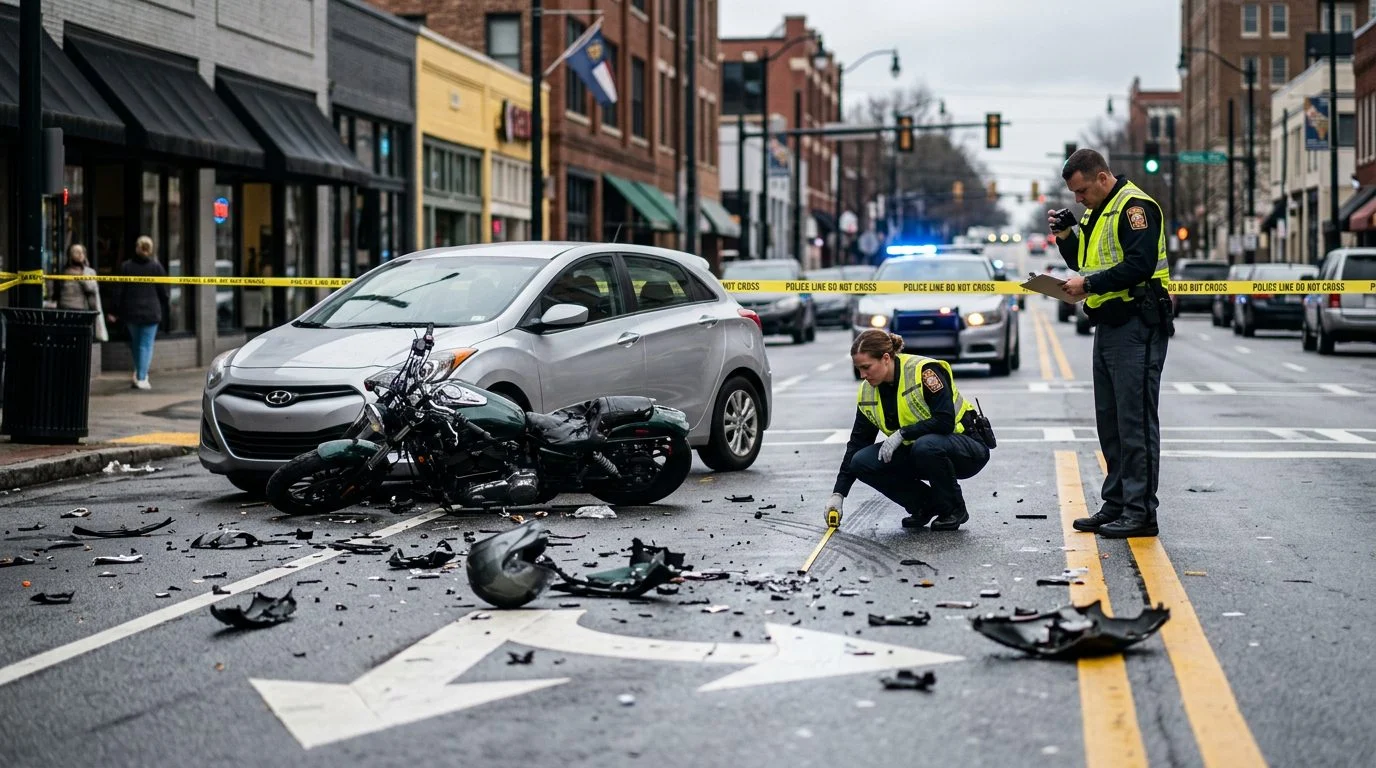
Motorcycle Accidents | Duluth, Georgia
Know Your Next Steps After a Georgia Motorcycle Crash
Plain-language crash information for riders across metro Atlanta and Georgia, plus a checklist to help you document the scene and protect your options.
By Peter F. Jaraysi · Published November 5, 2026
If you were in a motorcycle crash in Georgia, the first steps matter most. This guide covers them in order: safety, medical care, the scene, evidence, and follow-up. It also explains the motorcycle accident statistics that show why helmets and prompt medical checks matter. This is general information, not legal advice, and it doesn’t replace medical care.
Start With Safety: What to Do First After a Motorcycle Crash in Georgia
Your first job is to check for injuries, including your own. Move out of traffic only if it’s safe to do so. A crash is frightening, and many riders feel shaken or sore before they realize how hurt they are.
Call 911 right away. Ask for police and medical help, even if the crash looks minor. Don’t move a seriously injured person unless staying put puts them in immediate danger, such as fire or moving traffic. Let trained responders handle lifting and moving.
If the motorcycle still runs, turn off the engine and turn on the hazard lights. Stay out of the traffic lane. Don’t remove an injured rider’s helmet unless medical responders ask you to.
If a motorcycle crash left you or someone you love hurt, our team at Slam Dunk Attorney is here to talk through what comes next. Talk it through with our team — the first consultation is free, confidential, and carries no obligation.
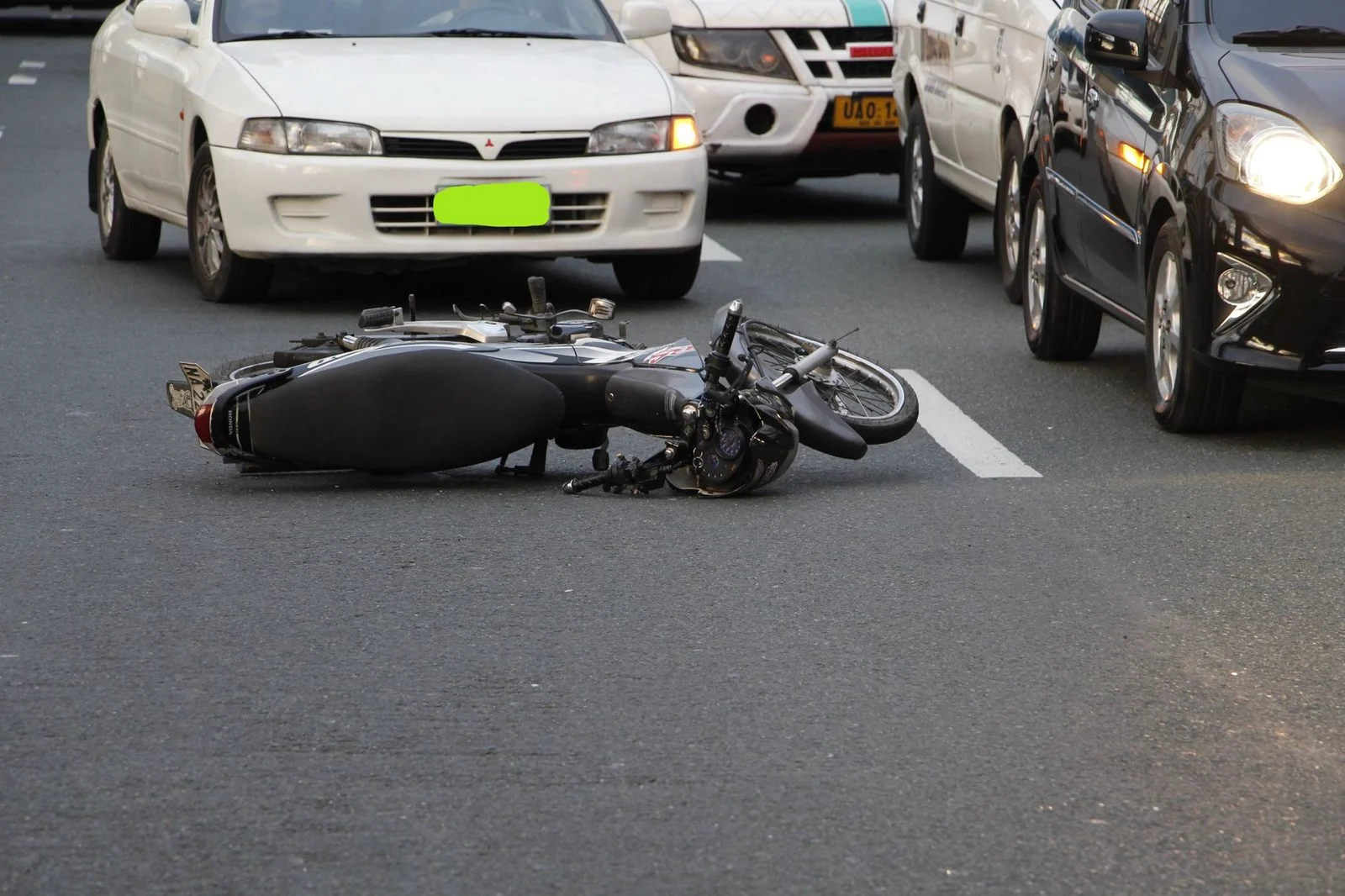
Motorcycle Accident Statistics: What the Official Numbers Show
Georgia’s official crash data is the best place to start for local numbers. The Governor’s Office of Highway Safety publishes a 2020 motorcycles factsheet covering Georgia motorcycle safety practices, licensing and equipment rules, lane-use restrictions, and 2020 crash and fatality data. The Georgia Department of Driver Services also publishes a 2019 motorcycle traffic safety facts sheet with statewide crash and fatality information.
Keep one thing in mind. Statistics describe groups of crashes, not any one crash. A statewide number can’t tell you who was at fault in your accident or what caused it.
Under O.C.G.A. § 40-6-315, no person shall operate or ride upon a motorcycle unless he or she is wearing protective headgear that complies with standards established by the commissioner of public safety, and this requirement does not apply to persons riding within an enclosed cab or motorized cart or to a person operating a three-wheeled motorcycle used only for agricultural purposes. The same law requires an approved eye-protective device on a motorcycle without a windshield. Wearing gear that meets the rules is a good habit for every ride.
Steps 1 to 3: Call 911, Get Medical Care, and Protect the Scene
Get checked by a medical provider, even if you feel fine. Some injuries don’t show symptoms right away. Internal bleeding and head injuries are two examples. A medical record also creates a clear timeline that links your injuries to the crash.
Motorcycle crashes often cause road rash, broken bones, and head, spine, and internal injuries. Road rash is skin damage from sliding across pavement. Tell every provider how the crash happened, and list every place that hurts. Small details help your doctor understand what happened.
Protect the scene while you wait for help. Keep yourself out of traffic. If the injured person is cold, cover them with a jacket or blanket and keep them still. Stay with them and keep talking to them until responders arrive.
Steps 4 to 6: Document the Scene With Photos, Positions, and Witnesses
Photos are often the most useful evidence you can gather. Take them early, before vehicles are moved, if it’s safe to do so. Photograph the motorcycle and every other vehicle from several angles. Capture license plates, the roadway, traffic signals or signs, skid marks, road debris, the weather, and any visible injuries.
Take wide shots to show where each vehicle ended up. Take close shots to show the damage. Photograph your helmet and gear too. Damage to them can show how hard the impact was.
Get names and phone numbers from witnesses. Write down what they say they saw. Don’t argue about fault with anyone at the scene.
A dashcam or a nearby business camera may have recorded the crash. Footage is often overwritten quickly. Write down where each camera points, so someone can ask for the footage soon after the crash.
Steps 7 to 8: Exchange Information and Get the Police Report
Collect these details from every driver: full name, phone number, address, driver’s license number, license plate, insurance company, and policy number. Ask to photograph each insurance card and license if the driver agrees.
Ask the responding officer for their name, badge number, and the report number. Then ask how to get a copy of the crash report. The report is the official record of what the officer documented at the scene.
Stay until the steps are done.
Record the motorcycle’s make, model, and damage. Note any damaged helmet or gear as evidence of the impact.
What to Avoid Saying and Signing at the Scene
Don’t admit fault. Avoid phrases like “it was my fault” or “I should have seen him.” Even a quick apology can be heard as an admission.
Stick to facts. Say where you were, which way you were traveling, and what you saw and did. Facts are different from guesses about speed, distance, or cause. Don’t guess.
Georgia uses a modified comparative fault rule. Under O.C.G.A. § 51-12-33, damages are reduced by the injured person’s percentage of fault. A person who is 50 percent or more at fault recovers nothing. Under O.C.G.A. § 51-12-33, when the plaintiff is to some degree responsible for the injury or damages claimed, the trier of fact determines the plaintiff’s percentage of fault, and the judge reduces the amount of damages otherwise awarded in proportion to that percentage. Under subsection (g), a plaintiff who is 50 percent or more responsible for the injury or damages claimed is not entitled to receive any damages. That’s why what you say at the scene matters.
Don’t sign papers from another driver or insurer on the spot without reading them. Other insurers may call you soon after the crash. You can take time before giving a recorded statement.
Not sure what your next step is?
Talk it through with our team — the first consultation is free, confidential, and carries no obligation.
Keep Records After You Leave the Scene
Keep every medical record, bill, prescription receipt, and appointment note in one folder. Add a daily journal of pain, symptoms, and activities you can’t do. Write the date, the symptom, and what you couldn’t do that day.
Keep records of lost income too. Save pay stubs, time-off records, and a note from your employer about missed work.
Georgia generally requires a personal injury lawsuit to be filed within two years after the right of action accrues, meaning when the claim begins. That rule comes from O.C.G.A. § 9-3-33. Other deadlines can apply depending on the facts. Claims against a city require written notice to the governing authority within six months of the event, under O.C.G.A. § 36-33-5. Claims against the State of Georgia require written notice within 12 months of when the loss was discovered or should have been discovered, under O.C.G.A. § 50-21-26.
Keep copies of all insurance letters. For each phone call, note the date, the person’s name, and what was said.

Talk With Our Team About What Happens Next
After a crash, many people wonder when to speak with an insurer or what steps come next. If you’re caring for an injured rider or dealing with a damaged motorcycle, you don’t have to work through it alone. Our team at Slam Dunk Attorney, based in Duluth, Georgia, is available to talk through your situation. Our free first consultation is confidential and carries no obligation to continue. You can reach out through our contact page.
Common Questions About Motorcycle Crashes in Georgia
What do motorcycle accident statistics for Georgia show?
Georgia’s official factsheets describe crash and fatality data for groups of riders. They don’t explain what happened in any one crash.
Is a helmet required in Georgia?
Yes. Georgia law requires riders to wear protective headgear that meets state standards.
How long do I have to file a lawsuit?
Georgia generally allows two years for a personal injury lawsuit. Shorter notice rules can apply to claims against cities or the state.
Do I have to stop after a motorcycle crash?
Yes.
What if I was partly at fault?
Georgia reduces damages by the injured person’s share of fault. A person who is 50 percent or more at fault recovers nothing (O.C.G.A. § 51-12-33; Quynn v. Hulsey (2020)).
Slam Dunk Attorney, Duluth, Georgia. Responsible lawyer for this page: Peter F. Jaraysi. This page is general information, not legal advice. Past results don’t predict future outcomes.
How Our Firm Can Help
Free First Consultation
Our first consultation is free, confidential, and carries no obligation to continue.
Serving Metro Atlanta and Georgia
We represent injured riders in Duluth, Lawrenceville, Johns Creek, Alpharetta, Marietta, Norcross, Kennesaw, Dunwoody, and communities across the state.
Lawyers Who Take Your Call
Peter F. Jaraysi and Brian D. Wright and our team listen to your account and explain your options in plain language.
Focused on Serious Injuries
We understand how a motorcycle crash can affect your health, work, and family, and we approach every case with care.
Be Careful Before You Speak to an Insurer
Insurance adjusters may contact you soon after a crash. Before giving a recorded statement or posting about the accident online, consider speaking with a lawyer about your situation.
Motorcycle Scene Checklist
Get to Safety and Call 911
If it is safe, move out of traffic and call 911 so police and medical help can respond to the scene.
Photograph Everything
Take pictures of the vehicles, the roadway, traffic signals, skid marks, debris, and your injuries.
Collect Witness Details
Write down names and phone numbers of drivers, passengers, and anyone who saw the crash.
Write Down What You Remember
Record the time, weather, speed, and sequence of events while the details are still fresh.
Get Medical Care
Seek evaluation even if your injuries seem minor, and keep every record, bill, and appointment note.
Save Your Gear and Damaged Property
Keep your helmet, riding gear, and motorcycle as they are, and do not repair them until you have spoken with a lawyer.