
Motorcycle Accidents | Duluth, Georgia
Key Georgia Rules After a Motorcycle Accident
Georgia's motorcycle laws, insurance questions and fault rules can shape what happens next. Here is a plain-language guide to the basics.
By Peter F. Jaraysi · Published November 10, 2026
If you were hurt in a motorcycle crash near Suwanee, Georgia, state law shapes your next steps. Slam Dunk Attorney is based in Duluth, Georgia, and handles motorcycle crash claims across metro Atlanta.
What to Do in the First Days After a Motorcycle Crash in Suwanee
Get a medical checkup as soon as you can, even if you feel fine. Some injuries, including concussions and internal bleeding, can take hours or days to show symptoms. Gaps in treatment also give insurers a reason to question how serious your injuries were.
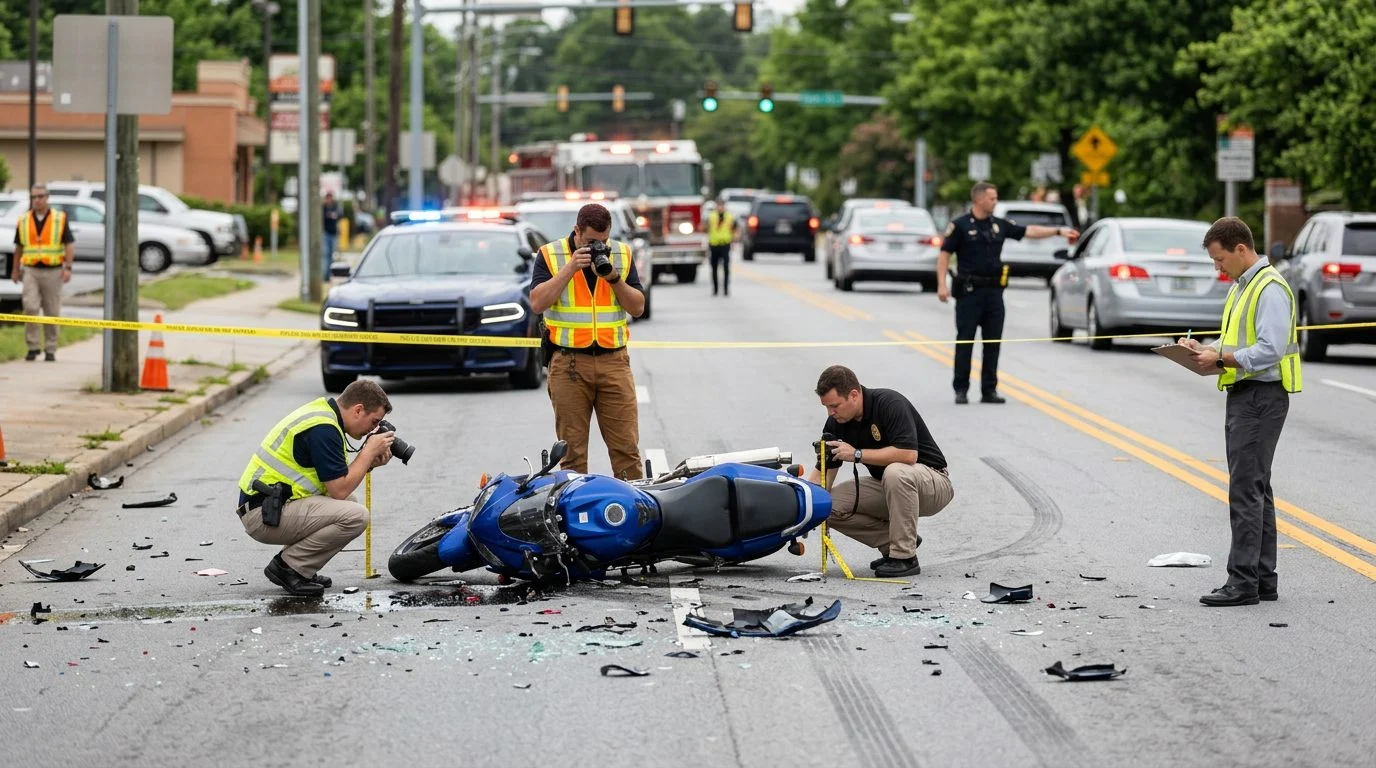
Report the crash to police and ask for the crash report number. Take photos of the road, your bike, your helmet and gear, and any visible injuries. Write down what you remember while it’s fresh, including the weather, traffic, and what the other driver said.
Keep every record. That means medical bills, prescriptions, time missed from work, pay stubs, and repair estimates. A simple daily note about pain and daily limits can also help later.
Be careful with recorded statements to an insurance adjuster. The adjuster works for the insurer, not for you. You can be polite and still say you need time to understand your options before you give a recorded statement.
Not sure what your next step is?
Talk it through with our team — the first consultation is free, confidential, and carries no obligation.
How Georgia Law Shapes a Motorcycle Injury Claim
Each one can change how a claim works.
First, Georgia requires operators and riders to wear protective headgear that meets state standards. O.C.G.A. § 40-6-315 also requires approved eye protection on a motorcycle without a windshield.
Second, O.C.G.A. § 51-12-33 reduces your damages by your percentage of fault. If you are 50 percent or more responsible, you cannot recover damages. Under O.C.G.A. § 51-12-33, when the plaintiff is to some degree responsible for the injury or damages claimed, the trier of fact determines the plaintiff’s percentage of fault and the judge reduces the amount of damages otherwise awarded to the plaintiff in proportion to that percentage of fault; the plaintiff is not entitled to receive any damages if the plaintiff is 50 percent or more responsible for the injury or damages claimed.
Don’t assume you have extra time.
Government defendants have shorter clocks. A claim against a Georgia city must be presented in writing to the city’s governing authority within six months under O.C.G.A. § 36-33-5. That claim must also state a specific dollar amount. Road defect cases need early review for this reason.
Common Crash Patterns on Suwanee-Area Roads
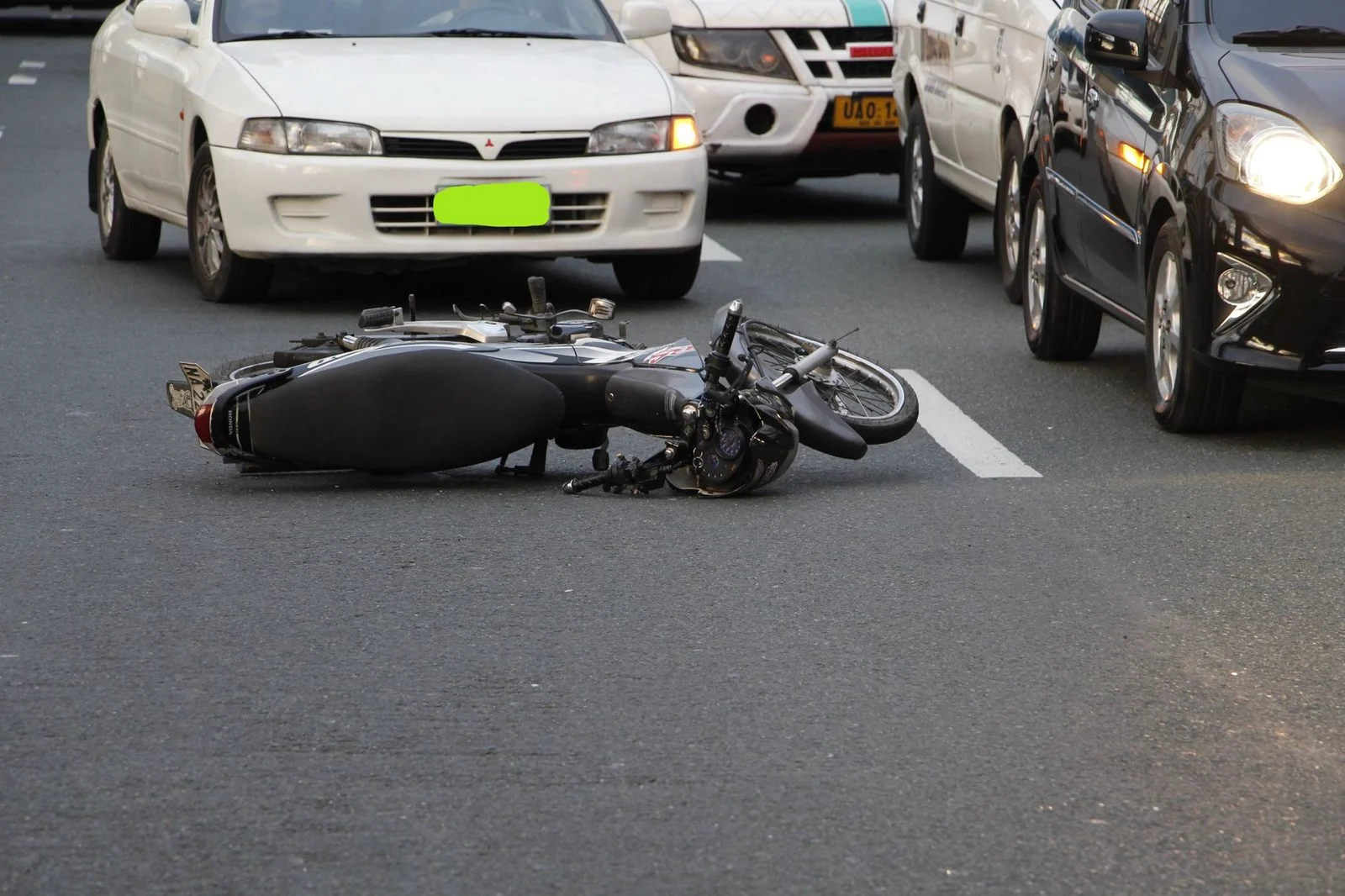
Many motorcycle crashes happen when a driver doesn’t see the rider. Left turns, lane changes, and stop-and-go traffic are common settings. Riders often describe these moments as sudden, with little time to react.
Left-turn collisions happen when a driver turns across an oncoming bike. Lane changes and merges are risky when a vehicle moves into a rider’s blind spot. Rear-end crashes happen in heavy traffic when a driver doesn’t stop in time.
Road hazards matter too. Gravel, potholes, debris, and poor lighting can cause a rider to lose control. A crash with a large truck carries even more risk. The Insurance Institute for Highway Safety notes that large trucks often weigh 20 to 30 times as much as passenger vehicles.
Each crash turns on its own facts. These patterns are a starting point for questions, not a prediction of who is at fault.
Who May Be Responsible for a Motorcycle Crash
The at-fault driver is the most common party. That driver may drive a car, pickup, or commercial truck. In some cases, the vehicle owner or the driver’s employer may also be responsible.
A property owner or contractor can be responsible for a dangerous condition on private property. Under O.C.G.A. § 51-3-1, an owner or occupier must use ordinary care to keep premises and approaches safe for people invited onto them. A government entity may be responsible for a roadway defect, but those claims follow the special notice rules above.
Several parties can share fault. Under O.C.G.A. § 51-12-33, each person found liable pays only its own share, and that share is not joint liability. Identifying every party early matters.
Insurance is another piece. Under O.C.G.A. § 33-7-11, Georgia auto policies must include uninsured motorist coverage, with limits chosen by the insured. That coverage may matter when the at-fault driver has little or no coverage.
Service Area: Suwanee, Gwinnett County, and Nearby Metro Atlanta
Suwanee sits in Gwinnett County, where riders share busy commuter and commercial roads.
Slam Dunk Attorney is based in Duluth, Georgia. The firm represents injured riders and passengers across metro Atlanta, including nearby communities like Johns Creek and Norcross.
This firm handles matters under Georgia law.
What a Free Motorcycle Accident Consultation Covers
A free consultation is a conversation about how your crash happened, your injuries, and the insurance involved. It also covers the Georgia deadlines that may apply to your situation.
You can ask how the claims process works. You can also ask questions with no obligation to move forward. Nobody can promise an outcome at this stage, and the consultation does not include a prediction of what your claim is worth.
Fees are discussed at the consultation. Some matters are handled on a contingency basis, which means the fee depends on the outcome, but the client may still be responsible for court costs and case expenses. Ask about every cost before you agree to anything.
Not sure what your next step is?
Talk it through with our team — the first consultation is free, confidential, and carries no obligation.
Talk With a Suwanee-Area Motorcycle Accident Lawyer About Your Crash
Georgia’s helmet, fault, and deadline rules can all affect a motorcycle crash claim. A lawyer can review those rules against the facts of your crash.
Do I have to wear a helmet in Georgia?
Yes. Georgia requires riders to wear protective headgear that meets state standards.
Can I recover if I was partly at fault?
O.C.G.A. § 51-12-33 provides that the judge shall reduce the amount of damages otherwise awarded to the plaintiff in proportion to his or her percentage of fault, as determined by the trier of fact, and that the plaintiff shall not be entitled to receive any damages if the plaintiff is 50 percent or more responsible for the injury or damages claimed. Your award is reduced by your share of fault (O.C.G.A. § 51-12-33; Quynn v. Hulsey (2020)).
You can read more in our motorcycle accident claims guide. This article is general information, not legal advice, and no particular outcome can be promised. Slam Dunk Attorney is based in Duluth, Georgia.
If you were hurt on a Suwanee-area road and are still deciding whether to talk with a lawyer, ask us for a free case review. We’ll go over your crash details and explain your options, and you decide what comes next.
A Helpful Tip
Before you give a recorded statement to an insurance adjuster, consider talking with a lawyer. Insurers often ask questions early, and your words can be used later.
Steps That Can Help Protect Your Case
Get medical care
Even if you feel okay, see a doctor promptly. Some injuries, including head and spinal injuries, may not show symptoms right away.
Document the scene
If you are able, photograph the vehicles, the road, traffic signs and your injuries. Note the time, weather and any witnesses.
Keep your records
Save repair estimates, medical bills, prescriptions and time missed from work. Organized records make it easier to review your situation.
Limit public posts
Think carefully before posting about the crash or your activities on social media. Statements made online can be used in an insurance claim.