
Motorcycle Accidents
Understanding the Insurance Claim Process After a Motorcycle Accident in Georgia
After a crash, knowing what to expect helps you protect your rights. We walk you through each step.
By Peter F. Jaraysi · Published September 29, 2026
How to File a Motorcycle Accident Insurance Claim in Georgia: A Step-by-Step Guide
After a motorcycle accident in Georgia, filing an insurance claim is your path to recovering costs for repairs, medical treatment, and lost wages. The process involves notifying your insurer promptly, gathering documentation, cooperating with an adjuster’s investigation, and understanding your rights throughout. This guide walks you through each stage so you know what to expect and what to do.
If you've filed a motorcycle claim in Georgia and feel the settlement offer doesn't match your injuries or damages, our team handles these disputes regularly—reach out for a free case review. Talk it through with our team — the first consultation is free, confidential, and carries no obligation.

What to Do Immediately After a Motorcycle Accident
Your first actions after a crash set the foundation for a successful claim. Check yourself and any passengers for injuries and call 911 if anyone needs emergency care. If the accident is minor and you’re safe, move to a secure location away from traffic.
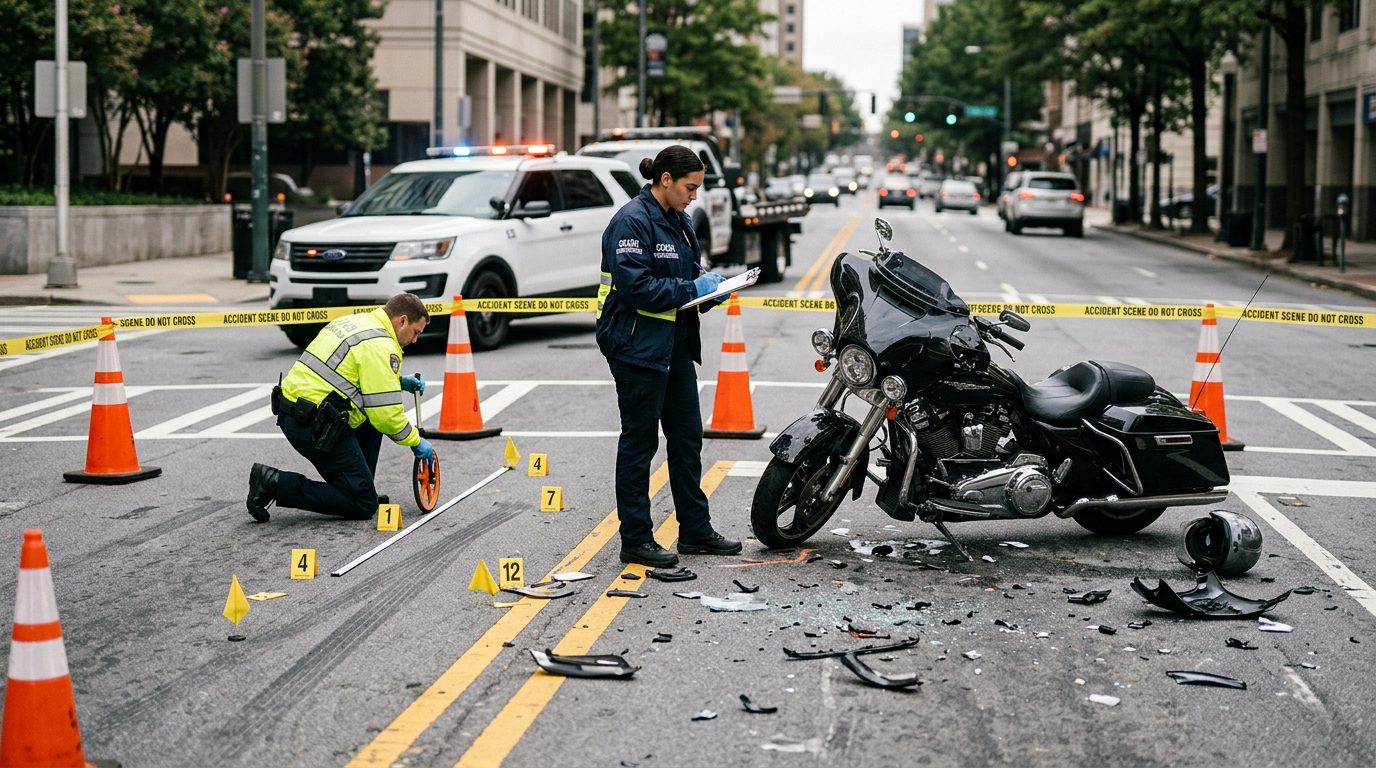
Contact law enforcement and request a police report number—this document is critical for your claim. While waiting for police, document the scene thoroughly: take photos and video of all vehicle damage, road conditions, traffic signs, debris, and the overall accident layout. Collect the other driver’s name, phone number, address, and insurance information. Get contact details from any witnesses; their statements often prove invaluable if liability is disputed.
Do not admit fault or apologize for the accident, and don’t sign anything except for police or emergency responders. Even if your injuries feel minor, seek medical attention. A medical record created promptly after the accident strengthens your claim and documents the link between the crash and your treatment.
Notify Your Insurance Company
Contact your insurer as soon as possible after the accident. Most motorcycle policies require prompt notice; delays may affect your claim’s validity. Have your policy number and a clear, factual account of what happened ready when you call.
Provide the details without speculation or assumptions about fault. Ask for a claim number and the name of your assigned adjuster. Confirm how your adjuster prefers contact and the timeline for next steps. Keep detailed records of every conversation: the date, time, adjuster’s name, and what was discussed. These notes protect you if disputes arise later.
Gather and Organize Documentation
Strong documentation is the backbone of a strong claim. Collect and organize these materials:
- Police report and incident number
- Photos and video from the accident scene
- Medical records and bills from all treatment
- Proof of lost wages if you missed work
- Repair estimates from motorcycle repair shops
- Receipts for any out-of-pocket expenses related to the accident
- Written or recorded witness statements
- Your insurance policy and declarations page
- All correspondence with the other party’s insurer
Organize these documents chronologically and by category. Share copies (not originals) with your adjuster as requested. Keep originals in a safe place.
The Insurance Claim Investigation Process
Once you’ve filed, your adjuster reviews your claim and all submitted documentation. The adjuster may contact witnesses, request additional information, and investigate liability—who was at fault. They’ll evaluate the extent of damage and injury based on repair estimates, medical records, and your account.
The insurer may request an independent medical examination to verify injury claims. The investigation timeline typically takes weeks to months, depending on liability complexity and injury severity. You have the right to ask your adjuster questions and request updates on progress. Don’t hesitate to follow up if you haven’t heard back within a reasonable timeframe.
Understanding Liability and Coverage in Georgia
Georgia is a fault-based state, meaning the at-fault party’s insurance typically covers damages from a motorcycle accident. The adjuster determines fault based on evidence, the police report, and witness accounts.
If the other driver is uninsured or underinsured, your own collision and comprehensive coverage applies. Medical payments coverage (if included in your policy) may cover treatment costs regardless of fault, ensuring immediate medical expenses are addressed. Uninsured and underinsured motorist coverage protects you when the other driver lacks adequate insurance to cover your damages—a critical protection many riders overlook.
Not sure what your next step is?
Talk it through with our team — the first consultation is free, confidential, and carries no obligation.
Claim Settlement and Payment
Once the investigation is complete, the insurer makes a liability determination. If liability is clear, they issue a settlement offer. Review the offer carefully and compare it to your documented damages, medical bills, and lost wages.
You can accept the offer, negotiate for more, or reject it. Payment is typically issued within 30 days of settlement agreement. If you disagree with the settlement or believe the offer undervalues your claim, you have options: mediation, negotiation, or legal action.
Common Challenges in Motorcycle Accident Claims
Disputed liability occurs when both parties claim the other was at fault. Adjusters sometimes underestimate injury severity or treatment costs. Delays in investigation or claim processing frustrate riders. Some insurers deny claims based on policy exclusions or coverage limits. Without complete documentation, proving damages becomes difficult. Insurers may also pressure you to settle quickly for less than fair value.
Understanding these challenges helps you prepare. Thorough documentation and clear communication with your adjuster reduce the risk of underestimation or denial.
Your Rights During the Claim Process
Georgia law protects you throughout the claim process. You have the right to timely communication from your insurer. You can review all evidence the insurer uses to evaluate your claim. You may submit additional documentation or evidence at any time. You can dispute a claim denial or low settlement offer.
If your insurer acts in bad faith—unreasonably delaying payment, denying a valid claim without justification, or refusing to investigate fairly—you have the right to file a complaint with the Georgia Department of Insurance. You also have the right to legal representation if your claim becomes disputed or denied.
FAQ
How long does a motorcycle insurance claim take in Georgia?
Most claims take weeks to months, depending on liability complexity and injury severity; simple, clear-liability claims may settle faster.
What if the other driver doesn’t have insurance?
Your uninsured motorist coverage (if you have it) protects you; your collision coverage may also apply.
Can I be partially at fault and still recover?
Yes—Georgia allows recovery even if you’re partially at fault, though your recovery is reduced by your percentage of fault.
What should I do if my claim is denied?
Review the denial letter carefully, gather any additional evidence, and contact your adjuster to discuss. You can dispute the denial or file a complaint with the Georgia Department of Insurance.
Do I need a lawyer for my motorcycle accident claim?
Many straightforward claims are resolved without legal help. If liability is disputed, the settlement offer seems low, or the insurer denies your claim, speaking with a lawyer helps protect your rights.
If you’ve filed a motorcycle claim in Georgia and feel the settlement offer doesn’t match your injuries or damages, our team handles these disputes regularly—reach out for a free case review.
Key Steps in a Georgia Motorcycle Insurance Claim
Report the Accident
Notify your insurance company as soon as possible. Provide a clear account of what happened, the other party's information, and any witness details. Most insurers have a deadline for reporting; check your policy.
Document Everything
Gather photos of vehicle damage, the accident scene, road conditions, and any visible injuries. Keep medical records, repair estimates, and all correspondence with the insurance company.
Understand Your Coverage
Review your policy to know what's covered—collision, comprehensive, uninsured motorist, and medical payments coverage all play a role depending on the circumstances of your crash.
Work Through the Claim
The insurer will investigate, request statements, and may arrange inspections or medical evaluations. This process typically takes weeks to months depending on liability complexity and injury severity.
What If the Other Driver Has No Insurance?
If the at-fault driver is uninsured, your uninsured motorist coverage (if you carry it) is designed to protect you. Your collision coverage may also apply. Review your policy or contact your insurer to understand your options in this situation.
Why You Need Support Through This Process
Protect Your Rights
Insurance companies have their own interests. Having someone in your corner ensures your claim is handled fairly and you understand what you're agreeing to.
Handle the Paperwork
Claims involve forms, deadlines, and technical language. We manage the documentation so nothing falls through the cracks.
Negotiate on Your Behalf
If an initial offer doesn't reflect your losses, we can advocate for fair compensation based on your injuries, medical costs, and other damages.
Save You Time
While you focus on healing, we handle communications with insurers, medical providers, and other parties involved in your claim.
About Fees
We represent injured motorcycle riders on a contingency basis: no fees unless there is a recovery. You may still owe certain case costs; we'll discuss those details during your free consultation.