
Georgia Car Accident Law
Is Georgia a No-Fault State for Car Accidents?
Understanding Georgia's fault-based system and how it affects your claim.
By Peter F. Jaraysi · Published October 05, 2026
Is Georgia a No-Fault State for Car Accidents?
No—Georgia is an at-fault state, not a no-fault state. In Georgia’s at-fault system, the driver who caused the accident is liable for damages. The at-fault driver’s insurance covers medical bills, property damage, lost wages, and pain and suffering. This differs from no-fault states like Florida or New York, where each person’s own insurance covers their injuries regardless of who caused the accident.
Understanding Georgia’s at-fault system is crucial after a car accident. It determines who pays, how much you can recover, and whether you have a valid claim.
If you're injured in a Georgia car accident and unsure whether you can recover damages, reach out to discuss your situation and what it means for your claim. Talk it through with our team — the first consultation is free, confidential, and carries no obligation.

Georgia Is an At-Fault State, Not a No-Fault State
In Georgia’s at-fault system, the driver who caused the accident bears financial responsibility. Law enforcement investigates and assigns fault based on evidence. The at-fault driver’s liability insurance then covers damages to other parties.
This differs fundamentally from no-fault states. In those states, your own insurance pays your medical bills and lost wages first, regardless of fault. Georgia doesn’t work that way. Here, you file a claim against the at-fault driver’s insurance or pursue a lawsuit to recover damages.
How Georgia’s Comparative Fault Rule Works
Georgia uses a modified comparative fault rule O.C.G.A. § 51-12-33 (Cameron v. JMP Pizza, Inc. (2026)). This rule recognizes that accidents rarely involve one person’s sole responsibility. You can recover damages even if you’re partly at fault—as long as you’re less than 50% responsible.
Here’s how it works: If you’re found 30% at fault and the other driver 70% at fault, you recover 70% of your damages. If you’re found 40% at fault, you recover 40% of damages. If you’re found 50% or more at fault, you recover nothing.
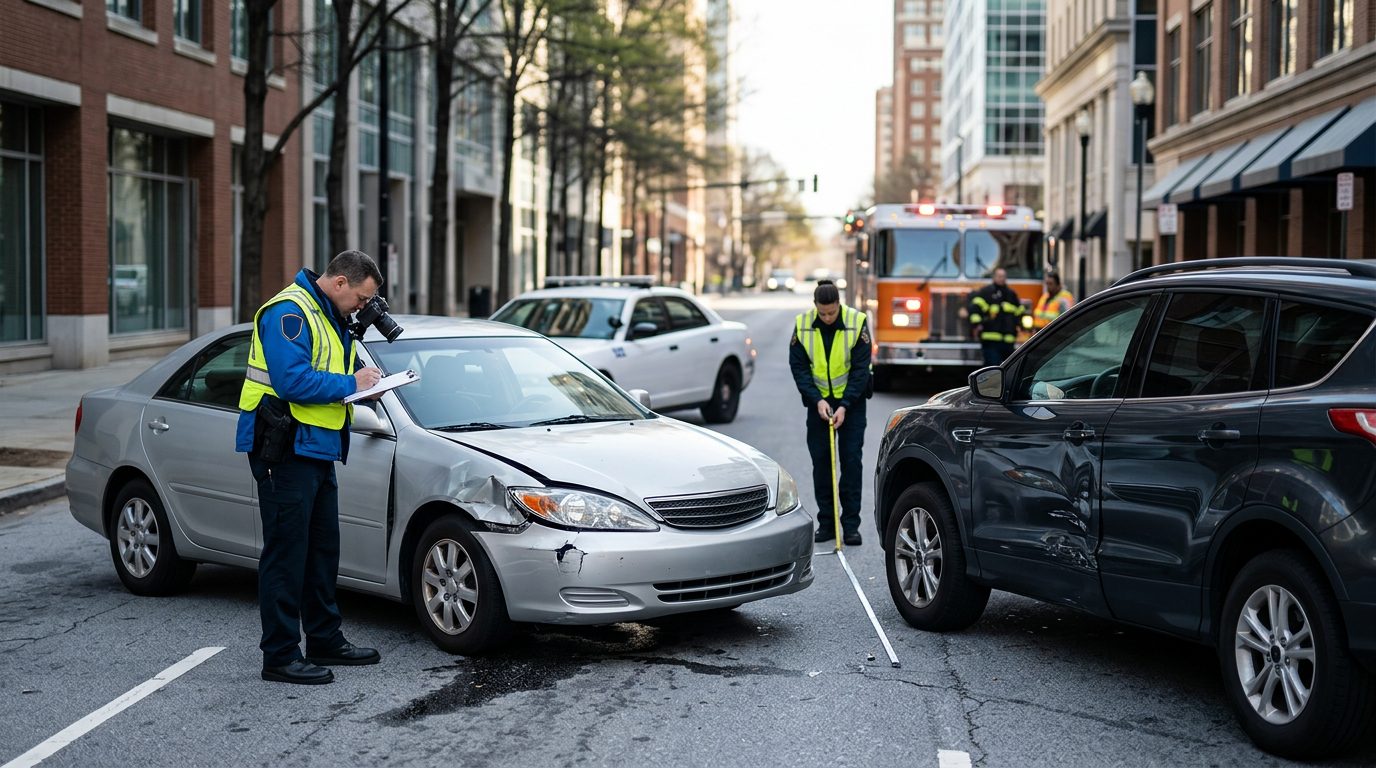
Fault is determined by examining evidence: police reports, witness statements, photographs of vehicle damage and road conditions, traffic laws, and driver behavior. Insurance adjusters and, if necessary, a jury weigh this evidence to assign a percentage of fault to each party.
Learn more about how comparative fault affects your claim O.C.G.A. § 51-12-33 (Cameron v. JMP Pizza, Inc. (2026)).
What Happens After a Georgia Car Accident
After a car accident in Georgia, take these steps:
-
Report to police. Call 911 or local https://dps.georgia.gov/ police. Obtain the police report number for your records.
-
Notify your insurance company. Report the accident to your own insurer promptly, even if you’re not at fault.
-
Document the scene. Take photos of vehicle damage, road conditions, traffic signals, weather, and visible injuries. These images become critical evidence.
-
Gather witness information. Ask bystanders for their names and phone numbers. Witness statements carry weight in fault determination.
-
Seek medical attention. Some injuries appear hours or days later. Keep detailed records of all medical treatment, tests, and prescriptions.
-
The at-fault driver’s insurance investigates. The other driver’s insurer will contact you and may request a recorded statement. You’re not required to give one without legal guidance.
-
File a claim or pursue a lawsuit. You can file a claim with the at-fault driver’s insurance. If the claim is denied or the offer is inadequate, you may file a lawsuit.
Learn more about how to handle car accident claims.
Will My Insurance Go Up If I’m Not at Fault in Georgia?
If you’re not at fault, your rates should not increase under Georgia’s safe driver rules. If you’re found partially at fault, your own insurer may raise your rates depending on your policy terms, driving history, and accident severity.
Ask your insurer about potential rate impact before filing a claim. Some people handle minor damage through their own collision coverage instead of filing a claim against the other driver’s insurance. This can help protect your rates. Your insurer can also pursue the at-fault driver for reimbursement through subrogation.
Who Pays for Car Damage in Georgia?
The at-fault driver’s liability insurance pays for property damage to your vehicle. If the at-fault driver is uninsured or underinsured, your own uninsured/underinsured motorist (UIM) coverage may apply.
You can file a claim under your own collision coverage and allow your insurer to pursue the at-fault driver for reimbursement. If your damages exceed the at-fault driver’s policy limits, you may pursue a personal lawsuit for the remainder.
Learn more about uninsured motorist coverage and Georgia insurance requirements.
Not sure what your next step is?
Talk it through with our team — the first consultation is free, confidential, and carries no obligation.
What Is Georgia’s “No Touch” Law?
Georgia prohibits drivers from texting while driving. Violation of this law is evidence of negligence in a car accident case.
If the other driver was texting at the time of the accident, this strengthens your claim of fault against them. Police reports and cell phone records can help establish whether texting occurred. Texting violations are powerful evidence in determining fault.
When Should You Seek Legal Guidance?
Consider reaching out if:
- You’re injured and the other driver’s insurance denies your claim or offers an inadequate amount.
- You’re partially at fault and unsure whether you can still recover.
- The accident involves serious injury, multiple vehicles, or a commercial truck.
- The at-fault driver is uninsured or underinsured.
- You’re facing pressure from an insurance adjuster or are uncertain about your rights.
Frequently Asked Questions
Can I recover damages if I’m partly at fault in Georgia?
Yes, as long as you’re less than 50% at fault. You’ll recover a percentage of damages equal to the other party’s share of fault.
What should I do if the at-fault driver is uninsured?
Your uninsured motorist coverage may cover your damages. Contact your own insurer to file a claim under this coverage.
What if I’m injured in a Georgia car accident?
Reach out to discuss your situation. You don’t have to navigate insurance companies or fault disputes alone. We can review your claim and explain your options.
Slam Dunk Attorney
Duluth, Georgia
Contact us for a free consultation
Georgia Uses a Fault-Based System
Unlike no-fault states, Georgia requires the at-fault driver's insurance to cover your damages. You'll need to prove the other party was responsible for the accident.
Common Questions About Georgia Car Accident Claims
Can I recover damages if I'm partly at fault?
Yes, as long as you're less than 50% at fault. You'll recover a percentage of damages equal to the other party's share of fault.
What if the at-fault driver is uninsured?
Your uninsured motorist coverage may cover your damages. Contact your own insurer to file a claim under this coverage.
Who pays for my medical bills and lost wages?
In Georgia's fault system, the at-fault driver's liability insurance typically covers these expenses. If they're uninsured or underinsured, your own policy may provide protection.
How long do I have to file a claim?
Georgia law sets specific time limits for filing a lawsuit. It's important to act promptly and understand your deadlines.
How Slam Dunk Attorney Helps
Navigate Georgia's Fault Rules
We explain how Georgia's fault-based system applies to your accident and what you may be entitled to recover.
Handle Insurance Claims
We manage communications with insurance companies and work to resolve your claim fairly.
Answer Your Questions
We listen to your situation and explain your options in plain language, so you understand what happens next.
Represent You Throughout
Whether settling your claim or pursuing litigation, we handle the legal work so you can focus on recovery.