
Nursing Home Abuse | Duluth, Georgia
Suing a Nursing Home in Georgia: What Families Should Know Before Deciding
Facilities have legal teams and insurers, and families are often dealing with grief while they make decisions. Here is a clear, step-by-step way to think it through.
By Peter F. Jaraysi · Published November 16, 2026
How Difficult Is It to Sue a Nursing Home?
Not sure what your next step is?
Talk it through with our team — the first consultation is free, confidential, and carries no obligation.

The Short Answer: How Difficult Is It to Sue a Nursing Home?
How difficult is it to sue a nursing home? In Georgia, it is demanding, but families do bring these claims. The process has several stages, takes time, and often meets strong resistance from the facility and its insurer. How hard a case is depends on the facts, and no outcome can be predicted from general information.
If you are reading this, something may have gone wrong. Maybe your mother came home with a new bruise or an unexplained fall. Maybe your father declined quickly, and the staff has not answered your questions. You may be worried, tired, and unsure what to do first.
This page explains what counts as neglect or abuse, what must be proven, how Georgia time limits work, the obstacles families often meet, and the steps a claim usually follows.
What Counts as Nursing Home Neglect or Abuse?
Neglect is a failure to give a resident the care they need. Abuse involves harmful or intentional mistreatment. Nursing home residents and their families often have questions about what to do when a loved one may have been harmed, and our team is available to talk through those concerns.
Georgia law adds that each resident must receive care that is adequate and appropriate. That care must come with reasonable skill and respect for personal dignity (Georgia resident care law).
Neglect is often the central issue. Common examples include falls that were not prevented, bedsores (pressure ulcers), dehydration, malnutrition, untreated infections, medication errors, and poor supervision.
Harm takes several forms. These include physical injury, emotional harm, and, in the worst cases, wrongful death. Some injuries are catastrophic. A spinal cord injury can lead to paralysis, a loss of muscle function. A Brain Trauma Foundation guideline notes that traumatic brain injuries range from mild to catastrophic.
Staff may describe an injury as a normal part of aging. The real question is whether the facility met its duty of care.
What You Need to Prove in a Nursing Home Lawsuit
The core question is whether the facility failed its duty and that failure caused harm. Georgia law lets an injured person recover for breach of a legal duty that causes damage (O.C.G.A. § 51-1-6). In plain terms, Georgia law allows an injured person to seek recovery when someone had a legal duty to act or to refrain from acting, that duty was breached, and the breach caused damage. Those are a legal duty to perform an act for another’s benefit or to refrain from an act that may injure another, a breach of that duty, and damage caused by the breach. Medical negligence claims follow a similar pattern, requiring proof of negligence and injury (PMC overview of medical malpractice).
Causation is often the hardest part. A resident may already have serious health problems. The facility may argue that illness, not care, caused the decline.
Evidence that often matters includes:
- Medical records and the care plan
- Nursing and shift notes
- Fall and incident reports
- Staffing schedules
- Medication administration records
- Photographs and visitor notes
- Written communications with staff
Early documentation matters. Georgia law gives residents access to their medical records, and they may inspect and receive a copy, unless that is medically contraindicated, for a reasonable fee that does not exceed actual cost (O.C.G.A. § 31-8-108). Request records in writing and keep copies of every request.
Some claims against licensed facilities need an early sworn statement. A plaintiff must file an affidavit from a qualified witness with the complaint. It must name at least one negligent act and its factual basis (medical affidavit requirement).
Time Limits for Suing a Nursing Home in Georgia
For most injury claims, the deadline in Georgia is two years. Actions for injuries to the person must generally be brought within two years after the right of action accrues, except for actions for injuries to the person involving loss of consortium, which must be brought within four years after the right of action accrues (O.C.G.A. § 9-3-33).
The clock does not wait for a family to feel ready. Waiting to see whether a resident improves can cost legal options. Questions about timing belong early in the process.
Death claims follow their own timing rules, so the wrongful death deadline should be reviewed early.
Claims against state-run facilities can have a shorter first step. Georgia requires written notice of a tort claim against the state under this article within 12 months after the loss was discovered or should have been discovered (O.C.G.A. § 50-21-26).
Gathering records and medical facts takes time. That is one reason families often benefit from an early conversation.
Common Obstacles That Make These Cases Harder
The main obstacles are the paperwork signed at admission, the insurance defense, limited access to records, and proving what happened to a resident who cannot describe it.
Many residents sign long packets on move-in day. Some include an arbitration clause or a waiver of certain claims. Whether those terms apply turns on the exact wording and the facts. Families should not assume the paperwork ends the question.
Facilities are typically insured. Their insurers and attorneys often challenge both liability and the harm claimed.
The family may need formal written requests to get records. Cooperation can vary from one facility to another.
A resident with dementia or another cognitive impairment may be unable to describe what happened. Those cases lean more on records, staff notes, and witnesses.
Several parties may share responsibility. These include the facility, its owner, a management company, a staffing agency, or individual employees. Georgia law makes each liable person responsible for only their own share of damages. The trier of fact also considers the fault of everyone who contributed, even those not named in the suit (O.C.G.A. § 51-12-33).
Not sure what your next step is?
Talk it through with our team — the first consultation is free, confidential, and carries no obligation.
Who Can Bring the Claim: Survival Claims and Wrongful Death
Who may bring a claim after a nursing home resident is injured can depend on the facts of each case, so it is worth discussing your situation with our team. If the resident dies, the claim can continue. An action for injury to the person does not end when either party dies. If the resident dies and there is no right of survivorship in any other person, the claim passes to the personal representative of the deceased plaintiff. If the wrongdoer dies before an action is brought, the wrongdoer’s personal representative is subject to the action, but there shall be no punitive damages against the personal representative (O.C.G.A. § 9-2-41).
Georgia wrongful death law sets out who may sue. The recovery is the full value of the decedent’s life, as shown by the evidence (O.C.G.A. § 51-4-2).
When death results from criminal or other negligence, the personal representative may recover funeral, medical, and other necessary expenses (O.C.G.A. § 51-4-5).
Special damages must be proved (O.C.G.A. § 51-12-2).
A plaintiff who is 50 percent or more responsible may not recover any damages (O.C.G.A. § 51-12-33).
The Process of Suing a Nursing Home, Step by Step
A nursing home claim usually moves from an initial review to records gathering, then a written demand. A lawsuit follows if the claim does not settle. Each step shapes the next.
- Initial review. Gather admission papers, the care plan, incident reports, and a written timeline of events.
- Records and investigation. Request the complete chart, staffing data, and any inspection reports. Medical facts usually need review by qualified professionals.
- Written demand. A written claim is often sent to the facility and its insurer before filing.
- Filing and discovery. If the claim is not resolved, a complaint is filed in court. Discovery follows, including written questions and depositions.
- Resolution. Some cases settle through negotiation or mediation. Others go to trial. Outcomes differ, and none can be promised.
Warning Signs and Steps to Take Now
Unexplained injuries, new bedsores, sudden weight loss, and changes in mood are warning signs worth acting on. Noticing them and asking questions is a reasonable step, whether or not a lawsuit follows.
Watch for these signs:
- Unexplained bruises or fractures
- New pressure sores
- Sudden weight loss or dehydration
- Repeated infections or falls
- Withdrawal or mood changes
- Soiled or unattended bedding
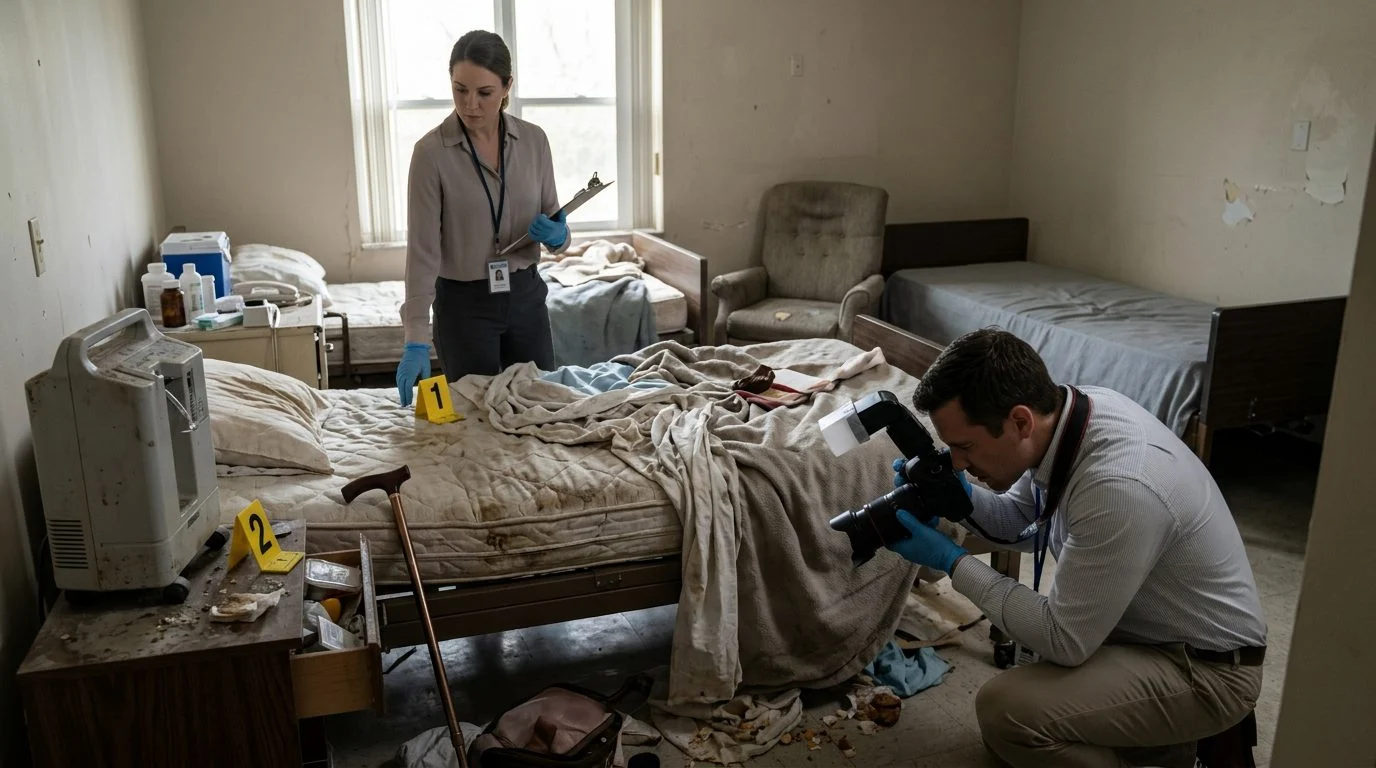
Practical steps help. Visit at different times of day. Ask for the care plan and any changes in writing. Keep a dated log of what you see and what staff tell you. Photograph injuries and the room.
Keep belongings, medication labels, and any clothing or bedding that shows a problem. Early preservation protects your options. A written record is valuable even if you never file a claim.

Talk With Our Team About Your Loved One’s Situation
Yes, you can sue a nursing home in Georgia, but the process is demanding and each case is different.
How long do you have to sue a nursing home in Georgia?
For most injury claims, Georgia law allows two years from when the right of action accrues. Wrongful death and state-facility claims can follow different timing rules.
Can an admission agreement stop a lawsuit?
Some admission terms can affect how a claim proceeds. The exact wording matters, so bring the papers when you talk with us.
Who can file a wrongful death lawsuit in Georgia?
A surviving spouse may bring the claim. If there is no spouse, a child or children may bring it.
If a parent or loved one was hurt in a nursing home, or died there, you may be carrying questions you never expected. We’re glad to listen to what happened and talk through your options. The first consultation is free, confidential, and carries no obligation to continue. You can reach our team through our contact page.
Attorney advertising. This page provides general information about Georgia law and is not legal advice. Responsible lawyer for this page: Peter F. Jaraysi, Slam Dunk Attorney, Duluth, Georgia. Contact: slamdunkattorney.com/contact-us. Every case is different, and no outcome can be predicted or promised.
Why These Cases Can Feel Hard
Paperwork Matters
Admission agreements, care plans and billing records can all shape how a claim is reviewed, so it helps to keep every page you were given.
Facilities Have Defenses
Nursing homes and their insurers often respond with their own records and arguments. Clear, organized evidence makes a real difference.
Emotions Run High
Many families are balancing worry for a loved one with guilt, anger and exhaustion. You do not have to sort it all out alone.
Timing Counts
Evidence can fade and memories can blur. Talking with a lawyer early keeps more options open while the details are still fresh.
Protect the Evidence Now
Keep copies of admission papers, medical records, incident reports, photos of injuries or living conditions, and any letters or messages from the facility. Do not sign new documents from the facility without first having them reviewed.
How We Can Help You Decide
Share What Happened
Tell us about your loved one's care, the concerns you noticed and any injuries or changes you have seen.
Review the Documents
We look at admission terms, records and communications to understand what the facility agreed to and what happened.
Discuss Your Options
We explain the possible paths in plain language, including whether a lawsuit makes sense for your family and what it would involve.