
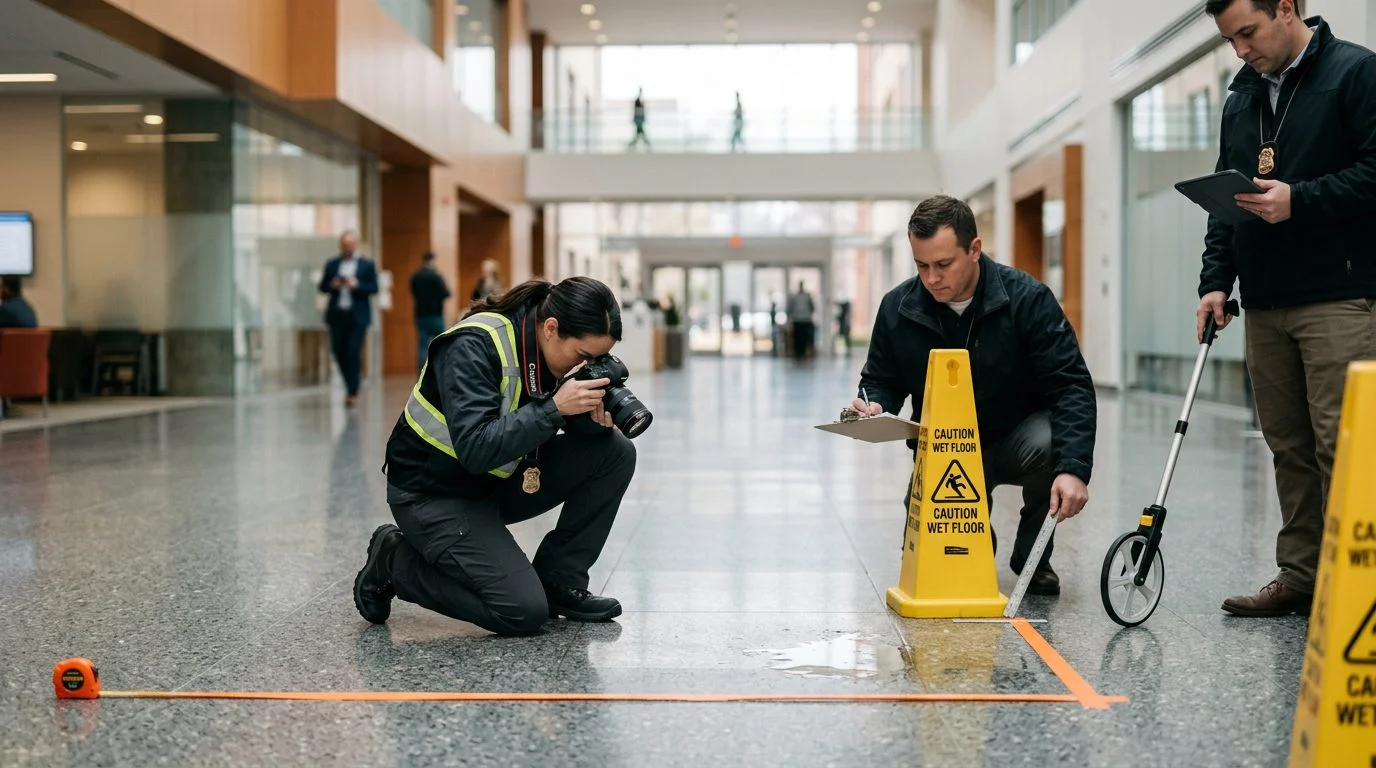
Premises Liability | Duluth, Georgia
Hurt on Someone Else's Property? We Help You Understand Your Options.
Our Duluth, Georgia personal injury firm represents people hurt in slip and falls, negligent security incidents, short-term rental accidents and other unsafe-property injuries, including catastrophic injuries, across metro Atlanta and Georgia.
By Peter F. Jaraysi · Published October 30, 2026
Premises liability is the part of Georgia law that asks whether a property owner or occupier should answer for an injury. Premises liability cases often involve an injury that is linked to a condition on someone else’s property. This page explains how a catastrophic premises liability injury Georgia claim works, what must be proven, which deadlines may apply, and what happens after a free consultation.
What Premises Liability Means When the Injury Is Catastrophic
Premises liability can hold a property owner or occupier responsible when a dangerous condition on its property injures someone lawfully there.
Catastrophic injuries are a different category from minor injuries. They can change a person’s whole life. A spinal cord injury can cause paralysis, which is a loss of muscle function. Traumatic brain injuries can range from mild to catastrophic, according to the Brain Trauma Foundation. Amputations and severe burns can also require surgery, long hospital stays, and long-term rehabilitation.
Because these injuries often need long-term care, their claims usually require more planning than a minor injury claim.
This page is written for three kinds of readers. The first is an injured person. The second is a family member helping someone recover. The third is a loved one of someone who died in a fall or other hazard on property they did not control.
These claims can arise in stores, homes, apartment complexes, parking areas, and short-term or vacation rentals booked through Airbnb or VRBO.
If a family member was left with paralysis or a brain injury after a fall on property they didn't control, our team can explain which Georgia rules may apply, at no cost to you. Talk it through with our team — the first consultation is free, confidential, and carries no obligation.

Who Owes You a Duty: Invitees, Licensees, and Trespassers
An owner or occupier owes its strongest duty of care to people it invites onto the property for a lawful purpose. Those people are called invitees.
Under O.C.G.A. § 51-3-1, an owner or occupier that invites or leads others onto its premises must use ordinary care to keep the premises and approaches safe. Georgia describes ordinary diligence as the care that ordinarily prudent people take under similar circumstances (O.C.G.A. § 51-1-2).
Licensees get less protection. Under O.C.G.A. § 51-3-2, the owner is liable to a licensee only for willful or wanton injury. That is a much narrower duty.
Trespassers fall into a separate category. The facts of each visit decide which category applies.
Common examples include:
- A store shelf that collapses because it was not secured
- An apartment stairwell with a broken railing
- A rental property hot tub with no safety cover
In each example, the key question depends on the visitor’s status; for a licensee, the owner is liable only for willful or wanton injury.
What a Catastrophic Injury Claim Can Cover
A catastrophic injury claim can seek compensation for medical care, future needs, lost income, and the pain the injury causes. Georgia separates damages into two groups. General damages are presumed to flow from a wrongful act and can be recovered without proof of any amount. Special damages actually flow from the act and must be proved (O.C.G.A. § 51-12-2).
Typical categories include:
- Past and future medical bills
- Rehabilitation and therapy
- Home modifications and adaptive equipment
- Lost wages and lost earning capacity
- Pain and suffering
Catastrophic cases often rely on treating physicians’ views about future care. That’s why a plan for long-term care may become part of the claim. Keeping complete medical records and bills from the start helps. The losses in any case turn on the injury, the medical picture, and the evidence.
Families of someone who died have additional rights. Under O.C.G.A. § 51-4-5, a personal representative may recover funeral, medical, and other necessary expenses when death results from criminal or other negligence. When no one is entitled to bring the claim under Code Section 51-4-2 or 51-4-4, the statute says the administrator or executor of the decedent may bring it and recover the full value of the decedent’s life, held for the benefit of the next of kin.
What Must Be Proven: Duty, Breach, Causation, Damages, and Knowledge
A premises claim generally requires proof that the owner owed a duty, failed to use ordinary care, and caused the injury. Real damages must also follow.
Notice is often the central question. Did the owner or occupier know about the hazard? If not, should it have found the hazard through reasonable inspection? A hazard that existed long enough to be found can support that argument.
Evidence that often shows notice and breach includes:
- Incident reports and photos of the scene
- Inspection, cleaning, and repair logs
- Prior complaints about the same hazard
- Surveillance video
- Witness statements
Preserve evidence early. Video can be overwritten, and a broken step may be repaired within days. Early written requests asking the owner or insurer to keep these records are important. Throwing away damaged shoes or clothing is a common mistake. So is posting about the accident online, which can be used to question your account.
Georgia Deadlines and Fault Rules to Know
Georgia generally requires a lawsuit for injury to a person to be filed within two years after the right of action accrues (O.C.G.A. § 9-3-33). The same statute allows four years for claims involving loss of consortium. Which deadline applies to your case depends on the facts.
Georgia also reduces recovery when the injured person shares fault. Under O.C.G.A. § 51-12-33, a judge reduces damages in proportion to the injured person’s percentage of fault. If that percentage is 50 percent or more, the person receives no damages.
Fault can also be split among several parties. Each liable person owes only the share assigned to them. That share is not joint liability.
Missing a deadline can end a claim. An early consultation helps you learn which dates may apply.
How a Premises Liability Claim Typically Unfolds
Most claims move from a free consultation to evidence gathering, medical documentation, negotiation, and, if needed, a lawsuit. Each step builds on the one before it. Timing varies a lot, so no one can promise how long any step will take.
- Free consultation. You describe the incident, your injuries, and any papers you have, such as medical bills, photos, or an incident report. The firm explains the options that may apply.
- Evidence preservation. Letters go to the property owner or insurer asking them to keep video, incident reports, and maintenance records.
- Medical documentation. Your treating providers record your diagnosis, treatment, prognosis, and future care needs.
- Demand and negotiation. The claim is presented to the insurer. If a fair resolution isn’t reached, a lawsuit may be filed in the appropriate Georgia court.
- Discovery and beyond. Both sides exchange information, witnesses may give depositions, and the case may move toward mediation or trial preparation.
Not sure what your next step is?
Talk it through with our team — the first consultation is free, confidential, and carries no obligation.
How Our Team Approaches These Cases
Slam Dunk Attorney represents injured people and their families from its Duluth, Georgia office, across metro Atlanta and Georgia. The firm also serves clients in Lawrenceville, Johns Creek, Alpharetta, Marietta, Norcross, Kennesaw, and Dunwoody.
Peter F. Jaraysi is the responsible lawyer for this page. The firm’s lawyers, Peter F. Jaraysi and Brian D. Wright, are supported by assistants and office staff.
Our team follows a plain approach on every matter:
- Clear communication about where your case stands and what comes next
- Prompt written requests for records, photos, and reports
- Coordination with your medical providers on your care records
- Plain-language updates for you and your family
Common Questions About Catastrophic Premises Injuries in Georgia
Can I bring a claim if I was partly at fault?
Possibly. Georgia reduces damages by your share of fault, and you receive nothing if you are 50 percent or more responsible (O.C.G.A. § 51-12-33).
Does it matter if the property was an Airbnb or VRBO rental?
It can. Who controlled the property matters. Under O.C.G.A. § 44-7-14, a landlord that has fully parted with possession and the right of possession is generally not responsible to third persons for damages from a tenant’s negligence or illegal use of the premises. It remains responsible for defective construction or failure to keep the premises in repair.
What if the injury happened at a business?
The business that owned or occupied the property is usually the starting point.
Should I keep the shoes, clothing, or item involved?
Yes. Keep them as they are, and take photos of the scene and your injuries. These items help preserve evidence.
Should I give a recorded statement to the property owner’s insurer?
Talk with our team before answering recorded questions. We can explain what the insurer is asking and why the wording matters.
Talk With Our Team About Your Situation
You can start with a free, confidential first consultation with no obligation to continue. You can ask questions before deciding anything.
If you’re reading this after a serious fall, collapse, or other hazard on property you didn’t control, you may be caring for a loved one with paralysis, a brain injury, an amputation, or burns. You may also be sorting out medical bills and wondering which dates apply. You don’t have to face those questions alone.
Contact our team to describe what happened, share the paperwork you have, and ask which Georgia rules may apply to your situation.
This page offers general information, not legal advice about your case. Peter F. Jaraysi is the responsible lawyer for this page at Slam Dunk Attorney in Duluth, Georgia. Contact details are on the firm’s contact page.
Why Start a Conversation With Our Firm
Clear, Plain-Language Guidance
We explain the process in terms you can follow, so you know what to expect while you focus on recovering.
Confidential First Meeting
Your free initial consultation is confidential and comes with no obligation to continue.
Our Lawyers and Support Staff
Peter F. Jaraysi and Brian D. Wright, along with our assistants and office staff, work with each client directly from our Duluth office.
Serving Metro Atlanta and Georgia
We represent injured people in Atlanta, Lawrenceville, Johns Creek, Alpharetta, Marietta, Norcross, Kennesaw, Dunwoody and communities throughout Georgia.
Protect Your Account of What Happened
Photos, witness names, incident reports and medical records can be hard to recover later. Keep copies of everything, and speak with an attorney before giving a recorded statement to a property owner or insurance company.
Unsafe Property Claims We Handle
Slip and Fall and Trip Injuries
Wet floors, broken stairs, poor lighting and hidden hazards in stores, offices, apartments and other public spaces can lead to serious harm.
Negligent Security
When inadequate security allows an assault or other crime to happen on a property, the people hurt may have a claim worth reviewing.
Short-Term and Vacation Rental Injuries
Injuries at Airbnb, VRBO and similar rentals can raise questions about who maintained and controlled the property.
Catastrophic Injuries
Spinal cord injuries, traumatic brain injuries, amputations, severe burns and other life-changing harm often require careful investigation and long-term planning.