
Accident Legal Advice After a Duluth, Georgia Crash
If you were hurt in a Duluth, Georgia car crash, protect your claim by taking these steps early:
- Get medical care and follow your doctor’s treatment plan.
- Save photos, witness details, the police report, bills, and missed-work records.
- Report the crash to your insurer, but do not guess about fault or accept a quick settlement before understanding your injuries.
- Speak with a Georgia personal injury lawyer before giving a recorded statement to the other driver’s insurer.
Good accident legal advice can help you avoid costly mistakes while medical bills and repair costs pile up. In Georgia, a personal injury lawsuit usually must be filed within two years of the crash under O.C.G.A. § 9-3-33, and waiting can make key evidence harder to find.
At Slam Dunk Attorney, we help Duluth, Georgia neighbors gather proof, deal with insurance pressure, and pursue fair compensation without upfront attorney fees in qualifying injury cases.
Led by Peter Jaraysi, Esq., our team at Slam Dunk Attorney is built to provide clear accident legal advice and push back when insurers undervalue injured people’s claims. Our courtroom-focused work and continued trial training shape the practical game plan we cover next.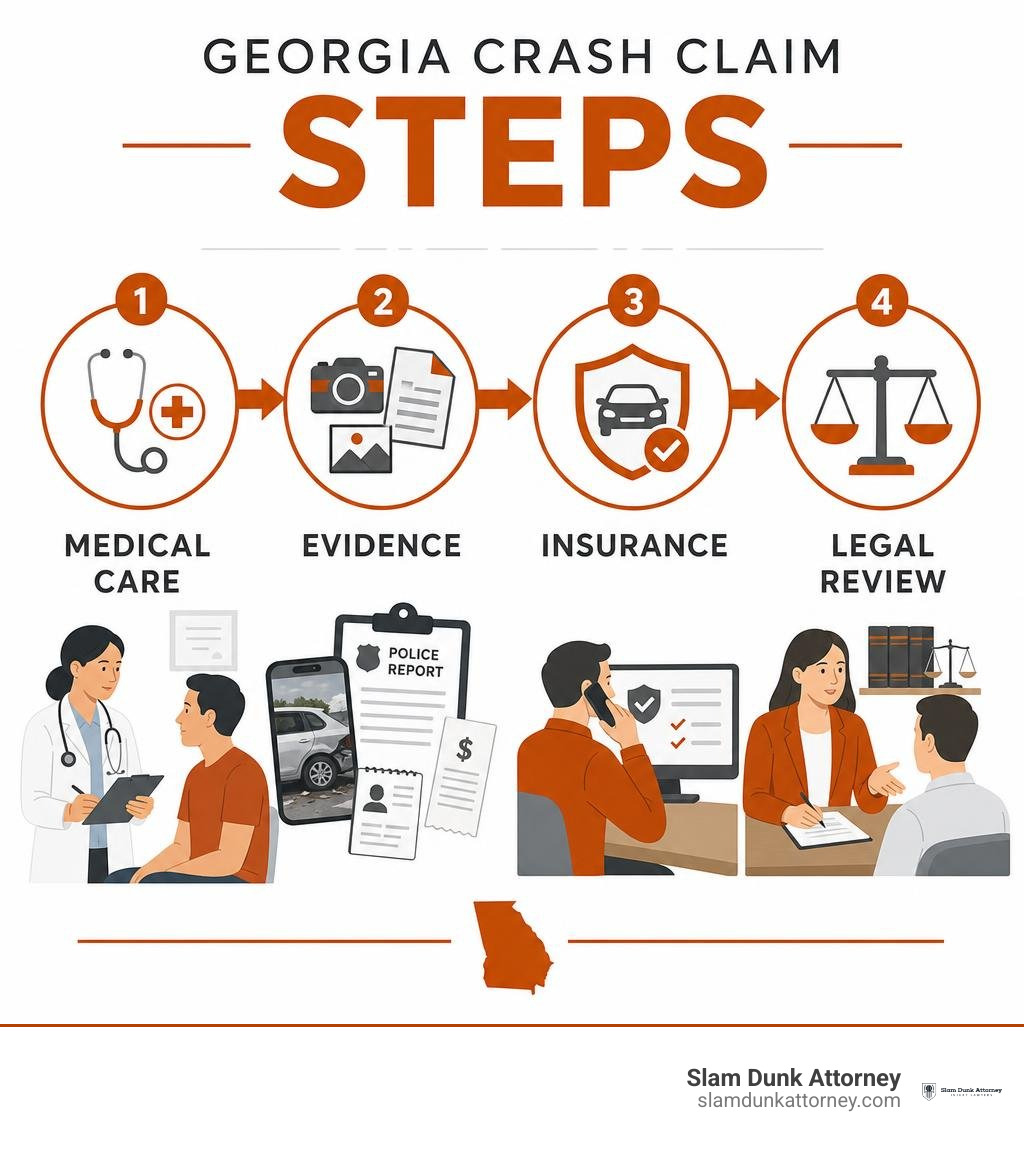
Proudly Serving Duluth and All of Georgia Contact us to start your recovery! Explore Our Practice Areas

Crucial Steps and Accident Legal Advice Following a Duluth, Georgia Collision
A traffic crash on Pleasant Hill Road or Peachtree Industrial Boulevard in Duluth, Georgia can leave your vehicle damaged and your head spinning. Georgia operates as a traditional tort liability state. This means the driver who caused the crash is responsible for the harm and financial losses that follow.
To hold the responsible party accountable, you must show that they violated their duty of care on the road. In personal injury law, a duty of care means taking reasonable steps to prevent harming others. For instance, under Georgia premises liability rules, property and business owners have a duty of care to keep their properties reasonably safe for lawful visitors. In traffic claims, every motorist has a similar legal duty to drive safely. Preserving evidence right away is vital to building a solid case.

Local law enforcement agencies, such as the Duluth Police Department or the Gwinnett County Police Department, will complete an official accident report. Getting a copy of this report helps confirm essential facts, but your own actions at the scene and in the days after matter just as much.
Immediate Actions and Gathering Essential Accident Legal Advice
Knowing the right steps to take after an auto accident will keep your case on track. First, always get an emergency medical evaluation. Adrenaline can mask severe neck, back, or internal injuries.
Next, take clear photos and videos of all vehicle positions, skid marks, road conditions, and visible injuries. If you are dealing with common incidents like rear-end collisions, know what to do after a rear-end collision so you can document damage to both bumpers.
Collect contact information from any eyewitnesses who saw what happened. In serious crashes, we often send a formal spoliation letter to prevent the other party or commercial entities from destroying dashcam video, electronic logs, or vehicle maintenance records.
Driver fatigue is a major hazard on our roadways in Duluth, Georgia. When fatigued drivers lose focus, serious collisions occur. Gathering cell phone records, driving logs, and witness statements quickly helps prove if a driver was overly tired, distracted, or careless.
Click to contact our personal injury lawyers today
Understanding Georgia Fault Rules and Comparative Negligence
Georgia follows a modified comparative negligence system, specifically the 50 percent bar rule under O.C.G.A. § 51-12-33. Under this law, you can recover damages as long as you are less than 50 percent at fault for the crash. If you are found to be 50 percent or more responsible, you cannot recover any financial compensation.
When you are partially at fault but below the 50 percent mark, your total payout is reduced by your share of fault. Understanding Georgia’s fault-based system clarifies why fault assignment is critical in our state. You can still seek compensation when you are partially at fault, but every percentage point matters.
|
|
|||||||||||||||||||||||||||||||||||||||||||||||||||||||||||||||||||||||||||||||||||||||||||||||||||
| Fault Percentage Assigned to You | Total Proved Damages | Final Compensation Received | Can You Recover Compensation? | ||||||||||||||||||||||||||||||||||||||||||||||||||||||||||||||||||||||||||||||||||||||||||||||||
|---|---|---|---|---|---|---|---|---|---|---|---|---|---|---|---|---|---|---|---|---|---|---|---|---|---|---|---|---|---|---|---|---|---|---|---|---|---|---|---|---|---|---|---|---|---|---|---|---|---|---|---|---|---|---|---|---|---|---|---|---|---|---|---|---|---|---|---|---|---|---|---|---|---|---|---|---|---|---|---|---|---|---|---|---|---|---|---|---|---|---|---|---|---|---|---|---|---|---|---|
| 0% At Fault | $100,000 | $100,000 | Yes (Full Recovery) | ||||||||||||||||||||||||||||||||||||||||||||||||||||||||||||||||||||||||||||||||||||||||||||||||
| 20% At Fault | $100,000 | $80,000 (Reduced by 20%) | Yes (Partial Recovery) | ||||||||||||||||||||||||||||||||||||||||||||||||||||||||||||||||||||||||||||||||||||||||||||||||
| 49% At Fault | $100,000 | $51,000 (Reduced by 49%) | Yes (Partial Recovery) | ||||||||||||||||||||||||||||||||||||||||||||||||||||||||||||||||||||||||||||||||||||||||||||||||
| 50% or More At Fault | $100,000 | $0 | No (Barred by Georgia Law) | ||||||||||||||||||||||||||||||||||||||||||||||||||||||||||||||||||||||||||||||||||||||||||||||||
Insurance adjusters evaluate police reports, physical damage, and driver statements to assign these fault percentages. Having our skilled legal team defending your position ensures the adjuster does not unfairly push the blame onto you.
Complete a Free Case Evaluation form now
Countering Insurance Tactics with Expert Accident Legal Advice
Insurance companies are for-profit businesses. Their primary goal is to close your claim for the lowest possible dollar amount. Adjusters frequently call injured victims within days of a crash offering quick, lowball settlements before the full extent of your injuries is even known.
One common trap is asking for a recorded statement. You should know the risks of giving a recorded statement to an insurance company before agreeing to anything. Adjusters can use your casual answers or polite phrases against you to dispute your injuries or shift fault.
Understanding how car insurance claims work allows you to anticipate these plays. If the at-fault driver fled the scene or lacks coverage, you may feel stuck. If you were hit by an uninsured driver, we can help you file an Uninsured/Underinsured Motorist (UM/UIM) claim under your own auto policy to cover medical bills and lost income.
Navigating Georgia Personal Injury Claims and Securing Maximum Compensation
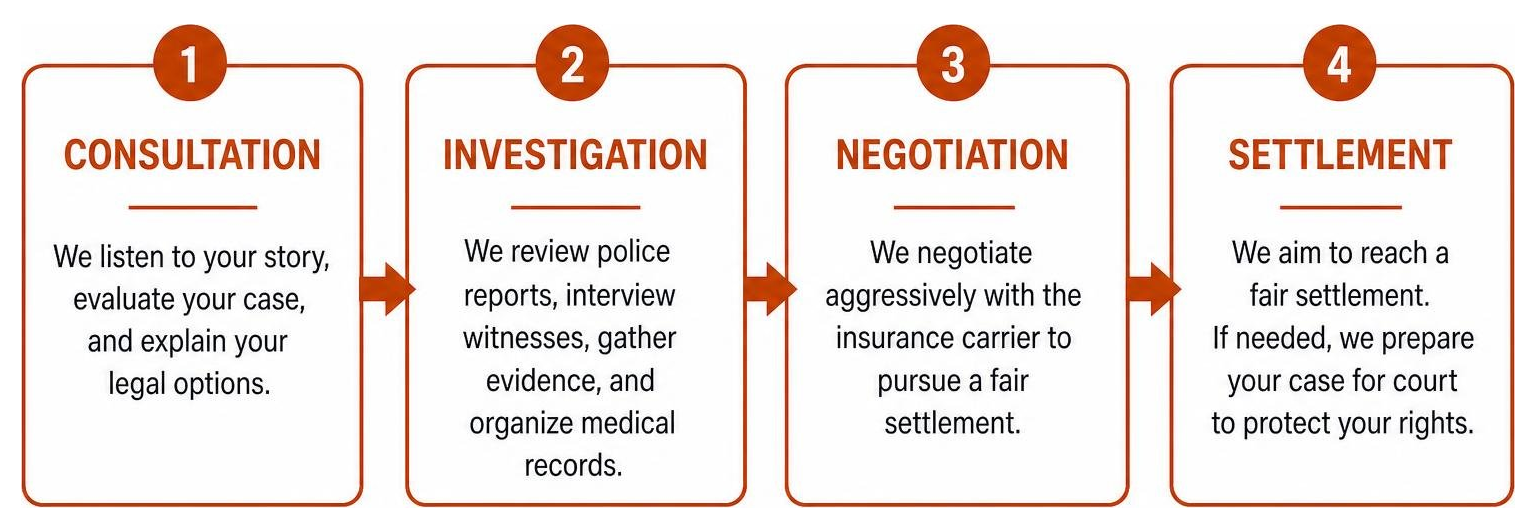
Handling an injury claim involves careful investigation, organizing medical records, and aggressive negotiation. When you team up with our firm in Duluth, Georgia, we review police reports, interview witnesses, analyze medical treatment plans, and consult with local accident specialists.
Most cases resolve through direct negotiations with the insurance carrier. However, if the insurer refuses to make a fair offer, we prepare the case for litigation in Gwinnett County courts to protect your rights.
Calculating Economic and Non-Economic Damages Under Georgia Law
- Past and future medical expenses
- Physical therapy and prescription costs
- Lost wages from missed work
- Diminished earning capacity if you cannot return to your prior job
- Vehicle repair or replacement costs
Learning how car accident settlements are calculated in Georgia helps you understand how these hard numbers form the foundation of your claim.
Non-economic damages address intangible losses. You can review how pain and suffering is valued to see how mental anguish, physical pain, and loss of enjoyment of life are calculated.
Contingency Fees and What to Expect During the Legal Process
If a lawsuit is required, we guide you through filing a car accident lawsuit. In Georgia, the statute of limitations for personal injury lawsuits is generally two years from the crash date under O.C.G.A. § 9-3-33. Property damage claims have a four-year deadline under O.C.G.A. § 9-3-32. Missing these statutory deadlines permanently bars you from seeking compensation in court.
Choosing the Right Representation in Duluth, Georgia for Your Case
Minor fender benders with no injuries and minimal damage may not need formal legal representation. However, legal industry benchmarks recommend hiring a lawyer if your medical bills exceed $3,000 or if your injuries cause you to miss more than one week of work. Evaluating when to hire a car accident lawyer can help you decide your next steps.
When choosing legal counsel, ask these essential questions during your initial consultation:
- How much of your practice is dedicated specifically to Georgia personal injury law?
- What is your track record with insurance negotiations and trial verdicts in Gwinnett County?
- Will I have direct communication with my legal team throughout my case?
- What is your exact fee structure if the case settles versus going to trial?
At Slam Dunk Attorney, we bring hustle, honesty, direct communication, and a championship-level team approach to every client we represent. If you need trusted legal guidance, speak with an experienced Duluth car accident lawyer today to protect your recovery.
The information provided on this blog is for general informational purposes only and is not intended to be, nor should it be construed as, legal advice. Every personal injury case is unique, and the laws and circumstances that apply can vary based on the specific facts of your situation. Reading this content does not create an attorney-client relationship. To receive legal advice specific to your case, you should consult directly with a qualified personal injury attorney licensed to practice in the state of Georgia.
Call or text 404-951-3513 or complete a Free Case Evaluation form