
Essential Tips for Handling Premises Liability Atlanta Claims
At Slam Dunk Attorney in Duluth, Georgia, we know that handling premises liability Atlanta claims effectively starts with clear, decisive action. You must identify your visitor status, document the hazardous condition immediately, report the incident to property management, seek prompt medical care, and meet Georgia’s strict filing deadlines. Taking these steps protects your health and preserves key evidence to hold negligent property managers accountable.
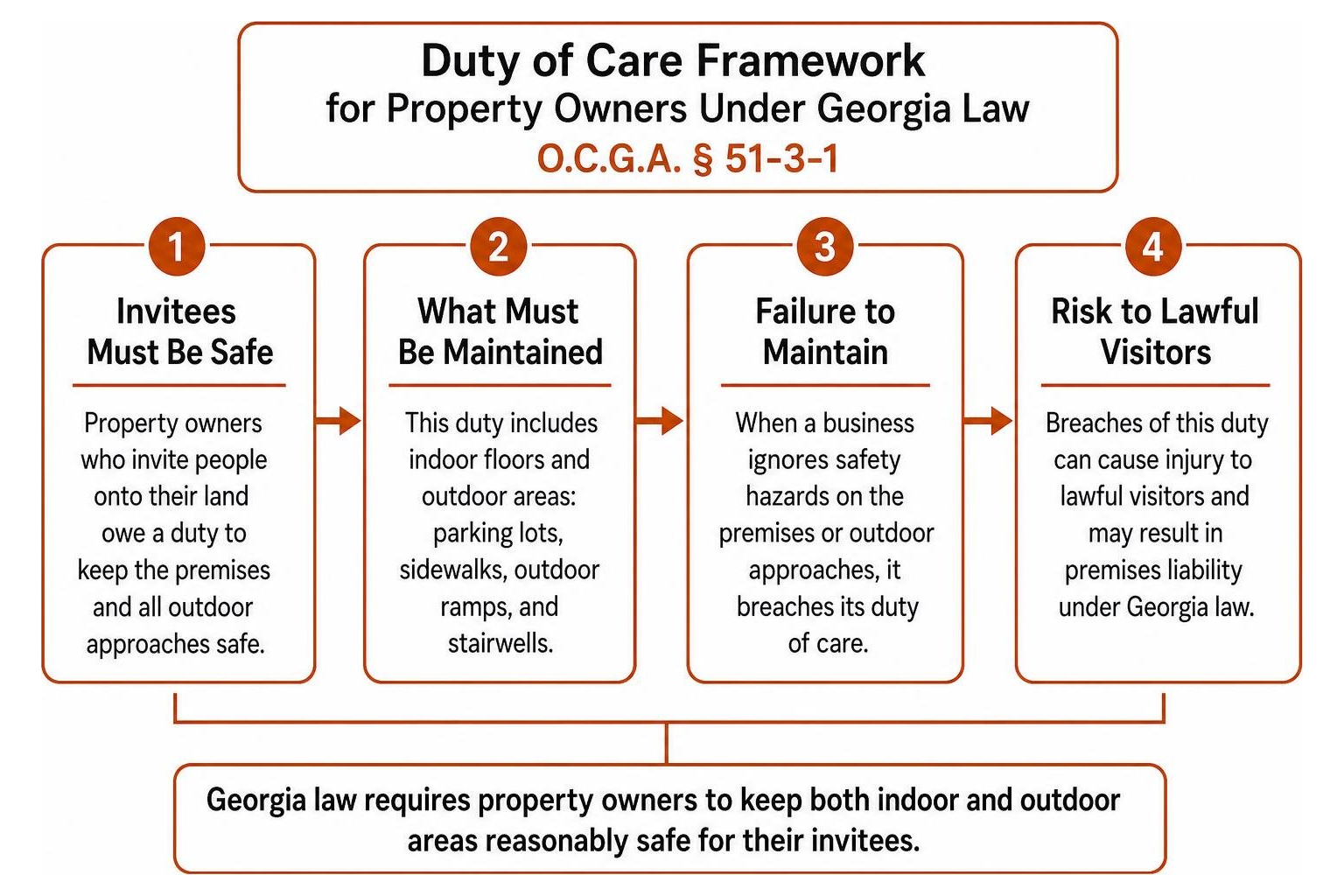
Under Georgia statute O.C.G.A. § 51-3-1, property owners who invite people onto their land must keep the premises and all outdoor approaches safe. That means commercial facilities must maintain not just their indoor floors, but also their parking lots, sidewalks, outdoor ramps, and stairwells. When a business ignores safety hazards, lawful visitors can get hurt.
Proudly Serving Duluth and All of Georgia Contact us to start your recovery! Explore Our Practice Areas
1. Identify Your Visitor Status in Premises Liability Atlanta Cases
Your legal status at the time of your injury determines the standard of care the property owner owed you under Georgia law.
| Visitor Status | Definition Under Georgia Law | Legal Duty Owed by Property Owner |
|---|---|---|
| Invitee (O.C.G.A. § 51-3-1) | Customers, patrons, tenants, or companions present for mutual benefit | Ordinary care to keep premises and approaches safe |
| Licensee (O.C.G.A. § 51-3-2) | Social guests entering solely for their own interests with permission | Protection only against wilful or wanton injury |
| Trespasser | Persons entering without permission, invitation, or legal right | No duty except to refrain from intentional harm |
To qualify as an invitee, you do not need to spend money. Under Georgia case law such as Radheshvar, LLC v. Kenneth A. Perez Larios, a social guest visiting a paying motel customer can qualify as an invitee because commercial lodgings derive mutual benefit from allowing guests. You can study The Essential Guide to Winning a Premises Liability Lawsuit to see how your visitor classification sets the foundation for your case.
2. Recognize Common Hazards on Atlanta Commercial Properties and Approaches
Dangerous conditions take many forms across retail centers, apartment complexes, restaurants, and office parks. Georgia property managers have an ongoing duty to inspect their grounds regularly and fix or warn against hidden dangers that visitors cannot reasonably anticipate.
Common property hazards include:
- Puddle build-ups, grease slicks, and newly mopped surfaces without warning cones.
- Broken parking lot curbing, uneven concrete, potholes, and damaged exterior ramps.
- Merchandise falling from high retail warehouse shelving.
- Waterborne pathogens in improperly treated public swimming pools.
- Balcony and exterior wooden deck structural collapses.
- Hidden surveillance devices or peephole voyeurism in rental spaces.
Working with our legal team helps you determine whether a business breached safety codes. If you fell because of a hidden spill or broken curb, review FAQs How Is Liability Determined in a Slip and Fall Accident for insight on how insurance adjusters evaluate fault.
Click to contact our personal injury lawyers today
3. Establish Foreseeability in Inadequate Security Incidents
Commercial landlords must protect customers from foreseeable third-party criminal attacks in common areas, parking garages, and breezeways. When property owners fail to provide reasonable security measures despite knowing about area crime risks, they can be held accountable for resulting injuries.
In Taylor v. Atlanta Center Ltd., Georgia courts confirmed that property managers cannot ignore past criminal conduct or high-risk crowd situations. If a business knows about prior criminal activity and fails to provide adequate lighting, working security cameras, or trained guards, injured victims may pursue a negligent security claim. For a deeper breakdown of security obligations, explore The Ultimate Guide to Inadequate Security Claims.
Complete a Free Case Evaluation form now
4. Gather Decisive Evidence to Prove Failure of Ordinary Care
To build a winning game plan for your claim, we must show the property owner had actual or constructive knowledge of the hazard before your injury occurred. Actual knowledge means employees already knew about the defect, while constructive knowledge means the hazard existed long enough that reasonable inspections would have uncovered it.
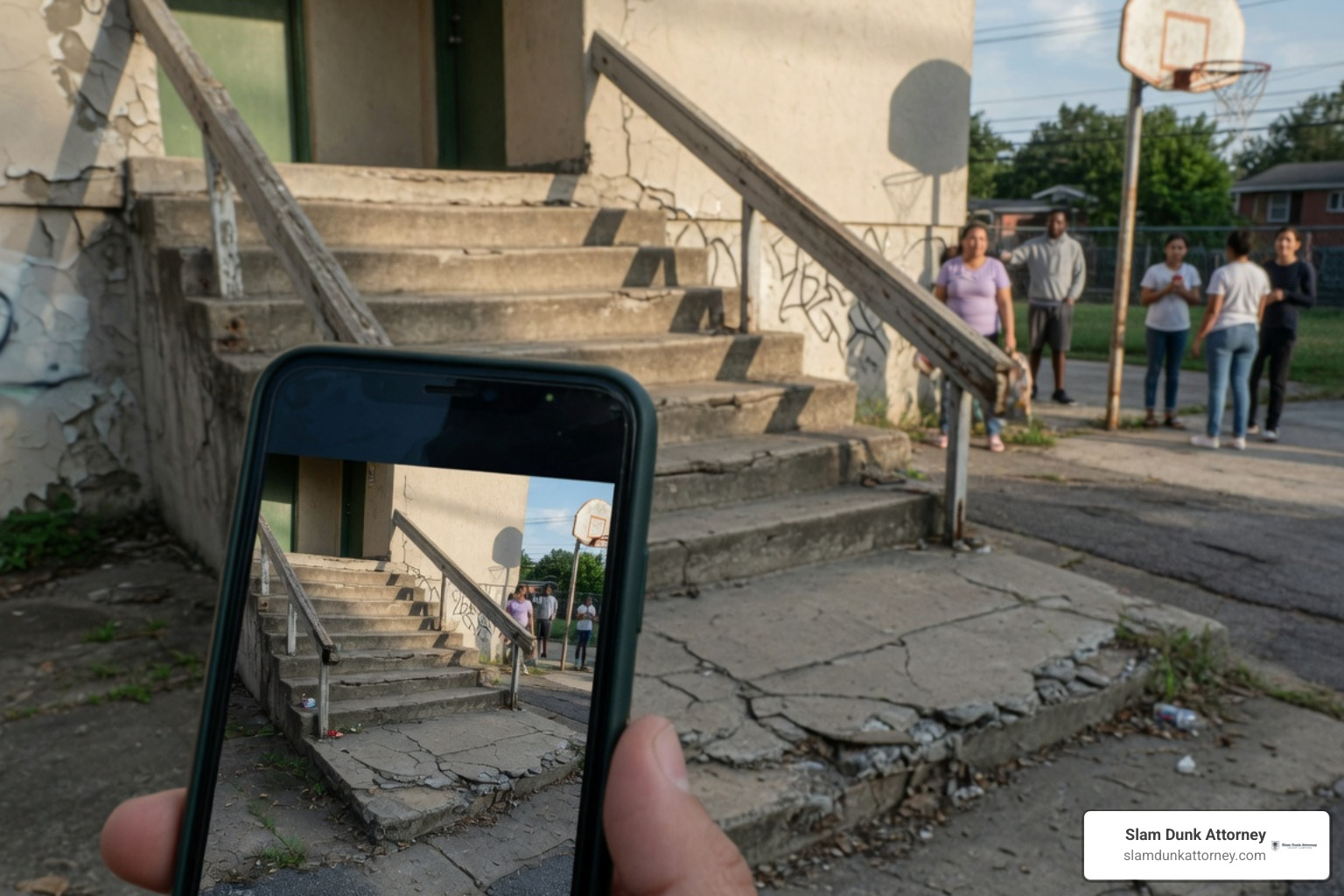
Critical evidence for your claim includes:
- Timestamped surveillance video showing how long the hazard existed.
- Incident reports filed with property management immediately after your fall or assault.
- Internal cleaning, maintenance, and inspection logs.
- High-resolution photos of the dangerous condition taken before management repairs it.
- Medical records detailing emergency treatment, diagnostic scans, and physical therapy costs.
Under Georgia law, you can recover economic damages like medical bills and lost income, along with non-economic damages for physical pain and mental distress. Learn more about available financial recoveries in FAQs What Damages Can I Recover for a Slip and Fall Accident in Georgia.
Georgia also uses a 50% bar comparative fault rule. Under this rule, you can still collect compensation if you were partly at fault for not seeing the hazard, as long as your share of the blame stays under 50%. Your final award simply decreases by your percentage of responsibility.
Protecting Your Rights After a Serious Georgia Property Injury
5. Secure Dedicated Representation for Premises Liability Atlanta Lawsuits
Georgia sets a strict two-year statute of limitations for personal injury claims under O.C.G.A. § 9-3-33. If you wait longer than two years from the date of your injury to file a lawsuit, Georgia courts will dismiss your claim completely.
Based in Duluth, Georgia, our team at Slam Dunk Attorney handles personal injury cases on a contingency fee arrangement. You pay zero upfront retainers and no out-of-pocket costs unless we win a financial settlement or jury verdict for you.
When you need an experienced Duluth premises liability lawyer who brings championship hustle to every case, we are here to fight for the maximum compensation you deserve.
The information provided on this blog is for general informational purposes only and is not intended to be, nor should it be construed as, legal advice. Every personal injury case is unique, and the laws and circumstances that apply can vary based on the specific facts of your situation. Reading this content does not create an attorney-client relationship. To receive legal advice specific to your case, you should consult directly with a qualified personal injury attorney licensed to practice in the state of Georgia.
Call or text 404-951-3513 or complete a Free Case Evaluation form