
Escalators: A Hidden Danger in Plain Sight
An escalator injury claim in Georgia starts with three critical steps: seek immediate medical attention, report the incident to property management, and document the scene with photos and witness information. You generally have two years from the date of the accident to file a claim, and you may recover compensation for medical bills, lost wages, and pain and suffering if someone else’s negligence caused your injury.
Escalators are a common sight in Georgia’s shopping malls, airports, and office buildings. While we use them daily, a sudden malfunction can lead to devastating injuries. These incidents are often caused by mechanical failures, poor maintenance, or hazards that property owners failed to address.
If you’ve been hurt on an escalator, you’re likely facing medical bills, lost wages, and uncertainty about your rights. You may wonder who is responsible and how you can get compensation for your suffering.
Georgia law allows injured parties to hold negligent property owners, maintenance companies, and manufacturers accountable. However, building a strong claim requires swift action, proper evidence, and an understanding of your legal rights.
At Slam Dunk Attorney, our team has extensive experience with premises liability cases, including escalator accidents. We investigate these claims, identify all at-fault parties, and fight back against insurance companies that try to minimize your escalator injury claim.
Proudly Serving Duluth and All of Georgia Contact us to start your recovery! Explore Our Practice Areas

Building Your Georgia Escalator Injury Claim
Understanding the key components of an escalator injury claim under Georgia law can empower you to take the necessary steps toward recovery and justice.
Common Causes and Resulting Injuries
Escalator accidents are more common than people think and can cause serious injuries. Falls are a frequent cause of these incidents, often resulting in severe and permanent harm.
Common causes of escalator accidents in Georgia include:
- Mechanical Failures: Sudden stops, starts, jerky motions, or direction reversals caused by faulty motors, control panels, or braking systems.
- Poor Maintenance: Neglected inspections can lead to worn-out parts, loose components, debris buildup, or improper lubrication, causing parts to fail.
- Defective Design: Flaws in the escalator’s design or manufacturing, such as unsafe gaps between steps, faulty comb plates, or defective handrails.
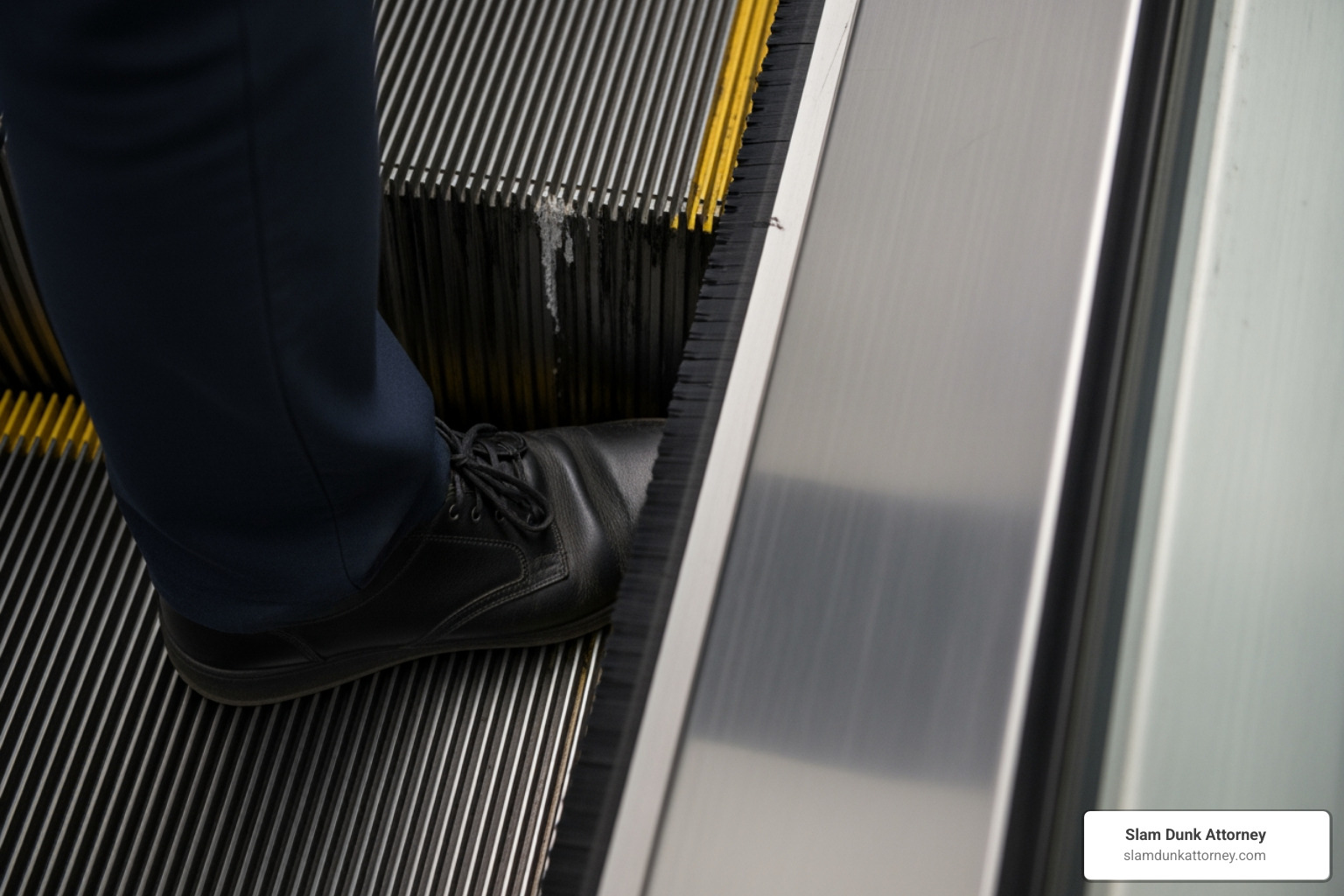
- Entrapment Hazards: Gaps between steps, side panels, or comb plates can trap loose clothing, shoelaces, fingers, or toes. Certain types of footwear are known to increase this risk.
- Falls: The most common accident type, often caused by slippery surfaces, uneven steps, broken handrails, poor lighting, or overcrowding.
These accidents can result in severe, life-altering injuries:
- Broken Bones and Fractures: Common in falls and sudden impacts.
- Head Trauma: A serious risk from falls, including concussions and traumatic brain injuries (TBIs).
- Lacerations and Degloving Injuries: Deep cuts or skin being torn away by moving parts or rough surfaces.
- Spinal Cord Injuries: Severe back and neck trauma from falls can cause paralysis or long-term neurological damage.
- Amputations: Tragic loss of fingers, toes, or feet due to entrapment in moving parts.
- Soft Tissue Injuries: Sprains, strains, and torn ligaments that may require extensive rehabilitation.
- Psychological Trauma: Lasting emotional distress, such as anxiety, PTSD, and phobias.
Determining Liability Under Georgia Law
In a Georgia escalator accident, determining who is responsible is critical. Liability typically falls under premises liability law, which holds property owners accountable for injuries caused by unsafe conditions.

Here’s who might be liable for your escalator injury:
- Property Owners: Owners of malls in Alpharetta, airports in Atlanta, or other Georgia properties have a legal duty to keep their premises reasonably safe. If they knew or should have known about an escalator hazard and failed to fix it or provide a warning, they can be held liable. For more information, see our FAQs on How is liability determined in a slip and fall accident?.
- Maintenance Companies: Third-party companies hired for escalator maintenance can be liable if their negligent work, faulty repairs, or missed inspections caused the accident.
- Escalator Manufacturers: If a design or manufacturing defect made the escalator inherently dangerous, the manufacturer could be liable under a product liability claim.
Multiple parties can share liability, so a thorough investigation is crucial for any escalator injury claim. If you’re wondering if you can sue a company, our article Can I sue a company for a slip and fall in one of their stores? provides further guidance.
Immediate Steps to Protect Your Rights
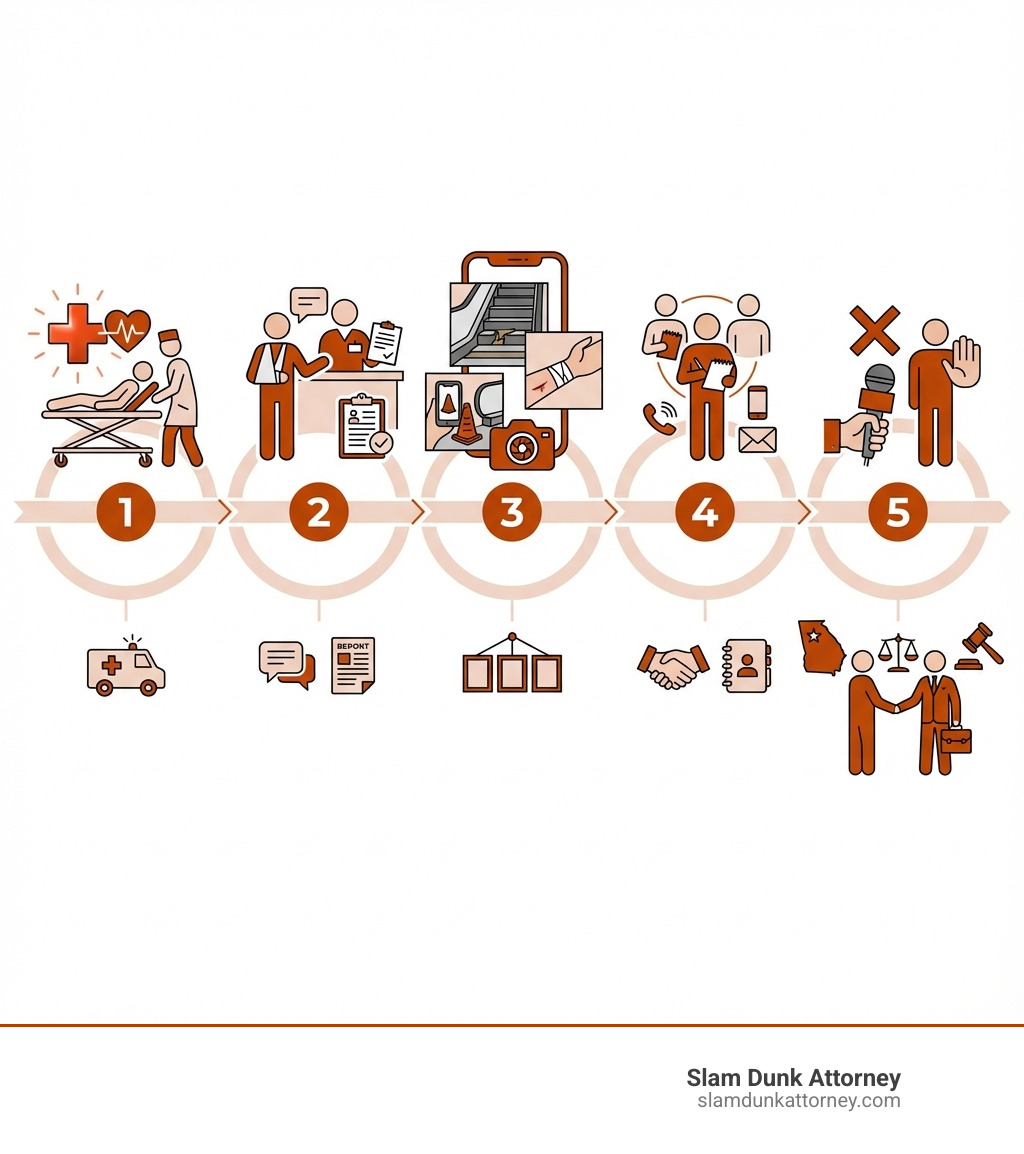
Your health is the top priority after an escalator accident. Once you are safe, take these steps to protect your legal rights for a potential escalator injury claim in Georgia.
- Seek Immediate Medical Attention: Get a medical evaluation even if you feel fine. Some serious injuries aren’t immediately apparent, and a medical record is vital for your claim.
- Report the Incident: Inform the property manager or security (e.g., at a mall in Johns Creek or the Atlanta airport) about the accident. Ask for a copy of the official incident report to document the event.
- Document the Scene: Use your phone to take photos and videos of the scene.
- The Escalator: Photograph the specific area of the accident, including any defects, debris, or lack of warning signs.
- Your Injuries: Take pictures of all visible injuries.
- The Surrounding Area: Note lighting conditions, wet spots, or other contributing factors.
- Footwear/Clothing: Photograph and preserve any damaged clothing or shoes.
- Location: Take wide shots showing the escalator’s location.
- Gather Witness Information: Get names and contact details from anyone who saw the accident. Their testimony can be crucial.
- Preserve Evidence: Keep all relevant items, including damaged clothing, medical bills, and communications with the property owner.
Key evidence for your escalator injury claim includes:
- Medical records and bills
- Photos and videos of the scene and your injuries
- Witness contact information
- The official incident report
- Damaged clothing or personal items
- Records of lost wages
Understanding Compensation for Your Escalator Injury Claim
An escalator injury claim in Georgia aims to recover compensation (“damages”) for all losses caused by another’s negligence. Damages are divided into two main categories.
-
Economic Damages: These are tangible financial losses backed by documentation.
- Medical Bills: All costs for past and future medical care, including ER visits, surgery, physical therapy, and medication.
- Lost Wages: Compensation for lost income and diminished future earning capacity if your ability to work is affected.
- Property Damage: Cost to repair or replace personal items damaged in the accident.
- Other Expenses: Costs like transportation to medical appointments or necessary home modifications.
-
Non-Economic Damages: These compensate for intangible losses that affect your quality of life.
- Pain and Suffering: Compensation for the physical pain and mental anguish caused by the injury.
- Emotional Distress: For psychological impacts like anxiety, depression, or PTSD.
- Physical Impairment/Disfigurement: For permanent disability, scarring, or loss of bodily function.
- Loss of Enjoyment of Life: For the inability to participate in hobbies and activities you once enjoyed.
- Loss of Consortium: A claim by a spouse for the loss of companionship due to the victim’s injuries.
In cases of extreme negligence, Georgia law may also permit punitive damages, which are intended to punish the at-fault party. The value of an escalator injury claim depends on the severity of your injuries and the specifics of the case. For more information, see our articles on What damages can I recover for a slip and fall accident in Georgia? and How much is my personal injury case worth?.
Navigating Key Legal Problems for Your Escalator Injury Claim
Navigating a personal injury claim in Georgia involves key legal problems. Understanding them is crucial for your strategy.
- Georgia’s Statute of Limitations: This is the most critical deadline. Under Georgia Code §9-3-33, you generally have only two years from the accident date to file a lawsuit. Missing this deadline usually means losing your right to compensation, so it is vital to act quickly. Learn more in our FAQ on What is the statute of limitations for slip and fall cases in Georgia?.
- Modified Comparative Negligence (The 50% Bar Rule): Georgia law reduces your compensation by your percentage of fault. For instance, if you are 20% at fault, your award is reduced by 20%. Critically, if you are found 50% or more at fault, you are barred from recovering any compensation at all.
- Complex Liability: Escalator accidents can involve multiple at-fault parties, including the property owner, maintenance company, and manufacturer. Proving each party’s negligence requires legal expertise.
- Insurance Company Tactics: Insurers aim to minimize payouts. They may offer a low settlement quickly, try to shift blame to you, or downplay your injuries. Never give a recorded statement or sign documents without speaking to an attorney.
While these cases can be challenging, a successful outcome is possible with the right legal guidance. See our article Are slip and fall cases hard to win? for more insight.
The Role of an Attorney in Your Case
An experienced personal injury attorney is an invaluable asset when navigating a complex escalator injury claim in Georgia. While you focus on healing, a lawyer can handle the legal burdens.
Our team at Slam Dunk Attorney helps by:
- Investigating and Gathering Evidence: We secure surveillance footage, maintenance logs, inspection reports, and witness statements to build a strong case based on Georgia law.
- Identifying All Liable Parties: We use our expertise to identify every party responsible for your injury, from property owners to manufacturers.
- Calculating Full Damages: We work with experts to calculate the full long-term costs of your injuries, ensuring your claim reflects the true impact on your life.
- Negotiating with Insurance Companies: We handle all communications with insurers, protecting you from their tactics and fighting for the maximum compensation you deserve.
- Litigating on Your Behalf: While most cases settle, we are always prepared to take your case to trial to secure a fair outcome.
- Navigating Georgia’s Legal System: We manage all deadlines and procedures, applying our deep knowledge of Georgia’s premises liability and negligence laws.
- Providing Peace of Mind: We handle the legal work with transparency and direct communication, so you can focus on your recovery.
To understand the scope of legal support, see our articles on What do personal injury lawyers do? and the Benefits of Hiring a Personal Injury Lawyer in Georgia.
How a Lawyer Can Protect Your Claim
To secure fair compensation for an escalator injury in Georgia, you must prove who was responsible under state law. The expertise of a personal injury lawyer is critical for your escalator injury claim.
At Slam Dunk Attorney, we focus on proving negligence, which is the cornerstone of a successful claim in Georgia. This requires establishing four key elements:
- Duty of Care: The responsible party owed you a duty to keep the premises safe.
- Breach of Duty: They failed in that duty (e.g., by neglecting maintenance).
- Causation: This failure directly caused your injuries.
- Damages: You suffered actual losses as a result.
Our team gathers crucial evidence like maintenance records and expert testimony to prove these elements. We are committed to providing an honest, transparent assessment of your case.
We calculate all past and future losses to maximize your compensation and stand firm against lowball insurance offers to ensure your escalator injury claim is valued fairly. Our team understands Georgia’s complex laws on premises liability and comparative negligence. We guide you through every step, from investigation to trial, to fight for your rights.
If you or a loved one has been injured in an escalator accident in Duluth, Atlanta, or anywhere in Georgia, don’t face the complexities of an escalator injury claim alone. Our team at Slam Dunk Attorney is ready to provide the dedicated legal support you need.
Contact a Duluth Premises Liability Lawyer today for a free consultation. We’ll listen to your story, assess your options under Georgia law, and help you take the next steps toward securing the compensation you deserve.
The information provided on this blog is for general informational purposes only and is not intended to be, nor should it be construed as, legal advice. Every personal injury case is unique, and the laws and circumstances that apply can vary based on the specific facts of your situation. Reading this content does not create an attorney-client relationship. To receive legal advice specific to your case, you should consult directly with a qualified personal injury attorney licensed to practice in the state of Georgia.
Call or text 404-951-3513 or complete a Free Case Evaluation form