
Premises Liability | Gwinnett County, Georgia
Hurt in a Slip and Fall? Learn How Georgia Law May Apply to Your Case
Slip and fall injuries can happen in stores, restaurants, apartments and vacation rentals. Slam Dunk Attorney, based in Duluth, helps injured people understand their options and what to do next.
Your First Step Is Simple
Free
Initial consultation
Confidential
Every conversation
No Obligation
To continue
By Peter F. Jaraysi · Published October 26, 2026
A slip and fall lawsuit in Gwinnett County can feel out of reach when you’re hurt and still figuring out what happened. Georgia law does set clear rules for property owners. Whether a claim is possible turns on how the fall happened and who was responsible for the area. This guide explains those rules in plain language.
Does a Duluth, Georgia personal injury firm take restaurant slip and fall cases in Gwinnett County and other metro Atlanta counties, and where can such a lawsuit be filed?
Yes. Slam Dunk Attorney, based in Duluth, Georgia, handles slip and fall and premises liability claims, including falls at restaurants, across metro Atlanta and Georgia. Our lawyers, including responsible lawyer Peter F. Jaraysi, take these claims in Gwinnett County and other metro Atlanta counties. The firm also represents clients in other parts of Georgia.
The county for a lawsuit is not picked at random. It turns on facts such as where the fall happened and where the business or its owner is located. Many restaurants belong to larger companies, which can make the right county a closer question. Our team looks at those details case by case before deciding where a suit belongs. If the fall happened on government property, separate notice rules apply, as explained below.
If you were hurt in a restaurant fall, you don't have to sort out the rules alone. Our team can talk through your situation in a free, confidential consultation. Talk it through with our team — the first consultation is free, confidential, and carries no obligation.
What duty does a restaurant owe a customer who falls?
A restaurant owes its customers a duty to keep the premises reasonably safe. Under O.C.G.A. § 51-3-1, an owner or occupier who invites people onto its property is liable for injuries caused by its failure to exercise ordinary care in keeping the premises and approaches safe. A paying customer is usually an invitee, which is a person invited onto the property for a lawful purpose.
Ordinary care means the care that ordinarily prudent people take in similar circumstances. Georgia law defines the absence of that care as ordinary negligence (O.C.G.A. § 51-1-2).
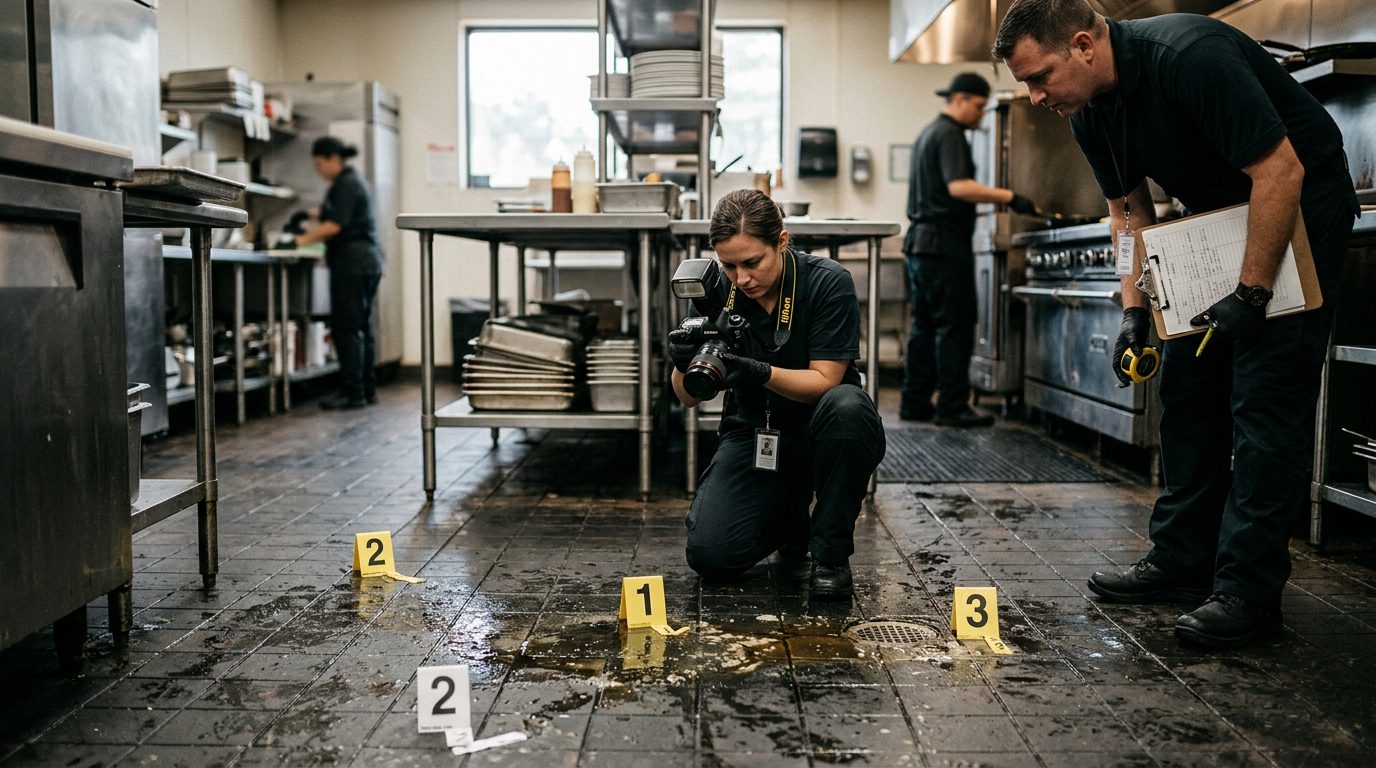
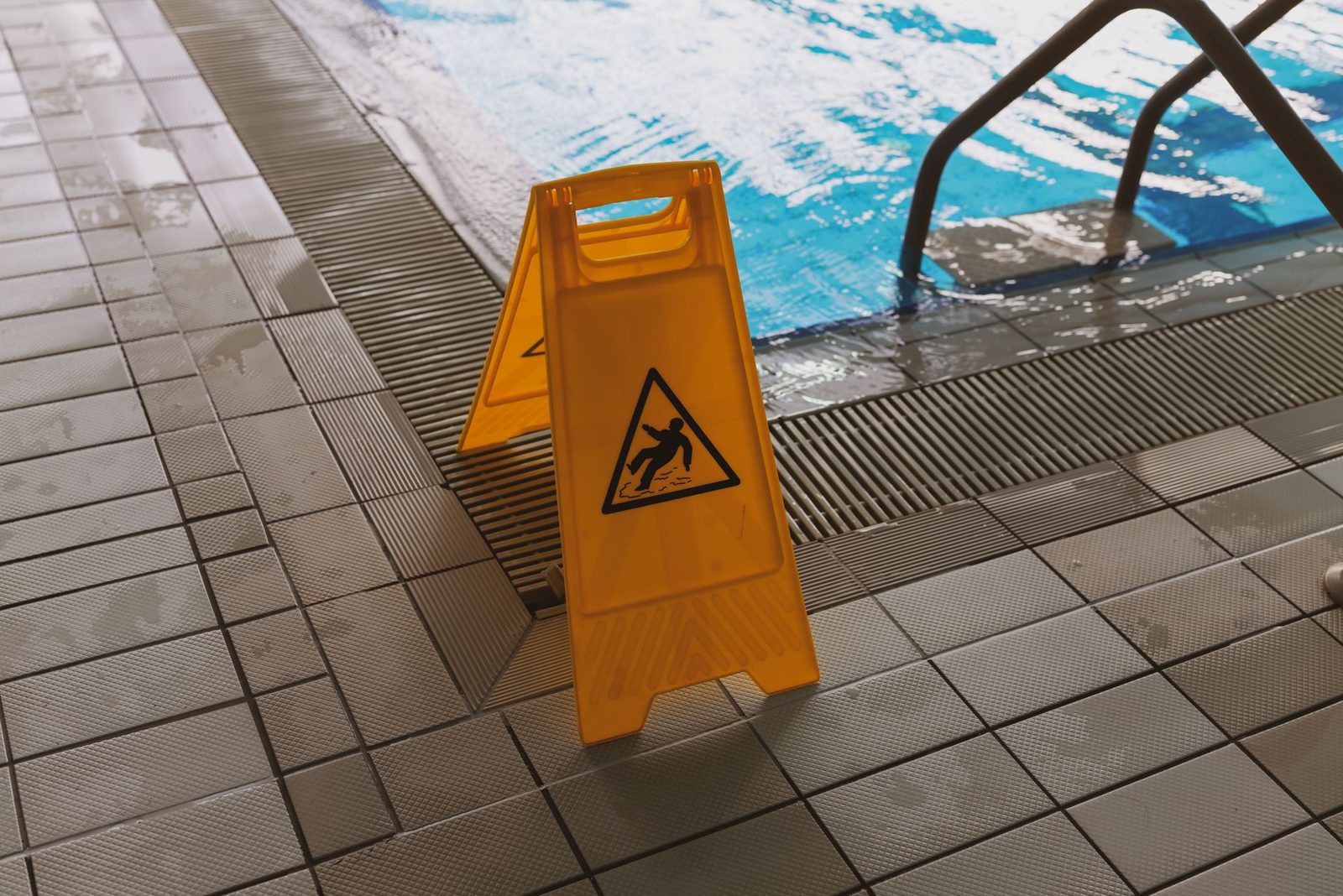
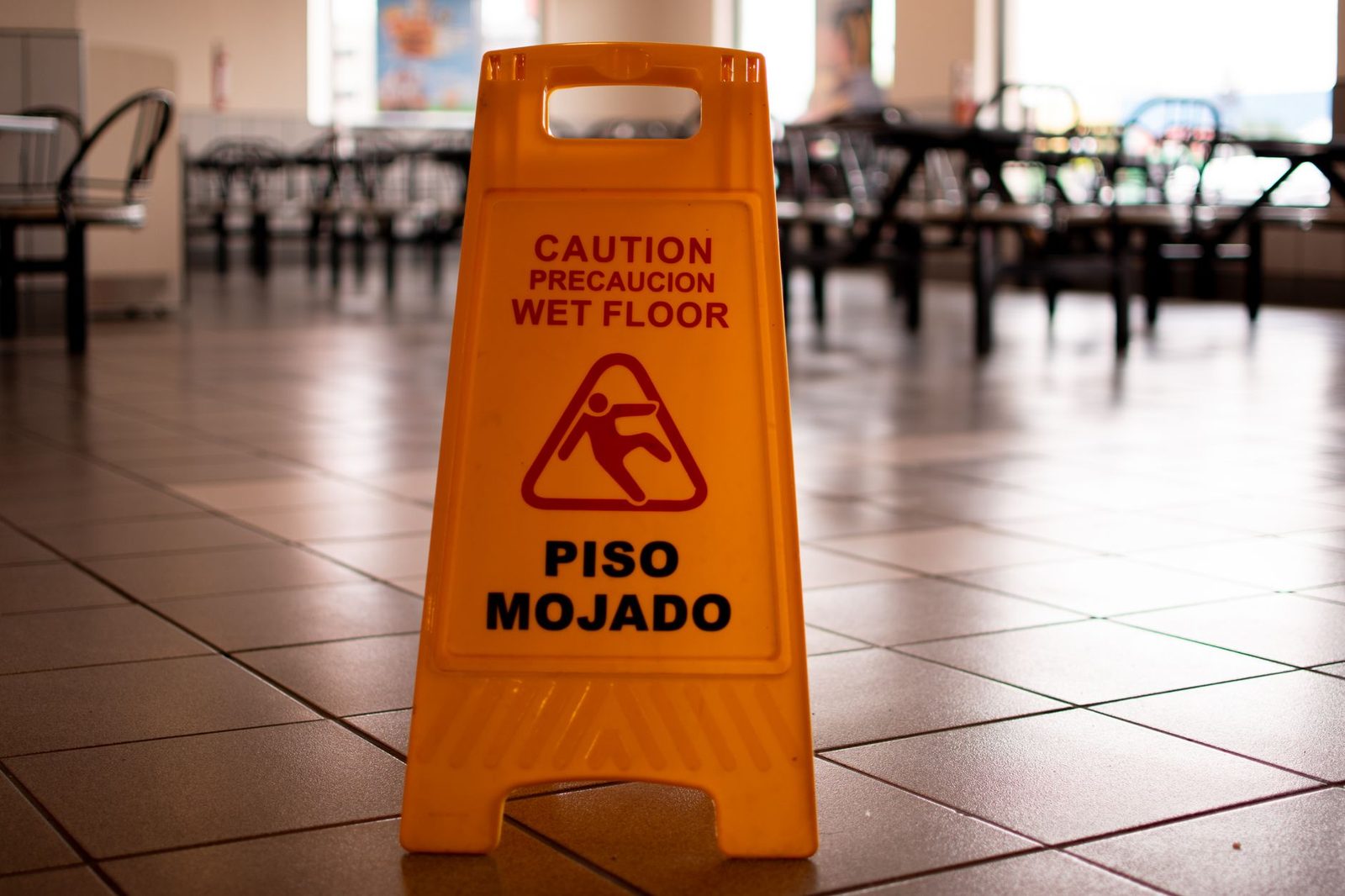
Restaurant falls often involve wet or greasy floors near kitchens and bars. Other common causes include spilled drinks left uncleaned, missing wet-floor signs, torn mats, broken steps, uneven patio surfaces, and poor lighting. Each case turns on who controlled the area and what staff knew. For a wider overview, read our Georgia slip and fall guide.
How do you prove negligence in a slip and fall lawsuit in Georgia?
Every case turns on its own facts, and the details of a claim can vary widely. The business owed you a duty, it breached that duty, the breach caused your fall, and you suffered harm. Notice is often the central question.
A spill that sat on the floor long enough for staff to see it is a common example. Useful evidence includes incident reports, photos of the spot, video, cleaning logs, and names of people who saw the fall. Write down what you remember while it’s fresh. Keep the shoes and clothing you wore, if you still have them.
Georgia also reduces recovery by your share of fault. Under O.C.G.A. § 51-12-33, damages are reduced by the injured person’s percentage of fault. A plaintiff who is 50 percent or more responsible recovers nothing. Under O.C.G.A. § 51-12-33, a plaintiff who is 50 percent or more responsible for the injury or damages claimed is not entitled to receive any damages. The strength of any claim depends on the facts of that fall.
How long do you have to file a slip and fall lawsuit in Georgia?
Georgia’s general deadline for injury claims is two years. Under O.C.G.A. § 9-3-33, except as otherwise provided in this article, actions for injuries to the person must be brought within two years after the right of action accrues, meaning after the claim arose, except for injuries to the reputation (one year) and actions for injuries to the person involving loss of consortium (four years).
Missing that deadline can stop a lawsuit before it starts. The clock matters even while you’re still gathering facts or waiting on medical care.
Claims against government entities follow shorter and different steps. For a city, a written claim must be presented to the city’s governing authority within six months of the event, under O.C.G.A. § 36-33-5. For the state, written notice generally must be given within 12 months of when the loss was discovered or should have been discovered, under O.C.G.A. § 50-21-26. Most restaurants are private businesses, but a fall on public property can raise these rules.
What damages can a restaurant slip and fall claim include?
Damages are the losses and harms a fall causes. They may include medical bills, lost income, out-of-pocket costs, and pain and suffering.
Georgia separates general damages from special damages. General damages are those the law presumes flow from a wrongful act, and they can be recovered without proof of an amount. Special damages are those that actually flow from the act, and they must be proved (O.C.G.A. § 51-12-2).
For medical costs, the amount is limited to the reasonable value of medically necessary care, treatment, or services. The trier of fact, meaning the judge or jury, decides that amount (O.C.G.A. § 51-12-1.1).
Medical records and bills are central. They show what was treated, when, and why. Every claim turns on its own facts, so this page does not promise or predict any amount.
What if a restaurant fall caused a catastrophic injury?
Some falls cause severe harm. These can include head injuries, spinal injuries, fractures that need surgery, and injuries that limit work or daily life for a long time. Some people need care for months or years.
A claim for a serious injury may need to account for future medical needs and lost ability to earn. That is why early medical follow-up matters. Keep every appointment, follow the treatment plan your provider gives you, and tell providers exactly how the fall happened.
Slam Dunk Attorney handles catastrophic injury cases as part of its practice. These claims are complex, and each one is different.
Not sure what your next step is?
Talk it through with our team — the first consultation is free, confidential, and carries no obligation.
Talking with a lawyer about a restaurant slip and fall in Gwinnett County
If you’re hurt, or you’re researching for someone you love, this isn’t a situation you chose. You may be juggling pain, appointments, bills, and hard questions about what to do next.
Common questions
Can I sue a restaurant for a slip and fall in Gwinnett County?
Possibly. Whether a claim is possible turns on how the fall happened and who controlled the area.
How long do I have to file?
Georgia’s general deadline for injury claims is two years from when the claim arose (O.C.G.A. § 9-3-33; Kenneth B. Cameron v. Jmp Pizza, Inc (2026)).
Is there a shorter deadline for a city?
Yes.
If you want to know whether your restaurant fall may support a claim, our team can talk it through with you. Your first consultation is free and confidential, with no obligation to continue. Contact Slam Dunk Attorney to start that conversation.
Attorney advertising. This page is general information, not legal advice. Responsible lawyer: Peter F. Jaraysi, Slam Dunk Attorney, Duluth, Georgia. Contact details are on our contact page.
How Our Team Approaches Your Slip and Fall Claim
Careful Review of the Facts
We look at how the fall happened, where it happened, and what medical care and records follow from it.
Attention to the Property
We examine who owned, operated or controlled the premises and whether a hazard was known or should have been found and fixed.
Clear Communication
Our lawyers and support staff explain each step in plain language so you know what to expect.
Honest Answers
We will tell you what we see in your situation, including the parts that may be difficult, so you can decide with full information.
Focus on Your Recovery
We want you to concentrate on your health while we handle the details of your claim.
Important: Protect Your Health and Your Information
Get medical attention right away, even if your injury seems minor, and keep records of your visits. Take photos of the area and of your footwear if you can. Be cautious about giving recorded statements or signing forms from a property owner or insurance company before you talk with a lawyer.
Common Places Where Slip and Falls Happen
Stores and Restaurants
Wet floors, spills, uneven flooring, and poorly marked hazards inside retail and dining locations.
Parking Lots and Sidewalks
Potholes, cracked pavement, ice, and debris in areas the public is expected to use.
Apartments and Common Areas
Broken stairs, damaged handrails, poor lighting, and unrepaired walkways at residential properties.
Vacation and Short-Term Rentals
Unsafe stairs, decks, bathrooms, and outdoor areas at Airbnb, VRBO and similar rental properties.