
Short-Term Rental Injuries | Alpharetta, GA
Hurt at a Vacation or Short-Term Rental? Get Clear Answers in Alpharetta
Injuries at Airbnb, VRBO and other short-term rentals raise real questions about who is responsible. Our team in Duluth, Georgia helps injured guests and visitors understand their options.
By Peter F. Jaraysi · Published October 26, 2026
If you were hurt at a short-term rental in Alpharetta, you may have a claim against the party whose negligence caused your injury. Georgia law asks whether the owner used ordinary care to keep the home safe for guests.
Looking for short-term rental injuries Alpharetta information? This guide explains how these injuries happen, who may be responsible, which deadlines apply, and what to save right away.
Slam Dunk Attorney is a personal injury firm based in Duluth, Georgia. It represents people hurt in Airbnb, VRBO and other vacation rentals across metro Atlanta and Georgia.
How Short-Term Rental Injuries Happen in Alpharetta
Most rental injuries happen in homes the injured person has never seen before.
Alpharetta has many multi-bedroom homes, townhomes and subdivision houses rented by the night or week. Families book them for trips. Business travelers use them for longer stays. Groups rent them for gatherings.
Guests don’t know the house. They don’t know which stair creaks, which deck rail is loose or where a pool gate fails to latch. A host may know these things well. A guest arriving after dark usually does not.
Gatherings add risk. Larger groups use decks, hot tubs and stairs at the same time. Each new group arrives with no history of the home’s problems.
This page covers injuries inside the home or on its grounds. A crash on the drive to the rental is a different kind of claim, and this guide does not cover it.
If you were hurt at a rental home in Alpharetta, or lost someone there, you may have a claim, and our team can review the facts with you. Talk it through with our team — the first consultation is free, confidential, and carries no obligation.
Common Injuries at Rental Homes and Their Causes
Falls, pool accidents and dog bites are among the most common injuries at rental homes.
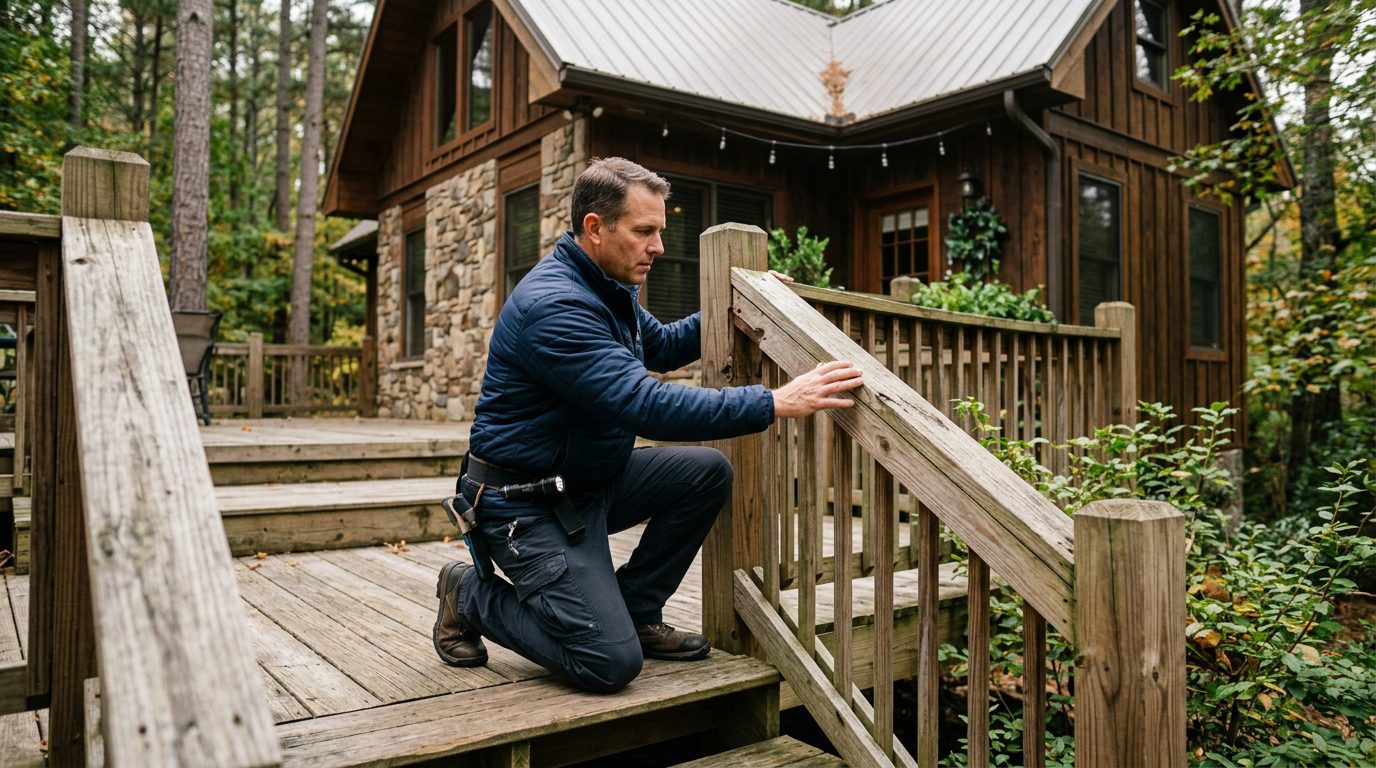
Falls from decks, balconies, staircases and loft areas are frequent. Missing or loose railings, worn steps and poor lighting are typical causes.
Pools, hot tubs and spas pose serious risks. The danger is greatest where barrier fences or gates are missing or do not latch. Drowning and near-drowning can cause lasting harm.
Defective appliances, faulty wiring, gas leaks, carbon monoxide and kitchen or fireplace fires can also injure guests. Repairs that were requested and ignored often become central questions.
Dog bites are another common claim. Under O.C.G.A. § 51-2-7, a person who owns or keeps a vicious or dangerous animal may be liable when careless management or letting the animal go at liberty causes injury to someone who did not provoke it. Showing that the animal was required by a city, county, or consolidated government ordinance to be at heel or on a leash, and was not at the time of the incident, is enough to prove vicious propensity, though this shortcut does not apply to domesticated fowl (including roosters with spurs) or domesticated livestock.
Some injuries change a life. The Georgia Department of Public Health tracks fall-related injuries, including traumatic brain injuries. Spinal cord injury, paralysis, amputation and severe burns can require long-term care and planning.
Assaults can happen when locks are broken or parking areas are dark. Those claims must meet the elements set out in O.C.G.A. § 51-3-51.
Who May Be Responsible for a Rental Injury
The property owner is the most common responsible party, but others may share responsibility.
The owner may be an individual investor, a family member or an LLC that holds title. Each can be a defendant, depending on who controls the property.
A property management company or co-host may handle cleaning, check-in, maintenance or repairs. If their failure to act caused the hazard, they may share responsibility.
Contractors matter too. Georgia law can make an employer liable for a contractor’s negligence in listed situations. One example is when the employer keeps the right to direct how the work is done. See O.C.G.A. § 51-2-5.
Georgia’s landlord rule works differently. Under O.C.G.A. § 44-7-14, a landlord who has fully parted with possession is generally not responsible for a tenant’s negligence. The landlord remains responsible for defective construction or failure to keep the premises in repair. Whether that fits a short-term stay depends on the facts.
Booking platforms like Airbnb and VRBO have their own terms and insurance programs. Whether they apply depends on the booking. Some homeowners and renters policies cover short-term rental activity. Regular hosting may need its own coverage, according to the Insurance Information Institute.
Identifying every party early matters. Evidence and insurance coverage can differ from one party to another.
How Georgia Law Treats Premises Injuries at Rentals
Georgia law asks whether the owner used ordinary care to keep the property safe for people invited there.
Under O.C.G.A. § 51-3-1, an owner or occupier who invites others for a lawful purpose is liable for injuries caused by failing to use ordinary care. That care covers the premises and approaches. A paying guest is invited onto the property for a lawful purpose.
Evidence of prior complaints, repair requests and inspections can help show what the owner knew or should have known.
Georgia also uses comparative fault (shared fault). Under O.C.G.A. § 51-12-33, damages are reduced in proportion to the injured person’s share of fault. A person found 50 percent or more responsible cannot recover damages.
Each liable party pays only its own apportioned share. That share is not joint liability among those liable. The fact-finder also weighs the fault of everyone who contributed to the injury, whether or not they were named in the suit.
Local rules may matter as evidence. Alpharetta and Fulton County short-term rental rules can show how a home was supposed to be run. Rules differ by city and county, so the ordinances for the specific property need checking.
Deadlines and Evidence to Preserve Now
For most personal injury claims, Georgia gives two years from the date of injury to file suit. See the Georgia injury filing deadline under O.C.G.A. § 9-3-33.
Other deadlines differ. A claim against a city may require written notice within six months of the event, under O.C.G.A. § 36-33-5. Wrongful death cases follow their own rules.
Start preserving evidence this week. Evidence can disappear quickly, because hosts may repair steps, replace railings or clean up a scene.
- Photograph the hazard, the area around it and any damaged parts before repair or removal.
- Save the listing, booking confirmation, house rules and all messages with the host or platform.
- Keep medical records, bills, prescriptions and a written timeline of symptoms and missed work.
- Write down names and contact details of other guests or neighbors who saw what happened.
Two cautions. Avoid posting detailed descriptions of fault on social media. Also avoid giving a recorded statement to an insurance adjuster before you talk with a lawyer about your rights.
Talk With Our Team About Your Alpharetta Rental Injury
Slam Dunk Attorney offers a free, confidential first consultation with no obligation to continue.
Our team handles intake, evidence requests and communication with insurers and property managers. We represent people injured in short-term and vacation rentals across metro Atlanta and Georgia.
If someone you love died at a rental home, Georgia law addresses that loss. A surviving spouse, or a child or children if there is no spouse, may recover for the homicide the full value of the decedent’s life, as shown by the evidence. See O.C.G.A. § 51-4-2.
Responsible lawyer: Peter F. Jaraysi, Slam Dunk Attorney, Duluth, Georgia. Our lawyers include Brian D. Wright, who can also discuss your situation.
Can I sue an Airbnb host if I fell on their stairs?
Possibly. A host may be responsible if they failed to use ordinary care to keep the stairs safe. A lawyer can review the details of your fall.
How long do I have to file a case in Georgia?
For most personal injury claims, you have two years from the date of injury (O.C.G.A. § 9-3-33; Kenneth B. Cameron v. Jmp Pizza, Inc (2026)). Other claims, such as those against a city, can have shorter notice rules.
What if I was partly at fault?
Georgia reduces your damages by your share of fault. If you are 50 percent or more at fault, you cannot recover damages under O.C.G.A. § 51-12-33.
If you were hurt at a rental house in Alpharetta, or lost someone you love there, contact Slam Dunk Attorney this week. Booking records and repair history can be requested before they change.
What Makes Rental Injury Cases Different
Unfamiliar property
Guests often do not know a rental's stairs, railings, pools or wiring the way a long-term resident would. Unfamiliar hazards are a common factor in these incidents.
Several parties may be involved
Depending on the facts, the owner, a property manager, or another party responsible for upkeep may be part of the picture.
Records matter
Booking confirmations, listing photos, messages with the host and repair requests can all help show what the property looked like and what was known.
Injuries can be serious
A fall or other incident at a rental can lead to broken bones, head injuries or long-term medical needs. Getting care comes first.
Protect Your Evidence
If you can, photograph the hazard, the area around it and your injuries. Keep your booking details and any messages with the host. Write down what happened while it is still fresh. Do not give recorded statements to insurers before you have talked with a lawyer.
Common Short-Term Rental Injury Situations
Stairs, decks and balconies
Loose railings, uneven steps, missing guardrails and slippery deck surfaces are frequent sources of serious falls.
Pools and hot tubs
Unfenced pools, slick surfaces and missing safety equipment can lead to drowning, near-drownings and severe injuries.
Dog bites on the property
Bites from a host's dog or another animal on the premises can cause deep wounds, scarring and infections.
Unsafe wiring and appliances
Faulty electrical systems, gas leaks, space heaters and broken appliances can cause burns, shocks and other harm.
Talk With Our Team About Your Rental Injury. Your First Consultation Is Free, Confidential and Comes With No Obligation to Continue.
Related practice areas
- Johns Creek Short-Term Rental Injury Lawyer
- Short-Term Rental Injuries Georgia: Who Is Responsible