
Premises Liability | Duluth, Georgia
Document What Happened, Step by Step
A plain-language guide to recording the hazard, the scene and your care after a premises injury. Slam Dunk Attorney, based in Duluth, Georgia, offers a free first consultation, confidential and with no obligation to continue.
By Peter F. Jaraysi · Published October 17, 2026
Documenting Your Premises Liability Injury: Evidence & Steps
If you’ve been injured on someone else’s property—whether from a slip and fall, unsafe stairs, poor lighting, or a negligent security failure—the evidence you collect in the first hours and days after your injury can become the foundation of your claim. Physical evidence fades, witnesses move away, and property owners repair hazards. Writing down what happened while it’s fresh creates a record of the events as you remember them.
This guide walks you through what to photograph, what to preserve, and how to organize your documentation so you’re ready if you decide to pursue a claim.
If you've been injured on someone else's property in Georgia and aren't sure what to preserve or how to start, reach out—our team can review what you've documented and advise you on next steps. Talk it through with our team — the first consultation is free, confidential, and carries no obligation.

Why Documenting Your Premises Liability Injury Matters
Early documentation creates a reliable record that memory alone cannot provide. When you photograph the hazard, note the weather, and collect witness names on the day of your injury, you’re capturing the scene as it actually was—not as anyone might remember it weeks or months later.
Whether a property owner may be liable for an injury depends on the facts of each case, so please consult a lawyer about your own situation. Photographs, weather records, and maintenance documents may be relevant to questions about whether the hazard existed and was visible, depending on the facts of your case. Property owners and their insurance companies may investigate your injury, and your own written account documents your version of events.
Physical evidence disappears fast. A wet floor gets mopped. Broken steps get repaired. Poor lighting gets fixed. Once the hazard is gone, proving it existed becomes much harder. Medical records document the care you received and the dates of that care. Whether the connection between the scene and your harm matters in a premises liability claim depends on the facts of your case, so consult a lawyer about your situation.
Immediate Steps: What to Do Right After Your Injury
Your health comes first. Seek medical attention immediately if you’re hurt. Once you’re safe and able, begin documenting.
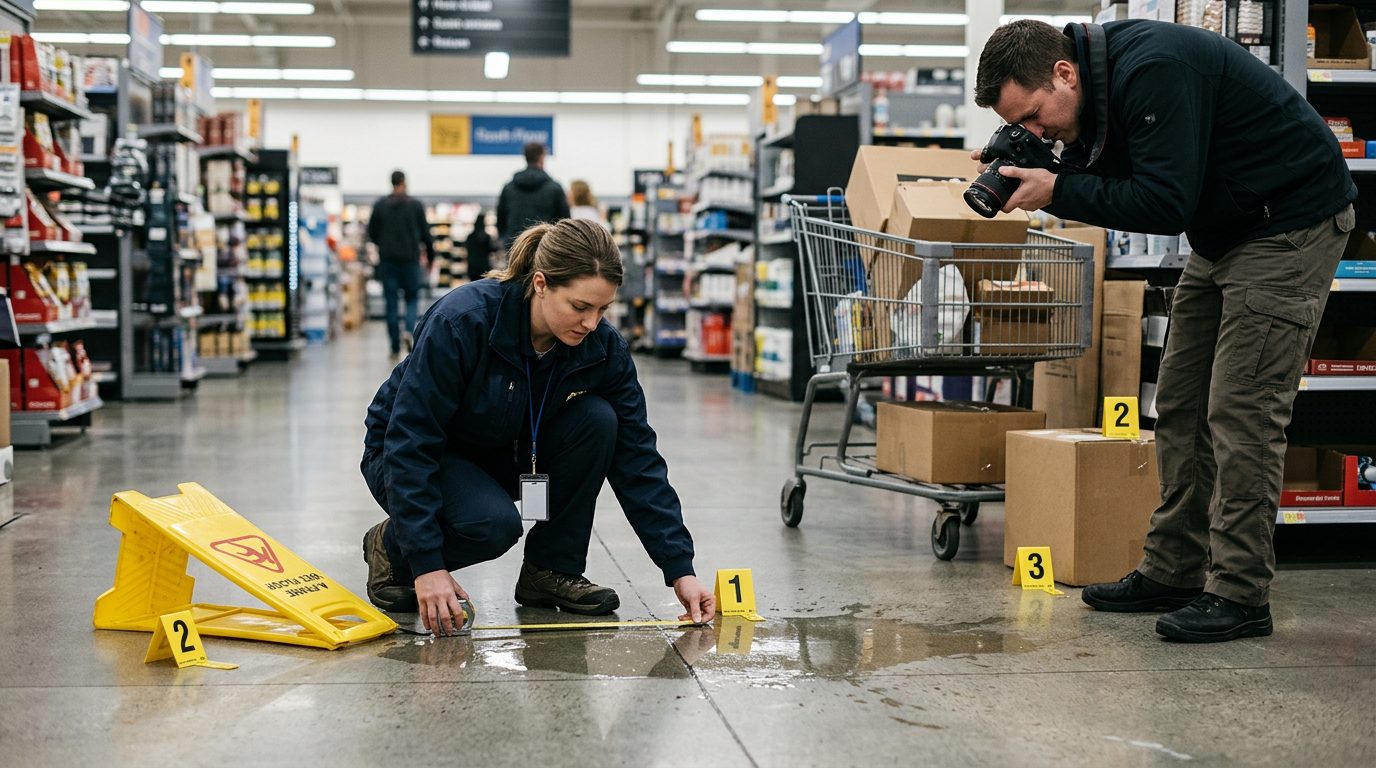
Photograph the scene. If it’s safe and you’re physically able, take photos and video of the exact location where you were injured. Capture wide shots showing the overall area, then close-ups of the specific hazard—the wet floor with no warning sign, the broken step, the inadequate lighting, the missing handrail. Include anything that shows why the condition was dangerous.
Record the date, time, and conditions. Note the exact date and time of your injury. Document the weather: Was it raining? Icy? Hot? Humid? These details matter because they explain how the hazard came to exist or why it was particularly dangerous.
Collect witness information. Before people leave the scene, ask anyone who saw the incident or the hazard for their name, phone number, and email address. Write it down or take a photo of their contact information. Ask them to briefly describe what they saw. If they’re willing, ask permission to record their account in their own words.
Report the injury to the property owner or manager. Tell the property owner, manager, or staff member about your injury as soon as possible. Ask them to document it in an incident report and request a copy. If they refuse or seem reluctant, note that in writing.
Do not alter the scene. If the location is still accessible and safe, do not clean up, move, or remove anything. The hazard and the scene are evidence.
Gathering Medical Evidence
Medical records document the care you received and when you received it. Obtain copies of all records from the date of your injury: emergency room reports, imaging (X-rays, MRI, ultrasound), and any follow-up visits.
Keep receipts for every medical expense—co-pays, medications, physical therapy, braces, or assistive devices. These receipts document the cost and extent of your injury.
Start a journal. Write down your symptoms, pain levels, and any limitations on a daily basis with dates. This contemporaneous record shows how your injury affected you over time and can be valuable evidence.
Ask your medical provider to document in your chart exactly how your injury happened—the mechanism of injury. For example: “Patient reports slip on wet floor at [location] on [date], fell forward, struck head and shoulder.” Medical records that reference the incident document the care you received after it.
Documenting the Hazardous Condition
Photograph the dangerous condition from multiple angles and at different distances. If the hazard has already been repaired or removed, you may still photograph it, and a lawyer can advise whether that matters in your situation.
If the property has maintenance records, inspection logs, or safety reports, try to obtain copies. These documents may relate to whether the owner knew or should have known about the condition, depending on the facts and applicable law. If the property manager or owner won’t provide them voluntarily, your attorney can request them formally later.
Note how long the hazard likely existed. For example: “Wet floor with no warning sign for at least 30 minutes before I fell” or “Broken step repaired the day after my injury.” This timeline helps establish that the owner had time to discover and fix the problem.
Identify any missing safety features: handrails, warning signs, adequate lighting, or non-slip surfaces. Photograph areas where these features should have been but weren’t.
Gather weather data for the date of your injury from the National Weather Service or a similar public source. Temperature, precipitation, and wind conditions help explain how the hazard arose and why it was dangerous.
Witness Information and Statements
Witness testimony is most reliable when recorded or written down immediately. Ask each witness to describe what they saw in their own words. Write it down or, with permission, record them on your phone.
Identify employees or staff who were present. They may have knowledge of how long the hazard existed, whether other people complained about it, or whether the owner had been warned.
Ask whether other people had complained about the same hazard before your injury. If anyone mentions a prior complaint, note that and try to get their contact information.
Request written statements from willing witnesses as soon as possible while their memories are fresh. A simple email asking them to describe what they saw and sign it is sufficient.
Not sure what your next step is?
Talk it through with our team — the first consultation is free, confidential, and carries no obligation.
Preserving Physical Evidence
Keep the clothing and shoes you wore during the injury. They may show damage, stains, or contamination that corroborates your account.
Preserve any objects involved in the fall or injury—a broken step, a defective product, a fallen object. Store these safely with a photo and label.
Do not discard medical devices, braces, crutches, or other aids you had to purchase because of the injury. These are tangible proof of your harm.
Store all evidence in a safe, organized place with labels and dates. Take photos of physical evidence before storing it in case the original is lost or damaged.
Creating a Written Record
Write a detailed account of the incident while it’s fresh in your mind. Include the date, time, location, what happened, and how you were injured. Describe your condition before the injury and note any pre-existing injuries or health issues.
Document the property owner’s or manager’s response to your injury. Did they apologize? Admit fault? Offer to pay? Did they seem unconcerned? Write it down.
Record any conversations with insurance adjusters, including the date, who you spoke with, and what was discussed.
Keep all written communications related to the incident: emails, text messages, letters from the property owner or insurance company. These are evidence.
What Not to Do
Do not post details of your injury or the incident on social media. The property owner’s insurance company may search for your posts, and how any posts are used depends on the facts of your case.
Do not sign any settlement agreement or release without having an attorney review it first. Once you sign, you typically cannot pursue further claims.
Do not give a recorded statement to the property owner’s insurance company without first speaking to an attorney. Insurers may use your words against you.
Do not accept cash payments “to settle” without understanding your full rights and the value of your claim.
Do not delay seeking medical attention to avoid creating a record. Your health is the priority, and prompt medical care creates documentation of your treatment.
Organizing Your Documentation
Create a folder—physical or digital—with all photos, videos, and medical records. Label each item with the date and a brief description.
Maintain a timeline of events: the injury date, each medical visit, changes in your symptoms, and all expenses. This chronology helps you and your attorney understand the full scope of your injury.
Keep a separate list of all witnesses with their names, phone numbers, email addresses, and a note of what they witnessed.
Save copies of incident reports, maintenance records, or any documents from the property.
Back up digital files to cloud storage or an external drive to prevent loss.
When to Seek Legal Guidance
Georgia law generally sets a two-year time limit, called a statute of limitations, for filing many personal injury claims, including some premises liability claims. Exceptions exist, and the deadline depends on the facts of your case, so consult a lawyer about your own situation. Acting early protects your rights and ensures evidence is preserved.
An attorney can advise you on which evidence is most important for your specific situation and help you understand the legal requirements for proving the property owner’s liability.
Questions about communications from an insurance company can be discussed with a lawyer, who can explain the options that may apply to your situation. Those options depend on the facts of your case.
A lawyer can also preserve evidence formally through legal holds and discovery if your case moves toward a lawsuit, ensuring nothing is lost or destroyed.
If you've been injured on someone else's property in Georgia and aren't sure what to preserve or how to start, reach out—our team can review what you've documented and advise you on next steps. Talk it through with our team — the first consultation is free, confidential, and carries no obligation.
Frequently Asked Questions
What if I can’t go back to the property to photograph the hazard?
Document what you can from memory and any photos you took at the time. Your attorney can help obtain additional evidence through formal discovery if necessary.
How long should I keep all this documentation?
Keep everything indefinitely, or at least until your claim is resolved. Your attorney will advise you on what to retain.
Always ask permission before recording anyone.
What if the property owner’s insurance company contacts me?
Do not give a recorded statement or sign anything without speaking to an attorney first. You can politely decline and refer them to your lawyer.
Do I have to file a lawsuit to recover damages?
Whether a lawsuit is needed depends on the facts of each premises liability matter, and a lawyer can explain the options that may apply to your situation. Your attorney will advise you on the best path forward.
If you’ve been injured on someone else’s property in Georgia and you’re unsure what to preserve or how to organize your documentation, our team can review what you’ve gathered and advise you on protecting your claim. People in your situation can reach out—we understand the confusion and uncertainty that comes after an unexpected injury. Contact us for a free case review to discuss your situation and next steps.
What to record after a premises injury
The condition itself
Note the exact spot, the surface, lighting, weather and anything that may have contributed to the hazard, such as a wet floor, broken step or missing warning sign.
Incident and report details
Record the date, time, the business or property owner's name, and any incident report you were given or were offered. Keep a copy of anything you signed.
Witnesses and contacts
Write down the names and phone numbers of anyone who saw what happened, along with any employees or staff who responded.
Your injuries and care
Keep notes on your symptoms, how they change over time, and each visit to a medical provider. Medical records document your care; they do not determine whether a claim exists.
General information, not legal advice
This guide describes common documentation steps. Whether a claim exists, what deadlines may apply and how responsibility is determined depend on the facts of your situation and on Georgia law, and exceptions may apply. Consult a lawyer about your own case.
A simple documentation checklist
Photograph the scene
If you are able, take photos and video of the hazard, the surrounding area and your injuries from several angles. Include a wide shot and a close-up with a common object for scale.
Write it down while you remember
Create a written account of how the incident happened, including what you saw, heard and were doing. Date it, and add to it as new details come back to you.
Keep every medical record
Save discharge papers, bills, prescriptions, referrals and appointment reminders. If you cannot return to the property to photograph the hazard, document what you can from memory and from any photos you took at the time.
Organize and keep copies
Store originals safely and keep digital copies in one folder. Keep receipts for out-of-pocket costs, and keep copies of all correspondence with the property owner or insurance representatives.