
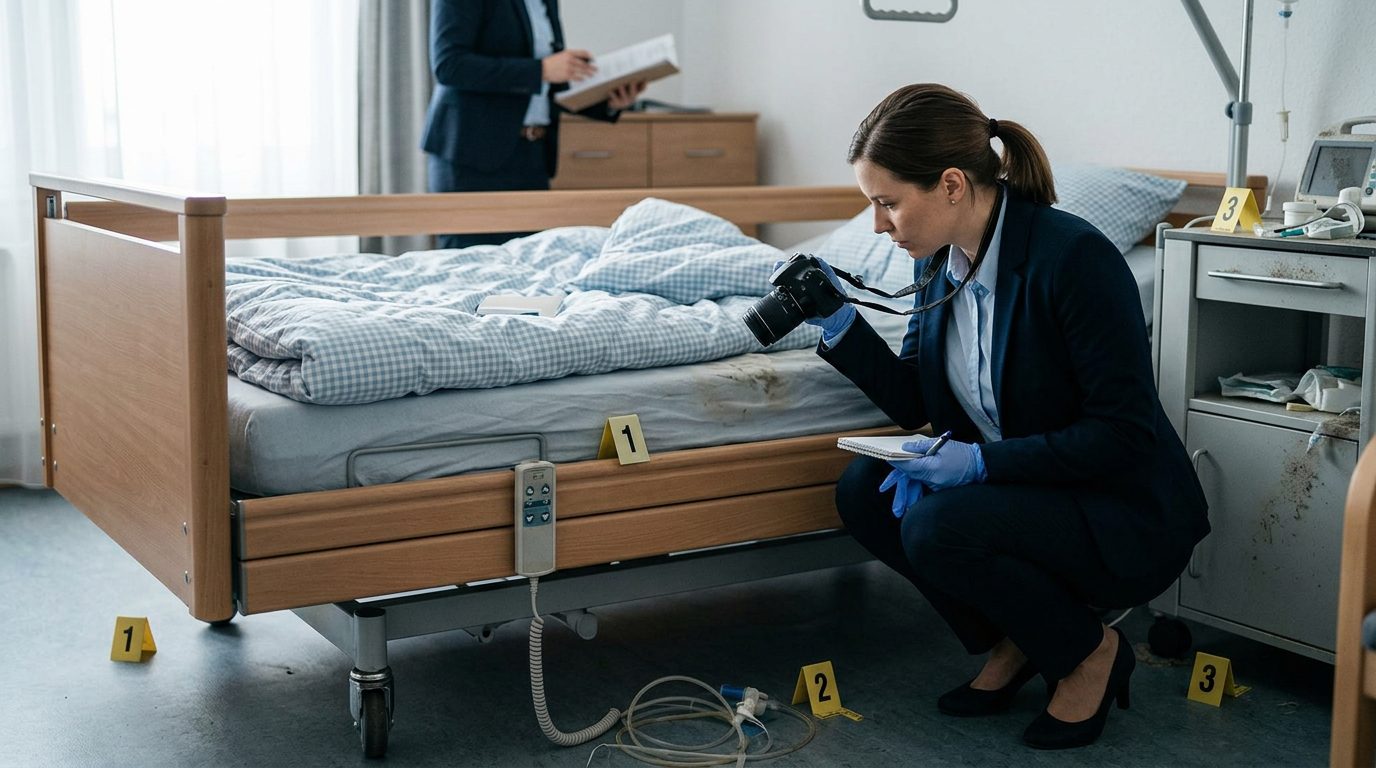
Nursing Home Abuse & Neglect
Nursing Home Bedsores & Pressure Ulcers: Liability in Georgia
Preventable wounds caused by neglect. If your loved one developed a pressure ulcer in a Georgia nursing home, we can help you understand what happened and your options.
By Peter F. Jaraysi · Published September 23, 2026
Nursing Home Bedsores and Pressure Ulcers: Recognizing Negligence and Liability in Georgia
Bedsores—also called pressure ulcers or decubitus ulcers—develop when prolonged pressure on skin over bony areas reduces blood flow and causes tissue breakdown. Nursing home bedsores and pressure ulcer liability cases often hinge on whether the facility failed to prevent a condition that is largely avoidable through proper care. Understanding what constitutes negligence, what warning signs to watch for, and how to document potential failures is essential if your loved one has developed these wounds in a long-term care setting.
If your loved one developed bedsores despite being cared for in a nursing home, you may have a claim—many families in this situation reach out to us to understand what happened and whether the facility failed in its duty of care. Talk it through with our team — the first consultation is free, confidential, and carries no obligation.
What Are Bedsores and Pressure Ulcers?
Pressure ulcers form when skin and underlying tissue are compressed between bone and an external surface—typically a bed or wheelchair—for prolonged periods. The reduced blood flow starves tissue of oxygen, causing cells to break down and die. These wounds are staged by severity, from Stage 1 (non-blanchable redness of the skin) through unstageable or deep tissue injury, which involves damage to muscle, bone, or supporting structures beneath the skin.
Bedsores most commonly appear over bony areas: the sacrum (base of the spine), heels, hips, elbows, and back of the head. They can develop or worsen rapidly if left untreated. Residents at highest risk include those with limited mobility, incontinence, poor nutrition, advanced age, dementia, spinal cord injury, or chronic medical conditions—but risk alone does not excuse a facility’s failure to prevent them.
Why Bedsores Develop in Nursing Homes
Pressure ulcers develop in nursing homes when facilities fail to implement or maintain the preventive measures required by law and professional standards. Common preventable causes include:
- Inadequate repositioning: Immobile residents must be turned and repositioned regularly—typically every 2 hours—to relieve pressure. Failure to follow a repositioning schedule is a leading cause of preventable bedsores.
- Neglect of pressure-relief equipment: Nursing homes must use special mattresses, cushions, heel protectors, and other devices designed to distribute pressure and reduce skin breakdown.
- Poor hygiene and skin monitoring: Staff must inspect residents’ skin regularly for early signs of breakdown and keep skin clean and dry. Missed inspections or failure to report early-stage ulcers allow preventable progression.
- Malnutrition and dehydration: Proper nutrition and hydration are essential to skin health. Facilities that fail to ensure adequate intake increase ulcer risk significantly.
- Understaffing and inadequate training: When nursing homes operate with insufficient staff or fail to train employees on pressure ulcer prevention, residents suffer. Staff shortages often lead to skipped repositioning, missed skin checks, and delayed response to complaints.
- Systemic neglect: Some facilities ignore resident or family complaints, fail to escalate concerns to medical staff, or do not follow individualized care plans—patterns that indicate institutional negligence.
Standard of Care: What Nursing Homes Must Do
Federal regulations establish clear standards for nursing home care. Facilities must:
- Assess pressure ulcer risk upon admission and on an ongoing basis, identifying residents at high risk so preventive measures can be tailored.
- Develop individualized care plans that specify the resident’s risk level, preventive interventions, and monitoring schedule.
- Implement regular repositioning according to the resident’s needs—typically every 2 hours for immobile residents, more frequently for those at very high risk.
- Provide and maintain pressure-relief equipment, including specialized mattresses, cushions, and positioning aids.
- Conduct daily skin inspections and document findings in the resident’s medical record.
- Ensure adequate nutrition and hydration to support skin health and wound healing.
- Respond promptly when ulcers appear, involving medical staff and initiating wound care immediately.
- Train staff on pressure ulcer prevention, early detection, and proper care techniques.
These are not optional best practices—they are legal obligations. Failure to meet them can constitute negligence.
When Bedsores Indicate Nursing Home Negligence
Not every pressure ulcer that develops in a nursing home represents negligence. However, several warning signs suggest that a facility has fallen short of its duty of care:
- Development in a previously mobile or low-risk resident: If your loved one was ambulatory or at low risk when admitted, and bedsores developed during their stay, the facility’s care may have been inadequate.
- Rapid progression: A pressure ulcer that advances from Stage 1 to Stage 3 or 4 within days or weeks—despite the resident being in the facility’s care—suggests the facility failed to implement preventive measures or seek timely medical intervention.
- Early appearance after admission: Bedsores that develop within the first week or two of admission may indicate that the facility failed to assess risk, develop a care plan, or implement preventive measures promptly.
- Failure to reposition or use equipment: If medical records show no documentation of repositioning, or if the facility did not use prescribed pressure-relief equipment despite a documented care plan, negligence may be evident.
- Delayed medical treatment: When a facility recognizes a developing ulcer but delays involving a physician or wound care specialist, further damage is foreseeable and preventable.
- Lack of documentation: Facilities are required to document skin assessments, repositioning, equipment use, and interventions. Absent or sparse records often indicate that preventive care was not provided.
- Ignored complaints: If you or your loved one reported concerns about skin breakdown or lack of repositioning, and the facility did not act, that failure is evidence of negligence.
Health Consequences of Untreated or Neglected Bedsores
The consequences of pressure ulcer negligence extend far beyond the initial wound. Untreated or inadequately managed bedsores can lead to:
- Infection and sepsis: Pressure ulcers are open wounds vulnerable to bacterial infection. Sepsis—a life-threatening systemic infection—can develop rapidly and cause organ failure or death.
- Bone and tissue damage: Advanced-stage ulcers penetrate deep into muscle and bone, causing permanent structural damage and chronic pain.
- Reduced mobility and quality of life: Even after healing, scarring and pain limit movement and independence.
- Extended hospitalization: Severe bedsores often require hospitalization for wound care, antibiotics, or surgical intervention.
- Psychological harm: Residents may experience depression, shame, and loss of dignity as a result of preventable wounds.
- Permanent disability or death: In the most severe cases, untreated bedsores and their complications result in permanent disability or death.
Not sure what your next step is?
Talk it through with our team — the first consultation is free, confidential, and carries no obligation.
Documenting Bedsore Negligence
If you suspect your loved one’s bedsores resulted from nursing home negligence, preserve and gather the following documentation:
- Medical records: Request the resident’s complete medical file, including admission assessments, care plans, daily nursing notes, wound documentation, and physician orders. These records should show whether the facility assessed pressure ulcer risk and implemented preventive measures.
- Photographs: Document the ulcer’s appearance and location with dated photographs. If possible, photograph the progression over time to show how quickly the wound worsened.
- Staffing records and shift logs: Request records showing staffing levels and shift assignments. Understaffing is often a factor in preventable bedsores.
- Incident reports and complaints: Ask the facility for any incident reports, complaint logs, or records of complaints you or your loved one filed about skin care or repositioning.
- Communications: Preserve emails, letters, visit notes, and any written communications with facility staff regarding your concerns.
- State survey reports: File a complaint with the Georgia Department of Community Health if appropriate, and request copies of any state survey reports or inspection findings related to the facility.
- Expert medical review: An experienced attorney will engage medical experts to review the records and establish whether the facility’s care deviated from the standard expected in the industry.
What to Do If Your Loved One Has Developed Bedsores
If you discover that your loved one has developed bedsores in a nursing home, take these steps:
- Seek immediate medical evaluation if the resident has not already been seen by a physician. Pressure ulcers require professional assessment and treatment.
- Request and preserve all medical records from the facility. Do not rely on the facility to provide complete records later—request them in writing and keep copies.
- Document the condition with photographs and written observations, including the date you first noticed the ulcer and any changes you’ve observed.
- Report to facility management and request a written response explaining what preventive measures were in place and why the ulcer developed.
- File a complaint with the Georgia Department of Community Health if you believe the facility violated care standards.
- Consult with an attorney experienced in nursing home liability to evaluate whether negligence occurred and what legal options may be available.
Nursing Home Liability and Your Rights
Nursing homes are legally responsible for providing adequate care to prevent foreseeable harm to residents. When a facility fails to meet the standard of care and a resident is injured as a result, negligence has occurred. Liability may extend to the facility itself, individual staff members, and corporate operators depending on the circumstances.
In Georgia, families may pursue claims on behalf of residents for damages including medical costs, pain and suffering, loss of quality of life, and other losses resulting from the facility’s negligence. Pressure ulcer cases often involve substantial damages because these wounds are preventable and the consequences of negligence can be severe.

Frequently Asked Questions
How quickly can a pressure ulcer develop in a nursing home?
Pressure ulcers can develop within days if a resident is immobile and not repositioned regularly. A Stage 1 ulcer may appear within 24 hours of continuous pressure; progression to deeper stages can occur within weeks if preventive care is not provided.
What is the difference between a Stage 2 and Stage 4 pressure ulcer?
A Stage 2 ulcer involves loss of skin and shallow tissue damage; a Stage 4 ulcer penetrates to muscle and bone. The difference reflects the severity of negligence and the extent of harm.
Can a nursing home be held liable if a resident had high pressure ulcer risk?
Yes. Even high-risk residents are entitled to proper preventive care. Liability depends on whether the facility met the standard of care, not on whether the resident was at risk.
What role does staffing play in pressure ulcer negligence?
Understaffing is a common factor in preventable bedsores. When a facility does not employ enough staff to reposition residents regularly and monitor skin, bedsores are foreseeable and preventable failures.
If your loved one developed bedsores despite being cared for in a nursing home, you may have a claim—many families in this situation reach out to us to understand what happened and whether the facility failed in its duty of care. We’re here to listen to your story and help you understand your options. Contact us for a free case review.
Pressure Ulcers Are Preventable
Stage 1 bedsores can develop within 24 hours of continuous pressure on immobile residents. Nursing homes have a duty to reposition residents regularly, maintain skin care, and monitor for early warning signs. Failure to do so may constitute neglect.
Understanding Pressure Ulcer Stages
Stage 1 & 2
Early-stage ulcers involve skin redness or blistering. These are most preventable with proper repositioning and skin care. Nursing homes should catch and treat these immediately.
Stage 3 & 4
Advanced ulcers involve tissue and muscle damage. These develop when early signs are ignored or preventive care is withheld. They cause severe pain and infection risk.
Unstageable & Deep Tissue
Wounds where the base cannot be seen, or damage beneath intact skin. These indicate prolonged neglect and serious underlying harm.
What Constitutes Nursing Home Liability
Duty of Care
Nursing homes must provide regular repositioning, skin inspections, proper nutrition, hydration, and hygiene to prevent pressure ulcers in immobile or at-risk residents.
Breach of Duty
Failure to reposition residents, ignoring early warning signs, inadequate staffing, or lack of preventive protocols can constitute breach of the facility's legal duty.
Causation & Harm
If a bedsore develops or worsens due to the facility's neglect—not underlying medical conditions alone—the facility may be liable for the resulting pain, infection, and medical costs.
Documentation Matters
Medical records, care plans, and incident reports often reveal whether the facility knew of the risk and failed to act. We review these records to build your case.
Steps We Take in a Nursing Home Bedsore Case
Medical & Care Record Review
We obtain and analyze the resident's medical records, care plans, and facility documentation to identify when the ulcer developed and what preventive measures were—or were not—taken.
Expert Consultation
We work with medical professionals to determine whether the bedsore was preventable, whether the facility breached its duty, and what harm resulted from that breach.
Facility Investigation
We examine the facility's policies, staffing levels, training records, and history of complaints to understand whether neglect was systemic or isolated.
Liability & Damages Assessment
We evaluate the facility's liability and calculate damages—including medical costs, pain and suffering, and other losses—to pursue fair compensation for your loved one.
Why This Matters
Bedsores are a leading indicator of nursing home neglect. They cause infection, sepsis, prolonged hospitalization, and in severe cases, death. If your loved one developed a pressure ulcer in a Georgia nursing home, the facility may be held accountable.