
Negligent Security | Georgia
When a Property Owner Fails to Protect You
If you were injured due to inadequate security at a commercial property, parking lot, or apartment complex, you may have a claim. Slam Dunk Attorney represents injured people across metro Atlanta and Georgia.
By Peter F. Jaraysi · Published September 20, 2026
Negligent Security at Commercial & Retail Properties: Your Georgia Legal Guide
You were assaulted, robbed, or injured at a retail store, shopping center, office building, or other commercial property—somewhere you should have been safe. The property owner failed to provide adequate security: no cameras, broken locks, poor lighting, or no trained security staff. You’re hurt, angry, and wondering if someone is responsible. In Georgia, the answer is often yes. Property owners have a legal duty to protect visitors from foreseeable harm, and when negligent security enables or fails to prevent a crime or injury, you may have a claim.
If you were hurt at a retail store, shopping center, or commercial property because security was inadequate or absent, you may have a claim—and people in your situation reach out to us regularly for a free case review. Talk it through with our team — the first consultation is free, confidential, and carries no obligation.

What Is Negligent Security at Commercial & Retail Properties?
Negligent security is a property owner’s or manager’s failure to provide reasonable security measures, resulting in foreseeable harm to visitors, employees, or customers. Under Georgia premises liability law, property owners must maintain their properties in a reasonably safe condition and take steps to protect people on the property from foreseeable dangers—including foreseeable criminal acts.
The key principle is foreseeability. If similar crimes or incidents were reasonably foreseeable based on prior criminal activity at the location, the property’s location in a high-crime area, or obvious security gaps, the property owner should have taken steps to prevent harm. When they don’t, and you’re injured as a result, they may be liable.
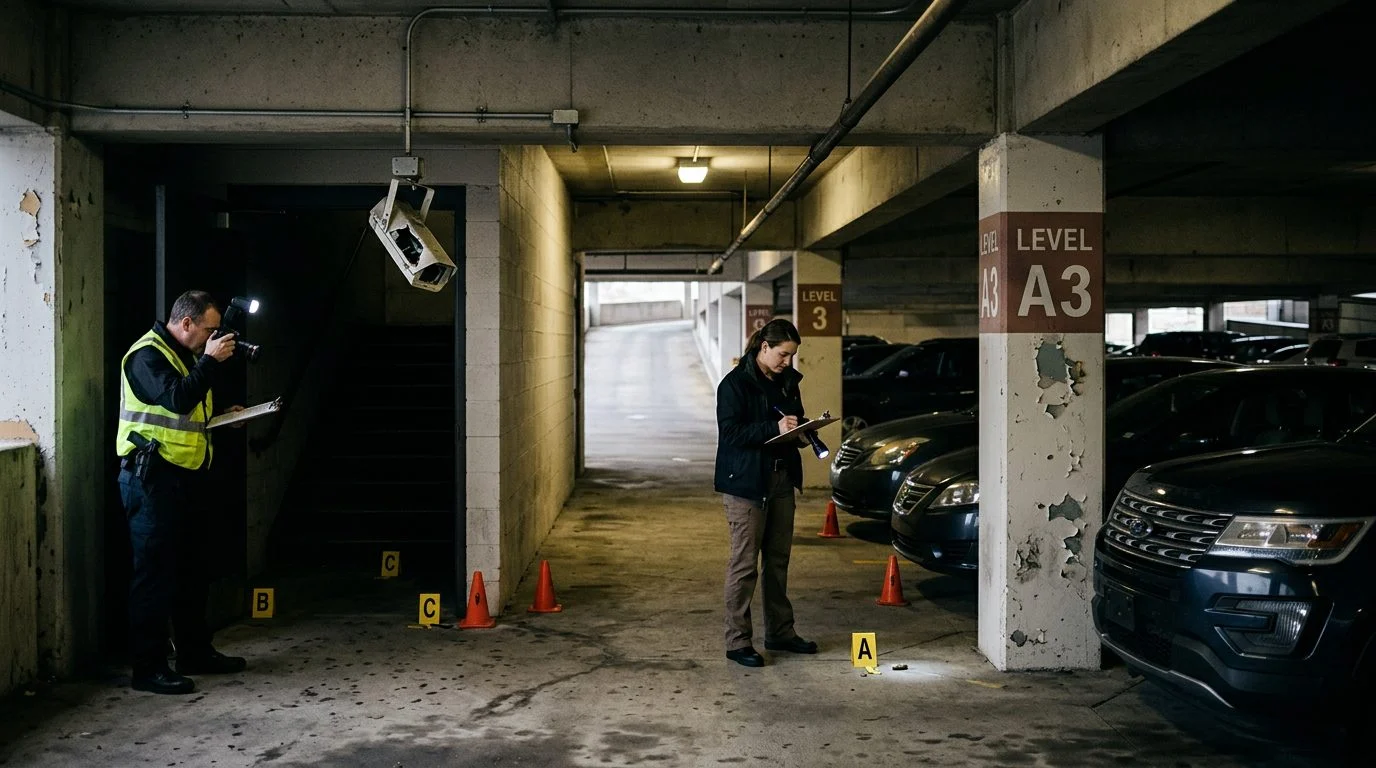
Negligent security claims arise in many scenarios: a customer assaulted in a parking lot with no lighting or security cameras; an employee robbed because the building had broken locks and no alarm system; a shopper attacked because security staff were absent or untrained; a visitor injured during a break-in because the property lacked basic security measures.
Who This Applies To
Negligent security claims protect anyone injured at a commercial or retail property due to inadequate security. This includes:
- Customers injured during an assault, robbery, or other crime at a retail store or shopping center
- Employees harmed due to inadequate workplace security measures
- Visitors to office buildings, warehouses, or commercial complexes attacked or injured because of poor security
- Anyone whose injury was foreseeable and preventable with reasonable security (lighting, cameras, guards, locks, alarm systems, trained staff)
If you were hurt because the property owner failed to provide reasonable security, you may have a claim—even if a third party (a criminal, an assailant, a thief) directly caused the injury.
What Negligent Security Claims Cover
Negligent security claims can recover a wide range of damages:
- Medical expenses: emergency care, hospitalization, surgery, ongoing treatment, physical therapy, mental health counseling, and future medical care
- Lost wages: income lost during recovery and ongoing disability or inability to work
- Pain and suffering: physical pain, emotional trauma, post-traumatic stress disorder (PTSD), anxiety, depression, and loss of enjoyment of life
- Property damage: stolen or damaged personal belongings
- Punitive damages: in cases of gross negligence or reckless disregard, Georgia law allows punitive damages to punish the property owner and deter future misconduct
- Wrongful death damages: if the injury resulted in death, surviving family members may recover for funeral expenses, lost financial support, and loss of companionship
The specific damages you recover depend on the severity of your injury, the circumstances of the incident, and the evidence supporting your claim.
What Constitutes Negligent Security in Georgia
Courts and juries in Georgia evaluate negligent security based on whether the property owner failed to take reasonable steps to prevent foreseeable harm. Common security failures include:
- Absence of adequate lighting in parking lots, entryways, stairwells, or common areas
- Broken or non-functional locks, doors, or gates that fail to prevent unauthorized entry
- No security cameras or non-functional surveillance systems that could deter or document crimes
- Lack of trained security personnel or inadequate staffing for the property’s size and crime history
- Failure to respond to prior criminal activity or known threats at the location
- Poor maintenance of property (broken windows, unsecured areas, overgrown landscaping that hides threats)
- Failure to warn customers or employees of known dangers or prior incidents
- Inadequate alarm systems or emergency response procedures that delay police response
- History of similar crimes at the location that were ignored or not addressed
The presence of one or more of these factors, combined with evidence that the harm was foreseeable, strengthens your claim.
How to Prove a Negligent Security Claim
To win a negligent security claim in Georgia, you must establish four key elements:
1. Duty of Care
The property owner owed you a legal duty to maintain the property in a reasonably safe condition and protect you from foreseeable harm. This duty exists for all visitors, customers, and employees on the property.
2. Breach of Duty
The property owner breached that duty by failing to provide adequate security measures given the foreseeable risk. Security was inadequate or absent, and a reasonable property owner would have done more.
3. Foreseeability
The harm was foreseeable. This is proven by showing that similar crimes or incidents had occurred at the location before, that the property is in a high-crime area, or that obvious security gaps made criminal activity likely.
4. Causation & Damages
The lack of security directly caused your injury, and you suffered quantifiable damages (medical bills, lost wages, pain and suffering, etc.).
Evidence that matters:
- Police reports and incident records
- Security footage (if available) or evidence it was disabled or absent
- Prior incident reports at the location
- Property maintenance and security records
- Witness statements
- Medical records and expert testimony on your injuries
- Wage statements and proof of lost income
- Expert testimony from security professionals on industry standards and foreseeability
In the negligent security cases we handle, thorough investigation into the property’s prior incidents and security protocols often reveals a pattern of negligence that strengthens the claim significantly.
Not sure what your next step is?
Talk it through with our team — the first consultation is free, confidential, and carries no obligation.
The Legal Process: What to Expect
Negligent security cases follow a structured legal process. Here’s what typically happens:
Step 1 – Free Consultation
You contact Slam Dunk Attorney and we review your case, gather initial details, and explain your legal options with no obligation. We ask about the incident, your injuries, and what you remember about the property’s security.
Step 2 – Investigation
We obtain police reports, security footage (if available), prior incident reports at the location, property maintenance records, and interview witnesses. We also research the property’s crime history and security protocols.
Step 3 – Demand & Negotiation
We send a detailed demand letter to the property owner’s insurance company outlining the negligence, foreseeability, and damages. We negotiate a settlement based on the strength of the evidence and the severity of your injuries.
Step 4 – Filing a Lawsuit (if needed)
If settlement talks stall, we file a complaint in Georgia court. This signals that we’re serious and often motivates the insurance company to negotiate more aggressively.
Step 5 – Discovery
Both sides exchange evidence, take depositions (recorded statements under oath), and build their cases. We obtain additional documents and expert reports to strengthen your position.
Step 6 – Settlement or Trial
Most cases settle before trial. If settlement isn’t reached, we prepare for trial and present your case to a jury.
Timeline: Negligent security cases typically take 1–3 years to resolve, depending on the complexity of the case and whether it goes to trial.
Why Slam Dunk Attorney Handles Negligent Security Cases Differently
We bring deep, local Georgia premises liability experience to every negligent security case. Here’s what sets us apart:
- Georgia-specific experience: We know how courts and juries in metro Atlanta and across Georgia evaluate negligent security claims. We understand Georgia’s comparative negligence law, statute of limitations, foreseeability standards, and punitive damages rules.
- Thorough investigation: We don’t rely on initial police reports. We dig into prior incidents, security protocols, maintenance failures, and the property’s crime history to build a compelling case.
- Expert network: We work with security experts, medical professionals, and economists to establish industry standards, prove foreseeability, and quantify your damages.
- Aggressive negotiation: We know what negligent security cases are worth and we fight for full compensation. We prepare every case as if it will go to trial, which strengthens our negotiating position.
- Trial-ready: We don’t settle early or accept lowball offers. Our trial preparation signals to insurers that we’re serious, which often leads to better settlements.
- Local presence: Based in Duluth, Georgia, we serve clients across metro Atlanta and the state with personalized attention and direct access to decision-makers.
Common Questions About Negligent Security Claims
Q: Do I have to prove the property owner knew a specific crime would happen?
No. You must show the crime was foreseeable based on prior incidents at the location, the property’s crime rate, or obvious security gaps. Foreseeability is established by pattern and circumstance, not by proving the owner predicted your exact injury.
Q: What if I was partially at fault for being in the wrong place?
Georgia’s comparative negligence law allows you to recover even if you were partially at fault, provided the property owner’s negligence was greater. The property owner cannot escape their duty of reasonable care by claiming you assumed the risk.
Q: How long do I have to file a claim?
Georgia’s statute of limitations for premises liability claims is generally two years from the date of injury. Don’t wait—evidence can disappear, witnesses become unavailable, and memories fade.
Q: Will my case go to trial?
Most negligent security cases settle before trial, but we prepare every case as if it will go to trial to maximize your leverage in negotiations.
Q: What if the property owner claims I assumed the risk?
Assumption of risk is a weak defense in negligent security cases. Property owners cannot escape their duty of reasonable care by arguing you knew the property was unsafe.
Q: Can I recover if a third party (not the property owner) committed the crime?
Yes. The property owner is liable if their negligent security enabled or failed to prevent the third party’s criminal act. The property owner’s duty is to protect you from foreseeable harm, including foreseeable criminal acts.

What You Should Do Right Now
If you’ve been injured due to inadequate security at a commercial property, take these steps:
- Seek medical attention immediately if you haven’t already
- File a police report and get a copy of the report number
- Document your injuries with photos and keep all medical records
- Preserve evidence: save receipts, wage statements, and any communications with the property owner or their insurance company
- Do not sign anything from the property owner’s insurance company without legal advice
- Contact Slam Dunk Attorney for a free case review—we’ll evaluate your claim and explain your options
If you were hurt at a retail store, shopping center, or commercial property because security was inadequate or absent, you may have a claim—and people in your situation reach out to us regularly for a free case review. Contact us today to discuss your case with an experienced Georgia negligent security attorney.
Why Property Owners Have a Duty to Protect
Foreseeability Matters
Property owners must maintain reasonable security when crime is foreseeable based on the location's history, prior incidents, or known security gaps. You don't have to prove the owner predicted your exact injury—only that the risk was reasonably foreseeable.
Common Negligent Security Failures
Inadequate lighting, broken locks, missing security cameras, lack of security personnel, poor maintenance, or failure to warn tenants and visitors of known dangers can all create liability when they contribute to your injury.
Evidence We Investigate
We examine prior police reports, crime statistics for the area, maintenance records, security logs, witness statements, and the property's condition at the time of your injury to build your case.
Your Recovery Is Our Focus
We work to hold property owners accountable and pursue compensation for your medical bills, lost wages, pain and suffering, and other damages resulting from the owner's failure to provide adequate security.
What You Need to Know About Negligent Security Claims
Burden of Proof
You must show that the property owner knew or should have known of the risk, failed to take reasonable precautions, and that failure directly caused your injury. Foreseeability is established by pattern and circumstance.
Comparative Fault
Georgia law allows recovery even if you were partially at fault, as long as you were less than 50% responsible. Your percentage of fault reduces any award, but a plaintiff who is 50% or more responsible recovers nothing.
Time Matters
There are time limits for filing a negligent security claim. Waiting too long can prevent you from pursuing compensation. Contact us promptly to protect your rights.
Types of Injuries We Handle
Negligent security claims arise from assault, robbery, theft, or other crimes on the property. If you were injured in a criminal act that the owner should have prevented through better security, we can help evaluate your claim.
Important: Case Costs Are Separate from Attorney Fees
We handle negligent security cases on a no-fees-unless-there-is-a-recovery basis. However, you may still be responsible for case costs such as investigation, expert reports, and court filing fees, even if your case does not result in recovery. We will discuss all costs with you upfront.