
Comprender lo que realmente significa “dolor y sufrimiento” después de un accidente
Reclamaciones por dolor y sufrimiento son una parte fundamental de los casos de lesiones personales en Georgia, pero pueden resultar confusos. A continuación, ofrecemos una breve descripción general:
¿Qué son?
- Indemnización por pérdidas no económicas, como dolor físico, angustia emocional y sufrimiento mental.
- Aparte de los daños económicos (gastos médicos, salarios perdidos).
- Incluye ansiedad, depresión y pérdida del disfrute de la vida.
¿Quién puede presentar una solicitud?
- Cualquier persona que haya resultado lesionada por la negligencia de otra persona en Georgia.
- Debe demostrar que la lesión causó dolor físico o emocional duradero.
¿Cómo se calculan?
- Georgia no tiene una fórmula establecida. Las aseguradoras suelen utilizar un método multiplicador (multiplicando los costos médicos) o un dieta (tarifa diaria).
- El valor depende de la gravedad de la lesión, el tiempo de recuperación y el impacto en la vida.
Las secuelas de un accidente implican mucho más que lesiones físicas. Las noches sin dormir, la ansiedad y el hecho de perderse actividades familiares son pérdidas reales, aunque no haya un recibo que lo acredite.
Soy Peter Jaraysi, fundador de Slam Dunk Attorney en Duluth. Mi equipo y yo luchamos para garantizar que las compañías de seguros no minimicen lo que es realmente importante. reclamaciones por daños y perjuicios que enfrentan nuestros clientes. Entendemos que estas lesiones invisibles pueden ser tan devastadoras como los huesos rotos.
Orgullosos de servir a Duluth y a todo Georgia ¡Contáctenos para comenzar su recuperación! Explore nuestras áreas de práctica

¿Qué significa “dolor y sufrimiento” en una demanda por lesiones en Georgia?
En un caso de lesiones personales en Georgia, los daños se dividen en dos categorías: económicos y no económicos. Los daños económicos son pérdidas tangibles con un valor monetario claro, como facturas médicas y salarios perdidos. Los daños no económicos son pérdidas subjetivas sin un valor monetario. Aquí es donde reclamaciones por daños y perjuicios Pasa.
En Georgia, el “dolor y sufrimiento” abarca el malestar físico, la angustia emocional y el sufrimiento mental que usted padece debido a la negligencia de otra persona. Se trata de cómo la lesión afecta a su vida cotidiana y a su bienestar.
Las dos caras de los daños: pérdidas económicas frente a pérdidas no económicas
Comprender la diferencia es clave para su reclamación.
Daños económicos son sus gastos reales, pagados de su bolsillo, incluyendo:
- Facturas médicas: Visitas a urgencias, cirugía, fisioterapia y atención médica futura.
- Salarios perdidos: Ingresos perdidos por no poder trabajar, incluida la capacidad futura de generar ingresos.
- Daños materiales: Costos de reparación o sustitución de su vehículo u otros bienes.
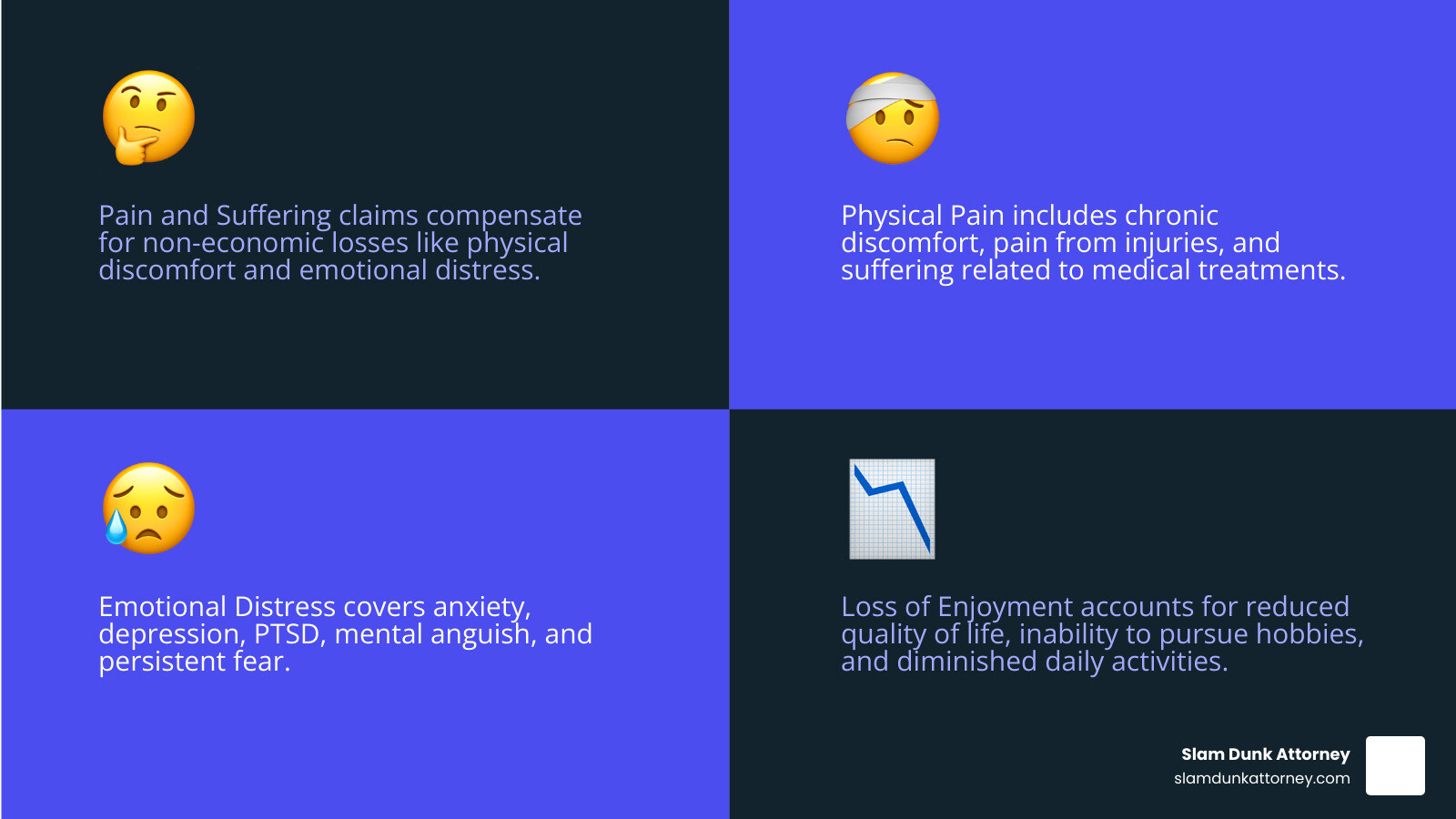
Daños no económicos son intangibles, pero igual de reales. Según la legislación de Georgia, estos incluyen:
- Dolor físico: El dolor físico causado por tus lesiones, tratamientos y recuperación.
- Angustia emocional: Angustia mental, ansiedad, miedo, depresión o incluso trastorno de estrés postraumático.
- Pérdida del disfrute de la vida: La imposibilidad de participar en pasatiempos o actividades que antes te hacían feliz, como hacer senderismo o jugar con tus hijos.
- Inconveniente: Interrupciones en su rutina diaria y necesidad de ayuda con el cuidado personal.
- Desfiguración: Cicatrices permanentes, pérdida de una extremidad u otros cambios en su apariencia.
Estos daños le compensan por el perjuicio causado a su calidad de vida. Un abogado con experiencia puede ayudarle a ilustrar estos impactos. Obtenga más información sobre el marco legal en nuestra guía sobre ¿Qué es la ley de lesiones personales?.
Cómo valoran los tribunales y las aseguradoras de Georgia las reclamaciones por daños y perjuicios
No existe un precio fijo para el dolor, pero se utilizan dos métodos comunes para estimar su valor: reclamaciones por daños y perjuicios:
1. El método multiplicador
Este enfoque común multiplica sus daños económicos totales (facturas médicas, salarios perdidos) por un número, normalmente entre 1,5 y 5. El multiplicador depende de factores como la gravedad de las lesiones, el tiempo de recuperación y el impacto general en su vida. Por ejemplo, $10 000 en daños económicos con un multiplicador de 3 daría como resultado $30 000 por dolor y sufrimiento.
2. El método de diaria
“Per diem” significa “por día”. Este método asigna una cantidad diaria en dólares por su sufrimiento, multiplicada por el número de días que estuvo sufriendo dolor. Por ejemplo, una tarifa diaria de $200 durante 180 días de recuperación equivale a $36,000.
Es importante recordar que Georgia Regla de falla 50%. Si se determina que usted tiene una culpa del 50% o más en el accidente, no podrá recuperar ningún daño. Si su culpa es inferior al 50%, su indemnización se reducirá en función de su porcentaje de culpa.
Lesiones comunes que provocan un deterioro significativo reclamaciones por daños y perjuicios incluyen lesiones cerebrales traumáticas (TBI), daños en la médula espinal, fracturas óseas y quemaduras graves. Comprender cómo se valoran estas reclamaciones es complejo, pero es fundamental para obtener una indemnización justa. Para obtener más detalles, consulte nuestras preguntas frecuentes: ¿Cuánto vale mi dolor y sufrimiento en un caso de lesiones personales?
Demostrar su reclamación y maximizar su indemnización

Demostrar reclamaciones por daños y perjuicios En Georgia se requiere evidencia convincente de su dolor físico y angustia emocional. Dado que estos daños son intangibles, un caso sólido depende de una documentación exhaustiva. Nuestro equipo sabe cómo recopilar y presentar las pruebas necesarias para maximizar su indemnización.
El poder de las pruebas en las reclamaciones por dolor y sufrimiento
Cuanto más sólidas sean las pruebas, más sólido será el argumento a favor de una indemnización justa. Estos son los tipos de pruebas fundamentales que ayudamos a recopilar a nuestros clientes:
- Historial médico y notas del médico: Estos son la base de su reclamación, ya que proporcionan pruebas objetivas de sus lesiones, tratamientos y niveles de dolor. Usted tiene derecho a obtener sus registros médicos, y nosotros podemos ayudarle a conseguirlos.
- Diarios personales o diarios del dolor: Un diario en el que se detallen los niveles de dolor, el estado emocional y cómo las lesiones limitan las actividades puede resultar muy persuasivo.
- Testimonio de expertos: Los expertos médicos pueden explicar el impacto a largo plazo de sus lesiones, mientras que los profesionales de la salud mental pueden testificar sobre el malestar emocional o el trastorno de estrés postraumático.
- Notas del terapeuta: Las notas de las sesiones de terapia proporcionan pruebas fundamentales de tu angustia mental.
- Fotografías y videos: Las imágenes de sus lesiones, dispositivos médicos o dificultades para realizar las tareas cotidianas pueden ser muy impactantes.
- Declaraciones de los testigos: “Los testimonios ”antes y después» de amigos, familiares o compañeros de trabajo pueden mostrar cómo el accidente cambió su vida.
Recopilar estas pruebas puede resultar abrumador mientras te estás recuperando. Nuestro equipo se encarga del trabajo pesado para que puedas centrarte en tu recuperación. Para obtener más información sobre el proceso, consulta nuestra guía sobre Dominar los pasos del proceso de reclamación por lesiones personales.
Haga clic para contactar nuestros abogados especializados en lesiones personales hoy mismo
Comprensión de los límites legales y las reclamaciones relacionadas en Georgia
Una pregunta frecuente sobre reclamaciones por daños y perjuicios en Georgia es si existen límites en la indemnización.
La buena noticia es que, en la mayoría de los casos de lesiones personales, La legislación de Georgia no impone límites a los daños no económicos.. Los jurados pueden otorgar lo que consideren justo basándose en las pruebas, lo que supone una gran ventaja para las personas con lesiones graves. Las indemnizaciones punitivas, que castigan al acusado por conductas graves como conducir en estado de ebriedad, tienen normas y límites diferentes.
‘La ’pérdida de consorcio» y su relación con el dolor y el sufrimiento
Además de su propia reclamación, su cónyuge puede solicitar pérdida de consorcio. Esta reclamación independiente compensa la pérdida de los beneficios de una relación matrimonial debido a su lesión.
La pérdida de consorcio puede incluir la pérdida de:
- Compañerismo y actividades compartidas
- Afecto, apoyo emocional e intimidad.
- Ayuda con las tareas domésticas y apoyo práctico
Esta reclamación reconoce que una lesión grave afecta a toda la familia. Por ejemplo, si una lesión en la espalda impide a su cónyuge participar en la vida familiar, esa pérdida puede ser indemnizada. Nuestro equipo puede evaluar si una reclamación por pérdida de consorcio se aplica a su caso. Comprender todas las vías de indemnización es clave para llegar a un acuerdo integral. Para obtener más información sobre el valor del caso, consulte nuestra guía: ¿Cuánto vale mi caso de lesiones personales?.
Completa un Formulario de evaluación gratuita de su caso ahora
Cómo tramitar su reclamación: ¿necesita un abogado?

Después de sufrir una lesión en Georgia, es posible que se pregunte si necesita un abogado para su caso. reclamaciones por daños y perjuicios. Aunque puede presentar una reclamación por su cuenta, nuestra experiencia nos dice que gestionar casos de lesiones graves sin ayuda legal suele dar lugar a indemnizaciones mucho más bajas.
Los retos de gestionar una reclamación por su cuenta
Representarse a uno mismo es un reto, especialmente cuando se trata de reclamaciones por daños y perjuicios.
- Los ajustadores de seguros no están de su lado: Su objetivo es minimizar los pagos. Son negociadores entrenados que pueden hacer una oferta baja, con la esperanza de que la aceptes. Obtén más información sobre responder a una oferta de liquidación baja.
- Complejidades legales: Demostrar la culpa en Georgia, un estado que aplica el principio de “culpa”, es complejo. Lidiar por su cuenta con cuestiones como la negligencia comparativa puede resultar abrumador.
- Cálculo del valor de su reclamación: Valorar el dolor y el sufrimiento es subjetivo. Sin conocimientos jurídicos, corres el riesgo de infravalorar tu reclamación y perder dinero.
- El plazo de prescripción: En Georgia, por lo general solo tienes dos años desde la fecha de la lesión para presentar una demanda. Si no cumple con este plazo, perderá su derecho a recibir una indemnización.
Cuándo llamar a un abogado especializado en lesiones personales en Duluth
Casi siempre debes consultar a un abogado, especialmente si:
- Tus lesiones son graves. o tener un impacto a largo plazo.
- La culpa es discutible. por la otra parte o su aseguradora.
- Has recibido un oferta de liquidación injustamente baja.
- Quieres céntrate en tu recuperación y deja que un profesional se encargue de la batalla legal.
En Slam Dunk Attorney, ofrecemos comunicación directa y un enfoque transparente y basado en el trabajo en equipo a las víctimas de accidentes en Duluth y en todo Georgia. Estamos aquí para ayudarle a comprender sus derechos y el verdadero valor de su reclamación.
Ofrecemos consultas gratuitas para analizar su caso. Obtenga más información sobre el Ventajas de contratar a un abogado especializado en lesiones personales en Georgia o obtenga respuestas a sus preguntas sobre reclamaciones de seguros.
Dar el siguiente paso para su reclamación por dolor y sufrimiento en Georgia
El camino después de un accidente es difícil. Comprenderlo. reclamaciones por daños y perjuicios Según la legislación de Georgia, es un paso fundamental para obtener la indemnización que usted se merece. Desde documentar sus dificultades hasta comprender normas legales como la negligencia comparativa, cada detalle es importante.
El equipo de Slam Dunk Attorney está aquí para ayudarle a resolver el rompecabezas. Somos abogados comprometidos con luchar por su indemnización completa para que usted pueda enfocarse en su recuperación.
Si ha sufrido una lesión en Duluth, Atlanta o cualquier otro lugar de Georgia, no se enfrente solo a las compañías de seguros. Deje que nuestro equipo aporte su dinamismo, honestidad y transparencia a su caso. Trabajaremos para garantizar que su dolor y sufrimiento nunca se minimicen.
Póngase en contacto con Slam Dunk Attorney hoy mismo para una consulta gratuita. Analicemos su caso y le ayudaremos a obtener la justicia que se merece.
La información proporcionada en este blog es solo para fines informativos generales y no pretende ser, ni debe interpretarse como, asesoramiento legal. Cada caso de lesiones personales es único, y las leyes y circunstancias que se aplican pueden variar en función de los hechos específicos de su situación. La lectura de este contenido no crea una relación abogado-cliente. Para recibir asesoramiento legal específico para su caso, debe consultar directamente con un abogado calificado en lesiones personales con licencia para ejercer en el estado de Georgia.
Llame o envíe un mensaje de texto 404-951-3513 o completar un Formulario de evaluación gratuita de su caso