When Evidence Disappears, So Can Your Case
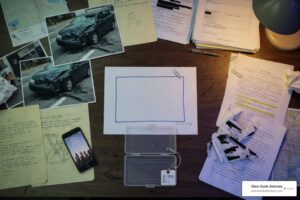
Spoliation of evidence is the destruction, loss, alteration, or failure to preserve evidence that is — or could be — relevant to a legal case.
Here is a quick breakdown:
| Term | Plain Meaning |
|---|---|
| What it is | Destroying, hiding, or failing to save evidence needed for a lawsuit |
| When it matters | As soon as an accident happens and a lawsuit becomes foreseeable |
| Who it affects | Both sides — the person who lost evidence and the person harmed by that loss |
| What happens | Courts can punish the responsible party with fines, case dismissal, or jury instructions that assume the evidence was damaging |
| Georgia relevance | Georgia courts take evidence preservation seriously, and the consequences can make or break your personal injury case |
If you were hurt in an accident in Duluth or anywhere in Georgia, the evidence from that moment — photos, video footage, vehicle data, medical records — starts disappearing fast. Some surveillance footage is deleted within 30 to 90 days. Electronic data can be overwritten in hours.
That is not an accident. And courts know it.
The legal concept behind spoliation is older than you might think. It traces back to a Latin legal principle — omnia praesumuntur contra spoliatorem — which roughly means “everything is presumed against the one who destroys.” Courts have been applying this idea for over 300 years, and it remains one of the most powerful tools in a personal injury case today.
We are Slam Dunk Attorney, Georgia personal injury attorneys who has seen how spoliation of evidence can shift the entire outcome of a case — and how acting fast is often the difference between a strong claim and a dead end.
Proudly Serving Duluth and All of Georgia Contact us to start your recovery! Explore Our Practice Areas

Understanding Spoliation of Evidence in Georgia Law
In Georgia, when we talk about tampering with evidence, we are usually dealing with a civil matter. It occurs when a party has a duty to keep something safe for a trial but fails to do so. This could be a store manager deleting slip-and-fall footage or a trucking company “losing” a driver’s logbook.
Under Georgia law, the duty to preserve evidence is tied to the concept of “foreseeability.” This means if a reasonable person would expect a lawsuit to follow an incident, they have a legal obligation to save anything related to it. In personal injury cases, this often involves premises liability (like a dangerous spill at a grocery store) or a breach of the duty of care (like a driver failing to follow traffic laws).
Because Georgia uses a 50% bar rule for modified comparative fault, every piece of evidence matters. If the other side destroys evidence that could have proven they were 100% at fault, they are essentially trying to cheat the system to make it look like you were responsible. We don’t let that slide.
When Does the Duty to Preserve Spoliation of Evidence Begin?
One of the biggest questions we hear in Duluth is: “When were they supposed to start saving this stuff?”
The duty to preserve spoliation of evidence doesn’t always wait for a formal lawsuit to be filed. In Georgia, it starts when litigation is “reasonably foreseeable.” Courts look at the totality of circumstances to decide if a party should have known a claim was coming.
For example, if an 18-wheeler hits your car on Pleasant Hill Road, the trucking company knows immediately that a claim is likely. They can’t wait until you sue them two years later to start “cleaning out” their files.
Some examples of evidence spoliation include:
- Wiping a truck’s “black box” data after a wreck.
- Repairing a defective floor or stair before it can be inspected.
- Deleting internal emails discussing a known safety hazard.
- Losing medical records or “accident reports” created at the scene.
With Georgia’s 2-year statute of limitations for personal injury, a lot can happen to physical evidence if you don’t act fast. Our team at Slam Dunk Attorney moves quickly to put defendants on notice so they can’t claim they “just didn’t know” they needed to save that evidence.
How Georgia Courts Handle Spoliation of Evidence Claims
Georgia judges have a lot of power when it comes to punishing someone for losing evidence. However, the punishment usually fits the “crime.” The court looks at whether the destruction was an accident or a purposeful attempt to win the case unfairly.
| Type of Spoliation | Culpability | Likely Court Action |
|---|---|---|
| Intentional | Acting in bad faith to hide the truth | Dismissal of the case or a “Default Judgment” (you win automatically) |
| Reckless | Showing a total disregard for the duty to save evidence | Strong jury instructions and potential exclusion of other evidence |
| Negligent | Simply being careless or disorganized | Adverse inference instructions to help “level the playing field” |
When a court finds that spoliation happened, they may issue an adverse inference jury instruction. This is a fancy way of saying the judge tells the jury: “The defendant destroyed the video footage, so you should assume that video showed exactly what the plaintiff says it did.” This is often the “kiss of death” for the other side’s defense. As noted in considerations for spoliation of evidence, even inadvertent loss can lead to serious sanctions if it prejudices your ability to prove your case.
The Impact of Digital and Electronic Evidence
In 2026, evidence isn’t just paper and bent metal. Most of the “smoking guns” we find are Electronically Stored Information (ESI). This includes:
- Dashcam and Surveillance Video: Often the most critical evidence in Duluth traffic accidents.
- Metadata: Hidden data that shows exactly when a document was created or edited.
- Social Media: Posts, photos, and messages that can prove a driver was distracted.
- Phone Records: GPS data and text message timestamps.
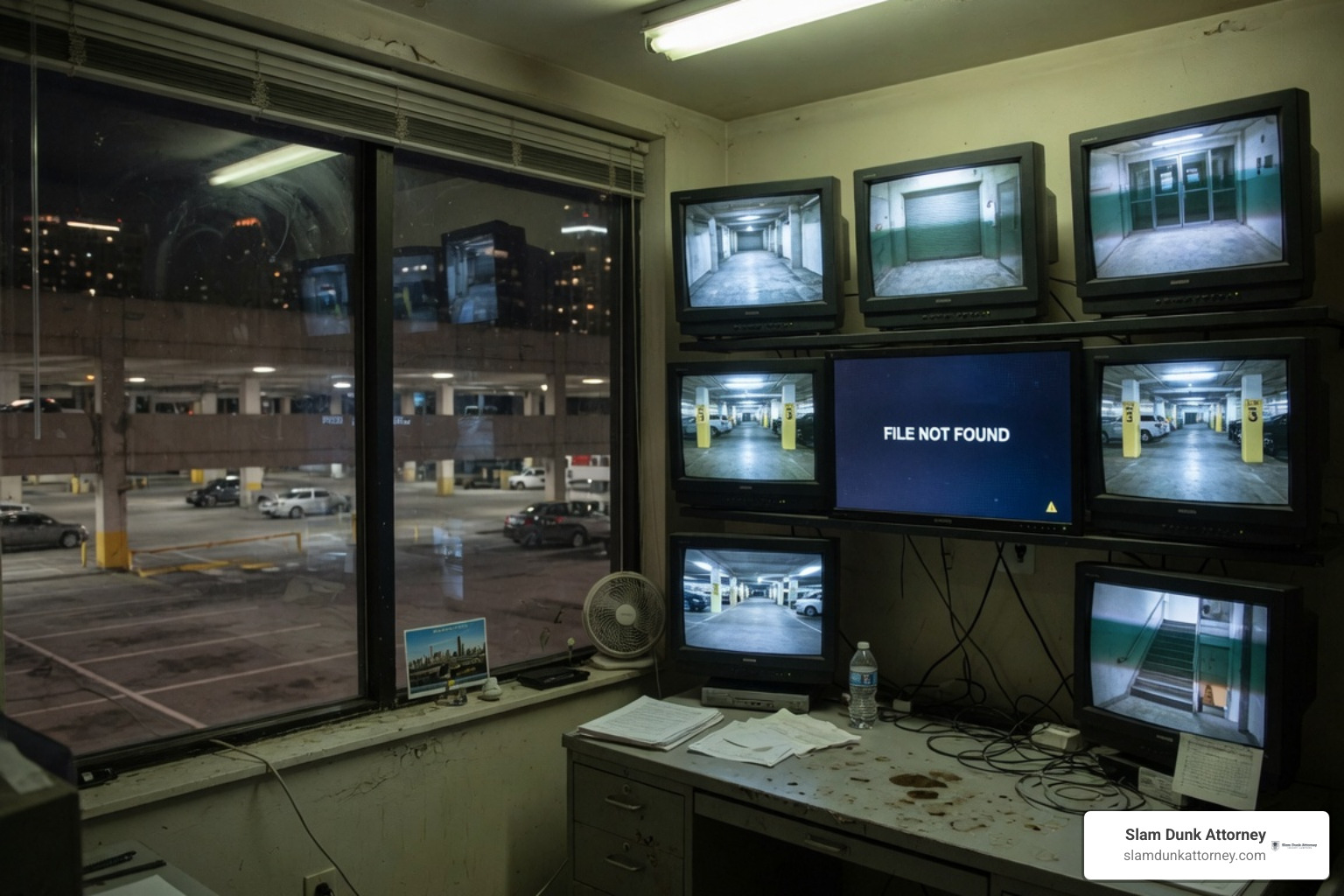
Digital evidence is fragile. It can be deleted with one click or overwritten by automated system settings. In Georgia, parties are expected to take “reasonable steps” to stop these automated deletions once they know a case is coming. If a company lets their server overwrite crucial emails after they’ve been notified of a claim, they could face the same penalties as if they had shredded a paper file.
Protecting Your Case and Avoiding Evidence Loss
When you work with us, we treat your case like a championship game. That means we start the investigation on day one. We value honesty and transparency, and we expect the same from the insurance companies. Our championship-level team knows that the best way to win is to secure the “ball” (the evidence) before the other side can fumbled it.
Why a Spoliation Letter is Your Best Defense
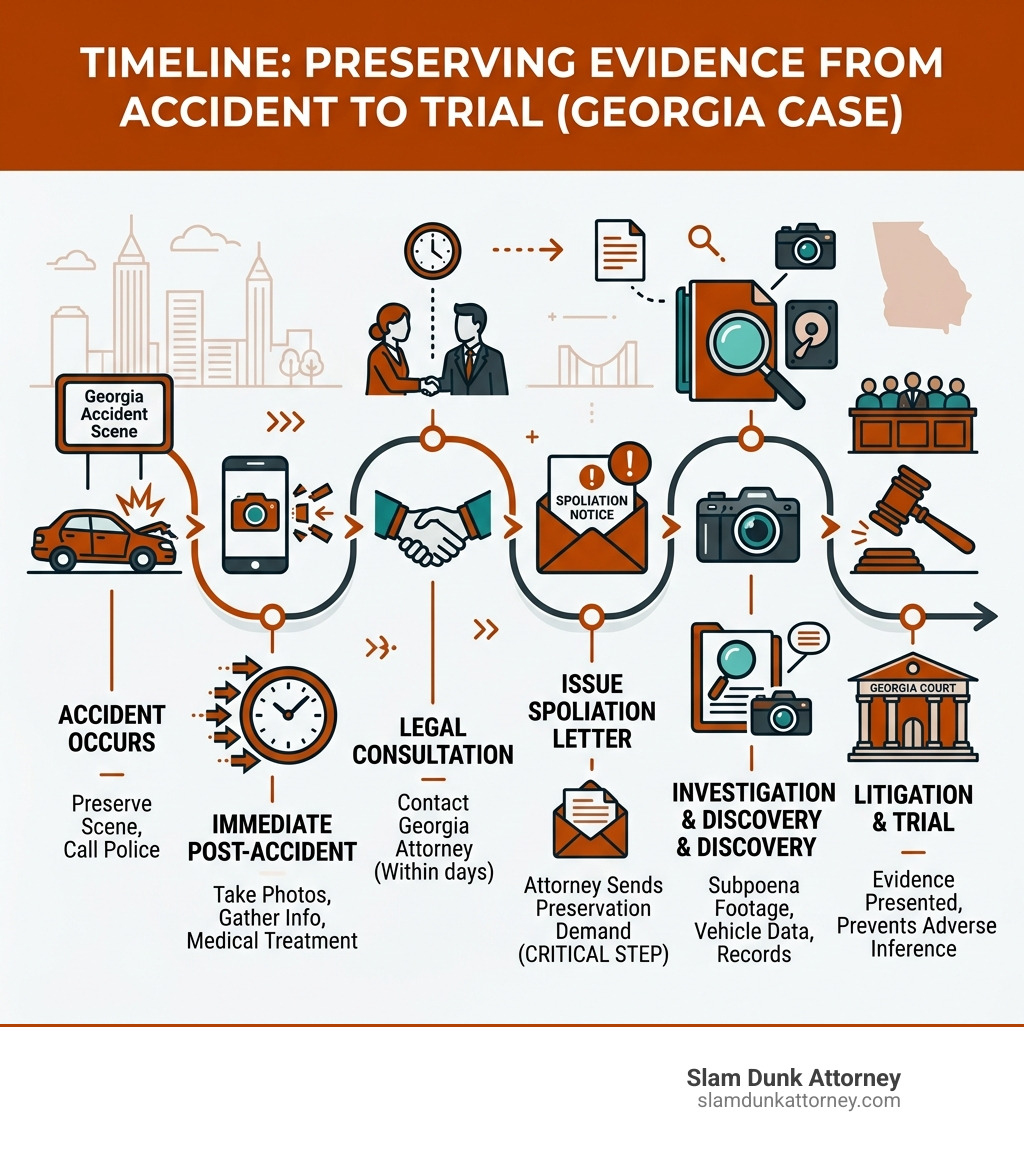
The single most important document we send early in a case is a preservation notice, also known as a spoliation letter.
What is a spoliation letter? It is a formal legal notice that tells the other party: “Do not touch, delete, or destroy anything related to this accident.”
For a Duluth business or a trucking company, this letter is a wake-up call. It specifically lists things like:
- Trucking logs and driver qualification files.
- Black box (EDR) data from the vehicles.
- Maintenance records for the last several years.
- Surveillance tapes from nearby storefronts.
Once they receive this letter, they can no longer claim the destruction was an “innocent mistake.” If they destroy evidence after getting our letter, the judge is much more likely to hit them with the harshest sanctions available.
Common Sanctions for Destroying Evidence
If we can prove the other side destroyed evidence with a culpable state of mind, the Georgia courts can step in with several “referee whistles”:
- Dismissal of Claims: If a plaintiff destroys evidence, their whole case could be thrown out.
- Default Judgment: If a defendant destroys evidence, the judge might rule that they lose the case immediately without a trial.
- Exclusion of Evidence: The court might forbid the party from bringing up certain defenses.
- Legal Fees: The party that destroyed evidence may be forced to pay for our time spent trying to track down the missing info.
The goal is to fix the prejudice caused to you. If you can’t prove your case because they burned the evidence, the court ensures they don’t profit from that bad behavior.
How Slam Dunk Attorney Hustles to Save Your Evidence
At Slam Dunk Attorney, we don’t just sit behind a desk in Duluth. We hustle. We know that in personal injury, “later” often means “never” when it comes to evidence.
Our approach is built on:
- Direct Communication: You talk to your team, and we keep you updated on our investigation.
- Local Knowledge: We know the dangerous intersections in Atlanta and the business practices of companies in Gwinnett County.
- Aggressive Preservation: We send spoliation letters the moment we are retained to lock down the facts.
We fight for full compensation, and that starts with a full set of facts. If you’ve been hurt, don’t wait for the evidence to disappear. You can find more info about our services or reach out to us directly for a neighborly, honest conversation about your rights.
When it comes to your recovery, we aim for nothing less than a slam dunk. Let us handle the legal heavy lifting while you focus on getting back on your feet.
The information provided on this blog is for general informational purposes only and is not intended to be, nor should it be construed as, legal advice. Every personal injury case is unique, and the laws and circumstances that apply can vary based on the specific facts of your situation. Reading this content does not create an attorney-client relationship. To receive legal advice specific to your case, you should consult directly with a qualified personal injury attorney licensed to practice in the state of Georgia.
Call or text 404-951-3513 or complete a Free Case Evaluation form