

What Are Medical Liens on Settlements? (The Quick Answer)
Medical liens on settlements are legal claims. They let doctors, hospitals, or insurance companies get paid from your personal injury money before you get your check.
Here is what you need to know:
-
- What it is: A legal right for a doctor or insurance company to take money from your settlement to pay your bills.
- Who can file one: Hospitals, doctors, chiropractors, health insurance companies, Medicare, and Medicaid.
- When it is paid: Liens come out of the settlement first. This happens before you get your share.
- Is it negotiable: Yes. In many cases, an attorney can lower the amount you owe.
- What if you do not settle: If you do not get any money, most lien holders cannot collect. This depends on your agreement.
If you got a settlement offer and there are liens, your take-home money could be much less than the total number. For example, a $100,000 settlement with $25,000 in medical liens leaves you with $75,000. This is even before attorney fees are figured out. In tough cases, liens can pile up like points against your team.
It can feel like the system is against you. This is hard when you are already dealing with pain and missed work. But knowing how liens work is the first step to protecting your money. In Georgia, these rules are very strict. You can read more about the Georgia hospital lien statutes to see how they work.
We’re the team at Slam Dunk Attorney, a personal injury law firm in Duluth, Georgia. We’ve helped Georgia residents with medical liens on settlements after serious accidents. We push back on high lien amounts and fight to make sure our clients keep as much of their money as possible. In the sections below, we’ll show you how this works in Georgia, who gets paid, and what we can do to protect you.
Proudly Serving Duluth and All of Georgia Contact us to start your recovery! Explore Our Practice Areas

How Medical Liens on Settlements Work in Georgia
In Georgia, medical liens are more than just a bill. They are a legal claim on your money. Think of it like a mortgage on a house. The bank has a claim to that house until the loan is paid. A hospital or doctor can do the same with your personal injury case.
Georgia has specific laws for these liens. For example, a hospital must follow strict rules to make sure their lien is valid. They must file paperwork in the county records and notify the right people. If they do not, the lien might not count.
When we handle cases in Duluth, Georgia, we look at these legal rules:
- Time limits to sue (Statute of Limitations): In Georgia, you usually have two years from the date of the accident to file a lawsuit. This is like a shot clock that starts the moment you are hurt.
- The 50% Fault Rule: Georgia uses a rule called modified comparative negligence. If you are 50% or more at fault for the accident, you cannot get any money. We must prove the other person was mostly at fault so you can cover your bills.
- Safety Rules (Duty of Care): To win, we must prove the other party failed to act safely. This is called a breach of duty.
Who Can Place Medical Liens on Settlements?
Not every doctor can file a lien, but many can under Georgia law. Common lien holders include:
- Hospitals: These are very common. If you were treated in Atlanta, the hospital may file a lien. They often want their full rates, which are much higher than what insurance pays.
- Doctors and Chiropractors: Private doctors may treat you on a lien basis if you do not have health insurance. They wait for payment until your case settles. You might ask, why did my doctor’s office file a lien against me? Usually, it is to make sure they get paid when the insurance check arrives.
- Government Programs: Medicare and Medicaid have a right to be paid back for the money they spent on your care. These are very important and hard to ignore.
- Private Health Insurance: If your insurance paid your bills, they might have a payback rule (subrogation). This lets them ask for money back from your settlement.
How Liens Affect Your Final Payout
This is where the math matters. Most people think if they settle for $100,000, they get $100,000. But the settlement is the total amount, not the take-home pay.
Imagine we get a $100,000 settlement for you after a car wreck in Lawrenceville.
- Total Settlement (Gross): $100,000
- Medical Liens: -$25,000
- Attorney Fees and Costs: (Based on the contract)
- Your Take-Home Pay (Net): What is left for you.
In Georgia, some liens get paid first. If you do not plan for this, you could take home much less than you thought. This is why we focus on hustle and honesty. We want you to know the numbers before you sign. We do not want you to have any foul out surprises at the end.
Negotiating Your Bills for a Slam Dunk Recovery
Just because a hospital says you owe $50,000 does not mean they get it all. At Slam Dunk Attorney, we treat lien negotiation like the final minutes of a big game. We look for every chance to lower those numbers.
One tool we use is the Made Whole Rule. In Georgia, an insurance company usually cannot take your money unless you have been made whole. This means if your settlement does not cover your pain, lost wages, and future needs, the insurance company might not be allowed to take a piece of your money.
We also check for property safety rules (premises liability). If you were hurt on someone else’s property, we make sure the right rules are followed. We also check every bill. Hospitals sometimes add extra charges. We check every line to make sure you are not overcharged.
Can an Attorney Reduce Medical Liens on Settlements?
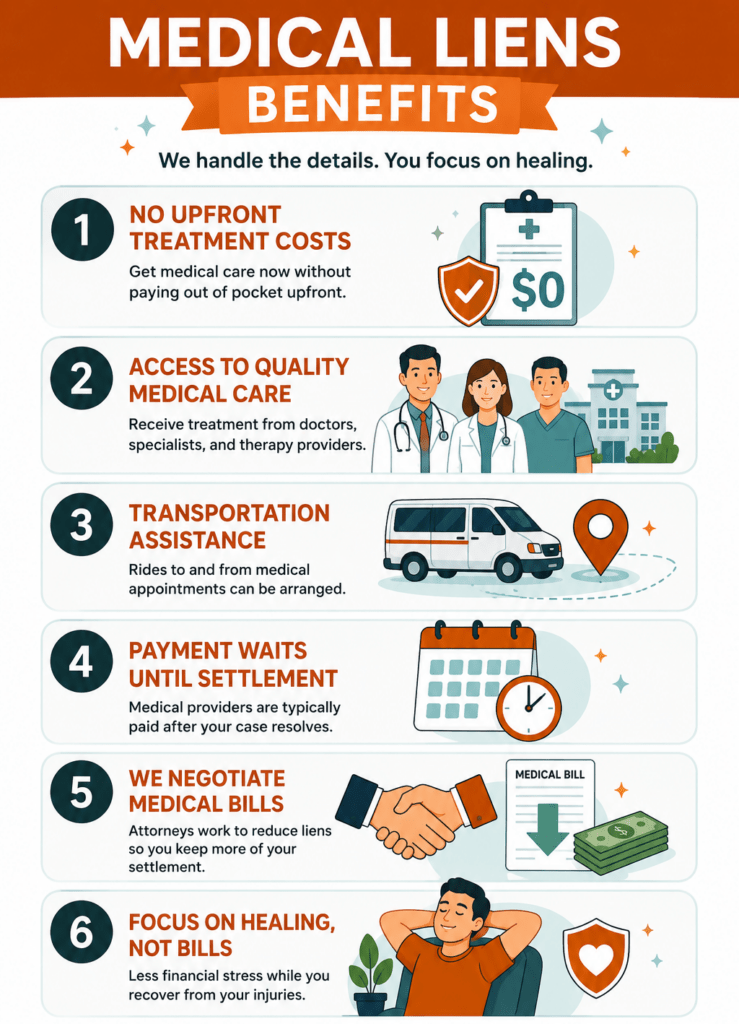
Yes. This is a big part of our job. We use several ways to lower medical liens on settlements:
- Lowering High Charges: We compare bills to what is normal in the Atlanta area.
- Unrelated Treatment: Sometimes, doctors try to bill for old injuries. We block those attempts.
- Fair Share Cuts (Proportional Reductions): If your settlement is small, we ask lien holders to take less. This helps you keep a fair share.
We stay honest with you. We do not just settle and hope for the best. We fight to reduce the points the doctors are trying to score against your payout.
Finding Out if a Lien Exists
You should not have to wonder if there is a claim against your money. We find them by:
- Public Records: Hospitals in Georgia often file liens with the Clerk of Superior Court. We check these records in Gwinnett or Fulton County.
- Certified Mail: Georgia law says hospitals must send a notice of a lien by mail to you and your lawyer.
- Attorney Checking: We reach out to every doctor you saw, from the ER in Johns Creek to the physical therapist in Alpharetta, to see if they have a lien.
The Timeline for Resolving Liens in Duluth, Georgia
Once you settle, the money does not arrive the next day. Here is the play-by-play:
- Settlement Agreement: You sign the papers.
- Check Issued: The insurance company sends the check to us.
- Trust Account: The money goes into a safe account until it clears.
- Settling the Liens: This takes the most time. It can take weeks or months to get final payoff letters from insurance or Medicare.
- Sending Your Check: Once every lien is settled, we send you your check.
We know you need your money fast. We work on these issues early in your case. For more info about why doctors file liens, you can check our FAQ page.
If you have been hurt in a car wreck or slip and fall in Georgia, do not let liens scare you. You need a team that knows the rules and knows how to win. At Slam Dunk Attorney, we are ready to get in the game for you.
The information provided on this blog is for general informational purposes only and is not intended to be, nor should it be construed as, legal advice. Every personal injury case is unique, and the laws and circumstances that apply can vary based on the specific facts of your situation. Reading this content does not create an attorney-client relationship. To receive legal advice specific to your case, you should consult directly with a qualified personal injury attorney licensed to practice in the state of Georgia.
Call or text 404-951-3513 or complete a Free Case Evaluation form