What is Auto Negligence and Why Does It Matter in Georgia?
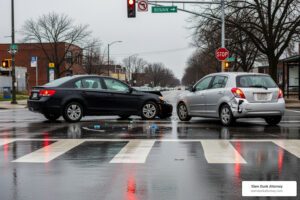
Auto negligence is the legal term for when a driver fails to use reasonable care, causing an accident that injures someone or damages property. In Georgia, it’s the foundation of most car accident injury claims.
Quick Definition:
- Auto negligence means failing to drive safely and causing harm.
- Requires proving four elements: duty, breach, causation, and damages.
- Georgia uses a “modified comparative negligence” rule with a 50% bar.
- Victims can recover compensation if they are less than 50% at fault.
Auto negligence matters because Georgia is an at-fault state. This means the driver who causes an accident is financially responsible for the resulting injuries and losses. If you’ve been hurt, proving the other driver was negligent is how you get compensation for medical bills, lost wages, and pain and suffering.
Research shows that human error causes the vast majority of crashes, from distracted and drunk driving to speeding. These aren’t just statistics; they represent real people in our communities whose lives are upended by another’s carelessness. Understanding auto negligence is about knowing your rights and what steps to take to protect your future after a crash.
I’m Peter Jaraysi, Esq. My team at Slam Dunk Attorney has spent years fighting for Georgians hurt by auto negligence in Duluth, Georgia, and across the state. We know how overwhelming this is, and we focus on clear communication and relentless advocacy to guide you through the process under Georgia law.
Proudly Serving Duluth and All of Georgia Contact us to start your recovery! Explore Our Practice Areas
The Four Essential Elements You Must Prove
To win an auto negligence claim in Georgia, we must prove four key elements. If one is missing, the entire claim can fail.
- Duty of Care: Every driver in Georgia has a legal duty to operate their vehicle safely and act as a “reasonable person” would. This includes obeying traffic laws and paying attention to avoid foreseeable harm to others. It’s a failure to use the level of care that a person of ordinary prudence would exercise.
- Breach of Duty: A breach occurs when a driver fails to meet their duty of care. This is the careless act itself, like running a red light in Atlanta or texting while driving on I-85. Violating a traffic law is often clear evidence of a breach.
- Causation: We must prove the driver’s breach of duty directly caused the accident and your injuries. This means showing that the collision would not have happened “but for” the driver’s actions (e.g., running a stop sign) and that your injuries were a foreseeable result of their carelessness.
- Damages: Finally, you must have suffered actual harm or losses. These “damages” can be economic (like medical bills) or non-economic (like pain and suffering). Without demonstrable losses, there is no legal claim.
Common Examples of Negligent Driving Behaviors
Many drivers forget their duty of care, leading to tragic results. Here are common negligent behaviors we see in accidents across Duluth, Georgia, and other Georgia communities:
-
Distracted Driving: A major problem involving anything that takes a driver’s hands, eyes, or mind off the road. This includes texting, eating, adjusting the radio, or dealing with passengers.
-
Drunk Driving (DUI): Driving under the influence of alcohol or drugs severely impairs judgment and reaction time.
- Speeding: Exceeding the speed limit or driving too fast for conditions reduces reaction time and increases crash severity.
- Fatigued Driving: Drowsiness can be as dangerous as drunk driving.
- Running Red Lights or Stop Signs: Disregarding traffic signals is a blatant breach of duty and a common cause of intersection accidents.
- Illegal Turns or Lane Changes: Failing to signal or cutting off other drivers frequently causes collisions.
- Tailgating: Following too closely leaves no room to stop safely, often leading to rear-end crashes.
- Aggressive Driving: Road rage behaviors like weaving through traffic or excessive honking create dangerous situations.
- Failure to Maintain Vehicle: Negligence can also include failing to maintain a vehicle’s essential equipment, as poor braking may lead to accidents.
Click to contact our personal injury lawyers today
How Fault and Damages Are Handled Under Georgia Law
Georgia uses an at-fault insurance system, meaning the at-fault driver’s insurance is responsible for covering damages. This differs from “no-fault” states where your own insurance pays for initial medical costs regardless of blame.
Complete a Free Case Evaluation form now
Modified Comparative Negligence: Georgia’s 50% Rule
What if both drivers are partly to blame? Georgia follows a Modified Comparative Negligence rule, also known as the “50% bar rule.”
- If you are less than 50% at fault, you can recover damages, but your award is reduced by your percentage of fault. (e.g., if you are 20% at fault for $100,000 in damages, you can recover $80,000).
- If you are 50% or more at fault, you are barred from recovering any damages.
This rule makes it critical to gather strong evidence proving the other driver’s fault while minimizing your own.
The Role of Police Reports and Witness Statements
A police report is a powerful piece of evidence that documents the scene and often includes the officer’s initial assessment of fault. Witness statements are also vital, as independent accounts can corroborate your story and help establish how the accident truly happened.
Recoverable Damages in Georgia Auto Negligence Cases
Our goal is to secure compensation for all your losses, which fall into several categories:
- Economic Damages: These are tangible financial losses.
- Medical Expenses: All costs for past and future medical care related to your injuries.
- Lost Wages: Income lost during recovery and any reduction in future earning capacity.
- Property Damage: Costs to repair or replace your vehicle and other damaged property.
- Non-Economic Damages: These subjective losses impact your quality of life.
- Pain and Suffering: Compensation for physical pain and emotional distress.
- Loss of Enjoyment of Life: For being unable to participate in hobbies or activities you once enjoyed.
- Loss of Consortium: A spouse’s claim for loss of companionship due to their partner’s injuries.
- Punitive Damages: In rare cases of extreme or malicious negligence, these may be awarded to punish the at-fault party and deter future misconduct.
Proving Your Auto Negligence Claim and Getting Fair Compensation
After a car accident in Duluth, Georgia, the steps you take can significantly impact your ability to prove auto negligence and recover fair compensation. Acting strategically is key to protecting your legal rights.
Steps to Protect Your Auto Negligence Claim After a Crash
To build a strong foundation for your claim, we advise clients across Georgia to take these steps:
- Seek Medical Care Immediately: Your health is the priority. Some serious injuries aren’t immediately apparent. A prompt medical evaluation creates a crucial record linking your injuries to the accident.
- Call the Police: Always call 911 if there are injuries or significant damage. A police report provides an official, third-party account of the accident that is invaluable for your claim.
- Document the Scene: If it’s safe, use your phone to take photos and videos of vehicle damage, their positions, skid marks, road conditions, traffic signals, and any visible injuries.
- Gather Witness Information: Get the names and contact information of anyone who saw the accident. Independent witnesses can provide unbiased accounts that strengthen your case.
- Exchange Information (Carefully): Get the other driver’s name, contact info, license number, and insurance details. Be polite, but do not discuss fault or apologize, as these statements can be used against you.
- Avoid Recorded Statements or Signing Anything: The other driver’s insurance company is not on your side. Do not give a recorded statement or sign documents without first speaking to a Georgia personal injury attorney. They may offer a quick, lowball settlement that won’t cover your long-term costs.
- Keep Detailed Records: Maintain a file with all accident-related documents, including medical bills, repair estimates, and communications with insurance companies.
Understanding Shared Fault and Other Liable Parties
While many cases involve one at-fault driver, some situations are more complex. It’s important to understand how liability can be shared in Georgia.
Shared Fault in Georgia: The 50% Bar Rule Revisited
As mentioned, Georgia’s Modified Comparative Negligence rule bars you from recovery if you are 50% or more at fault. If you are less than 50% at fault, your compensation is simply reduced by your percentage of blame. This makes it vital to investigate all contributing factors.
Beyond Driver Error: Other Potentially Liable Parties
While human error is the leading cause of accidents, other parties can also be held liable for negligence:
- Vehicle Defects: If a faulty part like brakes or airbags caused or worsened the crash, the manufacturer or designer could be responsible.
- Poor Road Conditions / Government Liability: A government entity may be liable if an accident is caused by a known, unaddressed hazard like a massive pothole or missing sign in areas like Chamblee or Dunwoody, Georgia.
- Mechanic Negligence: If a mechanic’s faulty repair work leads to an accident, they could be held liable. In Georgia, you generally have two years from the date of the repair to seek compensation.
- Employers: If an employee causes an accident while on the job (including for rideshare companies), their employer may be held vicariously liable for the negligence.
Identifying all liable parties is critical to ensuring you can recover full compensation.
Why You Should Consider a Duluth, Georgia Car Accident Attorney
After an accident caused by someone’s negligence in Duluth, Georgia, partnering with an experienced attorney is your best course of action.
- Proving All Four Elements of Negligence: We have the legal expertise to investigate your accident, gather critical evidence like police reports and medical records, and build a strong case demonstrating how the other driver’s negligence caused your losses under Georgia law.
- Calculating Total Damages: It’s easy to underestimate the true cost of an accident. We help you account for all current and future damages, including future medical care, lost earning capacity, and the full value of your pain and suffering.
- Navigating Insurance Negotiations: Insurance adjusters are trained to minimize payouts. We handle all communications and negotiations, protecting you from lowball offers and fighting for the maximum compensation you deserve.
- Meeting Critical Deadlines: Georgia has a strict two-year statute of limitations for filing most personal injury lawsuits. Missing this deadline means losing your right to compensation. We ensure all legal deadlines are met.
- Our Commitment to You: At Slam Dunk Attorney, we use a championship-level team approach defined by hustle, honesty, and transparency. We are committed to providing comprehensive care and securing justice for accident victims in Duluth, Georgia, and beyond. We fight for your full compensation so you have the resources to recover and rebuild.
If you’ve been injured by a negligent driver, don’t face the insurance companies alone. Let our team handle the complexities of your claim so you can focus on healing. Learn how we handle car accident claims in Duluth, Georgia and see how we can help you get back on your feet.
The information provided on this blog is for general informational purposes only and is not intended to be, nor should it be construed as, legal advice. Every personal injury case is unique, and the laws and circumstances that apply can vary based on the specific facts of your situation. Reading this content does not create an attorney-client relationship. To receive legal advice specific to your case, you should consult directly with a qualified personal injury attorney licensed to practice in the state of Georgia.
Call or text 404-951-3513 or complete a Free Case Evaluation form