
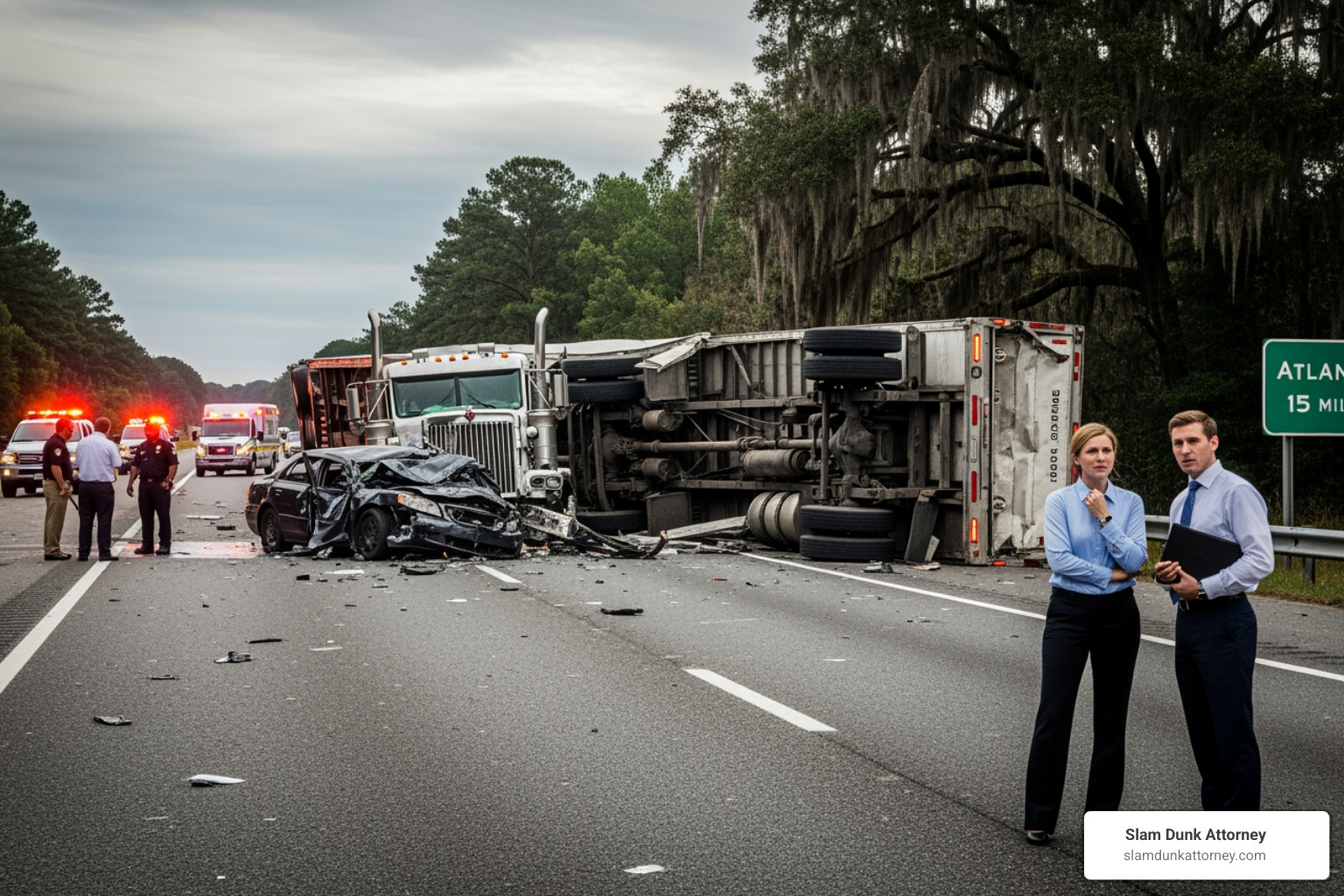
The Aftermath of a Georgia Truck Accident
A truck accident lawsuit Georgia can feel overwhelming. Between serious injuries, medical bills, and pressure from insurance companies, understanding the legal process is crucial to protecting your rights and securing fair compensation.
Here’s what you need to know about filing a truck accident lawsuit in Georgia:
- Who Can Be Held Liable – The truck driver, trucking company, cargo loaders, maintenance providers, or manufacturers may all share responsibility.
- Georgia’s Fault Rules – Under Georgia’s modified comparative negligence law, you cannot recover damages if you are 50% or more at fault.
- Types of Compensation – Medical expenses, lost wages, pain and suffering, and property damage.
- Filing Deadline – You have two years from the accident date to file a lawsuit under O.C.G.A. § 9-3-33.
- Evidence Matters – Police reports, black box data, driver logs, and maintenance records are critical to proving your case.
Georgia’s highways see thousands of commercial trucks daily, leading to over 230 fatalities and thousands of injuries from large truck accidents in 2021 alone. These crashes are more complex than car accidents, often involving federal regulations, multiple liable parties, and catastrophic injuries.
While you’re focused on recovery, insurance companies often try to settle quickly for far less than your case is worth.
I’m Peter Jaraysi, Esq., founder of Slam Dunk Attorney in Duluth, Georgia. I’ve helped countless Georgia residents steer the complexities of a truck accident lawsuit Georgia to secure the compensation they deserve. Our team understands Georgia law and fights to hold negligent trucking companies accountable.
Proudly Serving Duluth and All of Georgia Contact us to start your recovery! Explore Our Practice Areas

Navigating Your Truck Accident Lawsuit in Georgia: Key Legal Issues
When a massive commercial truck collides with a passenger vehicle, the results are almost always devastating. A truck accident lawsuit Georgia requires a deep understanding of Georgia’s complex trucking regulations and the ability to identify all potentially liable parties. Our goal is to help you understand every step.
Identifying Liable Parties and Common Causes
One of the most crucial steps is determining who is responsible for your injuries. Under Georgia law (Title 51 of the Georgia Code), anyone whose negligence caused your injuries can be held accountable. This often extends beyond the driver to include:
- The Truck Driver: The driver is often the most obvious party, held personally responsible for speeding, distracted driving, DUI, or violating Georgia’s “hours of service” (HOS) rules designed to prevent driver fatigue. For example, a fatigued driver on I-85 causing a crash would be directly liable.
- The Trucking Company: The company can be held liable through vicarious liability (for the driver’s actions) or direct negligence. This includes negligent hiring (e.g., hiring drivers with bad records), inadequate training, poor vehicle maintenance, or pressuring drivers to violate safety rules.
- Cargo Loaders: If improperly loaded cargo causes instability, the loading company can be liable.
- Manufacturers: A defective part (faulty brakes, tires) can lead to a product liability claim against the manufacturer.
- Maintenance Providers: External companies that perform negligent maintenance can also be held responsible.
Common causes of truck accidents in Georgia include:
- Driver Fatigue
- Distracted Driving
- Speeding/Aggressive Driving
- Improper Braking/Following Too Closely
- Poor Vehicle Maintenance
- Improper Cargo Loading
- Lack of Driver Training
- Driving Under the Influence (DUI)
Determining liability is complex, which is why consulting an attorney is crucial for a thorough investigation. Our FAQs provide more detail on how multiple parties can be held liable.
How Fault and Evidence Shape Your Georgia Truck Accident Lawsuit
Next, we determine fault and gather evidence. This is vital due to Georgia’s specific fault rules.
Georgia uses a modified comparative negligence system. Your compensation is reduced by your percentage of fault. For instance, if you are 20% at fault for an accident with $100,000 in damages, you can only recover $80,000. Critically, if you are 50% or more at fault, you cannot recover any damages. This “50% bar rule” makes proving the other party’s negligence essential.
Crucial evidence for proving liability includes:
- Police Reports: Provides an official account, witness statements, and initial observations.
- Black Box Data (ECM): Records critical data like speed and braking, which is invaluable for accident reconstruction.
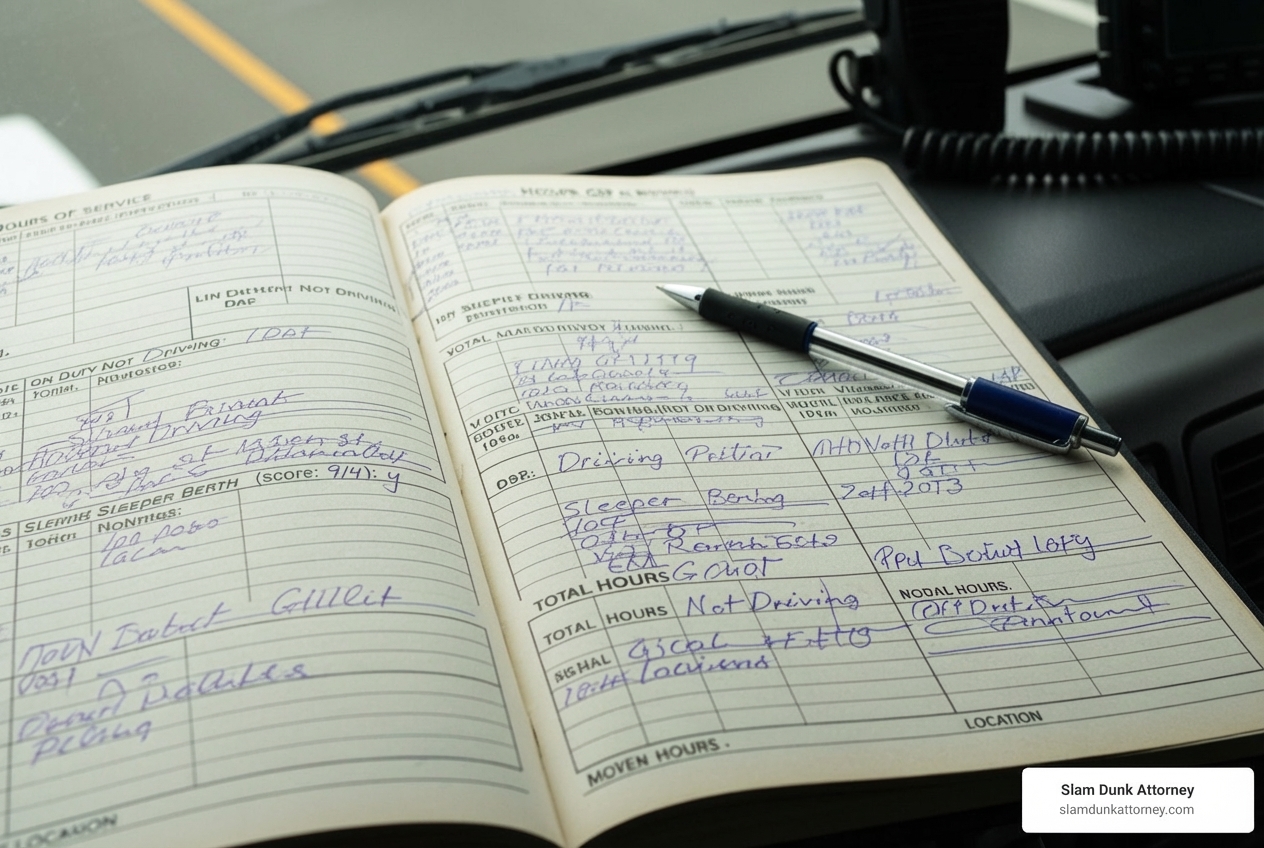
- Electronic Logging Device (ELD) Data: Records a driver’s hours of service (HOS), which can prove fatigue-related violations under Georgia law.
- Truck Maintenance Records: Shows the truck’s service history. Gaps or poor records can indicate negligence.
- Dashcam & Surveillance Footage: Can provide direct visual evidence of the crash.
- Eyewitness Testimony: Statements from witnesses can corroborate other evidence.
- Medical Records & Expert Testimony: Your records prove your injuries, while experts provide opinions on causation and damages.
- Driver Qualification Files: Contains the driver’s history, driving record, and drug test results.
Our team acts quickly to preserve critical evidence, like black box data, which can be overwritten or lost if not secured promptly.
Recoverable Damages and Critical Deadlines
Understanding what damages you can recover is essential for rebuilding your life.
In a truck accident lawsuit Georgia, you can seek compensation for:
- Economic Damages: These are quantifiable financial losses, including medical bills, lost wages, loss of earning capacity, and property damage.
- Non-Economic Damages: These subjective losses compensate for the impact on your quality of life, such as pain and suffering, mental anguish, and loss of enjoyment of life.
- Punitive Damages: If the defendant’s conduct was particularly egregious—showing “willful misconduct, malice, fraud, wantonness, oppression, or that entire want of care which would raise the presumption of conscious indifference to consequences” (O.C.G.A. 51-12-5.1)—a court may award punitive damages. These are intended to punish the at-fault party and deter similar behavior.
Truck accident settlements in Georgia are typically higher than car accident settlements due to more severe injuries and the significant insurance policies commercial trucks are required to carry under regulations applicable in the state. This substantial insurance coverage provides a larger pool of money available to compensate victims for extensive damages. While every case is unique, settlements for catastrophic injuries can exceed $1 million.
However, you must be aware of a critical deadline: the statute of limitations. In Georgia, you generally have two years from the accident date to file a lawsuit. Missing this deadline means you could lose your right to compensation entirely. For wrongful death cases, the two-year period typically starts from the date of death. Our FAQs offer more information on recoverable damages and this critical deadline.
Protecting Your Rights: The Role of a Lawyer and Your Next Steps
After a truck accident, the path forward can seem daunting. Knowing what to do and understanding the role of legal representation can make all the difference.
What to Do Immediately After a Georgia Truck Accident
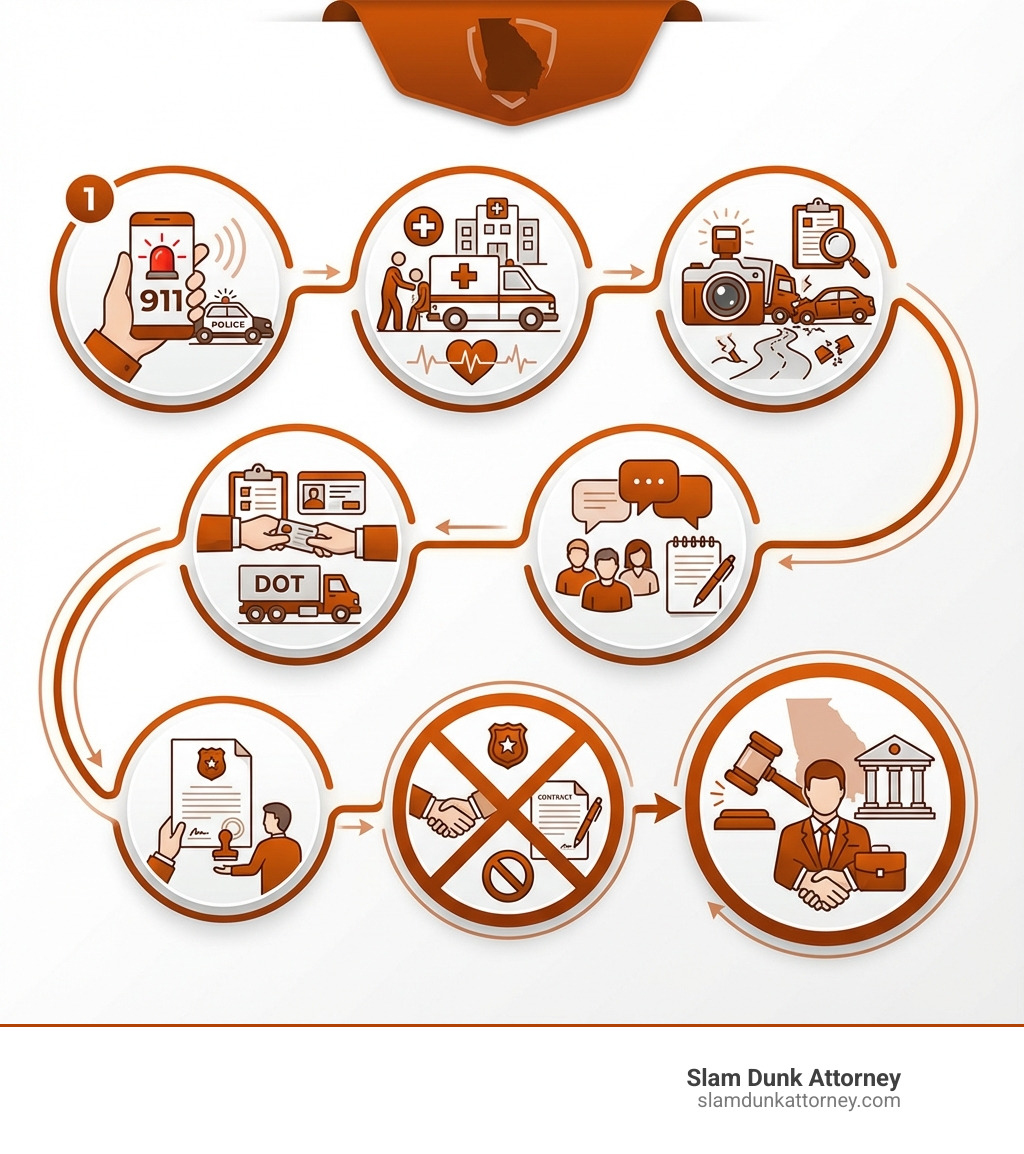
Your actions immediately following a truck accident can significantly impact your future truck accident lawsuit Georgia. Here are the critical steps:
- Seek Medical Attention Immediately: Your health is the priority. Adrenaline can mask serious injuries, so see a doctor immediately, even if you feel fine. This also documents your injuries for your claim.
- Call 911 and Report the Accident: A police report is vital evidence. It documents the scene and parties involved. Always call 911 when a commercial truck is involved.
- Document the Scene: If you can, take photos and videos of all vehicle damage, skid marks, road conditions, and your injuries. Visual evidence is powerful.
- Exchange Information: Get the driver’s name, contact info, license, insurance, and the trucking company’s name and any identifying numbers on the truck.
- Collect Witness Information: Get names and contact information from any witnesses. Their accounts are invaluable.
- Avoid Admitting Fault: Do not apologize or admit fault. Stick to the facts when speaking with anyone at the scene.
- Do NOT Speak to Insurance Adjusters: The trucking company’s insurer will contact you quickly to minimize their payout. Do not give a recorded statement or sign anything without speaking to an attorney first.
- Contact a Georgia Truck Accident Attorney: After addressing your medical needs, contact an experienced attorney. We can protect your rights and handle all communication with insurers.
Our guide on what to expect after a trucking accident provides more helpful information.
Why an Attorney is Crucial for Your Georgia Truck Accident Lawsuit
Navigating a truck accident lawsuit Georgia is far more complex than a typical car accident claim. The stakes are higher, the regulations are intricate, and the opposition is formidable. A dedicated attorney is crucial.
- Expertise in Regulations: We understand the complex Georgia regulations governing the trucking industry. We use this knowledge to investigate violations and prove negligence.
- Preserving Critical Evidence: We act fast to preserve vital evidence like black box data and driver logs, which can be quickly lost, by issuing legal demands to the trucking company.
- Calculating Full Damages: We work with medical and financial experts to calculate your total damages, including future costs and pain and suffering, countering the insurance company’s attempts to undervalue your claim.
- Negotiating with Insurers: Insurance adjusters for trucking companies are trained to offer low settlements. We handle all negotiations to ensure you receive fair compensation. For example, we have turned initial lowball offers into settlements of up to $1 Million for clients in multi-vehicle truck accidents.
- Filing the Lawsuit and Litigation: If a fair settlement isn’t reached, we are prepared to file a lawsuit and take your case to court. We manage all court procedures and deadlines, and our FAQs explain the lawsuit process in more detail.
- Peace of Mind: Our team handles the legal complexities so you can focus on your recovery. We provide peace of mind through direct communication, transparency, and a commitment to fighting for your rights.
Facing a powerful trucking company requires an experienced legal team in your corner. If you’ve been injured in a truck accident in Georgia, don’t go it alone. Our Duluth, GA truck accident lawyers at Slam Dunk Attorney are ready to fight for you. Contact us today for a free consultation to understand your options under Georgia law and take the first step toward justice.
Truck Accident Lawyer Duluth GA
The information provided on this blog is for general informational purposes only and is not intended to be, nor should it be construed as, legal advice. Every personal injury case is unique, and the laws and circumstances that apply can vary based on the specific facts of your situation. Reading this content does not create an attorney-client relationship. To receive legal advice specific to your case, you should consult directly with a qualified personal injury attorney licensed to practice in the state of Georgia.
Call or text 404-951-3513 or complete a Free Case Evaluation form