
How to get compensation after a car accident in Georgia depends on understanding your rights, documenting damages, and navigating the insurance claims process. Here is what you need to know:
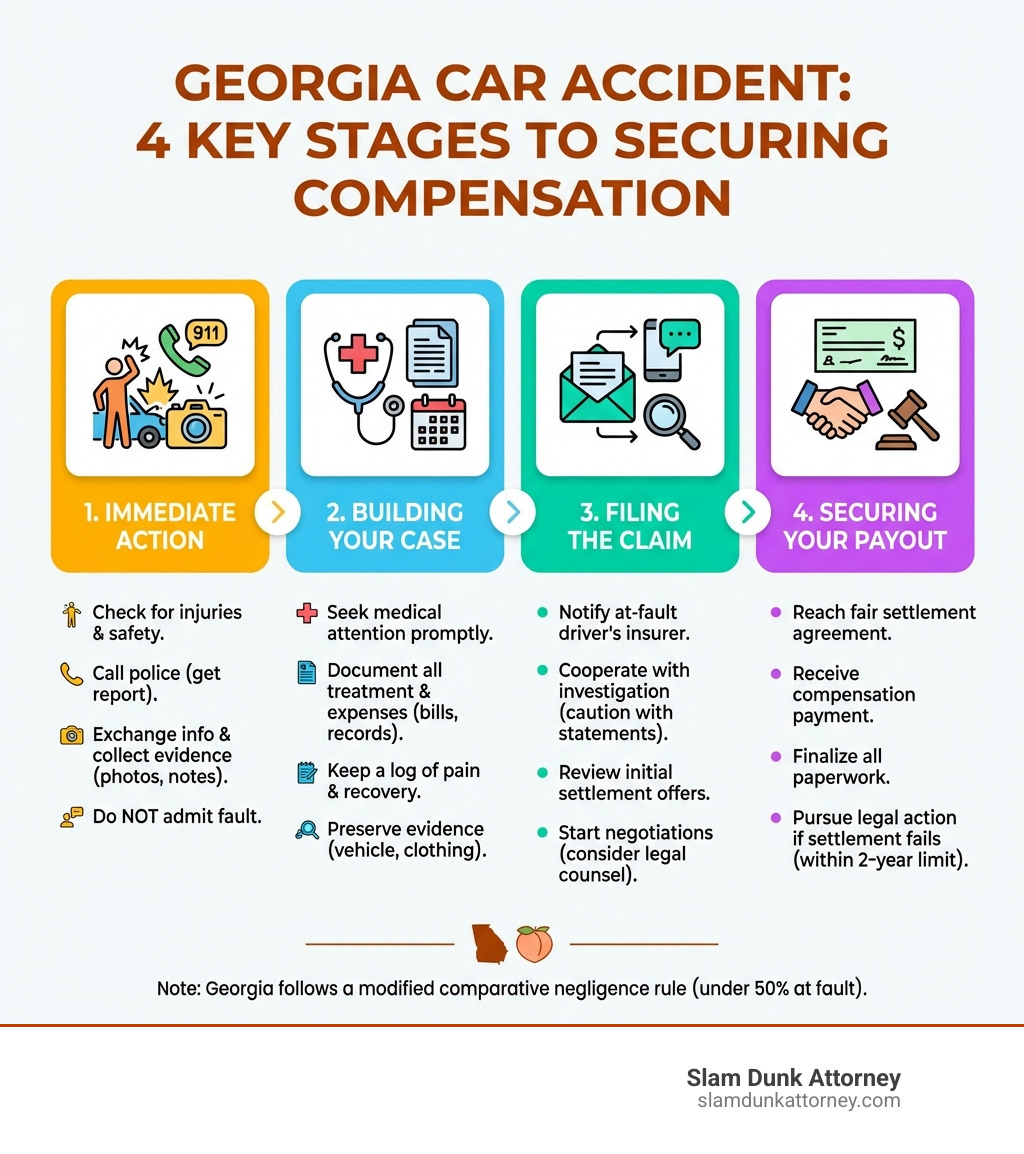
- File a claim with the at-fault driver’s insurance company. Georgia is an at-fault state, so the responsible party’s insurer is usually financially responsible for your damages.
- Document all medical treatment and expenses. Keep records of bills, lost wages, and property damage so you can show exactly what the crash has cost you.
- Understand Georgia’s comparative negligence rule. You can recover compensation if you are less than 50% at fault, but your recovery is reduced by your percentage of fault.
- Act within Georgia’s two-year statute of limitations. In most personal injury cases, you must file a lawsuit within two years of the accident.
- Consider legal representation. An attorney can deal with the insurance companies, build your case, and work to maximize your settlement.
If you have been injured in a car accident in Duluth, Georgia, or anywhere in the surrounding communities, you are likely overwhelmed. Medical bills are mounting, your car needs repairs, and you might be losing income from missed work. On top of it all, the insurance company is calling with questions and pressure to settle quickly.
You want to focus on healing, but instead you are worried about paying bills and whether the insurance company’s offer is fair.
Many people do not know how to manage the compensation process. They are unsure of their rights under Georgia law, what evidence is needed, or how to respond when an adjuster makes a low offer. This lack of information can cost them thousands of dollars in compensation they may be entitled to.
Getting full and fair compensation is not automatic. It requires understanding Georgia’s laws, properly documenting your case, and having an advocate who knows how to hold insurance companies accountable.
The good news is that with the right information, you can protect your rights and move toward the compensation you need.
I am Peter Jaraysi, Esq., and my career is dedicated to helping Georgia accident victims pursue the compensation they deserve by standing up to insurance companies that try to shortchange them. This guide will walk you through what you need to know about how to get compensation after a car accident in Georgia so you can make informed decisions about your case.
Understanding the Types of Compensation Available in Georgia
When we talk about how to get compensation after a Georgia car accident, we’re discussing financial recovery to make you whole again. It’s about covering your losses so you can focus on healing. These losses fall into two main categories: economic and non-economic damages.
Proudly Serving Duluth and All of Georgia Contact us to start your recovery! Explore Our Practice Areas

What Damages Can You Claim After a Georgia Car Accident?
Economic damages are tangible, quantifiable losses from the accident. Because they come with bills or financial records, they are often easier to calculate. If someone else’s negligence caused your accident in Georgia, you have the right to seek recovery for these costs.
- Medical Bills: This is often the largest category, covering all medical care: emergency room visits, ambulance fees, doctor’s appointments, prescriptions, physical therapy, and counseling for psychological trauma. It’s vital to keep every bill and record.
- Lost Wages: If your injuries keep you from working, you can claim lost income, including salary, commissions, bonuses, and missed opportunities for advancement.
- Future Medical Costs: Some injuries require ongoing care, future surgeries, or long-term therapy. We work with medical experts to project these future costs, ensuring you aren’t left with the burden years later.
- Property Damage: This covers repairing or replacing your vehicle and any other personal property damaged in the crash, like a laptop, phone, or car seat.
For a deeper dive into the calculations, you can explore our resources on How Is a Car Accident Settlement Calculated in Georgia? and even learn about What Damages Can You Recover in a Motorcycle Accident Lawsuit? if your accident involved a motorcycle.
What Is My Pain and Suffering Worth in a Personal Injury Case?
Non-economic damages address the intangible impact the accident has had on your life. Often called “pain and suffering,” they are more challenging to quantify but are just as real and deserving of compensation.
- Emotional Distress: Car accidents are traumatic and can cause anxiety, fear, depression, or PTSD. These psychological impacts are a legitimate part of your claim.
- Loss of Enjoyment of Life: If your injuries stop you from enjoying hobbies, recreational activities, or daily tasks, you can be compensated for this diminished quality of life.
- Permanent Disability: Some injuries lead to long-term or permanent impairments that affect your mobility, cognitive function, or independence.
- Scarring and Disfigurement: Visible injuries resulting in permanent scars can cause significant emotional distress and impact self-esteem.

Determining the value of these non-economic damages is complex and often requires an experienced personal injury attorney. To learn more, we encourage you to read our articles on How Much Is My Personal Injury Case Worth? and What Is My Pain and Suffering Worth in a Personal Injury Case?.
Click to contact our personal injury lawyers today
How Georgia’s Laws Affect Your Eligibility for Compensation
Understanding how to get compensation in Georgia requires knowing the state’s specific legal framework.
- Georgia’s At-Fault System: Georgia is an at-fault state, meaning the person who caused the accident is financially responsible for the damages. Their insurance company is the primary payer for your medical bills, lost wages, and other losses. This makes proving fault essential. You can find more details by checking out Is Georgia a No-Fault State?.
- Modified Comparative Negligence (50% Bar Rule): What if you were partly to blame? Georgia’s “modified comparative negligence” rule allows you to recover damages as long as you are less than 50% at fault. Your compensation is simply reduced by your percentage of fault. If you are 50% or more at fault, you cannot recover anything. Insurers often use this rule to try and reduce their payout. For a deeper understanding, read our article on Compensation for a Car Accident that Was Partially My Fault.
- Proving Fault: In an at-fault state like Georgia, proving the other driver’s negligence caused your injuries is fundamental to your claim. This involves gathering evidence and presenting a compelling case against the at-fault driver’s insurance company.
Complete a Free Case Evaluation form now
How to Get Compensation: Your Step-by-Step Guide
Securing compensation after a Georgia car accident is a process. By following these steps, you can build a strong case and improve your chances of a successful outcome.
Step 1: Document Everything to Support Your Claim
Thorough documentation is the foundation of a successful personal injury claim in Georgia. The more evidence you have, the harder it is for an insurance company to dispute your claim.
- Police Report: Always call the police after an accident, especially with injuries or significant property damage. The police report provides an official record with key details and is a crucial piece of evidence. Learn more with our guide on How To Read a Police Accident Report.
- Medical Records: Seek medical attention immediately, even if you feel fine. Some injuries appear later. Your medical records link the accident to your injuries, showing their severity and the treatment you received. Track all appointments, diagnoses, and treatments.
- Photos and Videos: If it is safe, use your phone to take photos and videos of the scene, vehicle damage, skid marks, road conditions, and any visible injuries. Visual evidence is invaluable.
- Witness Statements: Get contact information from anyone who witnessed the accident. Their testimony can help establish fault.
- Expense Receipts: Keep meticulous records of all accident-related expenses, including medical bills, repair receipts, and transportation costs for appointments. These form the basis of your economic damages.
The first 24 hours are critical. For a complete checklist, see our Steps After Auto Accident guide.

Step 2: How to Get Compensation by Filing a Claim
Once you have gathered your documentation, it is time to formally pursue compensation, which usually starts with the insurance companies.
- Filing an Insurance Claim: Notify both your insurer and the at-fault driver’s insurer. Provide basic facts, but be cautious with detailed statements or admitting fault. Adjusters are trained to use your words against you to minimize payouts.
- Demand Letter: After you have reached maximum medical improvement (MMI), your attorney will prepare a comprehensive demand letter. It outlines the facts, your injuries, all damages, and demands a specific settlement amount.
- Negotiation with Adjusters: The insurance adjuster will review your claim and likely make a low initial offer. Your attorney will negotiate on your behalf, using evidence and legal arguments to justify a higher settlement.
- Georgia’s Statute of Limitations: This is a critical deadline. In Georgia, you generally have two years from the accident date to file a personal injury lawsuit. If you miss this deadline, you may lose your right to pursue compensation in court. Acting promptly is essential.
The entire process, from filing to settlement or litigation, can vary significantly in length. To understand the potential timeline, take a look at How Does the Car Accident Lawsuit Process Work?. Additionally, for victims of certain crimes that occur in Georgia, there are state-supported resources that may offer financial assistance for specific crime-related expenses. You can learn more by reviewing the Information on Georgia’s Victim Compensation Program.
Step 3: Securing Full Compensation with Legal Help
While you can handle a minor claim alone, the complexities of Georgia law and insurance company tactics often make legal representation invaluable for maximizing your compensation.
- Insurance Company Tactics: Insurers aim to pay as little as possible. Their adjusters may delay, deny, or downplay your claim, shift blame, or offer a quick, low settlement, hoping you will accept it out of frustration or financial pressure.
- Low Settlement Offers: Initial offers are commonly far less than what your claim may be worth under Georgia law. Without experience, it can be hard to know if an offer is fair.
- Role of an Attorney: This is where our team at Slam Dunk Attorney comes in. We know how to get compensation in Georgia. We will:
- Investigate thoroughly: We gather all evidence, including police reports, medical records, and witness statements.
- Handle all communications: We protect you from insurance company tactics and uphold your rights.
- Accurately calculate damages: We assess the full extent of your economic and non-economic damages.
- Negotiate for a fair result: We push for a settlement that reflects your total losses under Georgia law.
- Represent you in court when needed: While most cases settle, we are always prepared to file suit and present your case in a Georgia courtroom if that is what it takes.
- Maximizing Your Claim: Our commitment to hustle, honesty, and transparency means we provide comprehensive care and focus on justice. We work to help you pursue the maximum compensation available under Georgia law so you can focus on your recovery.
Hiring a personal injury attorney offers numerous to those in Georgia. If you are dealing with the aftermath of a car accident in Duluth, Georgia, Atlanta, or any of the nearby communities we serve, you do not have to steer this alone. Our team is here to help you understand your options and your rights under Georgia law. Contact a Duluth, Georgia car accident lawyer today for a free consultation.
The information provided on this blog is for general informational purposes only and is not intended to be, nor should it be construed as, legal advice. Every personal injury case is unique, and the laws and circumstances that apply can vary based on the specific facts of your situation. Reading this content does not create an attorney-client relationship. To receive legal advice specific to your case, you should consult directly with a qualified personal injury attorney licensed to practice in the state of Georgia.
Call or text 404-951-3513 or complete a Free Case Evaluation form