
How to Tell if You Have Internal Bleeding After a Duluth, Georgia Accident
Knowing how to tell if you have internal bleeding could save your life—or the life of someone you love. Don’t let a hidden injury take you out of the game.
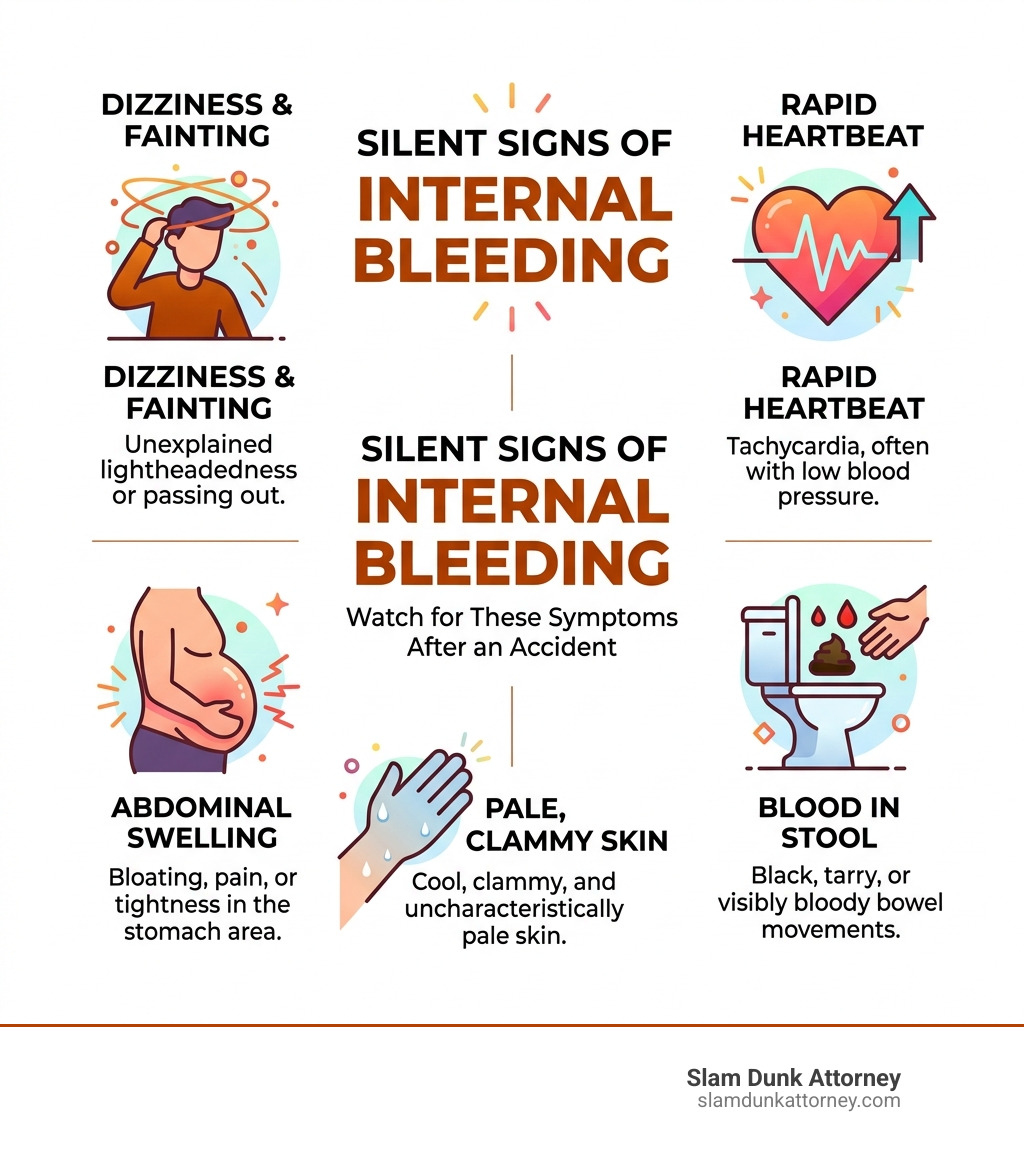
Here are the most common signs to watch for:
- Feeling dizzy or fainting for no reason
- Bad stomach pain, swelling, or a tight feeling
- A fast heartbeat (over 100 beats per minute) with low blood pressure
- Skin that looks pale, cold, or feels sweaty
- Feeling very weak or tired all of a sudden
- Blood in your poop, pee, or vomit (it might look bright red or like coffee grounds)
- A bad headache, feeling confused, or blurry vision
- Bruises you can’t explain, especially on your chest or stomach
If you have any of these signs after a crash—call 911 right away.
Internal bleeding is dangerous because you cannot see it. Unlike a cut on your arm, the blood stays trapped inside. Your body also makes adrenaline after a crash. This can hide your pain for hours or even days.
In Duluth, Georgia, we see this all the time. Someone leaves a car crash feeling okay. Then, two or three days later, the pain hits. By then, the injury is much worse. Never assume you are fine just because you feel okay right after a hit.
At Slam Dunk Attorney Personal Injury, we are Georgia personal injury attorneys. We help accident victims in Duluth and the Atlanta area. Many people come to us after they realize too late that they needed to know how to tell if you have internal bleeding. Below, we will show you what to look for and how to protect your health and your legal rights.
Internal bleeding is a “silent killer.” It happens when a blood vessel breaks and blood leaks into your stomach, chest, or head. In a Duluth car accident, this is usually caused by a hard hit to the body. This could be hitting the steering wheel or the dashboard.
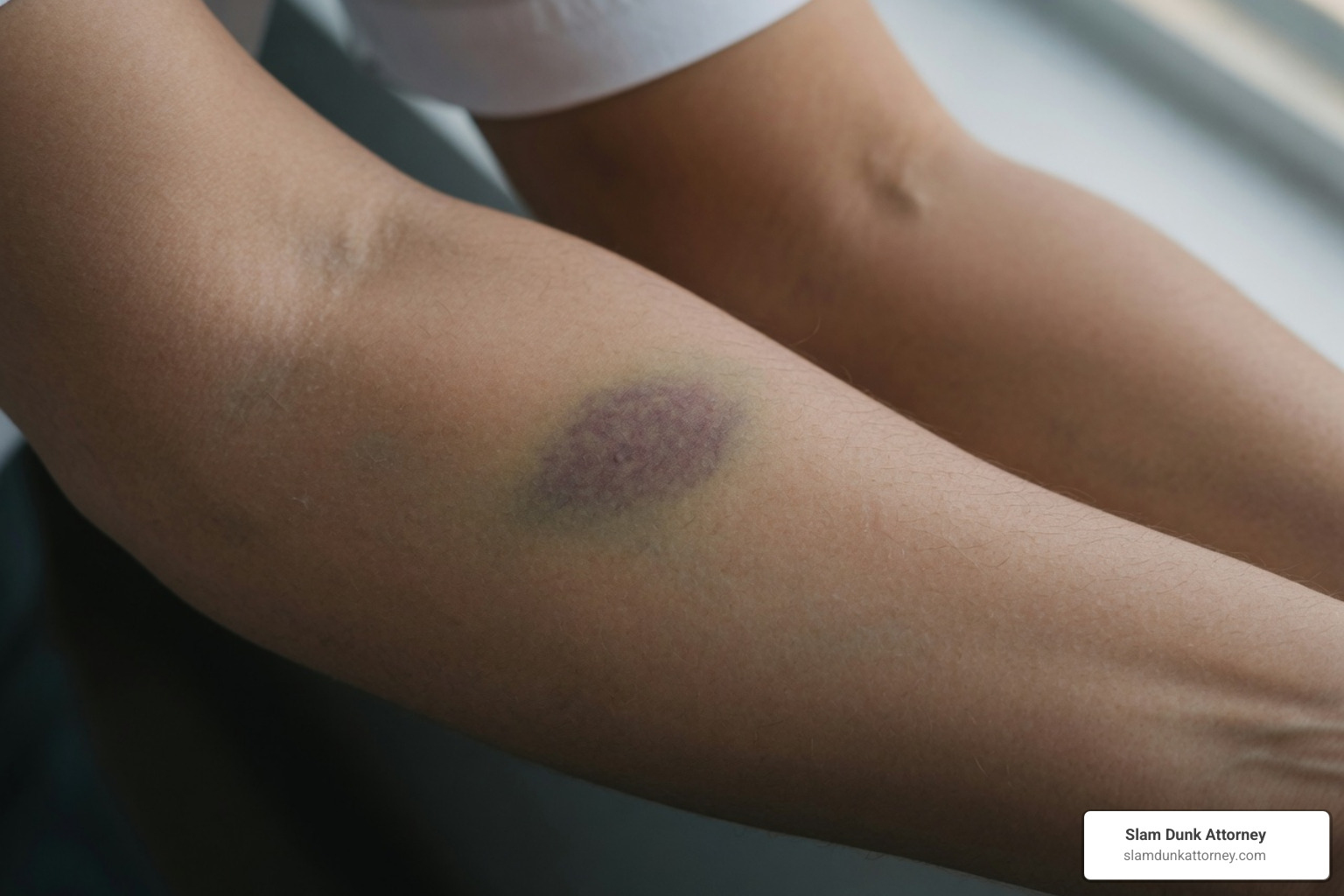
Seat belts save lives on I-85, but they can also cause “seat-belt syndrome.” This is when the belt presses so hard that it bruises your stomach or hurts your organs, like your spleen. If you see a deep purple bruise or feel “tightness” in your stomach, do not ignore it.
Proudly Serving Duluth and All of Georgia Contact us to start your recovery! Explore Our Practice Areas

Early Warning Signs and How to Tell if You Have Internal Bleeding
The hard part is that early signs feel like a “bad day.” You might just feel tired. Doctors use “classes” to show how bad the bleeding is:
- Class I Bleeding: You lose a little blood. You might just feel a bit “off.”
- Class II Bleeding: You lose more blood. Your heart might race, and you might feel short of breath or cold.
According to Symptoms and Signs of Internal Bleeding: Treatment, these signs are your body’s way of asking for help. If you are very thirsty or can’t catch your breath after a fender bender in Alpharetta, get help fast.
Signs by Location: Head, Chest, and Stomach
Where you are bleeding changes how you feel. Here is a quick guide:
- Head: You might get the worst headache of your life. You might also feel confused or have trouble seeing.
- Chest: Bleeding near the lungs can make you cough up red spit. It will hurt to breathe.
- Stomach: This is common in car crashes. Your stomach might feel hard. You might see bruising around your belly button.
For more help, the Internal Bleeding Signs, Symptoms & Treatment guide is a great tool for Georgia families.
Click to contact our personal injury lawyers today
When to Go to the Emergency Room
Do not “wait and see.” Go to an ER in Gwinnett or Fulton County if you have:
- A very fast pulse.
- Low blood pressure (feeling like you will faint).
- Feeling very confused.
- Passing out, even for a moment.
As we say in our guide on Internal Bleeding After A Car Accident, these are signs of shock. This means your heart doesn’t have enough blood to help your brain. This is a major emergency.
Complete a Free Case Evaluation form now
Protecting Your Health and Your Legal Rights in Duluth, Georgia
At Slam Dunk Attorney, we care about your recovery. In Georgia, the law says you can get money for your injuries if someone else was careless. If a distracted driver in Brookhaven hits you, they have a duty of care to keep you safe. When they break that duty, you can seek payment.
However, Georgia has a 50% bar rule. This means if you are 50% or more at fault for the crash, you cannot get any money. It is like a foul that ends your game. Also, you only have 2 years to file a lawsuit. This is called the statute of limitations. If you wait too long to see a doctor, the insurance company will say the crash didn’t cause your bleeding.
Finding the Injury and Getting Better
At the hospital, doctors will use tools to find the leak:
- CT Scans: These look for blood in the brain or stomach.
- Ultrasound: A fast test to look for fluid around the heart.
- Blood Work: To see if your blood levels are too low.
Sometimes bleeding is easy to see (Overt), and sometimes it is hidden (Occult).
| Feature | Overt Bleeding | Occult Bleeding |
|---|---|---|
| Can you see it? | Yes, in vomit or pee | No, it is hidden |
| Common Signs | Bright red blood | Dizziness, feeling tired |
| How fast? | Immediate Emergency | See a doctor fast |
Why Seeing a Doctor is a Slam Dunk for Your Case
Going to the doctor right away helps you stay in the game. Insurance companies in Georgia often try to pay as little as possible. They will look for a “gap in treatment.” If you wait three days to go to the ER, they will argue you got hurt somewhere else.
By getting care now, you create a paper trail. This proves the crash caused the injury. Your doctors will help you reach Maximum Medical Improvement (MMI). This is when you have healed as much as you can. We wait for this point before we settle your case to make sure all your bills are paid.
If you are worried about medical bills, we are here to help. At Slam Dunk Attorney, we bring championship-level hustle to every case. We are always honest with you about your case.
To learn more, visit our car accident lawyer services page. We help people in Duluth, Atlanta, and Lawrenceville. Don’t let the shot clock run out on your claim—get the medical help and legal team you deserve.
The information provided on this blog is for general informational purposes only and is not intended to be, nor should it be construed as, legal advice. Every personal injury case is unique, and the laws and circumstances that apply can vary based on the specific facts of your situation. Reading this content does not create an attorney-client relationship. To receive legal advice specific to your case, you should consult directly with a qualified personal injury attorney licensed to practice in the state of Georgia.
Call or text 404-951-3513 or complete a Free Case Evaluation form