When Your Apartment Becomes a Hazard
An apartment injury lawyer helps tenants and guests hurt by a landlord’s negligence pursue compensation. If you were injured on apartment property in Georgia, the property owner may be accountable under Georgia’s premises liability law (O.C.G.A. § 51-3-1), which requires them to keep their property reasonably safe.
If you want to read the exact language of this Georgia law, you can review O.C.G.A. § 51-3-1 on the official Georgia General Assembly website.
Who can be held liable for apartment injuries in Georgia:
- Property owners and landlords
- Property management companies
- Corporate landlords
- Maintenance contractors (in some cases)
Common causes of apartment injury claims:
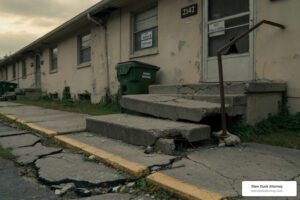
- Broken stairs or missing handrails
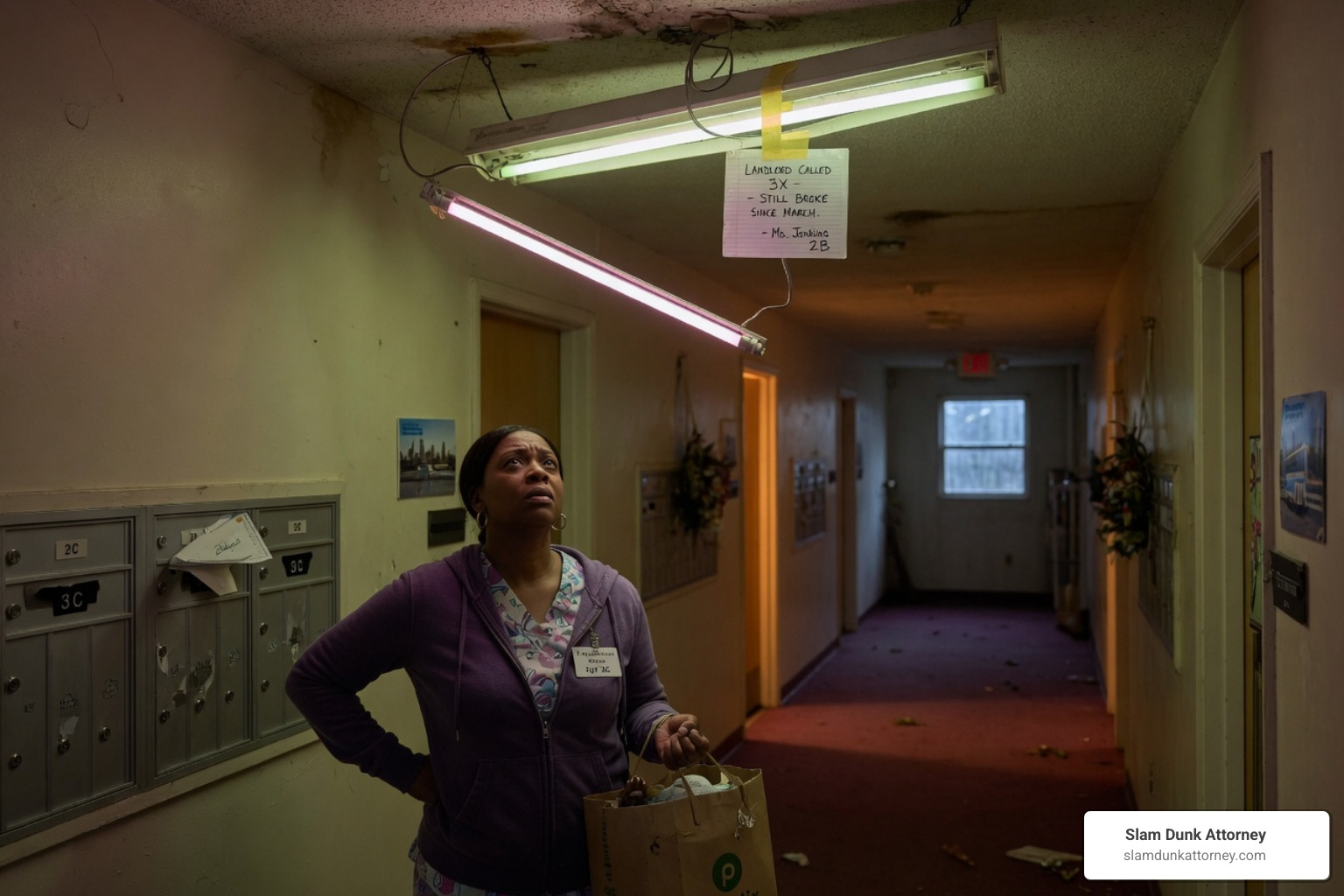
- Poor lighting in common areas
- Wet or slippery floors
- Damaged flooring or carpeting
- Faulty electrical wiring
- Inadequate security leading to assault
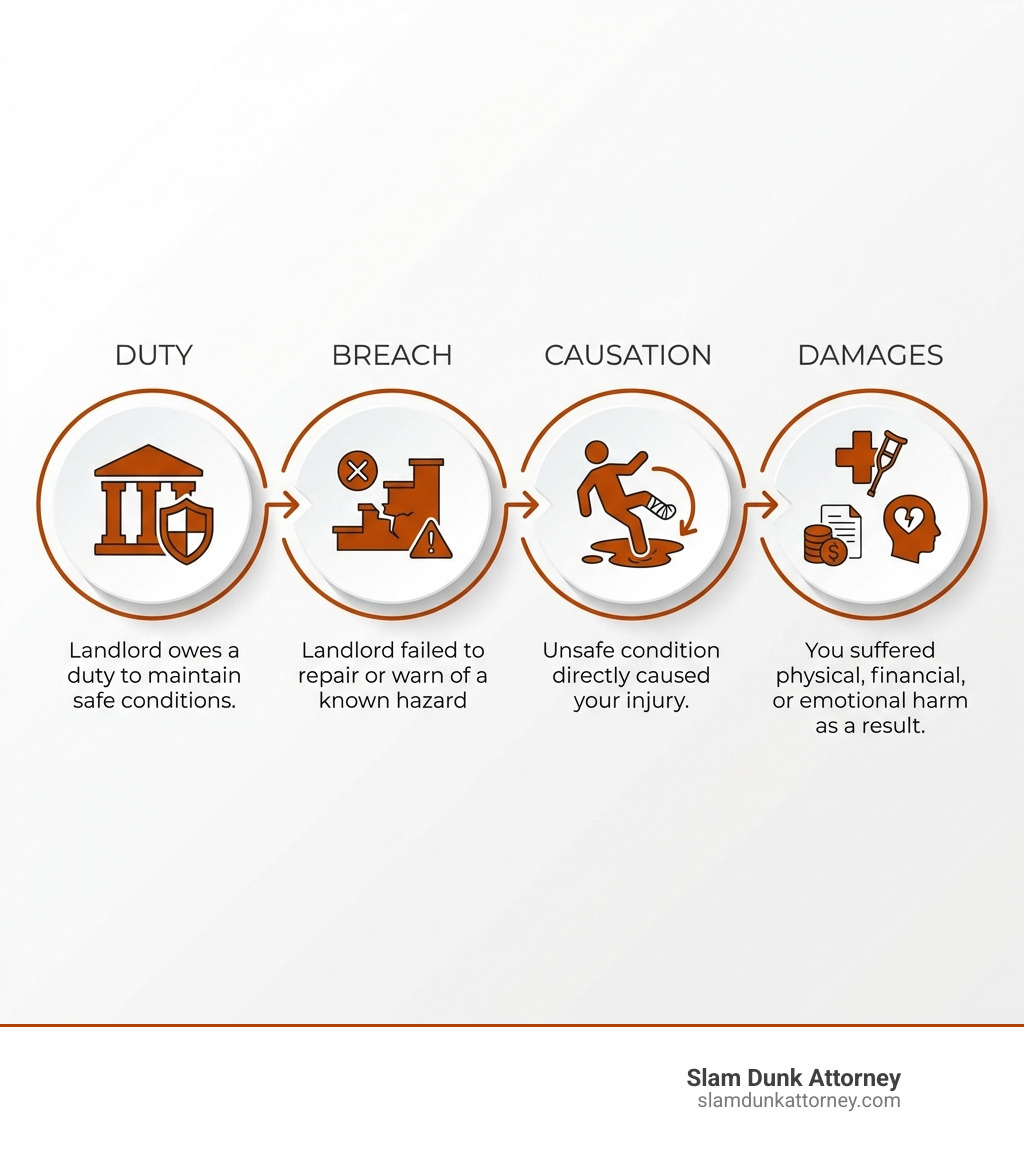
To win your case in Georgia, you must prove the landlord owed you a duty of care, breached that duty, the breach caused your injury, and you suffered actual damages. Your apartment should be a safe place, but when landlords fail to maintain their properties, preventable accidents happen.
Peter Jaraysi, Esq. founded Slam Dunk Attorney to help those injured due to negligence. As apartment injury lawyers in Duluth, Georgia, we’ve seen how property owners try to avoid responsibility. Our team fights for tenants who’ve been hurt by this negligence, and we’re here to help you understand your rights.
Proudly Serving Duluth and All of Georgia Contact us to start your recovery! Explore Our Practice Areas

Proving Your Case: How an Apartment Injury Lawyer Can Help
When you’re injured in an apartment building in Duluth, Georgia, the key is proving landlord negligence. As your apartment injury lawyer, we focus on establishing that the property owner or manager failed in their legal duty to keep you safe.
Identifying Landlord Negligence and Common Hazards
In Georgia, landlords must use ordinary care to keep their premises safe. This duty is highest in common areas like hallways, stairwells, parking lots, and lobbies, where they must perform regular inspections and make prompt repairs. For injuries inside a private unit, a landlord can be liable if they knew about a hidden danger and failed to warn you, or if their negligent repairs caused the injury.
Common hazardous conditions we see in Georgia apartment buildings include:
- Poor Lighting: Inadequate light in stairwells, hallways, or parking lots can hide tripping hazards.
- Broken Stairs or Railings: Missing steps, loose carpeting, or a lack of handrails create a serious fall risk.
- Wet or Slippery Floors: Spills or leaks without warning signs are a classic example of a preventable hazard.
- Damaged Flooring: Frayed carpets, broken tiles, or loose floorboards can easily cause someone to trip.
- Faulty Wiring: Outdated or poorly maintained electrical systems can lead to shocks or fires.
- Inadequate Security: Landlords may be liable for criminal attacks if they fail to provide reasonable security, such as working locks or adequate lighting, especially in areas with a history of crime. You can learn more about negligent security law in Georgia and how liability is determined in a negligent security case.
- Other Dangers: This also includes collapsing balconies, unsafe heating equipment, and even failing to address a known aggressive animal on the property.
Critical Steps to Take Immediately After an Apartment Injury
What you do right after an injury can significantly impact your claim. Here are the essential steps:
- Seek Immediate Medical Attention: Your health is the priority. Medical records also serve as vital evidence linking your injuries to the accident.
- Report the Incident to the Landlord: Notify management in writing as soon as possible to create an official record. Stick to the facts of what happened.
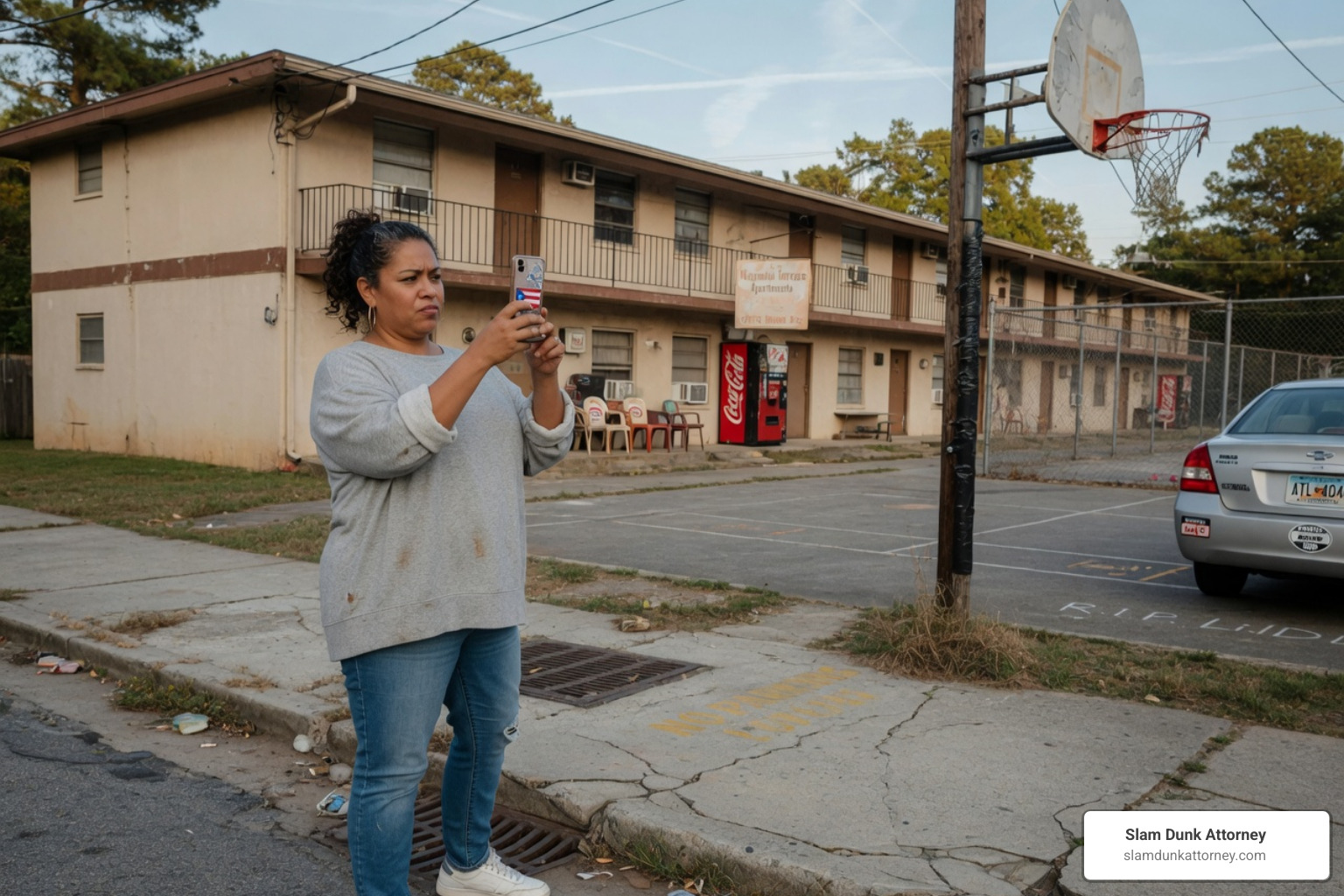
- Document the Scene Thoroughly: Use your phone to take extensive photos and videos of the hazard, the surrounding area, and your injuries.
- Gather Witness Information: If anyone saw the accident, get their name and contact information. Their testimony can be invaluable.
- Preserve All Records: Keep everything related to the incident, including communications with your landlord, medical bills, and proof of lost wages.
- Do Not Give Recorded Statements to Insurers: The landlord’s insurance company will likely contact you. Do not give a recorded statement or sign any documents without first speaking with an apartment injury lawyer.
What an Apartment Injury Lawyer Can Do For Your Georgia Claim
Navigating a claim while recovering from an injury is overwhelming. A dedicated apartment injury lawyer from Slam Dunk Attorney handles the legal complexities so you can focus on healing. Here’s how we help:
- Thorough Investigation: We launch a detailed investigation to gather evidence, interview witnesses, and establish the landlord’s negligence. For security-related incidents, we’ll investigate the property’s crime history to see if the landlord failed in their duty to protect you. Find out more by asking, How do I know if I have a negligent security case?.
- Calculating Full Damages: We work to calculate the full extent of your economic and non-economic damages to ensure you seek fair compensation for everything you’ve lost.
- Negotiating with Insurance Companies: We handle all communications with insurers, protecting you from their tactics and fighting for a settlement that reflects your true losses.
- Litigation and Court Representation: If a fair settlement isn’t possible, we are fully prepared to file a lawsuit and advocate for you in court.
- Contingency Fee Basis: We work on a contingency fee basis, meaning you pay nothing upfront. We only get paid if we win your case.
Compensation and Deadlines for Your Apartment Injury Lawsuit
Understanding what you can claim and the deadlines is crucial.
Types of Compensation You Can Seek in Georgia
Georgia law allows you to seek compensation for:
- Economic Damages: These are tangible financial losses, including past and future medical bills, lost wages, and loss of future earning capacity.
- Non-Economic Damages: These are non-financial losses that impact your quality of life, such as pain and suffering, emotional distress, and loss of enjoyment of life.
Common Injuries and the Georgia Statute of Limitations
Apartment accidents can cause devastating injuries like broken bones, traumatic brain injuries (TBI), and spinal cord damage.
CRITICAL: In Georgia, the statute of limitations for most personal injury claims is two (2) years from the date of the injury. If you miss this deadline, you lose your right to sue forever. It is vital to contact an apartment injury lawyer as soon as possible to protect your rights.
Your Path to Recovery and Justice
Your apartment should be a sanctuary, not a source of injury. When a landlord’s negligence turns your home into a hazard, Georgia law gives you the right to seek justice. We’ve covered how to prove your case, the immediate steps to take after an accident, and the critical two-year deadline for filing a claim.
Dealing with injuries and lost wages is stressful enough without having to fight an insurance company that doesn’t have your best interests at heart. You don’t have to do it alone.
At Slam Dunk Attorney, we are a Duluth, Georgia-based personal injury law firm committed to fighting for our clients’ full compensation. Our championship-level team provides direct communication and transparent guidance, allowing you to focus on your recovery while we handle the legal heavy lifting.
If you’ve been injured in an apartment building in Duluth, Georgia, Atlanta, or anywhere in Georgia due to negligence, don’t wait. Reach out to us for a free, no-obligation consultation to understand your rights and pursue the compensation you deserve.
Contact our Duluth, Georgia premises liability lawyers for a free consultation today, and let’s get your life back on track.
The information provided on this blog is for general informational purposes only and is not intended to be, nor should it be construed as, legal advice. Every personal injury case is unique, and the laws and circumstances that apply can vary based on the specific facts of your situation. Reading this content does not create an attorney-client relationship. To receive legal advice specific to your case, you should consult directly with a qualified personal injury attorney licensed to practice in the state of Georgia.
Call or text 404-951-3513 or complete a Free Case Evaluation form