
Understanding the Timeline for Justice in Georgia
How long does a nursing home lawsuit take in Georgia? Here’s what you need to know upfront:
Average Timeline: 18 months to 3 years
- Simple cases with clear liability: 6-12 months
- Most nursing home cases: 18-24 months
- Complex cases or trials: 2-4 years
Key factors that affect duration:
- Severity of injuries or wrongful death
- Number of defendants involved
- Strength and availability of evidence
- Whether the case settles or goes to trial
- Court scheduling and backlogs in Georgia
When you find that your loved one has been hurt, neglected, or abused in a nursing home, your first instinct is to take action immediately. You want justice now. You want answers now. You want accountability now.
But here’s the reality: nursing home lawsuits are a marathon, not a sprint.
The legal process takes time—often much longer than families expect. That doesn’t mean nothing is happening. It means building a strong case, gathering evidence, and fighting for maximum compensation under Georgia law requires patience, preparation, and persistence.
Most nursing home abuse and neglect cases in Georgia take between 18 and 24 months from the initial consultation to final resolution. Some settle faster. Others, especially those involving wrongful death or multiple defendants, can stretch to three years or more.
Understanding why these cases take time—and what happens during each stage—can help you manage expectations and stay focused on what matters: holding the facility accountable and securing the compensation your family deserves.
I’m Peter Jaraysi, Esq., and I’ve spent years fighting for Georgia families who’ve been failed by the very facilities they trusted. I know that understanding how long a nursing home lawsuit takes helps families prepare emotionally and financially for the road ahead.
Proudly Serving Duluth and All of Georgia Contact us to start your recovery! Explore Our Practice Areas

The Key Stages and Factors That Determine How Long a Nursing Home Lawsuit Takes
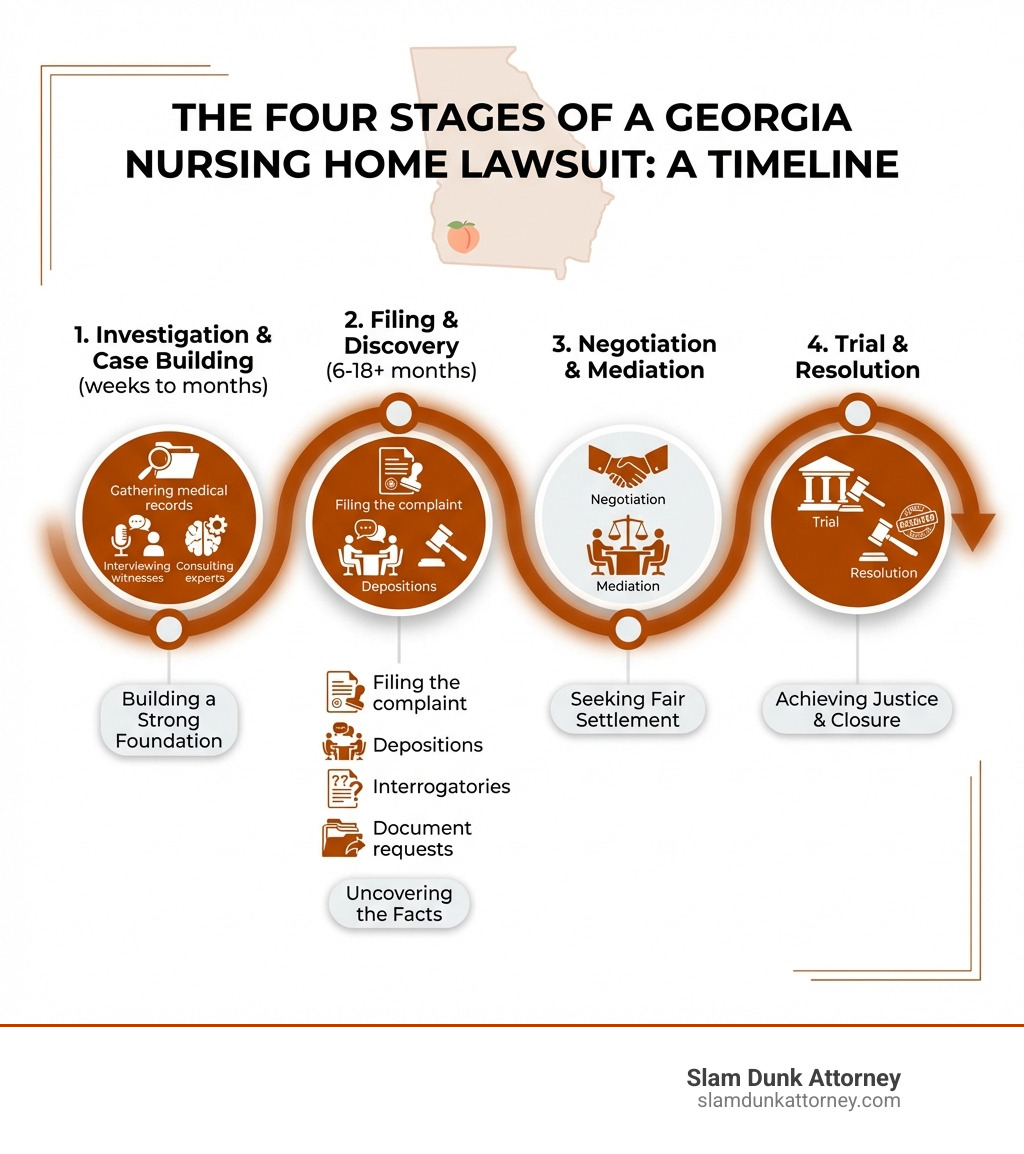
When we take on a nursing home lawsuit, we’re starting on a journey with distinct stages, each with its own timeline. The overall duration—and therefore, how long a nursing home lawsuit takes—is heavily influenced by how smoothly each of these stages proceeds.
Initial Investigation and Filing (Weeks to Months)
The first step in any nursing home lawsuit is a thorough investigation. This is where we lay the groundwork for your case, carefully gathering every piece of evidence to build a strong foundation. This phase typically lasts a few weeks to several months, depending on the complexity of the abuse or neglect.

Here’s what happens during this crucial initial stage:
- Evidence Gathering: We’ll collect all relevant documentation. This includes medical records, nursing home charts, incident reports, photographs of injuries, witness statements from family members or former employees, and any communication logs. The more detailed and comprehensive the evidence, the stronger your case will be.
- Medical Record Review: Expert medical professionals, often doctors or legal nurse consultants, will review your loved one’s medical records to establish the standard of care that should have been provided and how the nursing home failed to meet it. This review helps us understand the extent of the injuries and their causation.
- Expert Consultation: In many nursing home cases, especially those involving medical negligence, we consult with expert witnesses. These experts help us understand the medical intricacies of the case and can provide testimony about the facility’s breach of duty.
- Filing the Complaint in Georgia: Once we have a clear understanding of the case’s merits and sufficient evidence, we will formally file a lawsuit with the appropriate Georgia court. This document, known as a complaint, outlines the allegations against the nursing home and the damages we are seeking.
- Serving the Defendant: After filing, the nursing home (the defendant) must be formally notified of the lawsuit. This is called “serving” the defendant. Under Georgia law, defendants generally have a specific period, often 30 days, to file an official response or “answer” to the complaint.
It’s vital to act quickly if you suspect nursing home neglect. We have a detailed guide on What to Do If You Suspect Nursing Home Neglect that can help you understand your immediate steps. The sooner we can begin this investigation, the better chance we have of preserving crucial evidence and witness testimony.
How does the discovery phase affect how long a nursing home lawsuit takes? (6-18+ Months)
The discovery phase is often the longest and most intensive part of a nursing home lawsuit, frequently lasting anywhere from six months to over a year, and sometimes even longer. This is the period where both sides exchange information and gather evidence to prepare for trial or settlement negotiations.
During discovery, we use several tools to uncover the facts of the case:
- Depositions: These are sworn testimonies taken out-of-court from witnesses, including nursing home staff, doctors, experts, and even family members. Depositions are crucial for understanding what happened, assessing credibility, and locking in testimony. For example, we might depose a certified nursing assistant to understand staffing levels and direct care provided to your loved one.
- Interrogatories: These are written questions that one party sends to the other, which must be answered under oath. They help us gather factual information, identify other witnesses, and understand the defendant’s position.
- Document Requests: We will formally request and review a vast array of documents from the nursing home, such as staffing records, training manuals, corporate policies, incident reports, financial records, and records of previous complaints or violations.
- Expert Witness Involvement: While experts might be consulted early on, their formal involvement and the exchange of their reports typically occurs during discovery. These experts often provide opinions on the standard of care, causation of injuries, and prognosis.
Why is discovery often the longest part of the process?
- Volume of Information: Nursing home cases involve extensive medical records and facility documents. Reviewing and analyzing these can be incredibly time-consuming.
- Complexity of Issues: These cases often involve intricate medical details, multiple caregivers, and complex corporate structures, requiring in-depth investigation.
- Defense Delay Tactics: Unfortunately, some nursing homes or their insurance companies may employ tactics to delay the process, such as slow responses to requests, withholding documents, or making numerous objections. We are prepared for these tactics and will aggressively push back to keep your case moving forward.
- Scheduling Challenges: Coordinating depositions with multiple witnesses, attorneys, and experts can be a logistical challenge, especially when parties are geographically dispersed across Georgia.
The information uncovered during discovery is critical for evaluating the strengths and weaknesses of the case, which directly impacts settlement negotiations. Understanding the legal framework governing these cases, often falling under elder law, is essential for navigating this complex phase effectively.
How does going to trial affect how long a nursing home lawsuit takes?
While the thought of a trial can be daunting, it’s important to understand its role in the overall timeline. Most nursing home lawsuits are resolved through settlement, meaning an agreement is reached between the parties without the need for a jury verdict. However, if a fair settlement cannot be reached, we are fully prepared to take your case to trial.
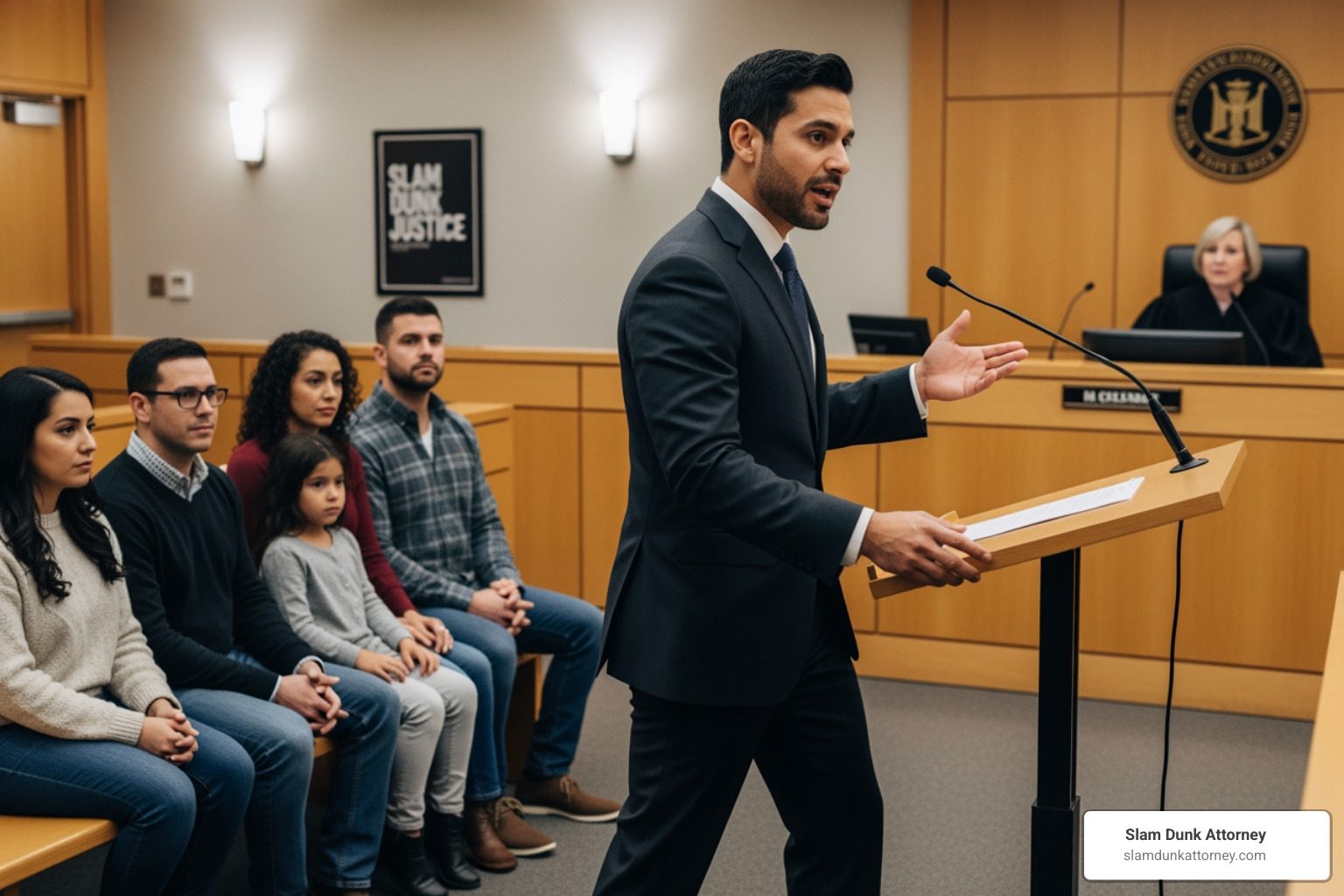
- Settlement vs. Trial: Settlement negotiations can occur at any point during the lawsuit, from the initial investigation through discovery, and even during trial. Many families understandably wish to avoid the stress and uncertainty of trial, making settlement a preferred outcome. Settlements often shorten the overall timeline significantly, sometimes by several months to a year, compared to going to trial.
- Mediation in Georgia: A common step before trial is mediation. This is a non-binding process where a neutral third party (a mediator) helps both sides explore settlement options. Mediation can be a very effective way to resolve cases efficiently in Georgia without the need for a trial.
- Court Backlogs: Even after discovery is complete and settlement efforts have failed, getting a trial date in Georgia can take time. Our local court systems, especially in busy counties like Gwinnett, Fulton, or DeKalb, often have significant backlogs. A case might be ready for trial, but the court’s calendar may push the actual trial date out by several months or even over a year.
- Trial Preparation: If a trial becomes necessary, it involves extensive preparation, including selecting a jury, preparing opening and closing statements, organizing exhibits, and rehearsing witness testimony. A trial itself can last from a few days to several weeks, depending on the complexity of the case.
- Appeals Process: Even after a jury verdict, the losing party may have the right to appeal the decision. An appeal can add an additional six months to a year or more to the overall timeline, as the case moves through the Georgia appellate courts. This is another reason why many cases settle before reaching a verdict or before an appeal is filed.
While trials extend the nursing home lawsuit timeline, they are sometimes necessary to achieve full justice and hold negligent facilities accountable. Our firm, Slam Dunk Attorney, is committed to securing the compensation your family deserves, whether through meticulous negotiation or tenacious courtroom advocacy.
Other Major Factors: Case Complexity and Georgia’s Statute of Limitations
Beyond the procedural stages, several inherent factors significantly influence how long a nursing home lawsuit takes.
- Severity of Injury: Cases involving severe injuries, permanent disability, or wrongful death tend to be more complex and therefore take longer. The damages sought are higher, and the defense often fights harder, requiring more extensive expert testimony and potentially more rigorous discovery.
- Wrongful Death Claims: If the nursing home’s negligence led to a loved one’s passing, the case becomes a wrongful death claim. These cases are often emotionally charged and legally complex, frequently involving more extensive investigation into causation and damages, which can extend the timeline.
- Number of Defendants: A lawsuit against a single nursing home might proceed more quickly than one involving multiple defendants (e.g., the nursing home, a management company, a specific negligent staff member, a medical provider). More defendants mean more attorneys, more discovery, and more parties to negotiate with, all of which add time.
- Strength of Evidence: Cases with clear, undeniable evidence of abuse or neglect (e.g., damning surveillance footage, multiple consistent witness accounts, undisputed medical records) may settle more quickly because liability is harder for the defense to dispute. Conversely, cases with ambiguous evidence or conflicting accounts will likely take longer to resolve.
- Georgia’s 2-Year Deadline: One of the most critical factors is Georgia’s statute of limitations. In Georgia, the general statute of limitations for personal injury cases, including nursing home abuse and neglect, is two years from the date the injury occurred or was discovered. For wrongful death claims, the statute of limitations is also generally two years from the date of death. It’s imperative to contact an attorney as soon as possible, as missing this deadline can result in losing your legal right to seek compensation. This urgency often means we must act swiftly to gather evidence and file the lawsuit, even as the longer discovery process unfolds.
- The Emotional Toll: We understand that navigating these lawsuits can take a significant emotional toll on families. The legal process, while necessary, can be draining. Our team is here to support you through every step, allowing you to focus on your family while we handle the legal complexities.
Navigating the Process and Securing Your Family’s Future
Understanding how long a nursing home lawsuit takes is the first step in preparing for the journey toward justice. We’ve seen that it’s a multi-stage process, often a marathon of 18 months to 3 years, influenced by everything from the initial evidence gathering to the complexities of findy, and the potential for trial.
At Slam Dunk Attorney, we believe in direct communication, a championship-level team approach, and a commitment to hustle, honesty, and transparency. We know that when your loved one has suffered abuse or neglect in a Georgia nursing home, you need a legal team that is not only skilled but also deeply empathetic.
- Importance of an Experienced Georgia Attorney: An attorney experienced in Georgia nursing home abuse law can significantly impact the speed and efficiency of your lawsuit. We know the local court systems, the applicable Georgia statutes, and the tactics often employed by defense attorneys and insurance companies. We can streamline the process, anticipate challenges, and aggressively advocate for your family’s rights.
- Managing Expectations: We pride ourselves on setting realistic expectations. While we work diligently to resolve cases as quickly as possible, we will always prioritize securing the full and fair compensation your family deserves, even if that means a longer fight. We’ll keep you informed about the potential timeline and any factors that might cause delays or accelerations.
- Communication is Key: Throughout the entire process, from the initial consultation to the final disbursement, we maintain open and honest communication. You’ll receive regular updates, and we’ll always be available to answer your questions, providing clarity and reassurance. Our transparent approach means you’re never left in the dark about the status of your case.
- Your Advocate for Justice: Our goal isn’t just to win your case; it’s to ensure comprehensive care and justice for accident victims and their families in Duluth, Atlanta, Norcross, and across Georgia. We fight to hold negligent nursing homes accountable, secure financial recovery for medical expenses, pain and suffering, and other damages, and hopefully, prevent future abuse from happening to other vulnerable residents.
If you suspect nursing home abuse or neglect in Georgia, don’t wait. The statute of limitations clock is ticking, and evidence can disappear. Let our team provide the guidance and advocacy you need.
Contact our Duluth Nursing Home Abuse Lawyer team today for a free consultation. We’re here to help you steer this marathon with confidence and secure the justice your family deserves.
The information provided on this blog is for general informational purposes only and is not intended to be, nor should it be construed as, legal advice. Every personal injury case is unique, and the laws and circumstances that apply can vary based on the specific facts of your situation. Reading this content does not create an attorney-client relationship. To receive legal advice specific to your case, you should consult directly with a qualified personal injury attorney licensed to practice in the state of Georgia.
Call or text 404-951-3513 or complete a Free Case Evaluation form