
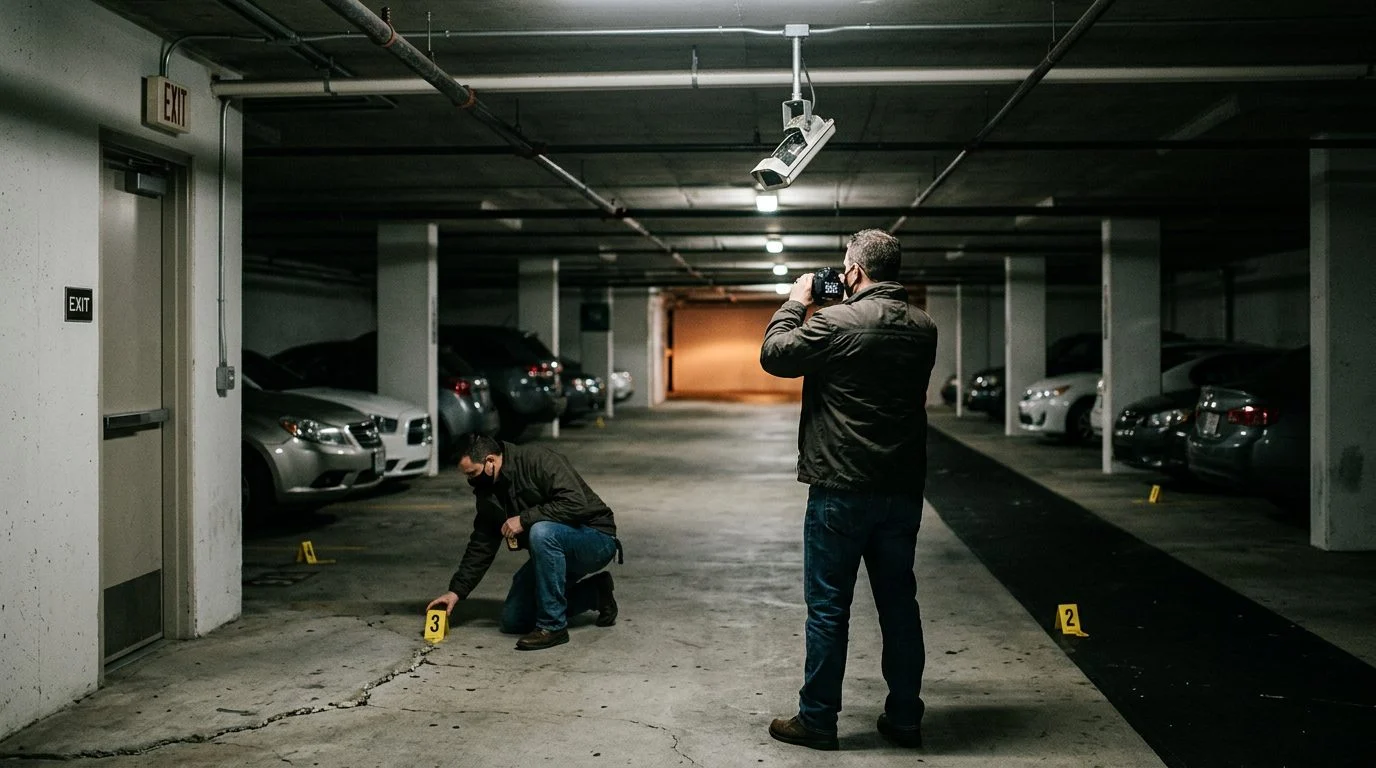
Premises Liability
Hotel Injury Claims in Georgia
If you were hurt at a hotel due to negligence or unsafe conditions, you may have a claim. Slam Dunk Attorney represents injured guests across metro Atlanta and Georgia.
By Peter F. Jaraysi · Published September 30, 2026
Hotel Premises Liability & Guest Injury Claims in Georgia
If you were injured at a Georgia hotel due to unsafe conditions—a wet floor, broken railing, inadequate security, or another hazard—the hotel may be legally responsible. This is called premises liability: the hotel owner’s duty to keep their property reasonably safe for guests. Understanding what that duty means, what you must prove, and what steps to take after an injury can help you decide whether you have a claim.
If you were injured at a Georgia hotel and aren't sure whether the hotel bears responsibility, you're not alone—people in your exact situation reach out to us regularly to understand their options. Talk it through with our team — the first consultation is free, confidential, and carries no obligation.
What Is Premises Liability at a Hotel?
Premises liability is the legal responsibility a property owner has to maintain their premises in a reasonably safe condition for invited guests. At a hotel, this means the owner and management must take reasonable steps to prevent foreseeable injuries and warn guests of known hazards.
Hotels owe guests a higher duty of care than they owe to trespassers. Because you paid for a room and were invited onto the property, Georgia law recognizes that you have a right to expect the hotel to maintain safe conditions. That duty doesn’t guarantee absolute safety—it requires reasonable care. The hotel must conduct regular inspections, repair dangerous conditions promptly, and warn you of known risks in common areas (lobbies, hallways, pools, parking areas, restaurants) and guest rooms.
The Hotel Owner’s Duty of Care in Georgia
Georgia law requires hotel owners to maintain premises in a reasonably safe condition for guests. This duty includes three core responsibilities:
Regular inspection for hazards. The hotel must inspect its property regularly to identify unsafe conditions—wet floors, broken fixtures, debris, inadequate lighting, or structural damage.
Prompt repair of dangerous conditions. Once a hazard is discovered, the hotel must repair it or remove it within a reasonable time. A known broken railing, a leaking roof, or a malfunctioning elevator cannot be left unaddressed.
Warning of known risks. If a hazard cannot be immediately repaired, the hotel must warn guests. This might mean placing a “wet floor” sign, closing off an unsafe area, or notifying you directly.
The duty extends to all areas guests are invited to use: guest rooms, hallways, stairwells, elevators, pools, hot tubs, restaurants, fitness centers, and parking areas. The hotel must also take reasonable steps to prevent foreseeable injuries—for example, providing adequate security to prevent unauthorized entry or assault.
Common Hotel Injury Scenarios
Premises liability claims at hotels often arise from these situations:
- Slip and fall on wet floors, spilled liquids, or debris in hallways, bathrooms, lobbies, or common areas
- Falls from inadequate railings, balconies, or stairs due to poor maintenance or unsafe design
- Injuries from broken furniture, defective beds, or unsafe fixtures in guest rooms (e.g., a bed frame that collapses, a shower door that shatters)
- Pool or hot tub accidents caused by lack of supervision, missing safety equipment, or failure to warn of water depth or temperature
- Injuries from inadequate security leading to assault, theft, or unauthorized entry into your room
- Food poisoning or injuries from contaminated food or beverages at hotel restaurants or room service
- Elevator or door malfunctions causing injury or entrapment
In the premises liability cases our attorneys handle, we often see injuries that seemed minor at first—a twisted ankle, a bump on the head—that later require ongoing medical care or reveal more serious damage.
What Must Be Proven in a Georgia Hotel Premises Liability Claim
To succeed in a hotel premises liability claim in Georgia, you must prove five elements:
-
The hotel owed you a duty of care. This is established by law—hotels owe guests a duty to maintain safe premises.
-
The hotel breached that duty. The hotel failed to inspect, repair, or warn. For example, the hotel knew about a wet floor but didn’t place a warning sign, or the hotel ignored a broken railing for weeks.
-
You suffered an actual injury. You must have been physically harmed—not just frightened or inconvenienced.
-
The breach caused your injury. There must be a direct connection between the hotel’s failure and your harm. If you slipped on a wet floor that the hotel failed to dry or warn about, the breach caused your injury.
-
You suffered measurable damages. You must have incurred losses: medical bills, lost wages, pain and suffering, or permanent disability.
All five elements must be proven. If the hotel can show you were careless or that the hazard was obvious and you ignored it, the case becomes more complex—but not necessarily lost.
Comparative Fault and Georgia Law
Georgia follows a comparative fault rule: if you were partly responsible for your injury, your recovery may be reduced by your percentage of fault. However, you can still recover damages only if you were less than 50% at fault; if you are 50% or more responsible, you recover nothing.
Example: You slip on a wet floor in a hotel hallway. The hotel failed to dry the floor or post a warning sign. But you were also rushing and not watching where you stepped. A jury might find the hotel 70% at fault and you 30% at fault. You could recover 70% of your total damages.
Another example: You’re injured on a wet floor, but a visible warning sign was posted. You ignored it. The hotel’s insurance company may argue you were careless. The court would weigh whether the sign was truly visible and adequate, and whether you acted reasonably despite seeing it.
The hotel’s insurance company will investigate your claim and likely argue you were partly responsible. This is why having an attorney matters: an attorney can counter those arguments and present evidence of the hotel’s negligence.
Not sure what your next step is?
Talk it through with our team — the first consultation is free, confidential, and carries no obligation.
Evidence That Strengthens a Hotel Injury Claim
Strong evidence is critical to proving a hotel premises liability claim. Gather and preserve:
- Photos or video of the hazardous condition that caused your injury (the wet floor, the broken railing, the debris)
- Medical records and bills documenting your injuries and all treatment, surgery, therapy, and medications
- Witness statements from other guests or hotel staff who saw the condition or your injury
- Hotel maintenance records showing the hotel knew (or should have known) about the hazard—repair requests, prior complaints, or maintenance logs
- Prior incident reports about the same hazard, showing a pattern of negligence
- Expert testimony about industry safety standards hotels should follow (e.g., how often floors should be inspected, when railings must be repaired)
- Your own written account of what happened, documented as soon as possible while your memory is fresh
The hotel’s own records—maintenance logs, incident reports, prior complaints—are often the most powerful evidence. An attorney can request these through a legal process called discovery.
Steps to Take After a Hotel Injury
What you do immediately after an injury can significantly affect your claim:
-
Seek medical attention right away, even if the injury seems minor. Some injuries worsen over time, and medical records create a crucial timeline.
-
Report the injury to hotel management and ask for an incident report. Stay calm and factual; don’t admit fault or apologize for the hotel’s negligence.
-
Take photos of the hazardous condition, your injuries, and the scene from multiple angles.
-
Get contact information from witnesses—other guests, staff members, or anyone who saw the condition or your injury.
-
Keep all receipts and records related to your injury and treatment: medical bills, pharmacy receipts, travel expenses, lost-wage documentation.
-
Do not sign anything the hotel offers without understanding it, especially any waiver or settlement offer.
-
Preserve evidence. Keep the clothing or shoes you wore, don’t discard anything related to the incident, and save photos and videos.
-
Write down details of what happened while your memory is fresh—the time, the weather, what you were doing, who was nearby, what the hotel did or didn’t do.
How a Premises Liability Claim Works
A hotel premises liability claim typically follows this path:
Investigation phase: Your attorney gathers evidence, reviews hotel records, interviews witnesses, and may consult experts about industry standards and causation.
Demand letter: Your attorney sends the hotel’s insurance company a detailed claim letter with evidence, a description of your injuries, and a calculation of damages. The insurance company reviews it and decides whether to respond.
Negotiation: The insurance company may offer a settlement. Your attorney advises whether the offer is fair or whether you should reject it and pursue litigation.
Litigation (if needed): If no settlement is reached, your case may go to court. Your attorney files a lawsuit in Georgia state court and represents you through discovery, depositions, and trial.
Timeline: Some claims settle within months; others take longer depending on the complexity of liability, the severity of your injuries, and whether the parties can agree on damages. A straightforward slip-and-fall with clear hotel negligence and moderate injuries may settle faster than a complex case with disputed liability.
Damages You May Recover
If you succeed in a hotel premises liability claim, you may recover:
- Medical expenses: Past and future treatment, surgery, physical therapy, medications, and ongoing care
- Lost wages: Income lost while recovering or unable to work
- Pain and suffering: Compensation for physical pain, emotional distress, and reduced quality of life
- Permanent disability or disfigurement: If your injury causes lasting harm or permanent loss of function
- Property damage: If your belongings were damaged in the incident
Damages are meant to restore you to the position you were in before the injury—not to punish the hotel, but to compensate you fairly for your losses.
Why You May Need an Attorney
Hotels and their insurance companies have experienced adjusters trained to minimize payouts. They may:
- Argue you were careless or partially at fault
- Claim the hazard was obvious and you should have avoided it
- Dispute the severity of your injuries or the cost of treatment
- Offer a low settlement before you understand the full value of your claim
An attorney levels the playing field. An attorney knows Georgia premises liability law, understands what evidence is needed, and can negotiate with the insurance company on your behalf. If litigation becomes necessary, an attorney can represent you in court. Many injured people underestimate their damages without legal guidance and accept settlements far below what they deserve.
If you were injured at a Georgia hotel and aren't sure whether the hotel bears responsibility, you're not alone—people in your exact situation reach out to us regularly to understand their options. Talk it through with our team — the first consultation is free, confidential, and carries no obligation.
Frequently Asked Questions
Can I sue a hotel if I was partly at fault for my injury?
Yes. Under Georgia’s comparative fault rule, you can recover damages even if you were partially at fault, as long as you are less than 50% responsible, though your recovery is reduced by your percentage of fault; if you are 50% or more at fault, you recover nothing.
How long does a hotel injury claim take?
Timeline varies. Some claims settle within months; complex cases may take a year or longer depending on liability disputes and the severity of injuries.
What if the hotel says I signed a waiver?
Waivers are often unenforceable in premises liability cases. An attorney can review any document you signed and advise whether it bars your claim.
Do I have to go to court?
No. Most premises liability claims settle before trial. But if the insurance company refuses a fair offer, litigation may be necessary.
What if I can’t afford an attorney?
Many premises liability attorneys work on a contingency fee basis: you pay nothing upfront, and the attorney is paid from your settlement or judgment. Discuss fee arrangements during your initial consultation.
Next Steps
If you were injured at a Georgia hotel and aren’t sure whether the hotel bears responsibility or what your claim might be worth, a free case review can clarify your situation. An attorney can review the facts of your injury, explain your rights under Georgia premises liability law, and advise on next steps—all without any obligation to hire us. People in your situation reach out regularly, and we’re here to help you understand your options.
Why Hotel Injury Claims Matter
Hotels Have a Duty of Care
Hotels are responsible for maintaining safe premises and protecting guests from foreseeable harm—including inadequate security, poor maintenance, unsafe conditions, and negligent staff conduct.
Comparative Fault in Georgia
Under Georgia law, you can recover damages even if you were partially at fault for your injury, as long as you are less than 50% responsible, with your recovery reduced by your percentage of fault; if you are 50% or more at fault, you cannot recover.
Time Matters
Hotel injury claims involve strict deadlines and complex insurance negotiations. Early action protects your right to pursue compensation and preserves critical evidence.
Documentation Is Key
Photos, incident reports, medical records, and witness statements strengthen your claim. We help gather and organize the evidence needed to support your case.
Common Hotel Injury Scenarios
Slip and Fall
Wet floors, broken stairs, poor lighting, or debris left unattended can cause serious injuries. Hotels must maintain safe walkways and warn guests of hazards.
Negligent Security
Inadequate locks, broken security cameras, insufficient staff, or failure to respond to threats can lead to assault, robbery, or other crimes against guests.
Unsafe Conditions
Faulty elevators, malfunctioning doors, exposed wiring, mold, or pest infestations put guests at risk. Hotels must inspect and repair hazards promptly.
Staff Negligence
Injuries caused by untrained staff, improper food handling, or reckless conduct may hold the hotel liable under premises liability law.
Important: Costs vs. Fees
If we represent you on a contingency basis, you pay no attorney fees unless there is a recovery. However, you may still be responsible for case costs such as filing fees, expert reports, and investigation expenses—even if the case does not result in recovery. Discuss all costs and fee arrangements clearly before proceeding.
Frequently Asked Questions
Can I sue a hotel if I was partly at fault for my injury?
Yes. Under Georgia's modified comparative fault rule, you can recover damages even if you were partially at fault, as long as you are less than 50% responsible, though your recovery is reduced by your percentage of fault.
How long does a hotel injury claim take?
Timeline varies. Some claims settle within months; complex cases may take longer. Early investigation and clear documentation help move your case forward efficiently.
What evidence do I need?
Photos of the hazard, incident reports filed with the hotel, medical records, witness contact information, and any communications with hotel management or insurance are all valuable.
Do I need to file a report with the hotel?
Reporting your injury to hotel management creates a documented record. We can advise you on how to report safely and what information to provide.
Injured at a Georgia Hotel? We're Here to Help.
Related practice areas
- Premises Liability Lawyer in Georgia: Injured on Someone Else’s Property
- Restaurant Premises Liability in Georgia: Injury Claims Explained