
Commercial vs. Residential Premises Liability in Georgia
Georgia property owners have a legal duty to keep their premises safe and warn visitors of known hazards—but that duty is not the same everywhere. A commercial building owner, a homeowner, and an apartment complex manager each owe different levels of care under Georgia law. Understanding which standard applies to your situation is the first step in determining whether you have a claim.
What Is Premises Liability?
Premises liability is a property owner’s legal responsibility to maintain safe conditions and warn of known dangers. It covers slip-and-fall accidents, negligent security, unsafe stairs, dog bites on the property, and other injuries caused by the property owner’s failure to act. Georgia law holds property owners accountable when their negligence causes injury to a visitor or invitee.
The key principle is straightforward: if someone is lawfully on your property and gets hurt because you failed to fix a hazard or warn about it, you may be liable. But the strength of that liability—and whether a duty existed at all—depends heavily on the type of property and the visitor’s status.
The Legal Duty Owed in Commercial Properties
Commercial property owners owe the highest duty of care to business invitees—customers, clients, vendors, and others who enter the property for business purposes. Day-to-day property upkeep can involve things like inspecting the premises, keeping them maintained, addressing hazards, and letting people know about dangers that may not be obvious.
A retail store must inspect its floors regularly for spills and debris. A restaurant must maintain safe walkways and promptly clean up water or food. An office building must keep stairwells well-lit and handrails secure. A parking lot owner must repair potholes and ensure adequate lighting. These aren’t optional tasks; they’re part of the legal standard of care.
Commercial property owners must also anticipate foreseeable risks. If a business operates in an area with known security issues, it may need to hire security staff or install cameras. If a store is in a high-traffic area, it must inspect more frequently. The standard is: what would a reasonable business owner do to prevent foreseeable harm?
The Legal Duty Owed in Residential Properties
Residential property owners owe a duty of reasonable care to invited guests—family members, friends, and people invited onto the property. This includes maintaining reasonably safe conditions and warning of known hazards. However, the standard is generally lower than for commercial properties.
Homeowners are not required to conduct systematic inspections or maintain their property to the same level as a business. If you invite a friend over and they slip on an icy front step you didn’t know about, you’re unlikely to be liable. But if you knew the step was cracked and dangerous and didn’t warn your guest, you may be.
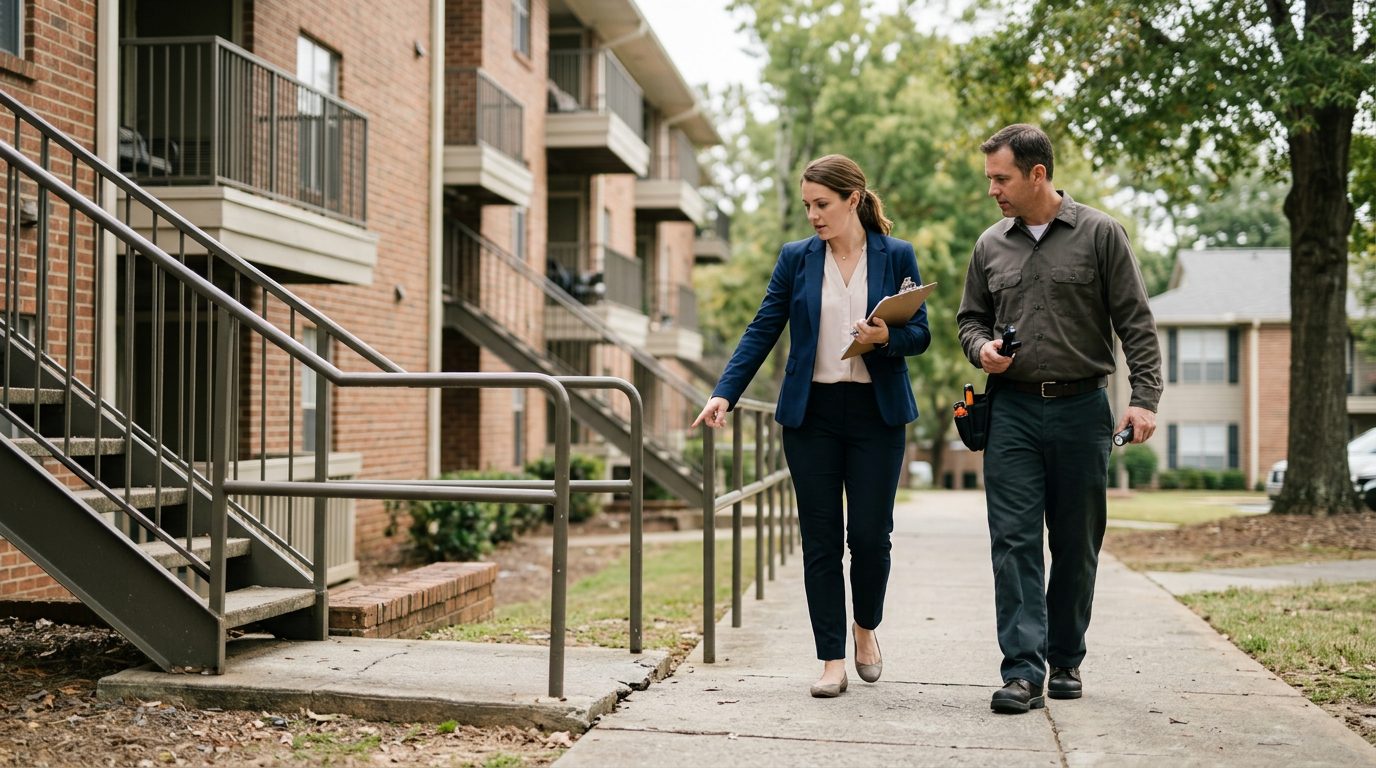
Landlords and apartment complex owners occupy a middle ground. They must maintain common areas (hallways, stairwells, parking lots) to a reasonable standard and may owe higher duties to tenants than homeowners owe to casual guests. Rental properties often carry liability insurance and face greater scrutiny.
For trespassers—people on the property without permission—homeowners generally owe little or no duty of care. Under O.C.G.A. § 51-3-54, no owner or occupier is liable for negligent security arising from an injury sustained by a person upon the premises as a trespasser, among several other listed situations.
Key Differences Between Commercial and Residential Premises Liability
Frequency of Inspection
Commercial properties require regular, systematic inspections—often daily or weekly. Residential properties don’t have the same formal inspection requirement.
Foreseeability
Commercial properties must anticipate a higher volume and greater variety of hazards because they’re open to the public. Residential properties face a lower threshold for foreseeability.
Warning Requirements
Commercial property owners must post clear warnings for known hazards: “Wet Floor,” “Caution: Uneven Surface,” “Watch Your Step.” Residential owners can warn informally—a phone call or a casual mention to a guest.
Visitor Classification
Commercial properties deal with many strangers. Residential properties typically involve known guests. This affects the duty owed and the defenses available.
Maintenance Standards
Commercial properties must maintain higher upkeep because public access is expected. Residential properties have more latitude.
Insurance and Liability Exposure
Commercial properties often carry higher liability insurance. Slip-and-fall claims in retail or hospitality settings are more common and more costly.
Visitor Status and How It Affects Your Claim
Your status as a visitor directly determines the duty owed to you:
Commercial Settings
– Invitees (customers, clients, business visitors) receive the highest duty of care. The property owner must maintain safe conditions and warn of hazards.
– Licensees (salespeople, service providers with permission) receive a moderate duty. The owner must warn of known hazards but doesn’t need to inspect for every possible danger.
– Trespassers receive minimal or no duty of care. The owner generally isn’t liable unless they willfully injure the trespasser.
Residential Settings
– Invited guests receive a reasonable duty of care. The owner must maintain safe conditions and warn of known hazards.
– Trespassers generally receive no duty of care, with limited exceptions for children or people on the property for a recognized social purpose.
If you were injured on a property, your first question should be: What was my status? Were you a customer, a guest, a tenant, or someone else? Your answer shapes whether the owner owed you a duty at all.
Common Premises Liability Claims in Commercial Settings
Retail stores, restaurants, offices, and warehouses generate the most common claims:
- Slip-and-fall on wet floors, spilled merchandise, or debris
- Inadequate security leading to assault, robbery, or theft
- Unsafe stairs, handrails, or flooring that cause falls or injuries
- Negligent maintenance of parking lots, walkways, or loading areas
- Failure to warn of temporary hazards like wet floors or construction zones
- Dog bites on commercial property (e.g., a business owner’s dog injures a customer)
In commercial premises liability cases our attorneys handle, documentation is often strong: security cameras, maintenance logs, witness statements from employees, and medical records. Businesses typically keep records, which helps prove what the owner knew and when.
Common Premises Liability Claims in Residential Settings
Homes and rental properties generate different injury patterns:
- Slip-and-fall on icy walkways, poorly maintained stairs, or broken steps
- Dog bite injuries on the homeowner’s or tenant’s property
- Unsafe conditions in rental properties where the landlord failed to maintain or repair (broken railings, faulty locks, inadequate lighting)
- Inadequate security in apartment complexes or condominiums leading to assault or theft
- Negligent maintenance of common areas (hallways, stairwells, parking lots)
- Failure to warn of known hazards like loose steps or broken handrails
Residential claims often face challenges because documentation is sparse. Homeowners don’t keep maintenance logs. Witnesses may not exist. But if the hazard was obvious and the owner knew about it, a claim can still be strong.
How Georgia Law Defines the Property Owner’s Duty
Georgia recognizes the “reasonable care” standard for premises liability. Property owners must exercise reasonable care to maintain safe premises and warn of hazards they know about or should know about through reasonable inspection.
Importantly, property owners are not insurers against all injuries. Just because someone gets hurt on your property doesn’t mean you’re liable. Georgia law requires that you owed a duty, breached it, and caused injury as a result.
Georgia also applies comparative negligence, meaning if you were partly at fault for your own injury, your damages may be reduced proportionally. Under O.C.G.A. § 51-12-33, where the plaintiff is to some degree responsible for the injury or damages claimed, the judge reduces the amount of damages otherwise awarded in proportion to the plaintiff’s percentage of fault. This doesn’t eliminate your claim—it adjusts it.
What You Need to Prove in a Premises Liability Case
To succeed in a premises liability claim, you must establish four elements:
- Duty: The property owner owed you a duty of care based on your visitor status and the property type.
- Breach: The owner failed to maintain safe conditions or warn of a known hazard.
- Causation: Your injury resulted directly from that breach.
- Damages: You suffered measurable harm—medical bills, lost wages, pain and suffering, scarring, or other losses.
Evidence matters enormously. Photograph the hazard immediately. Get witness names and contact information. Obtain medical records. Request maintenance records from the property owner. Security camera footage, if available, can be decisive. The more documentation you gather early, the stronger your claim.
Why the Distinction Matters for Your Claim
Understanding whether the property is commercial or residential helps you evaluate your claim’s strength. Commercial property owners face higher duty standards and greater liability exposure. A slip-and-fall in a grocery store is easier to prove than a slip-and-fall on a homeowner’s icy driveway, because the store’s duty is higher and more formal.
Residential property claims may face different defenses. A homeowner might argue they didn’t know about the hazard, and in many cases that’s a valid defense. A commercial property owner can’t make that argument as easily—they’re expected to know.
The distinction also affects insurance coverage. Commercial properties carry liability insurance designed for high-traffic, high-risk environments. Residential properties may have lower coverage or none at all, which affects your recovery.
FAQ
What is the difference between an invitee and a licensee?
An invitee is someone invited onto the property for business purposes (a customer in a store). A licensee has permission but isn’t there for the owner’s business benefit (a salesperson or service provider). Invitees receive higher duty of care.
Can a homeowner be sued if a guest is injured on their property in Georgia?
Yes, if the homeowner owed a duty of care to the guest, breached it, and caused injury. But the duty is lower than for commercial properties, and homeowners aren’t liable for unknown hazards.
How long do I have to file a premises liability claim in Georgia?
Georgia’s statute of limitations for personal injury claims is generally two years from the date of injury (O.C.G.A. § 9-3-33; Cameron v. JMP Pizza, Inc. (2026)). Don’t delay; evidence disappears and memories fade.
What is comparative negligence and how does it affect my claim?
If you were partly at fault for your injury, your damages are reduced by your percentage of fault (O.C.G.A. § 51-12-33; Quynn v. Hulsey, 310 Ga. 473 (2020)). You can still recover if the property owner was more at fault than you were.
Are landlords liable for injuries to tenants in Georgia?
Yes. Many rental arrangements involve keeping the property in safe condition and addressing hazards that come up. They may face higher liability than homeowners because they have a duty to maintain common areas and ensure habitability.
If you were injured on a commercial or residential property and aren’t sure whether the owner bears responsibility, reach out. People in your situation can contact us to understand their options and whether they have a claim worth pursuing.
Related practice areas
- Premises Liability Lawyer in Georgia: Injured on Someone Else’s Property
- Trespasser Premises Liability in Georgia | Property Owner Duty
- Premises Liability Damages in Georgia | What Can You Recover?
- Dog Bite Injury Claims | Slam Dunk Attorney