
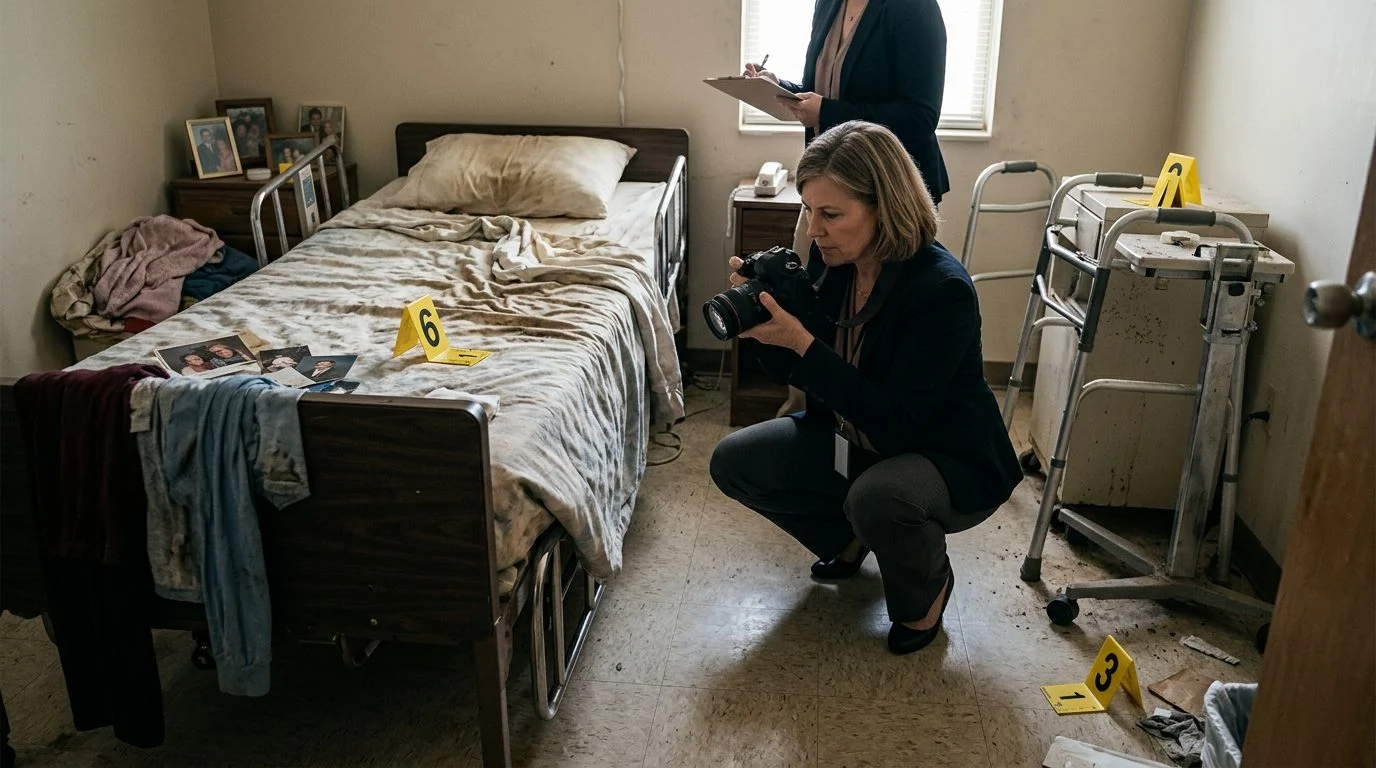
Nursing Home Elopement | Georgia
When a Nursing Home Fails to Prevent Wandering
If your loved one wandered away from a facility and was harmed, we investigate whether negligent supervision caused their injury or death.
By Peter F. Jaraysi · Published September 17, 2026
Nursing Home Elopement & Wandering Injury Lawyer in Georgia
When a nursing home resident wanders away or elopes without proper supervision, serious injuries—or worse—can follow. If your loved one was harmed because a facility failed to provide adequate monitoring or safeguards, you may have a legal claim. Slam Dunk Attorney represents families across Georgia in nursing home elopement injury cases. We investigate what happened, hold facilities accountable, and pursue the compensation your family deserves.
If your loved one wandered away from a nursing home and was injured due to inadequate supervision, you may have a claim—families in this situation can contact us for a free case review. Talk it through with our team — the first consultation is free, confidential, and carries no obligation.
What Is Nursing Home Elopement & Wandering?
Nursing home elopement occurs when a resident leaves the facility without permission or proper supervision, often resulting in serious harm. The terms “elopement” and “wandering” are sometimes used interchangeably, but they’re distinct: elopement is an intentional departure, while wandering is unmonitored movement within or outside the facility. Both can lead to injury if the facility fails to supervise.
Residents at risk typically have cognitive impairment, Alzheimer’s disease, dementia, or a documented history of wandering. Medication effects, confusion, and disorientation increase the likelihood. When a resident leaves unsupervised, common outcomes include:
- Falls and fractures
- Traffic accidents and pedestrian injuries
- Exposure to extreme heat or cold
- Dehydration and hypothermia
- Assault or exploitation
- Wrongful death
The facility’s duty is to anticipate these risks and prevent them through appropriate supervision and safeguards.
When Is a Nursing Home Liable for Elopement Injuries?
A nursing home is liable for elopement injuries when it breaches its duty of care to a resident. Under Georgia law, facilities must provide supervision appropriate to each resident’s assessed needs. Liability typically arises from one or more of these failures:
Negligent Supervision
The facility failed to monitor the resident at a level required by their condition. If a resident had documented cognitive impairment or a history of wandering, the facility must provide heightened vigilance. Inadequate staffing, inattention, or failure to follow the care plan constitutes negligent supervision.
Failure to Implement Safeguards
Facilities must use appropriate monitoring systems—door alarms, ID bracelets, surveillance cameras—to prevent elopement. If these systems were absent, non-functional, or improperly maintained, liability is stronger.
Failure to Communicate
The facility has a duty to inform family members of elopement risk and prior incidents. If a resident had wandered before and the facility did not alert the family or adjust the care plan, this failure supports a negligence claim.
Breach of Care Plan
Each resident has an individualized care plan. If the plan required specific monitoring or safeguards and the facility did not provide them, that breach is evidence of liability.
Delayed Response
If the resident was reported missing and the facility did not search promptly or call authorities, a delayed response can worsen injuries and increase damages.
Under Georgia’s comparative negligence framework, O.C.G.A. § 51-12-33 (Quynn v. Hulsey, 310 Ga. 473 (2020)), liability depends on whether the facility’s breach was the substantial cause of injury. A resident’s cognitive condition does not excuse the facility’s duty; it heightens it.
What Our Nursing Home Elopement Claims Cover
Damages in elopement injury cases compensate your family for losses directly caused by the facility’s breach of duty. These include:
- Medical expenses: emergency care, hospitalization, surgery, ongoing treatment, and rehabilitation
- Pain and suffering: physical pain, emotional distress, and loss of quality of life
- Lost wages: if you or a family member missed work to care for the injured resident or attend medical appointments
- Costs of additional care: in-home nursing, transfer to a safer facility, or specialized rehabilitation
- Wrongful death damages: if the resident died from injuries sustained during elopement, including funeral expenses and loss of companionship
- Punitive damages: in cases of gross negligence or reckless disregard for resident safety, Georgia law allows punitive damages to deter future misconduct
We pursue all available damages to ensure your family is fully compensated.
How the Nursing Home Elopement Claim Process Works
Our process is thorough and transparent. Here’s what to expect:
Step 1 – Free Consultation
We review the incident details, your loved one’s medical records, the facility’s care plan, and relevant facility policies. We listen to your account and answer your questions.
Step 2 – Investigation
We obtain the incident report, surveillance footage (if available), staffing schedules, the resident’s assessment and care plan, prior elopement incidents, and any complaints or concerns you reported to the facility.
Step 3 – Expert Review
We consult nursing home standards experts to establish whether the facility breached its duty of care. Experts review staffing levels, supervision practices, and adherence to industry standards.
Step 4 – Demand Letter
We present the evidence to the facility’s insurance company with a detailed demand for settlement. This letter explains the breach, the injuries, and the damages.
Step 5 – Negotiation or Litigation
Most cases settle during negotiation or mediation. If the insurance company refuses a fair offer, we prepare to file a lawsuit and litigate.
Timeline: Settlement cases typically resolve within 6–18 months. Litigation may extend 1–3 years, depending on discovery and court schedules.
Evidence We Gather in Elopement Cases
Strong elopement claims rest on solid evidence. We collect:
- Incident reports and facility documentation of the elopement event
- Resident’s care plan and assessment records showing known elopement or wandering risk
- Staffing schedules and records showing inadequate supervision at the time of the incident
- Security footage or documentation of missing or non-functional door alarms
- Prior elopement incidents or wandering complaints documented by family or facility staff
- Medical records documenting all injuries sustained during the elopement
- Facility policies on supervision, monitoring, and response procedures for wandering residents
- Expert testimony on nursing home standards of care in Georgia
This evidence builds a clear picture of what the facility knew, what it should have done, and how its failure caused injury.
Not sure what your next step is?
Talk it through with our team — the first consultation is free, confidential, and carries no obligation.
Why Families Choose Slam Dunk Attorney for Elopement Cases
Nursing Home Abuse Focus
We dedicate our practice to nursing home abuse and neglect. We understand Georgia facilities, regulations, and the tactics insurance companies use to deny claims.
Local Presence
We’re based in Duluth, Georgia, and represent families across metro Atlanta and the state. We know the local landscape and have relationships with investigators and experts.
No Upfront Costs
We handle investigation and legal work at no cost to you. You pay nothing unless we recover compensation. You may still owe case costs (such as expert fees or court filing fees) even if we do not recover, and we will discuss this with you upfront.
Direct Attorney Access
You work with experienced attorneys, not case managers or junior staff. We handle your case personally and keep you informed.
Thorough Investigation
We don’t settle quickly. We obtain records, consult experts, and build strong evidence before negotiating. This approach yields better outcomes.
Transparent Communication
We explain your options in plain language and keep you informed throughout the process.
Common Questions About Nursing Home Elopement Claims
Is the nursing home always liable if a resident wanders away?
No. Liability depends on whether the facility breached its duty of care. If a resident was properly supervised, monitoring systems were in place, and the care plan was followed, the facility may not be liable. We investigate the specific facts of your case.
What if my loved one had dementia or Alzheimer’s?
Residents with cognitive decline require heightened supervision. If the facility knew of the resident’s condition and failed to provide appropriate monitoring or safeguards, liability is stronger. This is a key factor we examine.
How long do I have to file a claim?
Georgia’s statute of limitations for personal injury claims is two years from the date of injury (O.C.G.A. § 9-3-33; Cameron v. JMP Pizza, Inc. (2026)). For wrongful death, it is also two years from the date of death. Contact us promptly to protect your rights.
What if the facility says the resident ‘chose’ to leave?
A resident’s choice to wander does not excuse the facility’s duty to supervise. If the resident had cognitive impairment or a history of wandering, the facility must have systems in place to prevent harm, regardless of intent.
Can I still pursue a claim if my loved one has recovered?
Yes. Even if recovery is complete, you may recover medical expenses, pain and suffering, and other damages. If your loved one passed away, a wrongful death claim may be available.
Will this case go to trial?
Most cases settle during negotiation or mediation. However, if the facility’s insurance company refuses a fair offer, we are prepared to litigate. We will discuss the best path forward for your situation.
What to Do If Your Loved One Has Eloped or Wandered
Act quickly to protect your legal rights:
- Preserve evidence: Keep all incident reports, medical records, and communications with the facility. Do not discard anything.
- Document injuries: Photograph injuries and obtain copies of all medical treatment records.
- Request records: Ask the facility in writing for the resident’s care plan, incident reports, staffing records, and prior elopement incidents.
- Report to authorities: File a report with the Georgia Department of Community Health if you suspect neglect or abuse.
- Consult an attorney: Contact us for a free case review to understand your legal options and protect your claim.
Your Family Deserves Answers and Accountability
If your loved one was injured or harmed because a Georgia nursing home failed to provide adequate supervision, we’re here to help. We investigate thoroughly, hold facilities accountable, and pursue fair compensation for your family’s losses.
Contact Slam Dunk Attorney today for a free consultation. If your loved one eloped from a nursing home and suffered injuries due to inadequate supervision or negligent monitoring, reach out now—we handle these cases and can explain your options at no cost.
Request a free consultation or call us today to discuss your case.
Liability Is Not Automatic
A resident wandering away does not automatically mean the nursing home is liable. Facilities have a duty to supervise and monitor residents according to their care plan—but liability depends on whether that duty was breached. We examine the facts: Was the resident properly supervised? Were monitoring systems in place? Was the care plan followed? Our investigation determines whether negligence caused harm.
What We Investigate in Elopement Cases
Supervision and Monitoring
Whether staff followed the resident's care plan, whether adequate supervision was provided, and whether monitoring systems (alarms, cameras, bed sensors) were in place and functioning.
Facility Policies and Training
Whether the nursing home had elopement-prevention policies, whether staff were trained to recognize wandering risk, and whether those policies were followed.
Resident Assessment
Whether the facility properly assessed the resident's cognitive status, mobility, and risk of wandering, and whether the care plan reflected that risk level.
Response and Documentation
How quickly the facility discovered the resident was missing, what steps were taken, and what records exist about the incident and the resident's condition.
Why Families Choose Slam Dunk Attorney
Focused on Nursing Home Abuse
We focus exclusively on cases involving nursing home negligence and abuse across Georgia, including elopement, inadequate supervision, and resulting injuries.
Thorough Investigation
We obtain medical records, care plans, facility policies, incident reports, and staff training documents to build a clear picture of what happened.
Empathetic Approach
We understand the pain of seeing a loved one harmed in a facility. We listen, answer your questions in plain language, and keep you informed throughout the process.
No Fees Unless There Is a Recovery
We work on a contingent fee basis. You pay no attorney fees unless there is a recovery. You may still owe case costs, which we discuss upfront.
Common Questions About Nursing Home Elopement
Is the nursing home always liable if a resident wanders away?
No. Liability depends on whether the facility breached its duty of care. If a resident was properly supervised, monitoring systems were in place, and the care plan was followed, the facility may not be liable. We investigate the specific facts of your case.
What if my loved one had dementia or Alzheimer's?
Residents with cognitive decline require heightened supervision and monitoring. Facilities must assess wandering risk and implement appropriate safeguards. If a facility failed to do so, that failure may constitute negligence.
What if my loved one was injured after wandering away?
If a resident was harmed—struck by a vehicle, injured in a fall, exposed to the elements—we investigate whether the facility's negligence allowed the elopement to occur and caused that injury.
What if my loved one died after wandering away?
We handle wrongful death claims when a resident dies as a result of elopement caused by facility negligence. We pursue recovery for your family's loss.
We're Here to Help
Related practice areas
- Nursing Home Medication Error Lawyer Georgia | Slam Dunk