
Nursing Home Abuse & Neglect
Nursing Home Elopement Claims in Georgia
When a facility fails to prevent a resident from leaving and they're harmed, we hold them accountable. Free case review.
By Peter F. Jaraysi · Published September 21, 2026
Nursing Home Elopement Claims: What Families Need to Know About Liability and Compensation
When a nursing home resident leaves the facility without permission or adequate supervision and is injured or goes missing, families face a devastating situation—and often a serious question: Is the nursing home responsible? The answer depends on whether the facility failed in its legal duty to assess, supervise, and protect your loved one. This guide explains what nursing home elopement is, when facilities are liable, and how to pursue a claim in Georgia.
If your loved one eloped from a nursing home and suffered injury or illness as a result, you may have a claim against the facility—and families in your situation contact us regularly for a free case review. Talk it through with our team — the first consultation is free, confidential, and carries no obligation.
What Is Nursing Home Elopement?
Nursing home elopement is when a resident leaves a facility without permission or proper supervision, creating serious safety risks. Unlike authorized outings or supervised trips, elopement happens when a resident wanders away undetected or without staff awareness. It’s not simply a resident stepping outside—it’s an unsupervised absence that puts the person in danger.
Elopement often occurs because of dementia, confusion, medication effects, or a resident’s desire to find a familiar place. A resident may not understand where they are or why they can’t leave. They may become disoriented, unable to find their way back, and exposed to traffic, severe weather, medical emergencies, or other hazards. In Georgia nursing homes, elopement incidents can result in residents struck by vehicles, lost in unfamiliar areas, suffering hypothermia or heat exhaustion, or experiencing a medical crisis with no one nearby to help.
Who Is at Risk for Elopement?
Certain residents face higher elopement risk and require closer attention:
- Residents with dementia or Alzheimer’s disease – cognitive decline often leads to confusion and wandering behavior
- Residents with a history of wandering or previous elopement attempts – past behavior is a strong indicator of future risk
- Residents on medications affecting judgment or mobility – sedatives, pain medications, or psychiatric drugs can impair decision-making
- Residents with psychiatric conditions or behavioral issues – agitation, anxiety, or impulse-control problems increase risk
- Newly admitted residents or those experiencing transitions – unfamiliar environments and disrupted routines trigger confusion and attempts to leave
Facilities are required to identify these risk factors during admission and throughout a resident’s stay. Failure to do so—or recognizing risk but taking no action—is negligence.
What Are Nursing Homes Legally Required to Do?
Under Georgia law and federal nursing home regulations, facilities have a clear duty to protect residents from harm. That duty includes preventing elopement injuries.
Assessment and Documentation
Nursing homes must assess each resident’s elopement risk during admission and as part of ongoing care planning. This assessment should consider the resident’s cognitive status, mobility, history of wandering, and any medications affecting judgment. The facility must document this risk in the resident’s care plan and communicate it to all staff who interact with the resident.
Supervision and Monitoring
The level of supervision must match the resident’s individual risk. A resident at high risk for elopement requires more frequent checks, closer monitoring, and direct observation. A facility cannot simply acknowledge that a resident is a “flight risk” and then fail to supervise them.
Physical Safeguards
Facilities should implement reasonable precautions based on the resident’s risk level. These may include door alarms, secure exits, identification systems, and environmental modifications to reduce elopement opportunities. Not every resident needs the same level of physical security—the precautions must be tailored to individual risk.
Staff Training
Staff must be trained on elopement prevention, early warning signs of wandering behavior, and the proper response if a resident elopes. Training should cover facility policies, how to use monitoring equipment, and how to communicate elopement risk to family and guardians.
Prompt Response
If elopement occurs, the facility must respond immediately: alert family and guardians, contact local law enforcement, search the facility and grounds, and provide accurate information to first responders. A delayed response can mean the difference between a safe return and a tragedy.
Under Georgia law, nursing homes are required to provide adequate supervision and maintain safe premises. Federal regulations enforced by the Centers for Medicare & Medicaid Services (CMS) establish similar standards. Facilities that fail to meet these standards can be held liable for injuries that result.
When Is a Nursing Home Liable for Elopement Injuries?
A nursing home is liable for elopement injuries when it breaches its duty of care. Liability arises when the facility:
- Fails to assess elopement risk during admission or ongoing care planning
- Provides inadequate supervision given the resident’s known or observable risk level
- Fails to implement or maintain safety measures such as door alarms, secure exits, or monitoring systems
- Fails to train staff on elopement prevention and response protocols
- Fails to respond promptly when elopement occurs
- Fails to communicate elopement risk to family, guardians, or staff
- Negligently hires or retains staff who fail to supervise or follow protocols
- Ignores observable signs of wandering or confusion even without a formal dementia diagnosis
Importantly, a facility can be liable even if the resident was not formally diagnosed with dementia. If staff observed confusion, disorientation, or wandering behavior, the facility should have recognized elopement risk and taken action. Ignoring these signs is negligence.
Common Elopement Injury Scenarios
Elopement incidents in Georgia nursing homes result in serious, sometimes fatal, injuries:
- Resident struck by vehicle while wandering on a roadway or parking lot
- Exposure to severe weather leading to hypothermia, heat exhaustion, or dehydration
- Falls or injuries from disorientation while lost or confused outside the facility
- Medical emergency (stroke, heart attack, seizure) occurring while the resident is unsupervised
- Resident found deceased after prolonged elopement
- Assault or exploitation while the resident is vulnerable and alone
- Infection, malnutrition, or organ failure from extended absence without care
Each scenario represents a failure by the facility to protect a vulnerable person in its care.
Not sure what your next step is?
Talk it through with our team — the first consultation is free, confidential, and carries no obligation.
What a Nursing Home Elopement Claim Covers
If you have a valid claim, you may recover compensation for:
- Medical expenses – emergency care, hospitalization, surgery, ongoing treatment for injuries sustained during elopement
- Pain and suffering – physical pain, emotional distress, loss of quality of life, and trauma to the resident
- Lost wages – if you took unpaid leave from work to care for your loved one or manage medical needs
- Wrongful death damages – if elopement resulted in death, including funeral and burial costs, loss of companionship, and lost financial support the resident would have provided
- Punitive damages – in cases of gross negligence or reckless conduct by the facility, designed to punish the facility and deter similar conduct
- Investigation and expert costs – fees for nursing home standards experts and medical professionals who testify about the facility’s breach of duty
How to Build a Nursing Home Elopement Claim
A strong elopement claim rests on evidence. Here’s what matters:
Medical and Care Records
Obtain the resident’s admission assessment, care plan, incident reports, medical treatment records from the elopement event, and any prior documentation of wandering or confusion. These records show what the facility knew and what it failed to do.
Facility Records and Policies
Request the facility’s elopement prevention policies, staff training logs, surveillance footage from the date of elopement, communication logs between staff and family, and any prior incident reports involving the resident or other residents.
Documentation of the Resident’s Condition
Gather information about the resident’s cognitive status, mobility, history of wandering or disorientation, and any medications that affect judgment. This establishes that the facility should have recognized elopement risk.
Witness Statements
Collect accounts from family members about observations of the resident’s confusion or wandering, statements from staff about the incident, and accounts from first responders who found or assisted the resident.
Physical Evidence
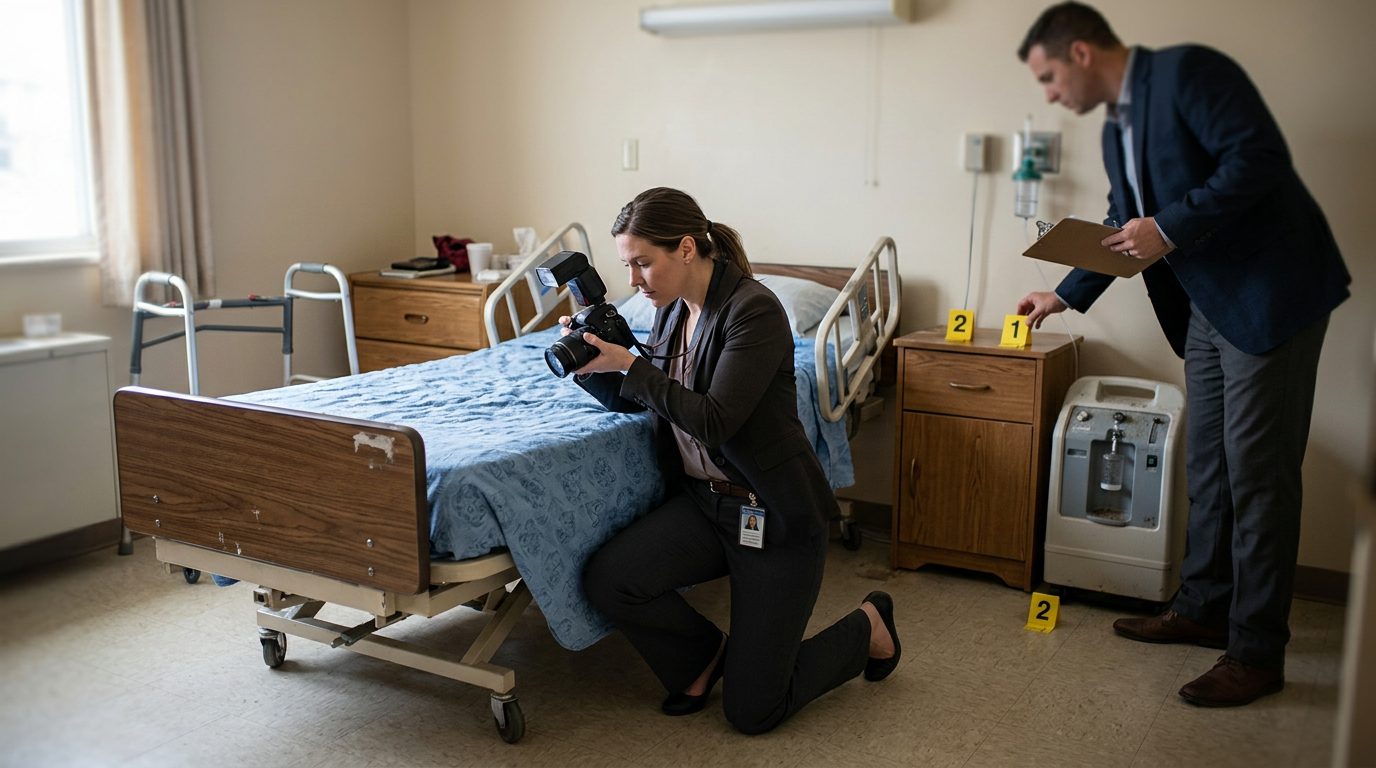
Photograph facility exits, alarm systems, signage, and the layout of doors and grounds. These images help establish whether the facility had adequate safeguards in place.
Expert Review
A nursing home standards expert can evaluate whether the facility’s assessment, supervision, and safety measures met industry standards and regulatory requirements. A medical expert can explain the injuries sustained and link them to the elopement event.
How the Process Works
Pursuing a nursing home elopement claim involves several steps:
Step 1: Initial Consultation
You meet with our attorney to discuss the incident, your loved one’s injuries or death, and your family’s goals. We listen to your story and answer your questions about the legal process.
Step 2: Investigation
We obtain medical records, facility records, incident reports, and surveillance footage. We interview family members, staff, and first responders. We identify gaps in the facility’s assessment, supervision, and response.
Step 3: Expert Review
A nursing home standards expert reviews the facility’s policies, care plan, and actions to determine whether they met the required standard of care. A medical expert reviews the injuries and causation.
Step 4: Demand Letter
We present our findings and damages to the facility’s insurance carrier, demanding fair compensation based on the harm caused.
Step 5: Negotiation
The facility and insurer may offer a settlement. We advocate for compensation that fully reflects your loved one’s injuries, pain, and losses. If the offer is insufficient, we advise you on next steps.
Step 6: Litigation (if necessary)
If settlement negotiations do not yield fair compensation, we file a lawsuit. The case proceeds through discovery (exchanging evidence), depositions (recorded witness statements), and potentially trial before a jury.
Timeline
Most cases resolve within 6–18 months from initial consultation. Complex cases or those requiring trial may take longer. We keep you informed at every stage.
Why Choose Slam Dunk Attorney for Your Elopement Claim
We bring deep experience with Georgia nursing home negligence cases, including elopement incidents. We understand state regulations, federal CMS standards, and the legal duty nursing homes owe to residents. We have access to nursing home standards experts and medical professionals who can testify about the facility’s breach of duty.
Our investigation is thorough. We obtain records, identify gaps in care, and build a case grounded in evidence and expert opinion. We communicate transparently, explaining the claim process and your options at every stage. We work on contingency—you pay no upfront fees, and we recover a fee only if we obtain compensation for you. We recognize the emotional toll elopement incidents take on families, and we treat you with compassion and respect.
Frequently Asked Questions
Is the nursing home automatically liable if my loved one eloped and was injured?
No. We must prove the facility failed to assess elopement risk, provide adequate supervision, or implement reasonable safety measures. Liability depends on what the facility knew and what precautions it should have taken.
What if my loved one had dementia but it wasn’t formally diagnosed?
Facilities have a duty to assess residents’ cognitive and behavioral status. If staff observed confusion, wandering, or disorientation, the facility should have recognized elopement risk regardless of formal diagnosis.
How long do I have to file a claim?
Georgia’s statute of limitations is generally two years from the date of injury or discovery of injury. For wrongful death, it is two years from the date of death. Do not delay—evidence can be lost and memories fade.
What if the facility says my loved one was a “flight risk” but did nothing to prevent it?
Acknowledging risk without taking action is negligence. We will argue that the facility breached its duty by failing to implement appropriate safeguards.
Can I recover if my loved one is still missing?
Yes. If elopement resulted in disappearance and presumed death, or ongoing medical and emotional harm, you may have a claim. We can discuss your specific situation.
Will this case go to trial?
Many cases settle during negotiation or mediation. However, we are prepared to take your case to trial if the facility and insurer do not offer fair compensation.
If your loved one eloped from a nursing home and suffered injury or illness as a result, you may have a claim against the facility—and families in your situation contact us regularly for a free case review. Talk it through with our team — the first consultation is free, confidential, and carries no obligation.
What to Do Now
If your loved one has eloped from a nursing home and suffered injury or illness, take these steps:
- Gather documents – collect incident reports, medical records, facility correspondence, and photographs
- Write down details – record the date and time of elopement, injuries sustained, facility response, and how the incident has affected your family
- Do not sign anything – avoid signing any settlement or release without legal review
- Contact us – reach out for a free case review
If your loved one eloped from a nursing home and suffered injury, illness, or worse as a result, you may have a legal claim against the facility. Families in your situation reach out to us regularly—contact Slam Dunk Attorney today for a free case review and to learn what compensation may be available to you.
What We Handle in Elopement Cases
Inadequate Risk Assessment
Nursing homes must evaluate each resident's elopement risk. We investigate whether the facility properly assessed your loved one's cognitive state, mobility, and history.
Failure to Supervise
Residents at high risk of elopement require appropriate monitoring. We examine staffing levels, supervision protocols, and whether the facility met its duty of care.
Missing Safety Measures
Facilities should implement reasonable precautions—door alarms, secure exits, medication management. We review what safeguards were in place and what was missing.
Injuries After Elopement
If your loved one left the facility and suffered harm—falls, accidents, exposure, or worse—we pursue claims for the facility's negligence that allowed it to happen.
Common Questions About Elopement Claims
Is the nursing home automatically liable?
No. We must prove the facility failed to assess elopement risk, provide adequate supervision, or implement reasonable safety measures. Liability depends on what the facility knew and what precautions it should have taken.
What if my loved one had dementia but it wasn't formally diagnosed?
The facility's duty is based on what it knew or should have known about your loved one's condition. We investigate medical records, prior incidents, staff observations, and whether the facility acted on warning signs.
What damages can we recover?
Elopement injury claims may include medical expenses, pain and suffering, lost quality of life, and in cases of wrongful death, funeral costs and loss of companionship. Each case is unique.
How long do we have to file a claim?
Georgia law sets time limits for filing claims. The sooner you contact us, the sooner we can preserve evidence, review records, and advise you on your specific situation.
Act Quickly
Elopement cases require fast action. Evidence—surveillance footage, incident reports, staffing records—can disappear. Medical records must be gathered early. Contact us right away so we can protect your claim.
Why Choose Slam Dunk Attorney
Focused on Georgia Nursing Home Cases
We focus exclusively on personal injury claims across metro Atlanta and Georgia, including nursing home abuse and elopement negligence.
Transparent, Plain-Language Guidance
We explain what happened, what the law requires, and what your case may be worth—without jargon or pressure.
No Fees Unless There Is a Recovery
We work on contingency. You pay no attorney fees unless we recover compensation for you. You may still owe case costs; we'll discuss this upfront.
Free Case Review
Call or request a consultation to discuss your loved one's elopement injury. We'll listen, answer your questions, and explain your options.