
Negligent Security & Premises Liability
Injured on Someone Else's Property in Kennesaw? We Can Help.
If a business or property owner failed to provide adequate security or maintain safe conditions, you may have a claim. Slam Dunk Attorney represents people hurt in negligent security and premises liability cases across Georgia.
By Peter F. Jaraysi · Published September 15, 2026
Negligent Security Injury in Kennesaw? Here’s What You Need to Know
If you’ve been attacked, robbed, or assaulted at a business, parking lot, hotel, or apartment complex in Kennesaw because the property owner failed to provide adequate security, you may have a legal claim. Negligent security occurs when a property owner or business fails to maintain reasonable security measures, and that failure allows a third party to harm you. This guide explains how negligent security law works in Georgia, what you need to prove, and why injured people reach out to Slam Dunk Attorney for help.

If you were injured due to a wet floor, broken step, poor lighting, or other unsafe condition, you may have a claim. Talk it through with our team — the first consultation is free, confidential, and carries no obligation.
What Is Negligent Security in Kennesaw?
Negligent security is a specific type of premises liability claim—it focuses on the absence or failure of protective measures that a property owner should have provided. A business or property owner owes you a duty to keep you reasonably safe from foreseeable harm, including criminal acts by others.
Common negligent security failures include broken or missing locks, non-functional security cameras, inadequate lighting in parking areas and hallways, no trained security personnel on duty, and failure to respond to known threats or prior incidents. In Kennesaw, these lapses happen at retail centers, parking lots, hotels, apartment complexes, and entertainment venues where visitors and patrons have a right to expect reasonable protection.
Negligent security differs from other premises liability claims (like slip-and-fall or unsafe property) because it specifically addresses whether the property owner took steps to prevent or deter criminal activity. A slip-and-fall involves a dangerous condition; negligent security involves inadequate or missing security measures.
When Does a Business Owe You a Duty of Security?
Georgia law recognizes that property owners and businesses must take reasonable steps to protect visitors and patrons from foreseeable harm. The key word is foreseeable—if criminal activity or harm is reasonably predictable, the duty to provide security increases.
Foreseeability is established when:
- Prior incidents occurred at the location. If the property has experienced robberies, assaults, or other crimes before, the owner knows the risk.
- Crime patterns are known in the area. If Kennesaw police reports or local crime data show a pattern of criminal activity in the neighborhood, that’s foreseeable.
- Similar crimes have happened at comparable properties. If other businesses in the same type of venue (hotels, retail centers, parking facilities) have experienced security breaches, that pattern supports foreseeability.
When foreseeability is established, the property owner’s responsibility to provide adequate security is heightened. Ignoring known risks and failing to install security cameras, improve lighting, hire security personnel, or fix broken locks can constitute negligence.
Common Negligent Security Scenarios in Kennesaw
Negligent security injuries happen in many settings:
- Parking lot assaults or robberies when lighting is broken or absent, and no security presence deters criminals.
- Hotel room break-ins or attacks when security protocols are lax, key card systems are faulty, or staff don’t respond to suspicious activity.
- Retail store violence or theft when staff are untrained in security procedures or no loss-prevention personnel are on duty.
- Apartment complex crimes when entry systems are broken, gates don’t lock, or management ignores maintenance requests.
- Workplace violence when employers fail to implement reasonable safety measures despite known threats.
In each scenario, the property owner had the opportunity and responsibility to prevent or reduce the risk—and failed to do so.
Not sure what your next step is?
Talk it through with our team — the first consultation is free, confidential, and carries no obligation.
How to Prove Negligent Security
To succeed in a negligent security claim, you must establish four elements:
- The property owner owed a duty of care. You were lawfully on the property (a customer, resident, guest, or employee), and the owner had a responsibility to protect you.
- They breached that duty. The owner failed to provide reasonable security measures—missing cameras, broken locks, inadequate lighting, no security personnel, or failure to respond to known threats.
- That breach caused your injury. The security failure directly allowed the third party to harm you. If adequate security would have prevented the attack, this element is met.
- You suffered damages. You have measurable losses—medical bills, lost wages, pain and suffering, emotional distress, or property damage.
Evidence that supports negligent security claims includes:
- Security camera footage (or evidence that cameras were absent or not working)
- Incident reports filed with the property owner or police
- Maintenance records showing broken locks, non-functional systems, or deferred repairs
- Prior complaints from other visitors or residents about security concerns
- Witness statements from people who saw the crime or the security failure
- Expert testimony on industry security standards and best practices
- Kennesaw police reports and local crime data establishing foreseeability
- Documentation of your injuries, medical treatment, and recovery costs
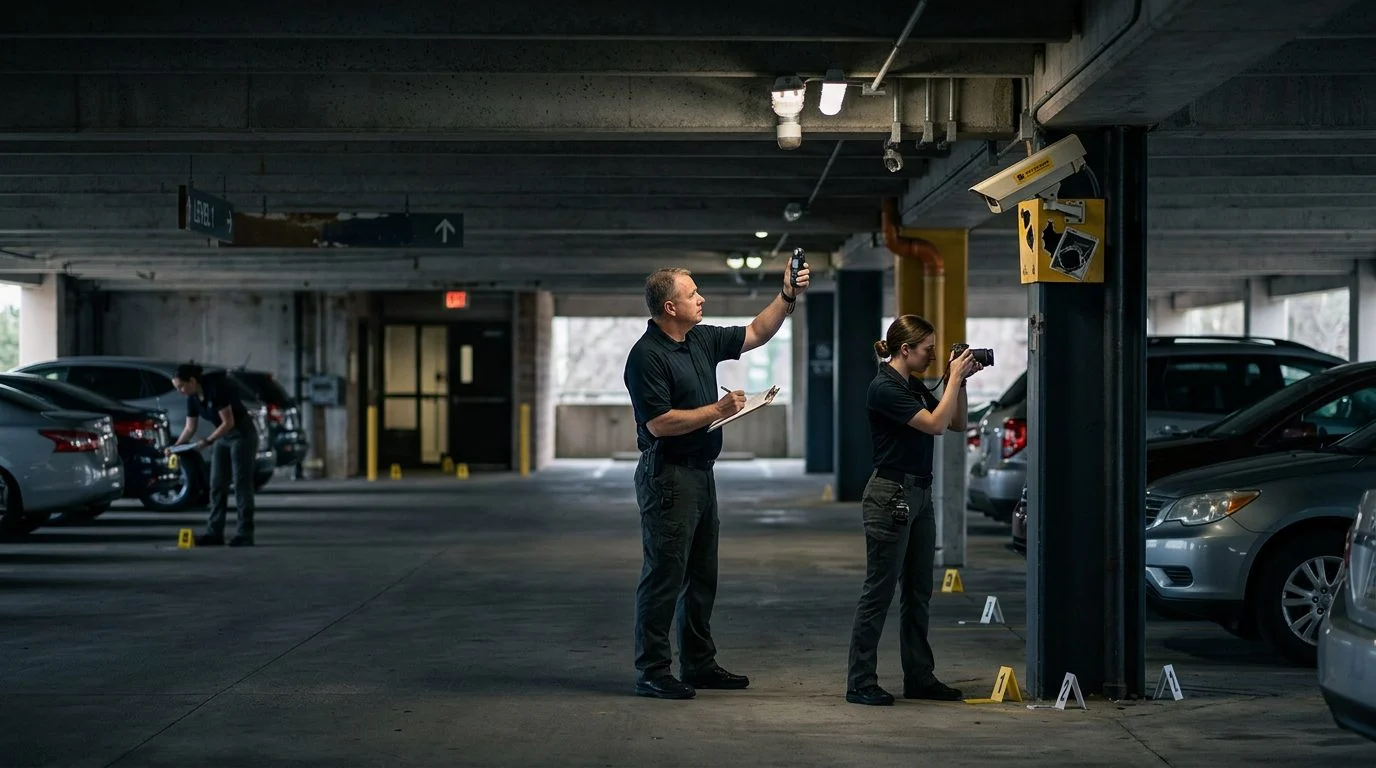
Early documentation is critical. Photograph the scene, lighting conditions, and any visible security gaps. Preserve witness contact information. Request a written incident report from the property owner or manager.
What Damages Can You Recover?
Recoverable damages in negligent security cases include:
- Medical expenses: emergency care, hospitalization, ongoing treatment, rehabilitation, surgery, mental health counseling, and medication.
- Lost wages: income lost while you recover and are unable to work.
- Pain and suffering: compensation for physical pain, emotional distress, anxiety, fear, and loss of enjoyment of life.
- Property damage: if personal items were stolen, damaged, or destroyed during the incident.
The value of your claim depends on the severity of your injury, the length of your recovery, the permanence of any disability, and the circumstances of the negligent security failure. Each case is unique.
Why You Need a Negligent Security Lawyer
Property owners and businesses have insurance policies and legal teams working to minimize liability and reduce settlement amounts. You need an attorney on your side to level the playing field.
Negligent security claims require:
- Thorough investigation of the property’s history, prior incidents, and security practices.
- Expert analysis to establish industry standards and show how the owner’s security measures fell short.
- Knowledge of Georgia premises liability law and how foreseeability and comparative fault apply to your case (O.C.G.A. § 51-12-33; Quynn v. Hulsey, 310 Ga. 473 (2020)).
- Negotiation skills to push back against insurance company denials and lowball offers.
An attorney handles the legal work, evidence gathering, and communications with insurance adjusters—allowing you to focus on recovery without the stress of managing a complex claim.
What to Do After a Negligent Security Injury in Kennesaw
If you’ve been hurt due to inadequate security, take these steps immediately:
- Seek medical attention. Even if injuries seem minor, get evaluated. Some injuries worsen over time, and medical records create a documented timeline.
- Report the incident to the property owner, manager, or business and request a written incident report. Keep a copy.
- Document the scene. Take photos and video of lighting, security cameras (or their absence), locks, entry systems, and any visible security gaps.
- Gather witness information. Get names, phone numbers, and email addresses from anyone who saw the crime or the security failure.
- Preserve evidence. Do not allow the property to be altered, cleaned up, or repaired before an attorney can document conditions.
- Contact a negligent security attorney before speaking with insurance adjusters or signing anything. Adjusters are trained to minimize claims; an attorney protects your rights.
Have questions about what happened?
Ask our team directly. The first conversation is free, confidential, and there is no obligation to continue.
Why Choose Slam Dunk Attorney for Your Kennesaw Negligent Security Claim?
Based in Duluth, Georgia, Slam Dunk Attorney serves Kennesaw and the greater Atlanta area. We have extensive experience handling premises liability and negligent security cases across Georgia.
We offer:
- Free consultation and case review. No upfront cost to discuss your claim and learn your legal options.
- Transparent communication. We explain your case in plain language, not legal jargon.
- Experienced representation. Our team understands how Georgia law applies to negligent security failures and knows how to build strong claims.
- Commitment to accountability. We hold negligent property owners and businesses responsible for putting visitors and patrons at risk.

Frequently Asked Questions
How long do I have to file a negligent security claim in Georgia?
Georgia law generally allows two years from the date of injury to file a personal injury lawsuit (O.C.G.A. § 9-3-33; Cameron v. JMP Pizza, Inc. (2026)). Acting quickly preserves evidence and witness memories, so don’t delay.
Can I sue a business for a crime that happened on their property?
Yes, if the business failed to provide reasonable security and the harm was foreseeable. The criminal’s actions don’t eliminate the property owner’s responsibility to maintain adequate protective measures.
What if I was partially at fault for the incident?
Georgia follows comparative fault rules (O.C.G.A. § 51-12-33; Quynn v. Hulsey, 310 Ga. 473 (2020)). Even if you bear some responsibility, you may still recover damages reduced by your percentage of fault—as long as you’re less than 50% at fault; if you’re 50% or more at fault, you recover nothing (O.C.G.A. § 51-12-33; Quynn v. Hulsey, 310 Ga. 473 (2020)).
Will this case go to trial?
Many negligent security claims settle before trial. Your attorney will negotiate with the insurance company and prepare for trial if a fair settlement isn’t reached.
What if the property owner claims they didn’t know about prior crimes?
Our investigation will uncover incident reports, police records, and prior complaints. Property owners often know more than they admit, and records prove foreseeability.
If you’ve been hurt because a business or property owner failed to provide adequate security, you’re not alone—people in your situation can contact us for a free case review. Request a free consultation with Slam Dunk Attorney today, or call to discuss your negligent security claim.
Why Choose Slam Dunk Attorney for Your Negligent Security Claim
We Focus on Premises Liability Cases
Our firm concentrates exclusively on personal injury claims, including negligent security, slip and fall, and unsafe property cases. We understand the unique challenges of proving a property owner's duty to protect you.
Serving Kennesaw and Greater Atlanta
Based in Duluth, Georgia, we represent clients throughout metro Atlanta and across the state. We know the local courts, local laws, and how Georgia courts handle premises liability claims.
We Act Quickly to Preserve Evidence
Time matters in these cases. Early investigation, witness interviews, and evidence collection strengthen your claim. We move fast to protect your rights.
Transparent, Empathetic Representation
We listen to your story, explain your options in plain language, and keep you informed every step of the way. Your recovery and peace of mind are our priority.
Time Limits Apply
Georgia law sets strict deadlines for filing personal injury lawsuits. The sooner you contact us, the sooner we can review your case and protect your rights.
Common Negligent Security & Premises Liability Scenarios
Crime on Business Property
If you were assaulted, robbed, or injured by criminal activity on a business's property, the owner may be liable if they failed to provide reasonable security measures or warn of known dangers.
Slip, Trip & Fall
Property owners must maintain safe conditions and warn visitors of hazards. If you were injured due to a wet floor, broken step, poor lighting, or other unsafe condition, you may have a claim.
Inadequate Security Measures
Businesses in high-crime areas may have a duty to provide security cameras, lighting, locks, or security personnel. Failure to do so can create liability if you are harmed.
Negligent Hiring or Supervision
If a property owner hired or retained someone with a known history of violence or failed to supervise them, and that person injured you, the owner may be responsible.
Frequently Asked Questions
How long do I have to file a negligent security claim in Georgia?
Georgia law generally allows two years from the date of injury to file a personal injury lawsuit (O.C.G.A. § 9-3-33; Cameron v. JMP Pizza, Inc. (2026)). Acting quickly preserves evidence and witness memories, so don't delay in contacting us.
Can I sue a business for a crime that happened on their property?
Yes, if the business failed to provide reasonable security measures or failed to warn of known dangers. Property owners have a duty to protect visitors from foreseeable harm, including criminal activity.
What do I need to prove in a negligent security case?
You must show that the property owner owed you a duty of care, failed to meet that duty, and that failure directly caused your injury. We investigate to gather evidence of inadequate security and foreseeability.
What if I'm partially at fault?
Georgia applies comparative negligence rules (O.C.G.A. § 51-12-33; Quynn v. Hulsey, 310 Ga. 473 (2020)). Even if you bear some responsibility, you may still recover damages. We'll explain how this applies to your specific situation.