
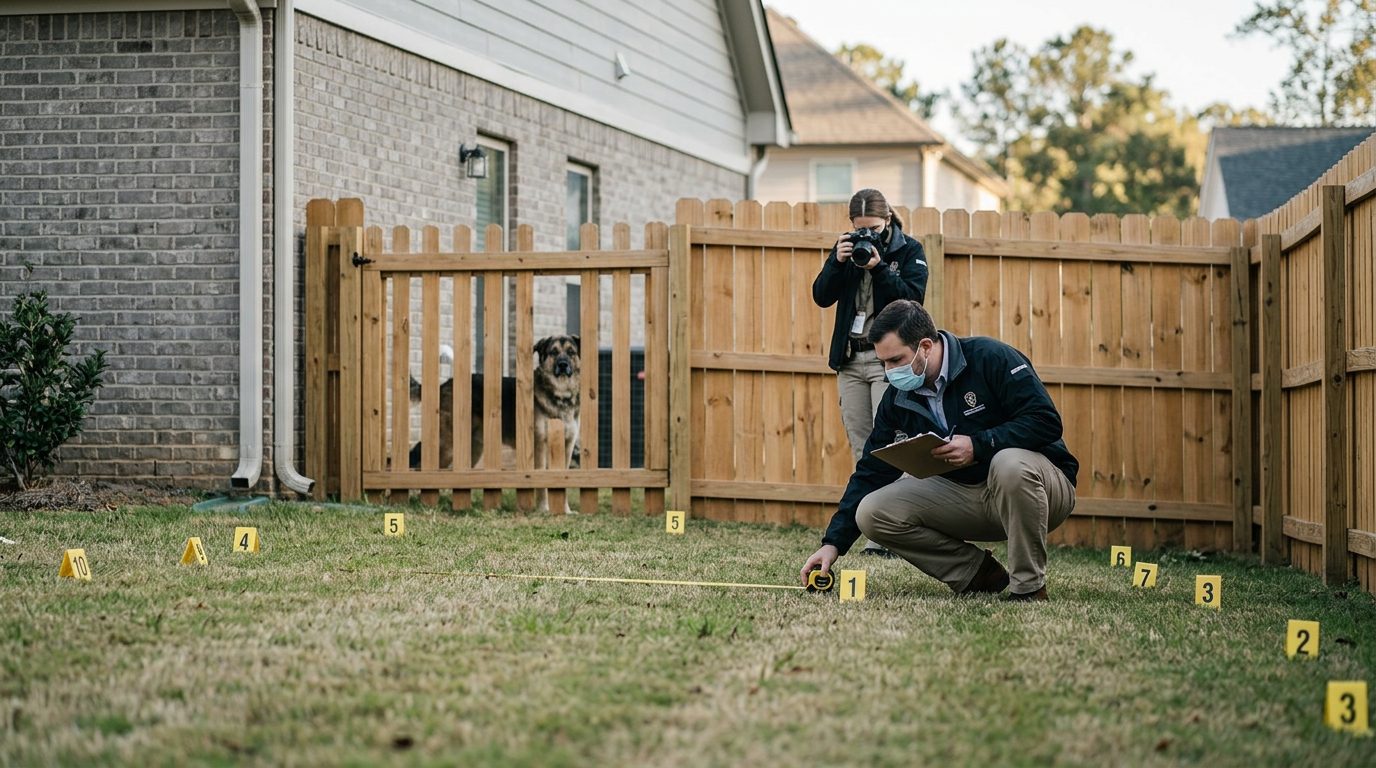
Dog Bite Liability
Dog Bite Owner Liability in Georgia: What You Need to Know
If you've been bitten by someone else's dog, Georgia law may hold the owner responsible. Learn how liability works and what your next step should be.
By Peter F. Jaraysi · Published September 20, 2026
Dog Bite Owner Liability in Georgia: What You Need to Know
Georgia law holds dog owners strictly liable for injuries their dogs cause—meaning you don’t have to prove the owner was negligent or that the dog had a history of aggression. If a dog bit you or knocked you down and caused injury, the owner can be held responsible under Georgia’s strict liability statute. Here’s what you need to know to decide whether you have a claim and what to expect.
If a dog bit you or knocked you down and left you injured, you may have a claim against the owner—and you don't have to prove they were negligent. Call Slam Dunk Attorney for a free case review. Talk it through with our team — the first consultation is free, confidential, and carries no obligation.
What Is Dog Bite Owner Liability in Georgia?
Dog bite owner liability in Georgia means the dog’s owner is legally responsible for injuries the dog causes, regardless of the owner’s intent or the dog’s past behavior.
Under Georgia law, a dog owner owes a legal duty to control their animal and prevent it from injuring people. When a dog injures someone—whether by biting, jumping, or knocking them down—the owner can be held liable for damages. This is called strict liability: the owner is responsible even if they were careful, even if the dog had never shown aggression before, and even if the owner didn’t know the dog was dangerous.
This is different from negligence, which requires you to prove the owner did something wrong or failed to do something they should have done. With strict liability, you don’t have to prove any of that. You only have to prove the dog caused your injury and you were lawfully on the property where it happened.
Strict liability also covers more than just bites. If a dog knocked you down and you were injured, or if the dog caused injury through any direct contact, you may have a claim.
Georgia’s Dog Bite Strict Liability Law
Georgia’s strict liability statute for dog bites makes owners responsible for injuries their dogs cause.
Under this law, you must prove three things:
- The defendant owned or controlled the dog at the time of the incident.
- The dog caused your injury—through a bite, knock-down, jump, or other direct contact.
- You were in a public place or lawfully in a private place when you were injured (for example, you were invited onto the property, or you were a mail carrier or utility worker doing your job).
You do not have to prove: – The owner knew the dog was dangerous – The dog had bitten anyone before – The owner was negligent or careless – The owner intended for the dog to injure you
Common misconception: Georgia does not follow the “one free bite” rule that some other states use. In those states, an owner is only liable if the dog has bitten someone before. Georgia’s strict liability law applies to the first bite and every incident after it.
Who Is Liable for a Dog Bite in Georgia?
More than one person can be held liable for a dog bite injury.
The dog’s owner is the primary defendant. The owner is the person who owns the dog and is responsible for its control and care.
The person in control of the dog at the time may also be liable. This could be a dog walker, a pet sitter, a family member, or anyone else who had the dog in their custody when the bite occurred.
Property owners or managers can be liable under premises liability or negligent security if they knew a dangerous dog was on the property and failed to warn visitors or take steps to prevent injury. For example, if a landlord knew a tenant had a dangerous dog and did nothing to warn guests or restrict the dog’s access to common areas, the landlord could share liability.
Landlords may be liable in some cases if they knew about a dangerous dog on the rental property and failed to take action.
In many cases, multiple parties share responsibility. An attorney will investigate to identify all potential defendants and sources of recovery.
What Damages Can You Recover?
Damages are the money you can recover for the harm the dog bite caused. Georgia law recognizes several categories:
Medical expenses: Emergency room care, surgery, stitches, antibiotics, wound care, infection treatment, and any follow-up medical visits related to the bite.
Reconstructive or cosmetic surgery: If the bite left scars or disfigurement—especially on the face, neck, or hands—you may recover the cost of surgery to repair or minimize the damage.
Lost wages: If the injury kept you from work during recovery, you can recover the income you lost.
Loss of earning capacity: If the bite caused permanent injury that reduces your ability to work or earn in the future, you can recover damages for that loss.
Pain and suffering: This covers the physical pain of the injury and the emotional distress—fear, anxiety, or trauma—caused by the attack.
Scarring and disfigurement: Georgia recognizes scarring and disfigurement as separate damages. Even if scars don’t require surgery, you can recover money for the permanent change to your appearance and the impact on your quality of life.
Permanent disability or functional impairment: If the bite caused lasting damage—loss of use of a limb, nerve damage, or chronic pain—you can recover damages for that permanent change.
Punitive damages: In rare cases where the owner’s conduct was grossly negligent or reckless—for example, if the owner knew the dog was dangerous and deliberately let it roam free—a court may award punitive damages to punish the owner and deter similar behavior. These are uncommon but possible in serious cases.
What You Must Prove to Hold an Owner Liable
To win a dog bite claim in Georgia, you must establish four elements:
1. Ownership or control: The defendant owned the dog or had control of it at the time of the incident.
2. Causation: The dog directly caused your injury. You have medical records, witness statements, or other evidence showing the dog bit you or knocked you down.
3. Lawful presence: You were in a public place (a sidewalk, park, street) or lawfully in a private place (you were invited, you were a service provider, or you had permission to be there). If you were trespassing, the owner may not be liable.
4. Damages: You suffered actual harm—medical bills, lost income, pain, scarring, or other measurable loss.
You do not have to prove the owner was negligent, knew the dog was dangerous, or that the dog had bitten before. Strict liability removes that burden.
Not sure what your next step is?
Talk it through with our team — the first consultation is free, confidential, and carries no obligation.
Defenses Dog Owners May Raise
Dog owners and their insurance companies will often raise defenses to reduce or eliminate liability. Common defenses include:
Trespassing: If you were on the owner’s property without permission and not lawfully there (for example, you were not a guest, service provider, or mail carrier), the owner may argue you were trespassing and they owe you no duty.
Provocation: The owner may claim you provoked the dog—teased it, hit it, or otherwise caused it to bite in self-defense.
Assumption of risk: If you knew the dog was dangerous and chose to interact with it anyway, the owner may argue you assumed the risk of injury.
Comparative fault: Under Georgia’s comparative negligence law, if you are found partly responsible for the injury (for example, if you ignored a “Beware of Dog” sign and entered an enclosed yard), your recovery is reduced by your percentage of fault. If you are found more than 50% at fault, you cannot recover.
An experienced attorney will anticipate these defenses and gather evidence to counter them.
How the Dog Bite Claim Process Works
The path from injury to settlement or trial follows a predictable sequence.
Step 1: Seek medical attention and document the injury Get immediate medical care. Even minor bites can become infected. Keep all medical records, bills, and receipts. Take photos of the bite wound, your injuries, and the scene where the bite occurred.
Step 2: Report to animal control or police Contact your local animal control or police department and file a report. This creates an official record of the incident and helps establish the facts of the case.
Step 3: Gather evidence Collect the names and contact information of anyone who witnessed the bite. Take photos of the dog, the location, and your injuries. Keep a written record of what happened while it’s fresh in your memory.
Step 4: Notify the dog owner’s insurance Most dog bites are covered by the owner’s homeowner’s or renter’s insurance. You or your attorney will notify the insurance company of the claim. Do not delay; insurance policies often have notice requirements.
Step 5: Consult with a dog bite attorney Contact an attorney to evaluate your claim. An attorney will review the facts, explain your rights, and advise you on next steps. This consultation is usually free.
Step 6: Attorney investigation Your attorney will obtain medical records, animal control reports, witness statements, and photos. The attorney may also investigate the dog’s history and the owner’s insurance coverage.
Step 7: Demand letter Your attorney sends a formal letter to the insurance company outlining the facts, your injuries, your damages, and the amount you are demanding in settlement. This letter sets the stage for negotiation.
Step 8: Settlement negotiation The insurance company will respond to the demand. Your attorney and the insurance company’s adjuster will negotiate. Most dog bite cases settle at this stage without going to trial.
Step 9: Litigation (if necessary) If no settlement is reached, your attorney may file a lawsuit. The case then enters discovery (exchange of evidence), depositions (recorded interviews), and trial preparation. If the case goes to trial, a judge or jury will decide liability and damages.
Timeline: What to Expect
Dog bite claims don’t resolve overnight. Here’s a realistic timeline:
Immediate (first 24–48 hours): Seek medical care, report to animal control, take photos, and document everything.
Weeks 1–4: Gather evidence, collect witness contact information, consult an attorney, and notify the insurance company.
Months 1–3: Your attorney investigates, obtains medical records, and prepares a demand letter.
Months 3–6: The insurance company reviews the demand and makes an initial settlement offer (or denies the claim).
Months 6–12: Your attorney and the insurance company negotiate. Many cases settle during this period.
12+ months: If no settlement is reached, the case may proceed to litigation. Discovery, depositions, and trial preparation can take several more months or longer.
Important note: Timelines vary widely based on the severity of your injury, how quickly the insurance company responds, and the complexity of the case. Some cases settle in weeks; others take a year or more.
Statute of Limitations in Georgia
You have a limited window to file a lawsuit. Under Georgia law, you have 2 years from the date of the bite to file a dog bite lawsuit in Georgia.
This deadline is strict. If you miss it, your claim is barred forever, and you lose the right to recover anything.
Don’t wait. Even if you’re still negotiating with the insurance company, consult an attorney early to ensure the deadline is protected. An attorney will track the deadline and file a lawsuit if settlement negotiations stall.
Why Slam Dunk Attorney for Your Dog Bite Claim
Focused experience: We handle dog bite cases across metro Atlanta and Georgia. We know Georgia’s strict liability law inside and out, and we understand how insurance companies evaluate and settle these claims.
Insurance negotiation: We deal directly with homeowner’s and renter’s insurance companies. We know their playbook, their typical settlement ranges, and how to build a case that gets results.
Thorough investigation: We gather medical records, witness statements, animal control reports, and photos. We investigate the dog’s history and the owner’s background to build the strongest possible case.
No upfront cost: We offer a free consultation and case review. We work on contingency—you pay no attorney fee unless we recover money for you. You may still owe case costs (such as court filing fees or medical record retrieval fees), which we discuss with you upfront.
Transparent communication: We explain Georgia’s law, your options, and realistic outcomes in plain language. We don’t use legal jargon or make promises we can’t keep.
Local presence: We’re based in Duluth, Georgia, and serve Alpharetta, Johns Creek, Lawrenceville, Marietta, Norcross, Kennesaw, Dunwoody, and throughout metro Atlanta and Georgia. We know the local courts, judges, and insurance practices.
If a dog bit you or knocked you down and left you injured, you may have a claim against the owner—and you don't have to prove they were negligent. Call Slam Dunk Attorney for a free case review. Talk it through with our team — the first consultation is free, confidential, and carries no obligation.
Common Questions About Dog Bite Owner Liability in Georgia
Do I have to prove the dog owner was negligent?
No. Georgia’s strict liability law means the owner is liable even if they were not negligent and the dog had no history of biting. You only have to prove the dog caused your injury and you were lawfully on the property.
What if the dog has never bitten anyone before?
It doesn’t matter. Georgia does not follow the “one free bite” rule. The owner is liable for the first bite under strict liability.
What if I was partly at fault?
Georgia follows comparative negligence. If you are found less than 50% at fault, you can still recover, but your award is reduced by your percentage of fault. If you are 50% or more at fault, you cannot recover.
Can I sue if the dog knocked me down but did not bite me?
Yes. Georgia’s strict liability law covers injuries caused by dogs, including knock-downs and other direct contact that causes injury.
How long do I have to file a claim?
You have 2 years from the date of the bite to file a lawsuit. Do not wait; contact an attorney as soon as possible to protect your rights.
Will the case go to trial?
Most dog bite cases settle with the owner’s insurance company before trial. However, if a fair settlement cannot be reached, we are prepared to take your case to court.
What if the owner does not have homeowner’s insurance?
We can still pursue a claim against the owner directly. However, insurance coverage makes recovery more likely. We will investigate all available sources of recovery.
Do I have to pay attorney fees upfront?
No. We work on contingency: you pay no attorney fee unless we recover money for you. You may still owe case costs (such as medical record fees or court filing fees), which we will discuss with you upfront.
Get Your Free Case Review Today
If a dog bit you or knocked you down and left you injured, you may have a claim under Georgia’s strict liability law. You don’t have to prove the owner was negligent, and you don’t have to face this alone. Reach out to Slam Dunk Attorney for a free, no-obligation case review. We’ll listen to what happened, explain your rights, and tell you whether you have a claim. Contact us today to get started.
Georgia's Dog Liability Law
Under Georgia law (O.C.G.A. § 51-2-7), a dog owner can be held liable for injuries caused by their dog in specific circumstances—such as when the owner knew the dog was vicious or dangerous, or when the dog was not properly restrained in violation of local leash laws. Liability is not automatic; the circumstances of your case matter. An attorney can help you understand whether the owner's conduct meets the legal standard.
Key Points About Dog Bite Liability in Georgia
Owner Knowledge or Breach of Duty
The owner may be liable if they knew (or should have known) the dog was dangerous, or if they violated a local leash law or failed to properly restrain the dog.
Your Right to Compensation
If the owner is found liable, you may be entitled to recover damages for medical expenses, lost wages, pain and suffering, and other losses resulting from the bite.
Comparative Fault
Georgia law allows recovery even if you bear some responsibility for the incident—as long as you are not 50% or more at fault. Your own actions are weighed against the owner's conduct.
Trespassing and Other Defenses
The owner may argue that you were trespassing or that you provoked the dog. Whether these defenses apply depends on the specific facts of your case.
Why You Need Legal Guidance
Understanding Your Rights
Dog bite liability law has specific requirements. An attorney can evaluate whether the owner's conduct meets Georgia's legal standard and what damages you may pursue.
Evidence and Documentation
Building a strong case requires medical records, witness statements, photos, and proof of the owner's knowledge or breach of duty. We help gather and organize this evidence.
Dealing with Insurance
The owner's homeowner's or renter's insurance often covers dog bite claims. Negotiating a fair settlement with insurers requires experience and clear communication.
Time-Sensitive Steps
There are deadlines and procedural requirements in Georgia for pursuing a claim. Early consultation ensures you don't miss critical steps.
We're Here to Help
Related practice areas
- Dog Bite Claims for Children in Georgia | Slam Dunk Attorney