
Nursing Home Abuse | Duluth, Georgia
Bedsores Can Signal Nursing Home Neglect. Find Out What Happened.
Learn the warning signs families often miss, the questions to ask a facility, and how our team can review your loved one's care.
By Peter F. Jaraysi · Published November 17, 2026
If a parent or other loved one in a nursing home has a bedsore, you may be asking whether someone failed to give proper care. A bedsore can be a sign of neglect, but it does not prove neglect on its own.
This guide explains what a bedsore is, what Georgia law and federal rules expect of a facility, which records matter, and how a bedsore lawyer in Georgia can help you decide what to do next.
What Is a Bedsore, and Why Are Nursing Home Residents at Risk?
A bedsore, also called a pressure ulcer, is damage to the skin and the tissue beneath it. It forms when pressure, friction, or rubbing stays on one spot for too long. Residents who cannot shift their weight or move on their own face the highest risk.
The rule says a facility must make sure residents get care to prevent pressure ulcers, in line with professional standards of practice. 42 C.F.R. § 483.25
Prevention is mostly routine work: repositioning, cleaning, checking the skin, and reporting changes early. When those routines slip, the risk climbs. Wound care teams also describe how deep a wound goes, because depth shapes the treatment plan. Many families first notice a bedsore during a visit, not in the care notes.
If a loved one has an open wound and you have questions about their care, you don't have to sort it out alone, so reach out to our team to talk it through. Talk it through with our team — the first consultation is free, confidential, and carries no obligation.
Can a Bedsore Mean Nursing Home Neglect?
Yes, a bedsore can point to neglect, but it is not automatic proof. Federal rules say a resident should not develop a pressure ulcer unless the resident’s clinical condition shows it was unavoidable. 42 C.F.R. § 483.25 The real questions are whether the bedsore was avoidable and whether staff acted on early warning signs.
Warning signs families often notice include:
- a new wound, or one that is getting worse
- a bad smell from a wound or dressing
- fever or unexplained weight loss
- a resident who was not turned or changed as expected
Federal rules also require a facility to investigate allegations of neglect and to keep the resident safe while it investigates. 42 C.F.R. § 483.12
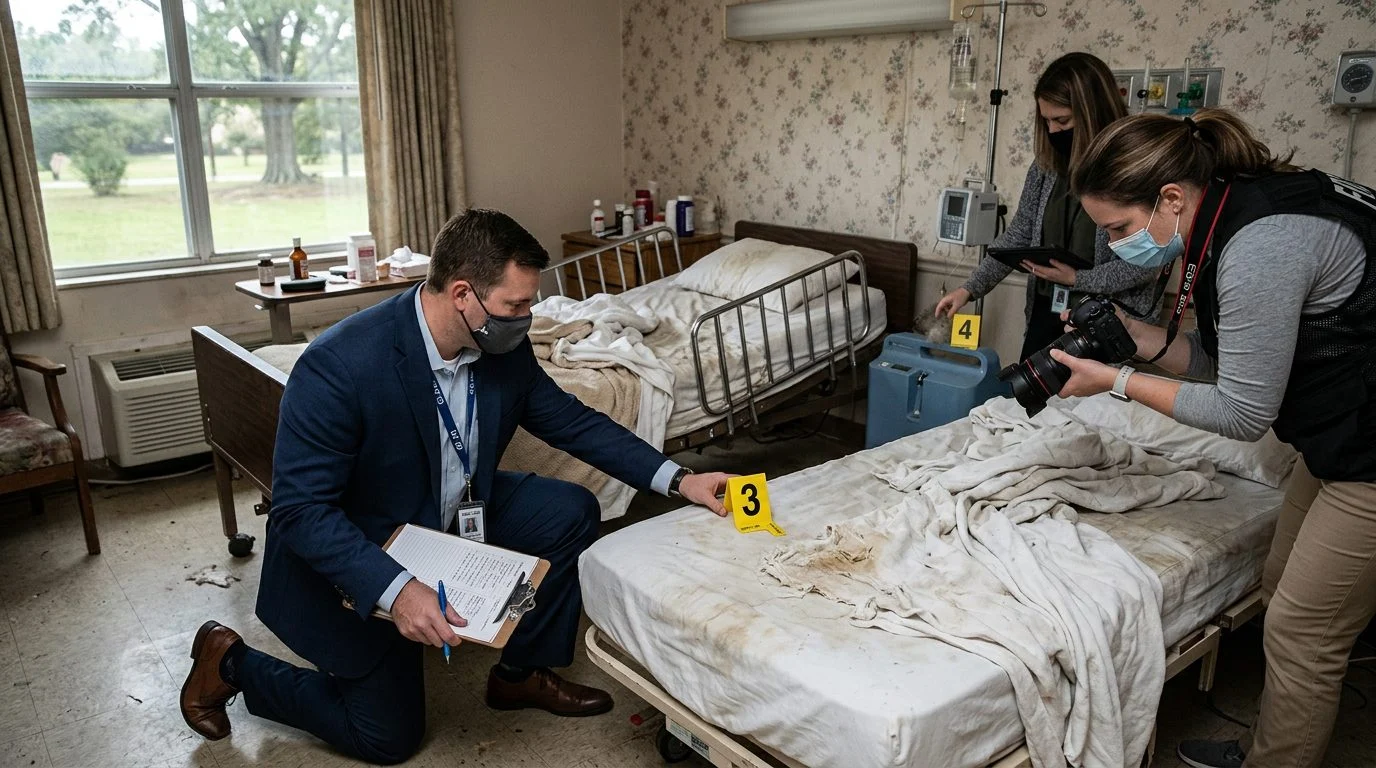
One mistake to avoid is waiting. Write down dates and what you saw. Take dated photos of the wound with the resident’s permission, and keep copies of every care note you receive.
What Evidence Matters in a Nursing Home Bedsore Case?
The records that usually matter most are the care plan, turning and repositioning logs, wound charts, and notes about changes in the resident’s condition. Hospital and transfer records matter too, since a bedsore can start in one setting and show up in another.
To prove negligence, a claim usually looks at what the facility owed the resident, whether it fell short, and whether that shortfall caused the harm. Georgia describes ordinary diligence as the care that ordinarily prudent people use in similar circumstances. O.C.G.A. § 51-1-2
A resident or guardian can ask for a clear explanation of the diagnosis, treatment, and prognosis. They can also inspect and copy the medical records. The facility may charge a duplication fee, but not more than its actual cost. O.C.G.A. § 31-8-108
State regulators can order a facility to correct violations. Repeated violations can also lead to civil penalties. O.C.G.A. § 31-8-126
Act early. Wounds change from week to week, so ask for records now and keep your own dated timeline.
Who Can Be Responsible for a Bedsore Injury?
Responsibility can reach beyond the one worker who gave the care. Georgia makes a person liable for torts committed by a servant by his command or in the prosecution and within the scope of his business. O.C.G.A. § 51-2-2
A facility may also hire outside companies for therapy, staffing, or wound care. An employer can be liable for a contractor’s negligence in listed situations, such as when it keeps the right to direct how the work is done. O.C.G.A. § 51-2-5
Bedsores can also start in one care setting and show up in another. Hospitals, rehabilitation centers, and home health providers may each hold records that show when the skin broke down. Staffing records can also show whether enough workers were on shift to turn and check residents.
Which party is the right one to name turns on the facts and the documents reviewed.
What Can a Bedsore Claim Include?
A bedsore claim can seek damages for the harm the resident suffered. Georgia law separates damages into two kinds. O.C.G.A. § 51-12-2
General damages are those the law presumes to flow from a wrongful act. They can be recovered without proof of any amount.
Special damages actually flow from the act and must be proved. In a bedsore case, these often include bills for hospital care, wound treatment, and added nursing or rehabilitation costs. Keep every bill and receipt.
A surviving spouse, or a child when there is no spouse, may recover for the death of a spouse or parent. Under O.C.G.A. § 51-4-2, the surviving spouse or, if there is no surviving spouse, a child or children, either minor or sui juris, may recover for the homicide of the spouse or parent the full value of the life of the decedent, as shown by the evidence. O.C.G.A. § 51-4-5
No particular amount or result can be promised, and every case is different.
Do You Need a Bedsore Lawyer, and What Does One Do?
You may want a lawyer’s review early, because the filing deadline matters. Georgia generally allows two years to file a personal injury lawsuit. O.C.G.A. § 9-3-33 Some claims carry other deadlines, so don’t assume two years covers every claim.
A bedsore lawyer’s work usually includes:
- reviewing the records and building a timeline
- identifying who may be responsible
- gathering evidence from the facility and other providers
- communicating with insurers and the facility
- explaining deadlines and next steps
The facility and its insurer have their own people and process from the start. Getting advice early keeps your options open.
Until then, you can take steps now. If you are the resident’s guardian, ask for the records in writing. Keep a dated timeline, and read any document before you sign it.
Not sure what your next step is?
Talk it through with our team — the first consultation is free, confidential, and carries no obligation.
What to Expect From a Free Consultation With Our Team
The initial consultation is free, confidential, and carries no obligation to continue.
Slam Dunk Attorney is based in Duluth, Georgia, and handles nursing home abuse, wrongful death, and catastrophic injury claims across metro Atlanta and Georgia.
In the first conversation, you share the resident’s situation, the timeline, and any records you have. Our lawyers then explain possible next steps in plain language. Fees and case costs are reviewed with you during the consultation, so you understand them before you decide anything.
Are bed sores from neglect?
A bedsore can be a sign of neglect, but it is not automatic proof. What matters is whether the care met the standard the law requires.
How long do I have to file a nursing home neglect lawsuit in Georgia?
Georgia generally allows two years for personal injury lawsuits, though some claims have other deadlines.
What records can I request from a nursing home?
A resident or guardian can request medical records. The facility can charge a copying fee that does not exceed actual cost.
What does a bedsore lawyer do?
A bedsore lawyer reviews records, identifies who may be responsible, gathers evidence, and explains deadlines and next steps.
If a loved one has an open wound and you have questions about their care, you don’t have to sort it out alone, so reach out to our team to talk it through.
Attorney advertising. This page is provided by Slam Dunk Attorney, Duluth, Georgia. The responsible lawyer is Peter F. Jaraysi. Contact the firm through our contact page. No specific outcome is promised.
Warning signs families should not ignore
Sores on the heels, tailbone or hips
Pressure injuries often form on areas that bear weight, especially when a resident cannot shift position on their own.
Sudden weight loss or dehydration
Changes in eating, drinking or weight can point to a care problem that needs a closer look.
Infection or a wound that is getting worse
Redness, odor, drainage or spreading tissue damage should be reported to the facility and documented right away.
Unexplained falls or injuries
Bruises, fractures or repeated falls without a clear explanation deserve written records and questions.
Document first, then ask questions
If you notice a new or worsening sore, ask the facility for a written explanation and the resident's current care plan. Take dated photos and keep notes of what staff tell you.
How our team can help
Free first consultation
The first consultation is free, confidential and comes with no obligation to continue.
Review of records
We look at medical notes, care plans and facility documents to understand what happened and when.
Clear, plain-language updates
Our team explains each step in terms you can follow, so you always know where your family's case stands.