
Por qué es importante comprender el Proceso de reclamación por lesiones Cosas que importan cuando estás herido
El proceso de reclamación por lesiones Puede resultar abrumador lidiar con el dolor, las facturas médicas y una compañía de seguros que parece más interesada en sus ganancias que en su recuperación. Esto es lo que necesita saber:
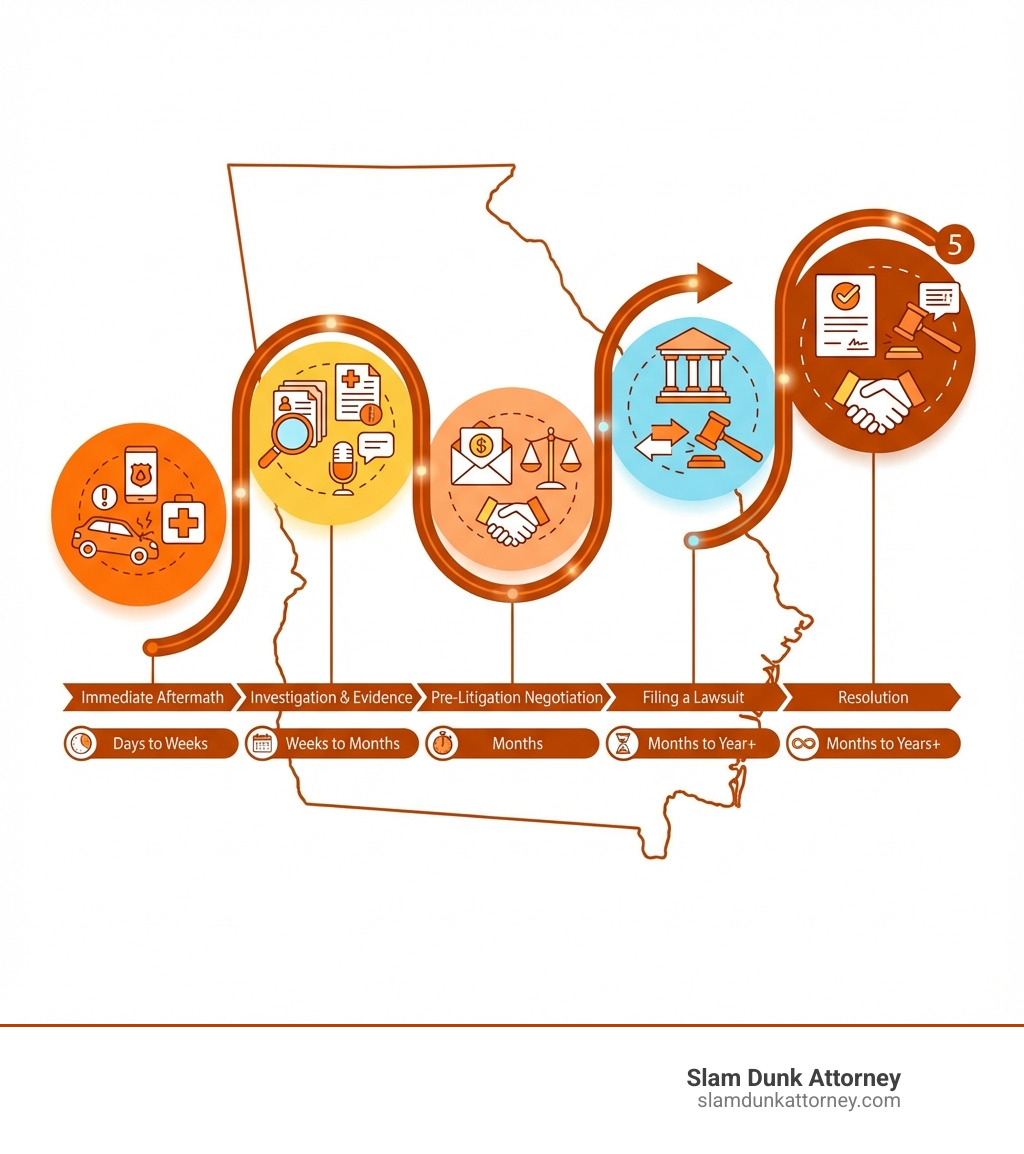
Las 5 etapas principales de una demanda por lesiones personales en Georgia:
- Consecuencias inmediatas – Denuncia el accidente, busca atención médica y documenta todo.
- Investigación y pruebas – Reúna los expedientes médicos, las declaraciones de los testigos y prepare su caso.
- Negociación previa al litigio – Envíe una carta de demanda y negocie con los ajustadores de seguros.
- Presentación de una demanda – Si no se llega a un acuerdo, presente una demanda y pase a la fase de presentación de pruebas.
- Resolución – Llegar a un acuerdo mediante mediación o proceder a juicio para obtener un veredicto.
La mayoría de las demandas por lesiones personales en Georgia se resuelven antes del juicio, pero comprender cada etapa le ayuda a proteger sus derechos en virtud de la regla de negligencia comparativa modificada de Georgia.
Si usted sufre lesiones por la negligencia de otra persona, ya sea en un accidente automovilístico en la autopista 316, por un resbalón y caída en un centro comercial de Duluth o por negligencia médica, la ley de Georgia le otorga el derecho a solicitar una indemnización. Sin embargo, el camino para obtener una indemnización no es sencillo. Las compañías de seguros intentan minimizar los pagos y el sistema legal tiene plazos estrictos.
Soy Peter Jaraysi, abogado. Mi equipo y yo hemos dedicado nuestras carreras a navegar por el proceso de reclamación por lesiones para los habitantes de Georgia. Entendemos cómo operan las compañías de seguros y luchamos por obtener la indemnización completa que nuestros clientes merecen según la legislación de Georgia.
Orgullosos de servir a Duluth y a todo Georgia ¡Contáctenos para comenzar su recuperación! Explore nuestras áreas de práctica

¿Qué es una demanda por lesiones personales en Georgia?
Una demanda por lesiones personales en Georgia es una acción legal para solicitar una compensación económica por los daños causados por la negligencia o el acto intencionado de otra parte. El objetivo es recuperar los gastos médicos, los salarios perdidos y otras pérdidas.
Para que una reclamación prospere, debemos demostrar cuatro elementos esenciales:
- Deber de diligencia: La parte culpable tenía la obligación legal de actuar con un cuidado razonable. Por ejemplo, los conductores deben manejar sus vehículos de manera segura.
- Incumplimiento del deber (negligencia): La parte no cumplió con ese deber. Un conductor que se salta un semáforo en rojo incumple su deber.
- Causalidad: El incumplimiento del deber fue la causa directa de sus lesiones. Las acciones del conductor que se saltó el semáforo en rojo deben ser la causa de su fractura en el brazo.
- Daños: Usted sufrió daños reales y cuantificables, como gastos médicos, pérdida de ingresos y dolor y sufrimiento.
¿Qué tipos de accidentes dan derecho a reclamar una indemnización en Georgia?
Muchos incidentes pueden dar lugar a una demanda por lesiones personales, siempre que cumplan los cuatro elementos anteriores. A menudo nos ocupamos de casos relacionados con:
- Accidentes automovilísticos: Estas son algunas de las reclamaciones más comunes, incluyendo colisiones causadas por conducción distraída, exceso de velocidad u otras formas de negligencia en carreteras como Peachtree Industrial Boulevard o la I-285.
- Accidentes por resbalones y caídas: Los propietarios de inmuebles en Georgia deben mantener sus instalaciones razonablemente seguras. Si usted sufre una lesión por un peligro como un piso mojado sin señal de advertencia, es posible que tenga derecho a presentar una demanda por responsabilidad civil inmobiliaria.
- Negligencia médica: Cuando la negligencia de un profesional de la salud causa lesiones, puede dar lugar a una reclamación. Esto incluye diagnósticos erróneos, errores quirúrgicos o errores en la medicación.
- Muerte por negligencia: Cuando un accidente es mortal, los familiares sobrevivientes pueden presentar una demanda por muerte por negligencia por su pérdida, incluyendo los gastos del funeral y el “valor total de la vida del difunto” según la ley de Georgia.
El proceso de reclamación por lesiones en Georgia: una guía paso a paso
Navegando por el proceso de reclamación por lesiones en Georgia puede ser complejo, pero dividirlo en pasos manejables ayuda. Guiamos a nuestros clientes a través de cada etapa, asegurándonos de que sus derechos estén protegidos.
Paso 1: Acciones inmediatas después de un accidente
Las medidas que tome inmediatamente después de un accidente son cruciales tanto para su salud como para su reclamación.
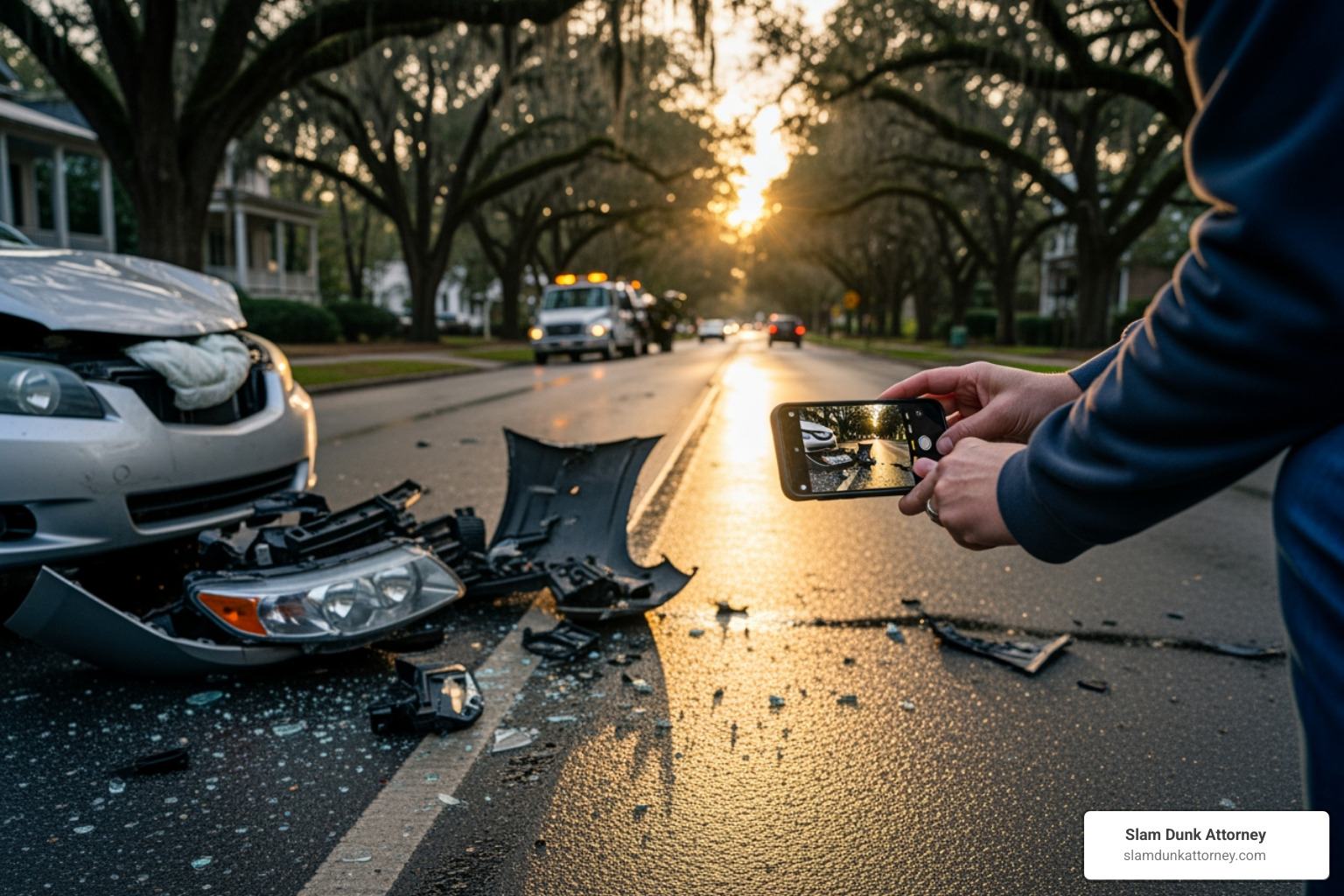
- Priorice la seguridad y busque atención médica: Tu salud es lo primero. Llama al 911 si tienes lesiones graves. Acude al médico de inmediato, aunque te sientas bien, ya que algunas lesiones aparecen más tarde. Los registros médicos son fundamentales para relacionar tus lesiones con el accidente, y retrasar el tratamiento puede debilitar tu reclamación.
- Llame a las autoridades: En caso de accidentes automovilísticos en Georgia con lesiones o daños materiales importantes, se requiere un informe policial. Este informe es una prueba esencial.
- Documentar la escena: Si es seguro, recopila información:
- Fotos y videos: Tome fotos de los daños del vehículo, las condiciones de la carretera y las lesiones visibles.
- Información sobre el intercambio: Obtenga el nombre, la información de contacto y los datos del seguro de la otra parte.
- Testigos: Recopile la información de contacto de todas las personas que presenciaron el accidente.
- Evita admitir la culpa: Georgia tiene una regla de negligencia comparativa modificada (la “regla de 50%”). Si se determina que usted tiene una culpa de 50% o más, no podrá recuperar ningún daño. Su indemnización se reducirá en función de su porcentaje de culpa si esta es inferior a 50%. Nunca admita la culpa en el lugar del accidente.
Paso 2: Previo al litigio y preparación de su caso
Después del accidente, comienza la fase previa al litigio. Aquí es donde preparamos su caso para las negociaciones.
- Investigación y recopilación de pruebas: Nuestro equipo lleva a cabo una investigación exhaustiva, recopilando todas las pruebas relevantes, incluyendo expedientes médicos, informes de accidentes, declaraciones de testigos y grabaciones de cámaras de vigilancia. En casos complejos, también podemos consultar con expertos.
- Carta de demanda: Una vez que comprendemos el alcance total de sus daños, enviamos una carta de demanda formal a la compañía de seguros de la parte culpable. Esta carta describe los hechos, la responsabilidad y la indemnización que usted solicita.
- Negociaciones con las compañías de seguros: La mayoría de los casos de lesiones personales se resuelven durante esta etapa. Los ajustadores de seguros buscan pagar lo menos posible. Nuestro equipo se encarga de todas las comunicaciones, rechazando las ofertas bajas y luchando por una compensación justa basada en las pruebas.
- Estatuto de limitaciones de Georgia: Es fundamental saber que en Georgia, por lo general, tienes dos años desde la fecha de la lesión para presentar una demanda. Si no se cumple este plazo, se pierde el derecho a solicitar una indemnización. Nuestro equipo se asegura de que se cumplan todos los plazos.
Paso 3: Presentación de una demanda y descubrimiento de pruebas
Si las negociaciones no dan lugar a un acuerdo justo, es posible que le aconsejemos presentar una demanda. Esto lleva el caso a un litigio formal.

- Cómo presentar una queja: Iniciamos el proceso judicial presentando una “demanda” ante el tribunal, en la que se detallan los hechos, las reclamaciones legales y la indemnización solicitada. A continuación, se notifica formalmente la demanda al demandado.
- La fase de descubrimiento: A menudo denominada “descubrimiento”, esta es la etapa en la que ambas partes intercambian información. Puede durar hasta un año y suele incluir:
- Interrogatorios: Preguntas escritas enviadas a la otra parte, que deben responderse bajo juramento.
- Declaraciones: Testimonios jurados y extrajudiciales de las partes y los testigos. Se trata de una herramienta clave para recabar datos y evaluar la credibilidad de los testigos.
- Solicitudes de presentación: Solicitudes formales de documentos, fotos y otras pruebas.
- Mociones previas al juicio: Antes del juicio, cualquiera de las partes puede presentar mociones previas al juicio solicitando al tribunal que se pronuncie sobre cuestiones específicas, como la exclusión de pruebas o la desestimación de partes del caso.
- Mediación: Muchos casos en Georgia se resuelven mediante mediación, incluso después de que se haya presentado una demanda. Un mediador neutral ayuda a ambas partes a negociar una solución, evitando el tiempo y los gastos de un juicio.
- Juicio (si es necesario): Si el caso no se resuelve, se procede a juicio. Esto implica la selección del jurado, las declaraciones iniciales, la presentación de pruebas, los alegatos finales y, por último, el veredicto del jurado.
Paso 4: Cómo se determina la indemnización en Georgia
Para determinar el valor de una demanda por lesiones personales en Georgia, es necesario calcular los daños que ha sufrido. La indemnización tiene como objetivo compensarle por completo, en la medida en que el dinero lo permita.
| Tipo de daño | Descripción | Ejemplos en una reclamación en Georgia |
|---|---|---|
| Daños económicos | Pérdidas financieras cuantificables derivadas de la lesión. | Facturas médicas, salarios perdidos, daños materiales, costos de rehabilitación. |
| Daños no económicos | Pérdidas subjetivas, no monetarias, que son más difíciles de cuantificar. | Dolor y sufrimiento, angustia emocional, pérdida del disfrute de la vida, pérdida de consorcio. |
Regla de negligencia comparativa modificada de Georgia (la regla 50%)
En Georgia, si se determina que usted tiene parte de la culpa del accidente, su indemnización se reducirá en función de su porcentaje de culpa. Sin embargo, si un jurado determina que usted tiene una culpa del 50% o más, no podrá recuperar ningún daño. Esta regla hace que sea crucial establecer la responsabilidad de la otra parte y minimizar cualquier culpa por su parte.
Después de que se llega a un veredicto
Si su caso llega a juicio y usted gana, el proceso no termina ahí.
- Pago: La compañía de seguros de la parte culpable suele ser responsable de pagar la indemnización. Esto suele implicar la firma de un formulario de exención de responsabilidad.
- Cobro posterior al fallo: En casos excepcionales en los que el demandado no paga, puede ser necesario proceder al cobro. Esto podría implicar la imposición de un gravamen sobre sus bienes o el embargo de su salario.
- Apelaciones: Cualquiera de las partes puede apelar la decisión del tribunal si considera que se ha cometido un error legal. Una apelación puede alargar considerablemente el proceso y aumentar los gastos.
Haga clic para contactar nuestros abogados especializados en lesiones personales hoy mismo
Gestionar su reclamación con confianza
El proceso de reclamación por lesiones Es un camino largo, pero con el equipo legal adecuado, puede recorrerlo con confianza.
Mejores prácticas para el proceso de reclamación por lesiones
Para proteger su reclamación y maximizar su posible indemnización, siga estas recomendaciones clave sobre lo que debe y no debe hacer:
- Busque atención médica de inmediato: Los registros médicos son la base de su reclamación. Retrasar el tratamiento sugiere que sus lesiones no son graves.
- MANTENGA REGISTROS DETALLADOS: Mantenga un expediente con todos los documentos relacionados con el accidente, incluyendo facturas médicas, recibos e informes policiales. También puede ser útil llevar un diario del dolor.
- SIGA todas las indicaciones médicas: Acuda a todas las citas y siga el tratamiento. La falta de constancia puede perjudicar su caso.
- Póngase en contacto con un abogado especializado en lesiones personales: Una consulta temprana es una de las mejores medidas que puede tomar. Podemos proteger sus derechos y gestionar las comunicaciones con las aseguradoras.
- NO admitas tu culpa: Debido a la regla de negligencia comparativa de Georgia, admitir la culpa puede reducir o eliminar su indemnización.
- NO publiques en redes sociales: Las compañías de seguros monitorean las redes sociales. Las publicaciones pueden sacarse de contexto y utilizarse para argumentar que sus lesiones no son graves.
- NO proporcione declaraciones grabadas a las aseguradoras sin un abogado: Rechace educadamente y remítales a su abogado. Todo lo que diga puede ser utilizado en su contra.
- NO firme nada sin antes someterlo a revisión legal: Las ofertas iniciales de acuerdo suelen ser demasiado bajas. Una vez que firme una exención, no podrá solicitar más indemnizaciones.
Por qué asociarse con un abogado de Duluth es su mejor opción
Manejo del proceso de reclamación por lesiones Por sí solo es un reto, ya que las compañías de seguros cuentan con amplios recursos y ajustadores capacitados para minimizar los pagos. Nuestro equipo en Slam Dunk Attorney nivela el campo de juego.
- Navegando por la complejidad: Entendemos las leyes específicas de Georgia, desde el plazo de prescripción hasta la regla de negligencia comparativa, asegurándonos de que no se pase por alto ningún detalle.
- Maximizar la compensación: Evaluamos con precisión el valor total de su reclamación, incluyendo tanto los daños económicos como los no económicos, y luchamos por conseguir un acuerdo integral.
- Gestión de todas las comunicaciones: Nosotros nos encargamos de lidiar con los agresivos ajustadores de seguros, para que usted pueda enfocarse en su recuperación.
- Experiencia preparada para el juicio: Aunque la mayoría de los casos se resuelven, preparamos cada caso para ir a juicio. Nuestro equipo litigará con firmeza en los tribunales si no se ofrece un acuerdo justo.
- Nuestro compromiso: Como empresa con sede en Duluth, estamos comprometidos con el esfuerzo, la honestidad y la transparencia. Brindamos atención integral a las víctimas de accidentes en Duluth, Atlanta y en todo Georgia, manteniéndole informado en cada paso del proceso.
La duración de una demanda por lesiones personales varía, pero con nuestro equipo, puede estar seguro de que su caso avanzará de manera eficaz. Si ha sufrido lesiones en Georgia, no enfrente el proceso solo. Ofrecemos una revisión gratuita de su caso para explicarle sus opciones.
Obtenga ayuda de un abogado especializado en accidentes automovilísticos en Duluth..
La información proporcionada en este blog es solo para fines informativos generales y no pretende ser, ni debe interpretarse como, asesoramiento legal. Cada caso de lesiones personales es único, y las leyes y circunstancias que se aplican pueden variar en función de los hechos específicos de su situación. La lectura de este contenido no crea una relación abogado-cliente. Para recibir asesoramiento legal específico para su caso, debe consultar directamente con un abogado calificado en lesiones personales con licencia para ejercer en el estado de Georgia.
Llame o envíe un mensaje de texto 404-951-3513 o completar un Formulario de evaluación gratuita de su caso